Fantastic Beasts And Where To Find Them

Director: David Yates (2016) BBFC cert: 12A

Let the magic of J.K. Rowling cast you back in time for another fabulous fantasy adventure. This prequel to her astonishingly successful Harry Potter series is a visually rich, fully realised world full of warm characters, cute critters and exciting action.

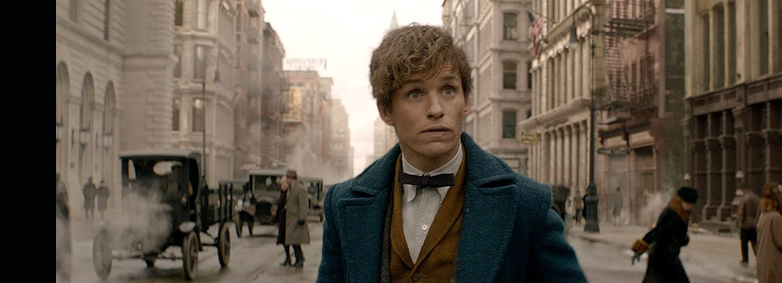
Set a full 70 years before Harry’s story starts, the story is shifted from the UK to New York in 1926. Our hero is Newt Scamander, an English wizard with the air and appearance of a foppish Edwardian gentleman adventurer. He carries a magic wand and a battered brown suitcase of surprising capacity. There are elements of TV’s Dr Who to his character. These include being expelled from his home, picking up companions to help out and describing himself as ‘annoying’ to other people.

However actor Eddie Redmayne is far too endearing a screen presence to be the spiky mannered Timelord and no-one in this film finds Newt annoying. If there is one major fault in the film it is this disparity between the script and the performance. This is not to say Redmayne is poor, far from it. His boyish charm encourages empathy at every turn and he gently underplays his scenes to allow others to blossom.

While shopping for a birthday present in New York, some of Newt’s beasts escape and the tourist falls foul of the President of wizards. As he tracks them down he is pursued by Colin Farrell’s dapper Director of Magical Security and his trench coat-clad henchmen.

Meanwhile an invisible creature is terrorising the city and a dark wizard called Grindelwald is on the loose and threatening war. There are chases, potions, magical battles, a speakeasy full of house elves and a menageries worth of extraordinary creatures.

Katherine Waterston and Alison Sudol’s magical sisters provide the opportunity for romance. This is smart move by Rowling who recognises her key target demographic of longtime Potter fans are now adults. They may even have children of their own.

Redmayne’s generosity to Waterston, Sudol and Dan Fogler as a bumbling baker allow his co-stars to steal the heart of the film. We know we’ll meet Newt again, but we want to meet Jacob, Tina and Queenie again.

Samantha Morton, Ron Perlman and Jon Voigt add to the weight of acting talent and there’s a cameo by Johnny Depp. There are far fewer British actors in this film than in the Potter stories, possibly because those films attempted to exhaust our nations entire supply of thesps.

Rowling infuses her script with contemporary social commentary. She touches upon civil rights, the welfare of children, education and the conservation of endangered species. There are also asides on the demonisation of women in the media and their marginalisation in the workplace. The forces of darkness include a powerful newspaper magnate who are in cahoots with politicians, while an anti-witch cult is a barely concealed avatar for mainstream religion.

However Rowling’s tone is rarely preachy and she offers optimism, gentleness and nurturing. Building is emphasised over destruction and craftsmanship over mass production. The focus is kept firmly on entertaining the multiplex hordes.

There is a lot of detailed world building. We’re introduced to a city full of new characters, organisations and locations, many who will undoubtedly take centre stage in the next four films. We learn Newt has an older brother of some repute. I wonder if Benedict Cumberbatch’s agent is waiting by the phone.

Warner Bros are taking no chances with the continuation of their franchise phenomenon. They put the trusted director of the last four Potter films in charge and have backed him with all their creative, financial and marketing muscle. The opening moments are careful to include familiar images such as Hogwarts school to reassure us of their good intentions.

Though shot at Warner Bros. Studios in Leavesden, UK, the tremendous sets and faultless CGI never suggest we’re not in the US. Several scenes were also shot on location in London and Liverpool. There are nods to the Men In Black franchise (1997-2012) and a particular work of Terry Gilliam.

There’s no sex, drugs, booze or blood to scare the kids and you don’t have to be a Potter fan to thoroughly enjoy this as a stand alone story. But if you are a fan of Rowling’s fantastical world, you’ll love it.

@ChrisHunneysett


Miss Peregrine’s Home For Peculiar Children

Director: Tim Burton (2016) BBFC cert: 12A

Step inside the latest dark fantasy from the macabre mind of Tim Burton. Based on the best selling novel by Ransom Riggs, the director’s gothic sensibility has been fused with the superhero stylings of X-Men screenwriter Jane Goldman to create a clanking automaton of insufficient heart or electric thrills.

Whether this is an exhausted creative reaching for his reliable stock in trade ideas to get the job done or a potentially career fatal exercise in barrel scraping, Miss Peregrine’s Home makes for a great game of Tim Burton bingo.

There is a young lonely outsider of estranged parents, a kindly grandfather figure, suburbia is given its regular beating, pastel shades denote danger and sports are used as shorthand for idiocy, Visually there is elaborate topiary in the shape of dinosaurs, a scissor handed puppet is given life and a circus ring features in the finale. House!

The Birds (1963), Jason and the Argonauts (1963), Time Bandits (1981) and Brigadoon (1954) are among the many other films drawn upon for inspiration.

The plot is not so far away from any X-Men movie, honestly, pick any one you want. An outsider discovers a hidden school for specially gifted children ran by a powerful mentor. Nazi experiments in genetics are hinted at the cause of the ‘peculiars’ special powers.

Despite antagonism from some pupils he eventually joins forces in defending the school against their enemies. Along the way hidden talents are discovered and lessons of reaching ones full potential are received. The End.

Talented  and likeable Brit Asa Butterfield plays Jake, a modern 16-year old American teenager who visits Wales and discovers a time loop where it’s still 1943. Wales is a modern and forward looking country so I’ll not be making any cheap gags here. Despite being replaced on screen by Cornwall, Wales is made to look magical.

Hidden inside the time loop is Miss Peregrine’s Home For Peculiar Children, where the never ageing pupils live the same day over again. Each child has their own peculiarity such as invisibility, great strength or pyrokinesis. Ella Purnell plays the angelic Emma who has to wear lead boots to stop her floating away.

Eva Green gives a wonderfully eccentric turn as the pipe smoking housemistress Miss Peregrine, a glamorous combination of Mary Poppins and Morticia Adams. As well as creating the time loop to protect her young charges from their fearful enemies, she can transform into a peregrine falcon and is a deadly shot with a crossbow.

Her home is only one of may such time protected hideaways and all are threatened by The Hollows, monsters lead by the evil Mr. Barron. With sharklike teeth and a white wig, Samuel L. Jackson matches Green’s performance and the film is energised by his belated appearance.

A bevy of English actors add their name to the film poster. Dame Judi Dench flies through her cameo, Rupert Everett sports binoculars and an alarming accent. Terence Stamp and Chris O’Dowd play Jake’s grandfather and father.

There’s plenty of handsomely designed spectacle adorned with a dash of romance and odd moments of black humour. Mike Higham provides the unmemorable score and the familiar strains of Burtons’ usual collaborator Danny Elfman, are missed.

But the big mystery is who this film is aimed at. Its eye eating villains are far too macabre for little ones and the sub-superhero adventure is too gentle for teens.

And true to its lengthy title, the storytelling is caged and never soars.

@ChrisHunneysett


Alice Through The Looking Glass

Director: James Bobin (2016)

It’s six long years since the staggeringly successful but forgettable Alice In Wonderland (2010) from director Tim Burton.

And time drags in this muddled sequel which has even less connection to the fantastical novels of Lewis Carroll.

There’s no lyrical sense of wonder just hack handed sentiment, blunt slapstick and plodding special effects.

It jettisons familiar characters into two distinct and parallel plots of its own invention, respectively involving time travel and female empowerment. The resolution of family conflict joins the two strands loosely together.

Never forget Hollywood’s golden rule of scriptwriting; a film is always about family, regardless of how appropriate it is to the material.

Burton butchered Carroll’s whimsical masterpiece, replacing its playful intelligence, charm and wit with flamboyant gothic design and an excruciating mannered performance by Johnny Depp as the Mad Hatter.

Against the odds, Burton’s replacement James Bobin has made an even more unwieldy and incoherent film.

Previously Bobin directed The Muppets (2011) and Muppets Most Wanted (2014). He began in TV with The 11 O’Clock Show (1998) where he collaborated with Sacha Baron Cohen. The comic actor features heavily if sadly not hilariously in Looking Glass.

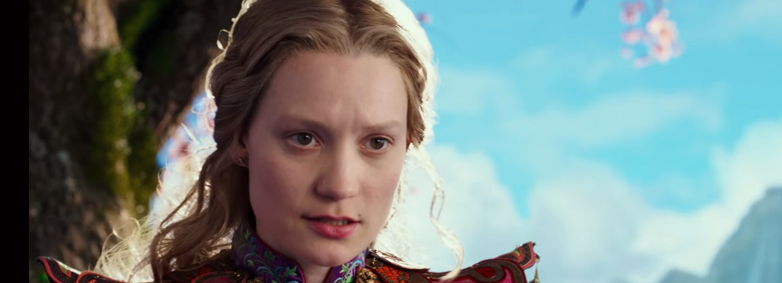
Despite Alice being reinvented as an action heroine, the pale Mia Wasikowska gives a pallid performance as Alice. Perhaps she’s miffed she’s billed a humble third after Depp and Anne Hathaway.

Alice steps through a mirror and falls into Wonderland, immediately signalling to us nothing in this world can hurt her. Which destroys any potential sense of danger in one dull thud.

She is told her friend the Mad Hatter has gone more mad but in a bad way, and is dying.

In white face paint, orange wig and tweeds, Depp’s Hatter resembles Ronald McDonald’s eccentric great uncle after confinement to a suitable attic.

To cure him Alice must do the impossible task of stealing a device called the chronosphere and go back in time to rescue his long lost family.

Removing the time travelling machine risks destroying Wonderland and everyone in it. But this threat is quickly forgotten about as the film is more interested in whizzing Alice about. There’s a surprise incursion to an insane asylum.

Alice is chased by Time who wants his contraption back. The film can’t decide if the black clad and German accented Sacha Baron Cohen is the baddie.

Also vying to be the baddie but failing in villainy are Helena Bonham Carter and Hathaway. They make a squabbling return as respectively the large headed and rude Red Queen and the elegant and duplicitous White Queen.

The presence of Bonham Carter, his now ex-wife, may explain Burton’s exclusion from the director’s chair.

The sepulchral tones of the late Alan Rickman offers a fleeting moment of gravity. While in her brief appearances as Alice’s mother, theatrical Scots stalwart Lindsay Duncan makes more of an impression than Wasikowska achieves.

Lending their voices to the advertising poster in some un-necessarily expensive casting choices are Stephen Fry, Michael Sheen, Timothy Spall, John Sessions, Barbara Windsor, Paul Whitehouse and Toby Jones.

Usually my heart despairs whenever Matt Lucas appears so it says a great deal about the film I found his presence curiously bearable.

Alice won Oscars for Best Art Direction and Best Costume Design, as well as being nominated for Best Visual Effects.

No doubt Looking Glass will follow the first film in being in the running for similar awards. It’s rich and detailed production design gives us plenty to look at while everyone busily runs around.

The chronosphere is a golden mechanical marvel Alice sits in to blast back in time, a design nod to George Pal’s teen culture embracing adaption of HG Well’s The Time Machine (1960).

Alice visits vast gothic halls and traverses a tumultuous ocean of time. The world is populated by  mechanical assistants, vegetable guardsmen, giant chess pieces, a fire breathing Jabberwocky, walking frogs, talking dogs and of course the disappearing Cheshire Cat.

Bookending the film is a framing device featuring Alice’s adventures at sea pursued by pirates. Because the world needs another big budget CGI fest involving Johnny Depp and pirates.

The story stresses the importance of not wasting ones time. Which is strange as I wasted two hours of my life watching this joyless merry go round of a movie.

Mind you, it felt much longer.

@ChrisHunneysett


Room

Director: Lenny Abrahamson (2016)

Disturbingly dark and horribly tense, this modern day fable is all the more gripping for the love at the heart of its story.

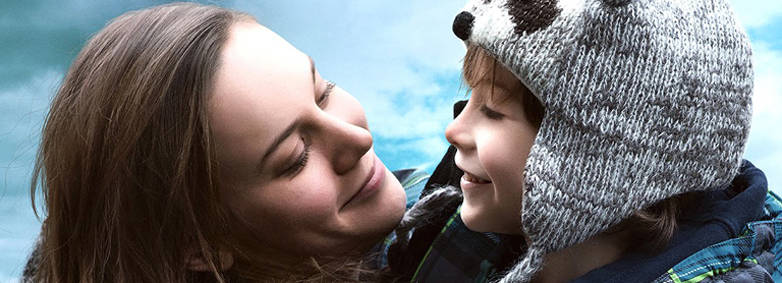
It’s told through the eyes of five year old Jack via Jacob Tremblay’s astonishing emotionally truthful performance.

He’s grown up in a decaying and cramped single room, entertained with tales of imaginary worlds told by his only companion, his mother Joy.

She’s played by the staggering excellent Brie Larson and the pair share a wonderfully warm chemistry.

Larson has been deservedly BAFTA nominated for leading actress and named as one of their Rising Stars of 2016. An Oscar nom should also be forthcoming.

At night Jack must hide in the cupboard to sleep because a bogeyman called thrusts himself into their world.

We hear of him and hear his voice long before we see him and Sean Bridgers is brilliantly and pathetically creepy as the predatory Old Nick.

Joan Allen and William H. Macy provide strong support as Joy’s parents Nancy and Robert.

As adults we can guess at the truths hidden from Jack and our fears for him and Joy make for a thoroughly unsettling watch.

A great deal of this could have oozed from the mind of Terry Gilliam in his disturbing Tideland (2006) phase.

After confronting Old Nick it is Jack’s turn to keep Joy from the grasp of the room’s demons.

Their mutual love is the thin thread of hope to which they cling to survive

The extraordinary central performances are supported by smart direction, scriptwriting and cinematography.

Emma Donaghue’s screenplay from her novel (pub. 2010) has been nominated by BAFTA for best adapted screenplay. Apart from this category and Larson’s acting nod, the film has sadly been overlooked for British honours.

Room was lensed by Danny Cohen, one of Britain’s most illustrious and hard working cinematographers.

Along with Roger Deakins, Cohen seems destined never to win an Academy Award for his work.

He was nominated for Tom Hooper’s The King’s Speech (2010) and worked again with the director Tom Hooper on the The Danish Girl (2016). Other recent work includes X+Y (2015) and London Road (2015).

Cohen has frequently collaborated with Shane Meadows on the This Is England TV series and his ability to capture grimy realities is fully exploited in Room.

There’s always room at the top for films this good.


Victor Frankenstein

Director: Paul McGuigan (2015)

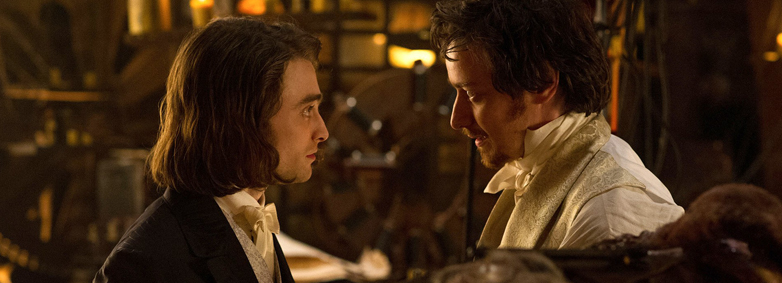
There’s magnetism a foot as the electric talent of James McAvoy and Daniel Radcliffe jolt Mary Shelley‘s gothic horror back into life.

This romping reinvention relocates the story to London and is told in flashback by Radcliffe’s hunchback Igor.

Lurching from action set piece to another, it has someone’s tongue stitched firmly in it’s cheek.

McAvoy gives a gleefully twitching turn as the mad scientist who wants to prove death is temporary by recycling dead bodies and applying shock treatment.

Recreated as a Victorian gentleman adventurer, he’s a monster mash-up of Robert Downey Jnr’s Sherlock Holmes (2009) and Hugh Jackman’s Van Helsing (2004).

Recognised as talented pair of hands, Igor is rescued from life as a brutalised circus clown by McAvoy’s mad medical student Frankenstein.

He’s the brains of the partnership with the choice cuts of dialogue, while Igor is the heart, feeding off the rump scraps of the script.

Soon the pair are in the laboratory and up to the elbows in blood and gore.

While Victor is working the graveyard shift cutting up cadavers to complete a creature, Igor and a trapeze artist called Lorelei practise making life the old fashioned way.

Better known as Lady Sybil from TV’s Downton Abbey, Jessica Brown Findlay role is only really required to add a pretty face to the bones of the action.

Unsurprisingly the finale involves a castle, a reconstructed cadaver and a lightning storm.

If it’s not quite the exquisite show of depraved lunacy a bystander claims he hopes to see, Victor Frankenstein does manage to be energetic and knowingly silly.

Under Milk Wood

Director: Kevin Allen (2015)

This trippy and licentious adaption of the famous Dylan play is entertaining, coherent and consistently bold.

It’s my introduction to his nightmarish verse of seaside misery and is an eye and ear opening experience.

Commissioned by BBC as a radio play and later adapted for the stage, the play was completed in by the Welsh poet shortly before his death in New York aged 39.

Set in the fictional Welsh fishing village of Llareggub. The name is pointedly ‘bugger all’ spelt backwards.

Described as ‘a small decaying watering place’, it hums to the sound of pagan rituals, a male voice choir, much organ music and a brass band.

The visual cacophony of saturated colours, blurred focus and obscure camera angles creates a vivid and disturbing dreamlike world.

A first film version in 1972 starred Hollywood greats Richard Burton, Elizabeth Taylor. This one has a grizzled Rhys Ifans and a comely Charlotte Church.

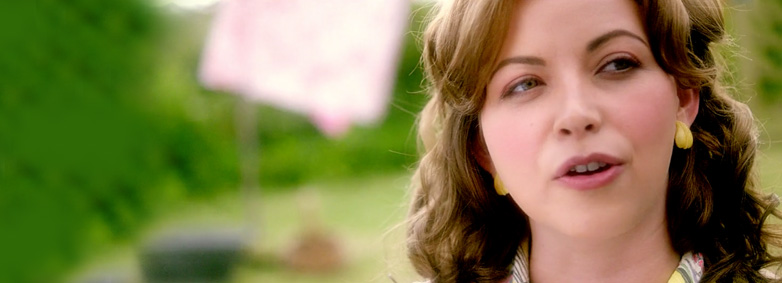
The artist formerly known as the voice of an angel gamely joins in the bawdy business. She’s confident on camera and showcases her talent with a touching torch song in a slow jazz style.

Ifans narrates through the character of the blind Captain Cat. The Welshman relishes the poetry and his confident, lyrical delivery is a major strength.

The Captain guides us through the dreams and fantasies of the sleeping inhabitants with names such as Nogood Boyo, Sinbad Sailors, Mrs. Willy Nilly and Organ Morgan.

They’re a collage of gossiping grotesques preoccupied with lust, loss, longing, murder and madness.

The play’s lack of narrative flow and moral navigation leaves us bobbing about on a murky tide of humanity without the safe harbour of a climax.

I watched the English language version and the Welsh language version is the UK’s submission for the Best Foreign Language award at next year’s Oscars.

I wish it the best of British luck.

Lost River

Director: Ryan Gosling (2015)

A mother struggles to keep her family safe in this challenging and contemporary nightmarish fairytale.

Director Gosling can’t be faulted for a lack of ambition in his directorial debut, it’s the Hollywoods heart-throb’s execution of his underdeveloped story that let’s him down.

Billy (Christina Hendricks) is three months behind on the mortgage and local bank manager Dave (Ben Mendelsohn) suggests she takes a job with Cat (Eva Mendes)

She runs a local cabaret, owned by Dave. It’s a strange, credit card-accepted-only place where the acts involve the dismemberment of beautiful women. The audience gleefully lap up this conflation of sex and violence as bloody entertainment.

However it’s downstairs in the secret chamber where the girls can make the real money but the fearful Billy is reluctant despite the pressure to do so.

Meanwhile her eldest son Bones (Iain De Caestecker) is friendly with Rat (Saoirse Ronan) who lives next door with her grandmother.

Their tentative relationship is threatened by the local hardman called Bully (Matt Smith). Bones has fallen foul of Bully for stealing copper pipes and the plier-wielding psychopath is out for revenge.

It is an apocalyptic setting, there’s no internet for a start. The bureaucracy still operates though.

The destruction of the man-made environment is ongoing; sledgehammers smash through walls, bulldozers rip down houses, buildings are burnt to the ground, there are burnt out cars and dinosaur statues. The elemental power of fire and water are recurring motifs.

Detroit and its astonishing urban decay are exploited to good effect; roads are swamped by a green and aggressive mother nature. Zoos are empty, neighbourhoods are abandoned.

Encounters with random people seem unscripted and there’s far too much improvisation to too little effect. Dialogue is sparse and there are no real conversations but lots of questions asked in an open-ended teenage way.

Insufficient menace and tension are generated by a languid pace.

In natural light Gosling throws in every shot he has heard of with no rythym or reason; dutch angles, tracking shots, overhead pans, shifting focus – and all in the first five minutes.

It does possess a strong sense of colour with many scenes saturated, giving Hendricks hair and complexion a startling vivacity.

There’s nothing wrong with the work of editors Nico Leunen and Valdis Oskarsdottir or of cinematographer Benoit Debie – just a lack of cohesive thought in preparing the shoot.

The soundtrack is a curious combination of industrial noises and old melodies; Mendelsohn gives an unexpected performance of Bob Nolan’s 1936 western song Cool Water.

As an actor Gosling has made some interesting work with director Nicholas Refn and is strongly influenced by his work. There’s also touches of David Lynch though this is not necessarily a compliment.

More random ideas bandied about include the character of Rat’s Grandmother who has been mute since her husband died building a reservoir. She watches the video of her wedding day on a loop, echoing Miss Havisham in Great Expectations.

All the actors commit themselves to the directors vision and some are familiar with him. Both Mendelsohn and Mendes worked with Gosling on The Place Beyond The Pines (2012) while Hendricks appeared in the Refn’s Drive (2011) with Gosling. Ronan appeared in the similarly fairytale inflected Hanna (2011).

Lost River feels like a film shot with the intention of finding itself in the edit. It may still be looking.

Frozen

Director: Chris Buck & Jennifer Lee (2013)

Wrapped up in sisterly love, this snow-filled Disney animated adventure is exciting, funny and even moving – but sadly never in sufficient qualities to justify it’s being nearly two hours long.

Apparently ‘inspired’ Hans Christian Andersen’s The Snow Queen, it too often evades the dark icy heart of the fairytale.

Unapproachable Elsa (Idina Menzel) is the queen with the power to create snow and ice. She is a misunderstood and feared character who falls out with her sweet and ditzy sister Anna (Kristen Bell).

After Elsa accidentally uses her power, a summer instantly turns to permanent winter. She struggles to control her own magic so she is accused of being an evil sorceress and driven away into the mountains.

It is left to Anna to trek into the wilds, reconcile Elsa with her subjects and subdue the weather.

The animation is brilliant and the ice palace building sequence will send shivers down your spine. Lighthearted comic buffoonery balances the action which mostly involve being chased downhill by ice monsters and hungry wolves.

Along the way they make friends with comedy sidekicks including a mountain man called Kristoff (Jonathan Groff), his reindeer named Sven and Olaf (Josh Gad) a snowman. He’s the the most fun character on show but also the most inconsequential.

The annoying dialogue is, like, totally California teenspeak, except for Sven the reindeer, who is mute but a far from dumb animal.

The script has problems, not least the lack of a readily identifiable, hissable villain. Yes there’s a giant snow troll but the drama rests on Elsa changing her mind. A nicely dark opening chapter is followed by a long and middling middle section.

Plus Frozen has two feisty female characters but doesn’t make the most of them. We see too little of the more interesting Elsa and spend too much time with Anna contemplating her romantic interests.

 Elsa belts out the excellent song ‘Let It Go’ but two weak and unnecessary songs (yes I’m talking to you Olaf the snowman and you, tiny trolls) slow the pace and lengthen the running time.

Everything heats up for the finale and delivers the film’s heartwarming message that love is more powerful than fear. Awww.

Elements of Frozen suggests someone at Disney saw the record-breaking worldwide box office returns of the theatrical production of Wicked and decided they wanted a piece of the action.

Based on Gregory Maguire‘s novel  Wicked: The Life and Times of the Wicked Witch of the West in turn based on The Wizard of Oz by Frank L Baum. The success of Wicked the show was due to tapping into the under-exploited market serving young teenage girls. Frozen methodically sets out to exploit the same rich profit seam.

Her undoubted talent notwithstanding, it’s no coincidence Idina Menzel played the role of powerful but misunderstood witch Elpheba in Wicked before playing the powerful but misunderstood witch Elsa in Frozen. Nor is it a surprise Frozen’s signature tune Let It Go could easily be slipped into the Wicked songbook. In fact more than one song could be – as the Honest Trailer recognises.

Since this review was first penned Frozen has become a global phenomenon. A sequel is on the way and of course there’s the short film Frozen Fever being shown in cinemas before Disney’s Cinderella. Which I enjoyed more.

Cinderella

Director: Kenneth Branagh (2015)

There are no surprises in this sweet, stately and straight-forward fairytale which Disney intends to be universally accepted the definitive version.

A non-revisionist extension of the Disney brand, it begins with once upon a time and ends happily ever after.

Unlike Disney’s earlier folklore forage this year Into The Woods or last year’s Maleficent which added a different perspective to European fairytales, Cinderella adds nothing new. Renaming Prince Charming as Kit is as far as reinvention goes.

Instead it’s determinedly old-fashioned, resolutely traditional telling of the tale; majestic, confident, warm and enchanting. At it’s centre is a message of how important it is to have courage and be kind.

With the magical assistance of her fairy godmother, the put-upon Cinderella is saved from an unjust life of drudgery by her handsome Prince Charming.

From cast to costumes to carriages, it is astonishingly beautiful, taking sumptuous pleasure in the smallest detail and director Brannagh keeps the pace steady enough to enjoy them.

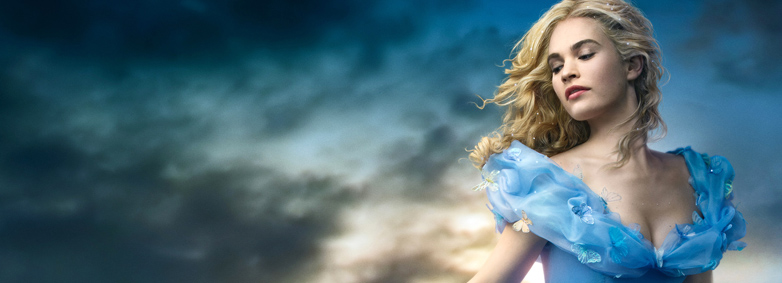
Following the death of her wealthy father, Cinderella (Lily James) is left at the mercy of her icy stepmother Lady Tremaine (Cate Blanchett) and spoilt step-sisters Anastasia and Drizella (Holliday Grainger and Sophie McShera).

Tremaine is a black-hearted widow who is deeply disappointed with life, as wasp-tongued as Cinders is wasp-waisted,

Our heroine is forced to sleep in attic and performs all the household chores. Her only friends are four animated cute and charming mice.

While out riding she meets the dashing Prince Kit (Richard Madden) and both pretend to be other than they are. Both are smitten but called away to their duties.

The dying King (Derek Jacobi) orders Kit to find a wife to provide an heir and protect the future of the Kingdom. So Kit holds a fabulous ball and demands attendance of all the maidens in the land, noble or common.

Barred from attending by her step-mother, Cinder’s fairy godmother (Helena Bonham Carter) appears.

She turns a pumpkin into a carriage, mice into horses and lizards into footmen. Cinders dons a pair of glass slippers and is off to the ball – but of course only until midnight when the magic will wear off.

Meeting each other on the dance floor, Kit and Cinderella are a handsome pair, not wildly exciting but pleasant with graceful dance moves – expect copycat routines on the next series of Strictly Come Dancing.

Cinderella’s race to return home is the most fun part of the film. It’s an exciting, energetic and humorous race against time.

Bonham Carter has fun as the fairy godmother and Jacobi adds acting gravitas as the King.

Rob Brydon appears briefly and manages to be funny and outstay his welcome, neatly encapsulating his entire career in a cameo.

Production Designer Dante Ferretti provides an astonishing wealth of detail amid glorious sets, extravagant furnishings giving texture to the fairytale world.

Costume Designer Sandy Powell dresses the cast in fabulous clothes and uniforms. Their heightened colours offer a promise of magic.

With many gasps, groans, giggles and growls padding out the vocal performances, the dialogue is far less imaginative than the design. It’s regularly abandoned in favour of the music of composer Patrick Boyle.

While his orchestral score swells and falls like Cinderella’s corseted bosom, Branagh delivers a series of sweeping camera moves that reveal yet more opulent design.

Dubbing for international markets seem to at the forefront of the film’s construction which opens and begins with a voice over.

The actors finish their lines with open mouths and the editing and direction provide an unusual amount of speaking off-camera. It’s a wonder they didn’t go full Leone and put cigars in everyones mouths to disguise the lip movement.

Disney of course have their own 1950 animated version which the script acknowledges with a Bibbidi Bobbidi Boo as the Fairy Godmother casts her spells.

But this is not just a movie, it’s an irresistible cavalry charge of cultural colonisation. The House of Mouse have mobilised their creative heavy armaments to annex the world of Cinderella and indisputably incorporate it as part of the Disney Empire. Having claimed forever the rich, fertile and lucrative source material, they’ll sweat the asset in due course.

It’s no surprise Cinderella’s mice play a pivotal role in the finale.

Preceded by a short featuring the characters from Frozen which is either utterly amazing or annoyingly entertaining depending on your view of that massively successful film.

The end of Cinderella shows the newly wed royal couple being presented on a snowy balcony to an adoring public with snow-clad mountains in the background.

Unless I’ve missed a memo and this is old news, it seems as if Disney are tying the two films together in a continuous universe, not unlike Disney’s rmega-franchises; Marvel and Star Wars, with Kit and Cinderella the parents of Elsa and Anna.

This lends Frozen some of Cinderella’s folklore resonance and makes the more staid Cinderella more palatable to the little ones.

As strong and monumental as this film is, even in playful homage it’s always dangerous to reference your cinematic betters – as Cinderella does with a throwaway ‘As you wish.’

The Tale of the Princess Kaguya

Director: Isao Takahata (2015)

Magical and moving, this animated folktale is charming, moving and a beautifully crafted joy, bursting with humour and life.

When sent to the Earth as punishment, a young Moon spirit discovers that mortal life involves responsibility and pain as well as love.

Deservedly nominated for best animated feature at the Oscars, it’s a captivating combination of glorious pencil-work and delicate pastel colours.

Working in a secluded grove, an old Bamboo Cutter (James Caan) is startled when a bright light reveals a tiny female form inside a tree. The kindly man takes her home to his wise wife (Mary Steenburgen) where the sprite changes miraculously into a baby.

Being without children they resolve to look after the baby as if she were their own. She grows at a prodigious rate, sprouting from baby to toddler in a single crawl.

The Princess is named ‘Li’l Bamboo’ by the local children and joins the gang of Sutemaru (Darren Criss) with whom a strong emotional bond develops.

Loyal, clever, impetuous and mischievous, Li’l Bamboo accelerates through a joyous, gentle and comic childhood in a wonderful rural adventure land. It’s alive with gorgeously animated birds, frogs, spiders, pigs, snakes, squirrels, beavers, fish and deer.

Returning to the magic grove the Bamboo Cutter finds a tree filled with money, then another with swathes of fine cloth. He concludes Li’l Bamboo is a true princess and must be raised as one.

So he builds his daughter a palace in the Capital and when she turns 13 years old he moves the family there to live, away from her friends.

Stern Lady Sagami (Lucy Liu) is employed to teach Li’l Bamboo courtly social graces but the spirited girl rails against her tutoring and the subduing of her personality. She mocks the painful beauty procedures and rejects the subservient idea of womanhood.

At a three day banquet to mark her coming of age, she is given the name Princess Kaguya and to please her father tries to become an obedient, studious daughter. With her great beauty and social skills she attracts a multitude of suitors, including the greatest nobles in the land.

But the Princess isn’t impressed by their status and to her father’s consternation Kaguya issues them impossible tasks to prove their love.

However she’s aghast when one by one they return to make her keep her word and she makes a rash wish which changes her life.

It is more measured in pace and tone and lacks the delirious colours and engineered wackiness of contemporary megaplex crowd pleasers such as Disney’s excellent Big Hero 6. Plus with a running time of 137 minutes it is for older rather than younger children.

With it’s strong-willed country girl who learns of life in the city it’s similar to the story of Heidi which director Takahata adapted in 1974. It is a tale celebrating life but also reflective of grief, loss and suffering, heralding the virtues of honesty and friendship over wealth and looks, taking to task the way female identity is constructed for the benefit of men.

The animation is impressionistic in style with characters and backgrounds being drawn on the same page – unlike in traditional cel animation where characters are drawn separately and superimposed onto the background. It is a wonderfully immersive and suitably organic technique, emphasising the passion for the story in every exquisite and entertaining frame.