I Saw The Light

Director: Marc Abraham (2016)

This befuddled biopic sheds little light on the life of country music maestro Hank Williams.

It begins with a spine tingling rendition of his classic ‘Cold Cold Heart’, but it’s sadly all down hill from there.

Though the star of TV’s The Night Manager Tom Hiddleston sings his heart out, he chooses to hide his looks and charm under a cowboy hat. He does a decent of copy of Williams’ agitated crab stage gait.

By the time Williams died in 1953 at the tragically young age of 29, he had became one of the most influential singer songwriters of his time.

But you wouldn’t know that from the episodic and jumbled narrative given to us here.

We first meet Hank when he’s already enjoying a degree of success with his band and a regular slot on local radio. He has ambitions to appear on The Grand Ole Opry, the number one TV destination for country singers.

An impetuous, tempestuous, immoral, feckless,unreliable husband father and artist, the narrative is a familiar rock biography checklist of an alcohol fuelled career slide as he loses gigs, wives and friends.

But it’s presented full of leaps, detours and evasions, offering random snapshots of his life instead of a coherent story.

We’re spoon fed a brief resume of his success at the end, but it’s provided without context and leaves us with no greater understanding of his importance to country music or wider cultural impact or degree of success.

The classic songs Williams wrote such as ‘Your Cheatin’ Heart’ are short changed.

And so are the women. They’re presented as grasping and fertile while Hank takes no responsibility for his own behaviour.

Elizabeth Olsen is a determined presence as his wife Audrey, but is portrayed as a humourless self serving money grabber.

Except for Hiddleston the performers don’t seem to be enjoying themselves, and I didn’t either.

Florence Foster Jenkins

Director: Stephen Frears (2016)

Big screen diva Meryl Streep launches a ferocious assault on your ears in this biopic of the worlds worst opera singer.

As the title character, her ignorance of a lack of talent is a punishing off note joke.

But if you can endure Streep’s cacophony of comic caterwauling, there’s a lot of enjoyment in the tender chemistry created with her on screen husband St. Clair Bayfield, played by Hugh Grant.

It’s New York 1944 and heiress Florence is an overly generous patron of the arts whose entourage exploits her good nature for cash.

Determined to aid the war effort, she books herself a gig at Carnegie Hall and gives a thousand servicemen free tickets.

This threatens St. Clair’s luxurious life as neither he, tutors or muscians dare tell Florence the painful truth about her lack of ability, for fear of being put out on their arias.

Director Stephen Frears’ lack of visual ambition is compensated by adhering to the narrative and focusing on character.

He’s rewarded with two marvellous performances as the leads stretch their throats in extraordinary ways.

Grant has never better. With the fading of his still considerable leading man looks, his tremendous talent shines ever brighter. He gave a light comic masterclass in The Man From U.N.C.L.E. (2015) and here he dances like a young James Stewart.

Streep was last seen singing on screen as a bar room rocker in the weak Ricki And The Flash (2015) and here gives a performance of grand neurotic eccentricity.

The stars essay a complex relationship while the script saves its mockery for the sycophants who surround them.

Rebecca Ferguson is under served as St. Clair’s lover but Nina Arianda is show stopping as a ticking blonde bombshell, threatening blow up the whole charade whenever she speaks her mind.

This is the second telling of the story this year, after the French language version Marguerite (2016) which won 4 prestigious Cesar awards.

This version is undemanding with broad appeal, and you don’t have to appreciate opera to enjoy it.


These Final Hours

Director: Zak Hilditch (2016)

With the end of the world only twelve hours away, society has descended into an orgy of sex, suicide, booze, drugs and violence.

And that’s just the first five minutes of this scorchingly apocalyptic Australian road movie.

A meteorite has caused Europe, Africa and the Americas to be engulfed in an rolling inferno, and Perth is last on the list.

Nathan Phillips is well cast as buff surfer dude James, desperately racing to a party to be with his girlfriend.

With it’s vehicle hopping, dry humour and brutal violence, this is arguably an unofficial and worthy prequel to George Miller’s magnificent Mad Max: Fury Road (2015). It offers an explanation of how society reached there from here.

The smart script by the director Hilditch offers James choices whose actions flesh out his character. Further bonus points are gained by never compromising the central premise.

Cinematographer Bonnie Elliot exploits the local light in extraordinary ways by saturating the screen in blistering red, orange and yellow.

Plaudits also to the production designer Nigel Davenport for stretching the budget and providing vehicles in a suitably searing shades of ochre.

Similarly to Max, James is defined by the relationships he has with the women in his life.

Jessica De Gouw and Kathryn Beck offer bikini clad support as James’ girlfriends Zoe and Vicky. Lynette Curran steals a scene as his mother.

En route to see Vicky, James’ rescues a young school girl from a pair of paedophiles.

Angourie Rice gives a remarkable performance as the sweet and straight talking Rose, who insists on being taken to her waiting father.

These reluctant fellow travellers offer each other the possibility of redemption as they work out what is really important in the short time they have left.


Ratchet And Clank

Director: Kevin Munroe (2016)

From Super Mario Bros. (1993) to Street Fighter (1995), Hollywood has a low scoring rate when trying to turn video games into cinema hits.

Never threatening the high score of soon to be remade Lara Croft: Tomb Raider (2001) or Resident Evil (2002), Ratchet And Clank features a defective robot and an alien mechanic teaming up to save the universe.

Based on the game of the same name, this is a poorly assembled and malfunctioning sci-fi animated adventure.

More a sugar fuelled distraction than a coherent movie, it’s written for and possibly by attention deficit kids wide eyed on popcorn and fizzy drinks.

David Kaye voices Crank, a defective War-bot. Unlike his monstrously armoured production line robot siblings, he’s petite, prissy and pacifist.

Clank is scheduled for demolition by Paul Giamatti’s Chairman Drek. He’s employed Armin Shimerman’s evil scientist Doctor Nefarious to build an army of robot assassins to annihilate the Galactic Rangers.

The Rangers are a dim and trigger happy team of celebrity loving law enforcers, lead by the square jawed and muscle bound buffoon Captain Qwark, voiced by Jim Ward.

Crash landing on a distant world, Clank is rescued by Ratchet. Energetically voiced by James Arnold Taylor, he’s some sort of orange space fox.

A small mechanic with big dreams, Ratchet whisks his new friend away to warn the Rangers.

With the least possible attention to detail in the animation, character, plot or dialogue, it’s a manic, mirthless mash up of movie spare parts, many borrowed from the Star Wars films.

But sadly not just the good ones. There’s a planet destroying weapon and pod racing. Architecture is republican era Alderaan.

The script throws in jokes about selfies and hashtags in a futile bid to be relevant. At one point a robot henchmen chews up a smartphone as punishment.

For the intended audience it’s probably the most terrifying moment in the whole film.

The release date is presumably to capitalise on the UK Bank holiday, pitching itself at all the kids too young to see Captain America: Civil War (2016) or have already seen The Jungle Book (2016) and Zootropolis (2016).

Sylvester Stallone, Rosario Dawson and John Goodman offer recognisable names to tempt unwary parents with a mirage of quality.

It’s game over already for this wannabee franchise.

Golden Years

Director: John Miller (2016)

With grand designs on Hollywood, TV presenter and star of DIY SOS Nick Knowles has knocked out this very British comedy.

His workmanlike script is an off the shelf construction of stately homes, incompetent cops, cups of tea and bare arses.

As mild mannered retiree Arthur, Bernard Hill leads a solid cast that includes Una Stubbs, Alun Armstrong, Simon Callow and Virginia McKenna.

They give this gentle crime caper a dash of colour and a veneer of respectability.

Accidentally discovering an aptitude for bank robbery, Arthur plans to save the local bowling club from closure and sets about raising the funds in a Robin Hood stylee.

The story highlights the contemporary issue of OAP’s being fleeced of their pensions by robber banks, and makes a point of the invisibility of the elderly in society.

It bestows vitality on its characters and respect to its audience by wisely saving its mockery for the media attention seeking copper in charge of the robbery investigation.

Brad Moore as Detective Stringer channels his inner David Brent in a perma-tanned performance.

Although it offers mild entertainment and is difficult to object to, it all feels like the movie version of a never seen 1970s TV sitcom.

Breaking the golden rule of cinema finance, Knowles has used his own cash to fund the project.

There’s definitely a screw loose somewhere.

Heaven Knows What

Director: Ben & Joshua Safdie (2016)

This raw tale of homeless heroin addicts refuses to offer easy solutions or heavy handed homilies.

It’s a loosely plotted account of dependancy, desperation and destitution, told with a blessed lack of sentiment or backstory. Events are given an immediacy through cold location work, shot guerrilla-style with handheld cameras.

New York is presented as an overcrowded, dirty, concrete conurbation where the state uses medicine to control the population. The internet exists but technology intermittently fails.

Adding an astonishing synth soundtrack to the opening scenes of dystopia and isolation, it feels like a 1970s sci-fi prophesy of the 21st century. And it’s set in the present day.

Framing the drama in this way affords us a degree of separation from events, necessary for us to endure watching them.

Based on her own memoir of life on New York streets, Arielle Holmes is compellingly aggressive and agitated performance as Harley.

She rebounds between sadistic addict Ilya and drug dealer Mike, leading to a running battle between the abusive pair. Caleb Landry Jones and Buddy Duress are grubbily convincing.

Littered among the mental illness, overdoses, shoplifting, fighting and begging are small random acts of kindness. They fuel a shambling camaraderie among the down and very nearly outs.

What seems to be dangerous, threatening and unhinged behaviour to bystanders, we recognise as being an understandable reaction to Harley’s extreme circumstance and limited options.

Heaven knows how she survived, not all her acquaintances are so fortunate.


Captain America: Civil War

Director: Anthony & Joe Russo (2016)

Hard on the heels of the showdown between Batman and Superman in Dawn of Justice  (2016) comes another super-powered spandex smack down.

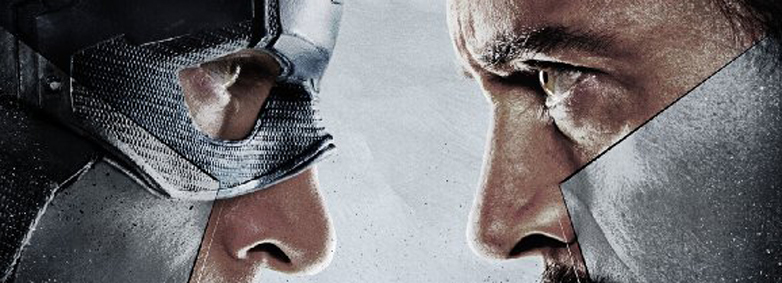
This time it’s Chris Evans and Robert Downey, Jr. facing off as Captain America and Iron Man.

Although nominally the third stand alone Captain America film, it plays like a third Avengers movie and deals with the fall out of Avengers: Age of Ultron (2015).

But Civil War lacks writer/director Joss Whedon’s ability to build a strong narrative and offer a spotlight for each major character.

Although the Russo’s bring a harder edge to the action, they haven’t Whedon’s grasp of group dynamics or comedy. They seem unable or unwilling to nurture interesting female characters, which is Whedon’s absolute stock in trade.

Here the blunt banter and sparse stabs of humour seem forced rather than growing organically out of character.

Many jokes seem parachuted in by executives and there are more than a few about gags about ageing. They lend the movie the stale air of a spandex version of Sylvester Stallone’s Expendables franchise.

The ferocious and superbly choreographed opening action scenes are at the very top end of Civil War‘s 12A certificate.

But the story is cluttered with too many minor characters. New ones are introduced to flag up their own stand alone solo movie and there’s a much herald appearance of a rebooted favourite.

Anthony Mackie and Don Cheadle return respectively as sidekicks War Machine and The Falcon. The Hulk and Thor are noticeably absent.

Young Brit Tom Holland steals the film with his wide eyed chatterbox take on Peter Parker.

It’s a shame his Spider-Man CGI alter-ego is so poorly rendered, all the more puzzling as the generally the film looks fantastic in its IMAX 3D version.

A great deal of time is set up the Black Panther (2018) movie. Marvel seem so eager to involve and so self pleased at promoting a black character they haven’t looked too closely at how he’s presented.

Removed of the cowl and claws of Black Panther, Chadwick Boseman is fine in the undemanding role as the urbane and irony free African prince T’Challa.

However he’s prone to beginning sentences with ‘in my culture..’. Maybe people do speak like this but it reminded me of Ron Ely era Tarzan. His dialogue and demeanour seem freshly minted from the preconceptions of the white New Yorkers who created him back in 1966.

William Hurt and Martin Freeman are introduced as part of the Black Panther thread.

While Jeremy Renner gives the most lacklustre performance of his career as Hawkeye, Paul Bettany does some lovely work as the Vision.

The script can’t work out what to do with him or his ill defined powers, so opts for ignoring him whenever it can. Notably during the fighting.

Dragged down into the melee and still without a film to call their own, the only two female heroes are Scarlett Johansson’s Black Widow and Elizabeth Olsen’s Scarlet Witch.

At heart Civil War wants to be a hard hitting action thriller. The tone is suitably subdued as the script deals with politically compromised ideals, murdered parents and revenge.

Then it remembers the audience and bursts into blasts of candy coloured action.

Remorseful at collateral deaths of civilians during an Avengers mission, the once independent Iron Man is ready to accept UN oversight of The Avengers team.

Bizarrely for a soldier, Captain America doesn’t agree with operating under a hierarchal command system.

A UN conclave are about to sign an accord to will curtail superhero activity when they suffer a terrorist attack.

Number one suspect is Captain America’s friend turned terrorist agent Bucky Barnes. AKA The Winter Soldier.

Despite being played by the physically impressive Sebastian Stan, he remains an irritatingly anonymous figure.

Captain America is convinced Bucky is innocent and sets off to find him before the CIA do.

This puts him at odds with Iron Man, leaving the rest of The Avengers team to decide with whom they stand.

As allegiances shift and romance blooms across the barricades, loyalties are stretched and snapped.

Meanwhile there’s a sinister plot involving Daniel Bruhl’s shady scientist and a super enhanced elite death squad.

Easily the best part of Civil War is the promised punch up between the host of heroes.

It’s an imaginatively conceived and entertaining executed bout which leaves the heroes damaged and divided.

Unfortunately it happens about half way through the running time, so the rest of the film feels very anti-climactic.

And after two and a half hours of spandex clad action, I was beginning to chafe.


Jane Got A Gun

Director: Gavin O’Connor (2016)

Since winning her best actress Oscar for ballet based drama Black Swan (2010), Natalie Portman’s career has been noticeably quiet.

In this small time western with occasional epic leanings, she’s back with a bang as Jane, a pistol packing farmer.

The genre that refuses to go to boot hill is on a decent run. Not just with high profile recent Oscar winners The Revenant (2016) and The Hateful Eight (2016) but also taut tales such as Mads Mikkelson’s The Salvation (2015) and Kurt Russell’s Bone Tomahawk (2016).

Jane Got A Gun is a blend of genre motifs and contemporary hot topics, offering a tale of revenge, rape, infanticide and sex trafficking among ranches, brothels and shoot outs.

Considering its troubled production history it’s remarkable how competent and coherent the finished film is.

In May 2012, it was announced that Natalie Portman would star in the film as the title  Lynne Ramsay would direct. Michael Fassbender was reported as cast in the hero role and Joel Edgerton was cast as the villain.

Scheduling conflicts lead to Edgerton replacing Fassbender and Jude Law stepping into Edgerton’s boots. When director Lynne Ramsey was replaced by Gavin O’Connor, Law was replaced first by Bradley Cooper and then by Ewan McGregor.

Cinematographer Darius Khondji also left the production, and was replaced by Mandy Walker. And rewrites followed.

Jane is saddled with grief, a dirt poor farm and a wounded husband Ham, the underused Noah Emmerich.

Her gun is a mumbling Joel Edgerton who plays Jane’s alcoholic war hero and ex lover.

Their personal chemistry is no more lacking than any other relationship in the film.

Jane employs Dan as protection from Ewan McGregor’s pantomime villain, a notorious outlaw who has vowed to kill Ham.

As Bishop’s scurvy faced posse arrive for revenge, the dead bodies mount up alongside the spare horses.

The familiar narrative has a strong through line, even if some of the scenes fit awkwardly together.

There are some splendidly cinematic sweeping vistas and agreeable rough and rugged design.

But there’s a lack of chemistry and though the climax doesn’t fire blanks, it never quite hits the emotional targets it’s aiming for.


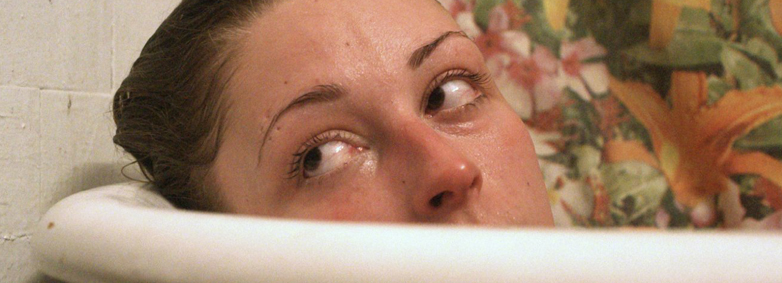
Friend Request

Director: Simon Verhoeven (2016)

This silly horror show about internet stalking opts for cheap slasher action and ignores the very real dangers of the virtual world.

Lurking at it’s dark heart is a cabal of well worn ideas such as secret sects and black magic.

Wasps buzz angrily and the scrabbly screechy soundtrack is laden with ominous echoes.

Alycia Debnam-Carey stars as student Laura who accepts a social media friend request from classmate Marina, played by pallid Liesl Ahlers.

When the lonely goth commits suicide on camera, Laura’s social media account takes on a life of its own, publishing the video and offensive messages.

As Laura’s friends suffer violent deaths, she must turn cyber sleuth to save herself and importantly, her diminishing online popularity.

It’s difficult to work out if the pair of cops investigating the case are a signifier of satirical intent. There are numerous unintentional laughs.

Presumably  in a bid to prevent legal problems, the specific social media site is never identified and the F word is never mentioned. But I could think of a few.

The Divide

Director: Katharine Round (2016)

There’s a serious lack of facts in this wooly minded documentary which wants to change the world.

It claims extreme levels of relative inequality within the UK and US are the main driver of social problems such as ill health, substance abuse and crime. Advertising is blamed for stimulating demand for unnecessary excessive consumption.

Archive news footage is mixed with testimony of historians and economists.

There’s a sloppy failure to define poverty or present a single chart or graph. Instead the narrative such as it is relies on emotive anecdotes and opinion to make its point.

Abandoning its starting point of 1928, it briefly raises the spectres of Thatcher and Reagan before landing in the present.

Seven people, including a rapping Scots alcoholic, a Wall Street psychologist and a Sunderland care worker, are used as examples of the unhappiness in both the rich and poor.

Apparently being wealthy does not make one happy, a theory I’d like to put to the test.

Described as a ‘a call to arms’ The Divide is propaganda for change but forgets to offer a solution to the ills it idnetifies.

Without which it amounts to little more than a cry of ‘it’s not fair’ – behaviour I don’t tolerate in my five year old.