La La Land

Director: Damien Chazelle (2017) BBFC cert: 12A

Be swept off your feet by this swooning romantic musical.

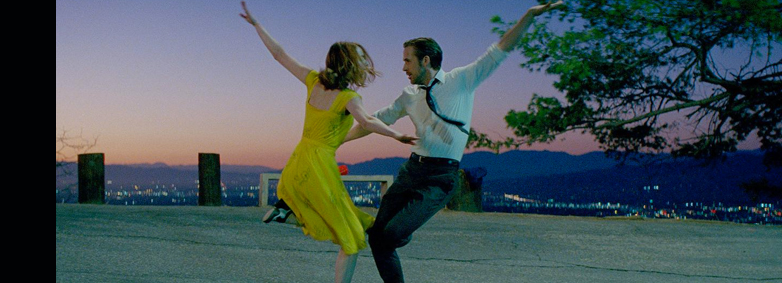
Unashamedly nostalgic for the music, movies, stars and Los Angeles of yesteryear, this fabulous fantasy is a sumptuous love letter to Hollywood’s golden age classics such as Singin’ In The Rain (1952) and An American In Paris (1951).

The ridiculously attractive Emma Stone and Ryan Gosling star in their third film together, and their irresistible chemistry continues to burn through the screen. While neither are great singers or dancers, the film doesn’t pretend they are, adding to the honesty and charm of their performances.

Their characters meet in a gridlocked highway, a metaphor for their lives going nowhere. As the traffic jam becomes a joyful dance number, it’s tempered with the sting of frustration, and the tone scene is set for the story to come.

Gosling plays Sebastian, a struggling jazz pianist with dreams of opening a jazz club. His life takes a left turn when he meets the aspiring actress, Mia. Between auditions she works as a coffee shop waitress at the Warner Brothers studio.

Matching her dance partner step for step but having the more difficult part of doing it backwards and in high heels, Stone offers astonishing levels of heartbreaking vulnerability.

Though Gosling’s talent means he’s far from just window dressing, Stone owns the film. As the pair follow their dreams, they discover compromises must be made when balancing art and commerce.

La La Land‘s deserved record breaking sweep of seven Golden Globe awards has seen bookies make it the favourite for this years top Oscars and its easy to see why.

This is a dreamy, delirious and delightful concoction of high stepping choreography and toe tapping compositions. It’s bursting with sexy energy, eye popping colour and soaring ambition.

Go ga ga for La La Land and shower yourself with tinsel town stardust.

@ChrisHunneysett


CHI-RAQ

Director: Spike Lee (2016) BBFC cert: 15

Anger is the defining emotion of Spike Lee’s films and there’s no denying the blistering power of his latest brash, sexy, and rap-filled essay on the state of the US.

Having produced, directed and co-written this satirical musical, he has updated a classical Greek comedy with an irresistible raucous energy.

As Lysistrata, Teyonah Parris is dynamite in an afro and high heels. Motivated by the shooting of a bystander, she persuades the women on both sides of the Chicago gang divide to withhold sex from their boyfriends as a means of preventing further violence.

Her charismatic criminal boyfriend Chi-Raq is one of the unhappy men. He shares his name with the gang-ridden south side of Chicago, an area more deadly to locals than Iraq to US soldiers.

Samuel L. Jackson has a ball a as zoot suited Greek chorus rapping straight to camera. Jennifer Hudson, Angela Bassett, Wesley Snipes and John Cusack form the backbone of a strong support cast.

@ChrisHunneysett

The Beatles: 8 Days A Week

Director: Ron Howard (2016) BBFC cert: 12A

This rock and roll documentary examines how the touring years of the Fab Four affected their musical output and consequently the cultural landscape of the world.

It’s a triumph of research and editing. Though hugely enjoyable even for a casual fan such as myself, there isn’t much new and the genius you can hear has been around for over fifty years.

Clearly a passion project for director Ron Howard, he mines exhaustively from a wealth of archive material. This allows the band to speak for themselves with their trademark goofy charm and sharp wit.

Journalists from the time contribute their memories and various famous people pop up to declare how much the band meant to their youth, such as an entertaining Sigourney Weaver.

We follow their meteoric rise from the cramped belly of Liverpool’s Cavern Club to become the first ever band to conduct a stadium tour of the US.

Despite unparalleled period of chart success, an exploitative recording contract encourages the ambitious band to hit the road to make some real money.

Due to the boys unprecedented popularity, US authorities were worried about fans’ safety and insisted the group play giant stadiums, leading to their selling out the 56,000 seater Shea Stadium in Chicago.

The bands innate decency and fearless naivety results in their successfully challenging the segregation of audiences in the US south. They also deal with bomb threats, riots and hordes of screaming teenage fans wherever they go.

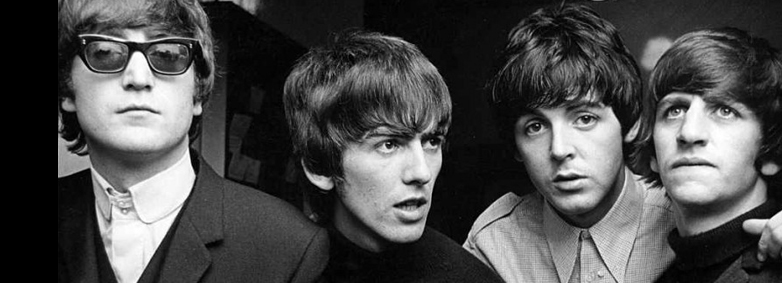
Decisions are made democratically, albeit it’s a democracy where John Lennon is the first among equals. Though we’re spared the creative differences which were to tear the group apart, the on-stage placing of George Harrison between Lennon and Paul McCartney suggests a temporary buffer to the schism to come. The much maligned Ringo demonstrates his almost violent musical contribution to their success.

We see how crucifying schedule of recording and performing contributes to their collective decision to quit touring in August 1966 to focus on recording. A superb montage to A Day In The Life shows how they develop physically, emotionally and artistically.

After a three year hiatus their last ever gig was performed unannounced from the roof of their Savile Row Apple office. This places it firmly in context and it becomes an act of spiritual and creative catharsis.

@ChrisHunneysett

Gary Numan: Android In LA LA Land

Director:Rob Alexander, Steve Read (2016) BBFC cert: 15

1970s synth rock superstar Gary Numan is the very human subject of this refreshingly candid and entertaining documentary.

We follow the surprisingly engaging singer as he decamps from England to LA to reboot his career in the internet era.

A meteoric rise aged 21 with global hits such as Cars and Are Friends Electric? was followed by years in the industry wilderness, massive financial problems and a fall out with his manager, his dad.

Super-fan wife Gemma proves a dab hand with a soldering iron as she keeps their three daughters entertained in their new home. In true rock god style it looks like a castle.

Numan talks with endearing humour and self awareness about the challenges of performing live while coping with Aspergers, depression and anxiety attacks. And the music sounds electric.

@ChrisHunneysett


I Saw The Light

Director: Marc Abraham (2016)

This befuddled biopic sheds little light on the life of country music maestro Hank Williams.

It begins with a spine tingling rendition of his classic ‘Cold Cold Heart’, but it’s sadly all down hill from there.

Though the star of TV’s The Night Manager Tom Hiddleston sings his heart out, he chooses to hide his looks and charm under a cowboy hat. He does a decent of copy of Williams’ agitated crab stage gait.

By the time Williams died in 1953 at the tragically young age of 29, he had became one of the most influential singer songwriters of his time.

But you wouldn’t know that from the episodic and jumbled narrative given to us here.

We first meet Hank when he’s already enjoying a degree of success with his band and a regular slot on local radio. He has ambitions to appear on The Grand Ole Opry, the number one TV destination for country singers.

An impetuous, tempestuous, immoral, feckless,unreliable husband father and artist, the narrative is a familiar rock biography checklist of an alcohol fuelled career slide as he loses gigs, wives and friends.

But it’s presented full of leaps, detours and evasions, offering random snapshots of his life instead of a coherent story.

We’re spoon fed a brief resume of his success at the end, but it’s provided without context and leaves us with no greater understanding of his importance to country music or wider cultural impact or degree of success.

The classic songs Williams wrote such as ‘Your Cheatin’ Heart’ are short changed.

And so are the women. They’re presented as grasping and fertile while Hank takes no responsibility for his own behaviour.

Elizabeth Olsen is a determined presence as his wife Audrey, but is portrayed as a humourless self serving money grabber.

Except for Hiddleston the performers don’t seem to be enjoying themselves, and I didn’t either.

David Bowie & the movies

From Elvis to Mick Jagger and Madonna, most successful musicians gravitate to the big screen and David Bowie was no exception.

Relaxed on camera, practised at performing to cue and no stranger to adopting a stage persona, Bowie was a natural fit for cinema.

However his greatest contribution to cinema wasn’t his thespian ability or his music, but we’ll get to that in a bit.

Never one to repeat himself creatively, Bowie’s film career as an actor suffered for the same reason his recording career.

An inclination to experiment saw him explore creative opportunities with varying degrees of success.

His charisma, intelligence and otherworldly demeanour lent itself to portraying outlandish characters such as an alien, a vampire, a goblin king or a mad scientist, respectively in The Man Who Fell To Earth (1976) The Hunger (1983) Labyrinth (1986) and The Prestige (2006).

An audience watching these films would find it easy to suspend their disbelief with Bowie in these roles, the persistent suspicion being Bowie may have been one or all of these things in real life.

It’s far more difficult to imagine the onetime Ziggy Stardust as an ordinary person, so less successful were his attempts to essay straight roles such as his second world war P.O.W. in Merry Christmas Mr Lawrence (1983).

Unable to secure leading roles, there was a small role as Pontius Pilate in Martin Scorsese’s The Last Temptation of Christ (1992) while more typical were cameos such as in Twin Peaks: Fire Walk With Me (1992).

There were many TV appearances as himself, including one in the short lived Ian Le Frenais and Dick Clement scripted series, Full Stretch (1993).

Far from the best series from the creators of Whatever happened To The Likely Lads (1973-74) Bowie gamely played himself asleep in the back of a limousine.

Away from acting Bowie contributed the eponymous tracks to Cat People (1982) and Absolute Beginners (1986). Two great songs worthy of better films to accompany them.

The latter is a muddled British musical mostly remembered for launching Patsy Kensit onto an unsuspecting world.

Bowie’s singing and dancing contribution lifts the film in what is far less than the sum of its ambitious parts.

The former is a glossy retread of a 1942 classic horror and though a complete bomb on release, Bowie’s track is so good Quentin Tarantino used it as part of the soundtrack to Inglourious Basterds (2009).

Containing narrative based lyrics and dramatic swells, Bowie’s songs contain a cinematic air.

Plus the singer possessed non of the reluctant fear of, say The Beatles, to allow others to creatively use his music.

As a result Bowie’s tracks have been used in part or in whole in over 450 different movies.

This may not be a record for an individual artist but it feels like one.

Yes this includes concert recordings, documentaries and the like, but it’s still an impressive total.

The royalties accrued may have been a nice pension for a man who never retired but I feel he was at least equally interested to see how his music would be adapted and used.

Movie-makers have rewarded Bowie’s faith with a genre hopping mix of films.

From sci-fi such as Guardians Of The Galaxy (2014) to football drama The Damned United (2009) musicals Moulin Rouge! (2001) thrillers American Psycho (2000) and romcoms Pretty Woman (1990) all have benefitted from Bowie’s music accompaniment.

However it’s certain Bowie considered his greatest contribution to cinema to be his most unique and personal, his son.

Duncan Jones’ debut directorial effort was the tremendous sci-fi thriller Moon (2009). This was followed up by the tricksy time-bending action adventure Source Code (2011). Next up is the much anticipated mega budget big screen adaption of online game Warcraft (2016).

From performing to soundtracks and bequeathing cinema an exciting new directing talent, its an extensive legacy for a man who was primarily a rockstar.

David Bowie. 1947-2016

Ricki and the Flash

Director: Jonathan Demme (2015)

Strip out Meryl Streep’s charisma and we’re left with slim pickings in this redemptive rock ‘n’ roll drama.

She plays plucky Ricki, a divorced middle-aged check-out operator who rocks out with her own band in the local spit and sawdust joint at night.

News of her daughter’s divorce and depression sends Ricki flying to her bedside, only to discover her presence is barely tolerated never mind welcomed.

There’s squabbles aplenty as retail therapy replaces psychotherapy, but not much else happens.

There’s talk of attempted suicide and bankruptcy but the most eventful scene involves spilt ice cream and teenage-like strops.

Full of life’s regrets and the guilt of poor parenting, Ricki faces the hardest gig of her life as she struggles to gain the love and respect of her estranged family.

Streep’s acting is as relentless as her singing as she dominates every scene with scant regard to her fellow performers. She delights in being lewd and revels in her pot smoking, hard drinking rock persona.

Mamie Gummer as Ricki’s daughter Julie isn’t over-awed by sharing the screen with her real life-life mother.

Kevin Kline is far form the master of his own house as ex husband Pete and Rick Springfield is whiny as lead guitarist Greg of her racially representative backing band, The Flash.

Fans of the triple Oscar winner and weak cover U2 versions will probably find more to enjoy here than I did.

★★☆☆☆