Ukulele renditions of Taylor Swift and Neil Diamond songs add a new dimension of terror to the apocalypse in this raucous Australian zombie comedy where good taste and restraint are immediate casualties.
Lupita Nyong’o’s talent and charisma are essential to raising the emotional stakes and giving gloss and fresh energy to what could be been a run-of-the-mill exercise in brain-eating carnage.
A cheerfully sweary and bloody antidote to her darkly disturbing and Oscar worthy turn earlier this year in horror movie, Us, Nyong’o plays a wholesome and sweet kindergarten teacher.
A school trip to a petting farm goes off syllabus when the secret military base next door accidentally unleashes a horde of lurching flesh-eating zombies.
Trapped with Nyong’o and her pupils in a souvenir shop are Alexander England’s immature slacker, and Josh Gad’s creepy TV entertainer.
There’s plenty of foul language among the guts and gore and I childishly giggled along as the mayhem erupted into blood splattered violence.
There are few shocks and not much to ruffle your feathers in this Tokyo-set psychological thriller.
Oscar winner and Tomb Raider action heroine Alicia Vikander stars alongside Elvis Presley’s granddaughter, Riley Keough, as Westerners whose romantic involvement with a handsome photographer has developed into a missing person inquiry.
A fractured narrative timeline, stilted dialogue and a steadfast refusal to be hurried make for a curiously dislocated yet oddly compelling watch, as the script explores the way women internalise guilt even when exploited and abused.
In its favour it offers a street level view of Japan full of regular people and no hint of exotic geishas, gangsters or mysticism. And as tourists we see some glorious landscapes.
Neither female star is shy when it comes to on screen nudity, and though the film flirts with the underlying erotic tone, it never goes all the way. And there’s no doubt the multi-lingual Vikander has a firm command of the local tongue.
Helen Mirren and Ian McKellen experience the horrors of internet dating in this quietly compelling and twisty thriller.
The pair deliver tremendous performances of calculated deception and superficial charm, with Mirren irresistibly demure and mischievous as a wealthy widow.
She’s preyed on by McKellen’s dapper English scoundrel who runs financial scams out of a London gentlemen’s club. In a moustache and blazer he’s every inch an English scoundrel in the mould of Terry-Thomas and is aided by Downton Abbey star Jim Carter, posing as an avuncular accountant.
A trip to see Quentin Tarantino’s revisionist Second World War movie Inglourious Basterds, underlines how easy it is to manufacture history, especially where online profiles are concerned.
The date forewarns us of the violence to follow and as the tension is methodically cranked up we’re we’re gently led to a very dark place where the deliberate tearing of a dress is as violent in intent and as shocking as the brutal murders we witness.
This animated festive fairytale is a parcel of big-hearted fun, and as a delivery from the co-creator of the madcap Despicable Me cartoons, it’s a surprisingly moving affair.
Rooted in dark European fairytales and set in the 18th century, a wealthy man exiles his lazy son Jasper, to a remote island where he must establish a successful postal service to earn a return home.
In the freezing depths of the local forest Jasper meets a fearsome woodsman, an encounter to have enormous repercussions for the local townsfolk and their children.
A cast including Jason Schwartzman, J.K. Simmons and Joan Cusack give voice to the US looney tunes style slapstick and energy, with a sprinkling of modern pop tunes and humour.
Plus its charm and sentimental belief in the innate goodness of people owes a huge debt to director Frank Capra and his Christmas classic, ‘It’s A Wonderful Life’. Santa would undoubtedly give this a stamp of approval.
This rarely funny romcom inspired by the chart topping George Michael song is a load of old baubles, being painfully patronising, phoney, smug and wacky.
Having played the Queen of dragons in TV’s Game of Thrones, Emilia Clarke stars as Kate, a struggling shop assistant forced to wear an elf costume, but things start looking up when the hunky yet mysterious Tom appears from nowhere to romance her.
He’s played by Henry Golding who had a romcom hit with 2018’s Crazy Rich Asians, and for all the film’s fault’s there’s no denying the pair have enough charm to power London’s Oxford Street Christmas decorations.
Co-writer Emma Thompson also stars as Kate’s mum, and uses the 1990’s war in former Yugoslavia as an excuse to indulge in a foreign accent and some anti-Brexit posturing.
Just like Kate’s shop, this is selling you a load of plastic festive tat, so skip the film and just listen to the songs instead.
I was recently invited to discuss the portrayal of mental health in movies by the lovely people of the No Really, I’m Fine Podcast, and thought I’d share my notes with you.
It begins with recent films Joker and Judy, and ends with One Flew Over The Cuckoo’s Nest, taking in Changeling and Airplane! along the way. I hope you enjoy and/or find this useful.
Joker and Judy are two recent and very different films in which the eponymous characters suffer mental illness in very differing ways, and in doing so the pair conform to a long established pattern of gender division in the portrayal of mental illness in the movies.
Joker is a savage and disturbing thriller starring Joaquin Phoenix an aspiring stand-up comic and part time clown who suffers from a disorder that causes him to laugh at inappropriate times, he’s also generally nervous, lacks confidence and is not good socially.
When his medication and therapy is withdrawn because of funding cuts, he slowly becomes an insane and violent criminal, inspiring riots in the streets.
Phoenix on fire
Judy is a biopic of Hollywood legend Judy Garland, who we see towards the end of her flagging career on stage in London, Renee Zellweger stars in a sympathetic portrait and sees Garland battles with long-standing nerves and addictions, leading to problems in her personal life including fighting a custody battle for her two younger kids, and a difficult fifth marriage.
Joker is a great example of when men in movies suffer mental illness, they typically externalise their problems and make them epic. Men seek to blame and punish others, become violent and their battles take place in a public arena. Male experiences of mental illness are closer to fantasy and framed as heroic, somehow successful, to a degree redemptive, or as in the case of Joker, they become powerful or somehow inspirational.
Zellweger on song
But when Judy and women suffer mental illness they typically internalise their problems and make them intimate. Women blame and punish themselves emotionally and physically, and their battles take place in the domestic arena. Female experiences are grounded in reality and framed as tragedy.
Plus women’s experiences of mental illness are defined by a perception of promiscuity, and of being a ‘bad’ i.e. neglectful mother, even when that ‘neglect’ is caused by the need to work in order to provide for their children.
It’s notable and typical Joker survives beyond the films end, and Judy doesn’t.
These gender defined portrayals and outcomes are consistent across all forms of mental illness when portrayed in movies, it doesn’t matter what form the mental illness of a character takes. Let’s look at a couple of examples, beginning with an absurdly extreme example to illustrate the point.
Dementia
Still Alice from 2014, is a small intimate, domestic drama which stars Julianne Moore as a middle aged woman diagnosed with Alzheimer’s.
Rise of the Planet of the Apes from 2011, is an epic action sci-fi adventure with John Lithgow suffering Alzheimer’s. His scientist son is trying to find a for cure Alzheimer’s, and along the way unleashes the monkey apocalypse.
Weaver
Autism
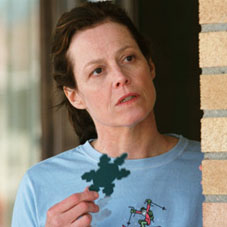
Snow Cake is a 2006 indie romantic comedy drama starring Sigourney Weaver as a small town single woman with Autism, coming to terms with the death of her daughter.
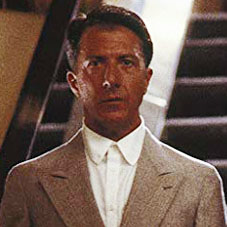
Rain Man is a 1988 Las Vegas road trip comedy-drama starring Dustin Hoffman and is about the reconciliation of two wealthy brothers.
Hoffman
The next example is of deliberately inflicted mental damage, and the one after is a symptom of of mental illness, not a cause. However the gender division remains.
Enforced loss of memory; brainwashing.
Gaslight is a 1944 American psychological thriller starring Ingrid Bergman whose husband slowly manipulates her into believing that she is going insane.
The Bourne Identity is a 2002 action thriller starring Matt Damon who demonstrates advanced combat skills and fluency in several languages as he fights his way across Europe.
Eating disorders
Heathers is a 1988 satirical High school comedy starring Winona Ryder, which as well as touching upon bulimia, shows high school girls struggling with bullying, fat shaming, teenage suicide and violent, toxic boyfriends.
The Machinist is a 2004 dark thriller starring Christian Bale about a troubled factory worker who loses weight due to insomnia caused by a trauma, and eventually achieves salvation and peace.
So in all these examples we see the gender divide of external/internal, public/domestic, epic/intimate and heroic/tragic. Let’s have an example which provides another typical division, sexuality and a violent response.
Multiple Personality Disorder
Split is a 2016 psychological horror thriller starring James McAvoy as a man with 24 different personalities who kidnaps and imprisons three teenage girls. And similar to Joker, he is a super-villain
The Three Faces of Eve is a 1957 mystery drama starring Joanne Woodward as a married but childless woman suffering from a duel personality. Eve ‘White’ is a submissive housewife, while Eve ‘Black’, her ‘other’ personality is outspoken, promiscuous and considered a danger to other people’s children.
Filmmakers couldn’t show Eve having sex in 1957, so her promiscuity is presented in coded form, as dancing with a man other than her husband, who responds by slapping Eve.
This is important as it links madness in woman with promiscuity, and makes clear violence is an acceptable ‘cure’, or at least, a treatment.
Mental illness in men is super-villainy, mental illness in women is promiscuity and mistreating children. Sanity for men is being a superhero, and sanity for women is being married, maternal, monogamous and submissive. And violence is the treatment. Which brings us to hysteria, and hysterical women in the movies.
HYSTERIA
Lets look at the most common mental affliction for women in the movies: Hysteria.
This can either be having a chronic attack of ‘nerves’, intense anxiety, or standing about screaming. It’s very loosely defined, if at all.
Surely you can’t be serious?
Airplane! is a 1980 disaster comedy, the funniest film ever made but not without it’s problems. There’s a joke about a hysterical woman being slapped into submission. First a doctor, shakes her, shouts at her and then slaps her. She continues screaming, and so a fellow passenger steps up to shout, and shake and slap, and behind him is a queue of passengers, and they are armed with boxing gloves, guns and baseball bats.
This joke works because the filmmakers know the cinema audience is totally accustomed to seeing men slapping women when they’re acting hysterically.
I was 11 or 12 years old when I first saw Airplane! and even then I’d seen enough movies to understand the joke.
Hollywood allows, encourages and expects men to inflict violence on women who are mentally ill. Violent ‘treatment’ is justified, accepted, and normal.
The word hysteria comes from the Greek word for uterus, hystera, and the Greeks believed that the uterus moved up through a woman’s body, strangling her, and causing madness.
This suggests an entirely physical cause for the symptoms but, by linking them to the uterus, it means hysteria only affects women. So madness is framed around your gender. And this thinking continued well into the twentieth Century.
Men who don’t have a uterus are inherently sane, women who do, are inherently prone to madness. For women sanity is equated with being passive, submissive, and governable.
Hysteria is a catch-all condition which because it’s definition is so broad, it makes it very easy for doctor’s to identify and treat – usually but not always with violence.
Now this won’t hurt a bit
Hysteria is 2011 period drama set in 1880, and starring Hugh Dancy as the real life Dr. Granville, who treats hysteria.
Because the medical profession thought anxiety originated in the uterus, common practice at the time was to manage the symptoms of hysteria by massaging a woman’s genital area.
Treating so many women results in his hand getting tired. So he adapts an electrical feather duster to use as an electric massager. And invents what we know today as a vibrator.
But the point to this, and remember this is a true story is this is a case of a doctor sexual abusing a mentally ill woman.
During Hysteria a character called Charlotte is arrested and during her trial, the prosecutor recommends Charlotte is sent to a sanatorium and be forced to undergo a hysterectomy, as that would ‘cure’ her.
The important thing to takeaway from Hysteria, the film and the condition, is the link between men diagnosing women as mentally ill, and then using violence and invasive force to subdue them. And here we have another common thread in cinema. A choice between prison or an asylum. We’ll come back to that in Cuckoo’s Nest.
So as well as the public/domestic, epic/intimate, gender division, women are identified as mentally ill for not conforming to men’s ideas of submissive, domestic and maternal womanhood. Also the women are typically punished for their behaviour beyond the expected ‘treatments’, often with death. Here’s a couple of examples, again using different types of mental health for comparison.
On the streets
In the house
Depression
Falling Down is a 1993 thriller starring Michael Douglas who walks across Los Angeles using a bat, a gun and a rocket launcher on those who annoy him.
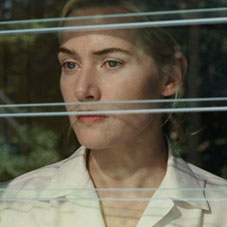
Revolutionary Road is a 2008 domestic drama starring Kate Winslet as a childless housewife who has extra-marital sex, then an abortion and then dies.
Obsessive Compulsive Disorder
As Good As It Gets is a 1997 romantic comedy starring Jack Nicholson as a misanthropic and obsessive-compulsive novelist whose reward for redeeming his previous bad behaviour is sex with the gorgeous Helen hunt.
Mommie Dearest is a 1981 docudrama starring Faye Dunaway as real life Hollywood star Joan Crawford, who’s depicted as an abusive mother who adopted her children to benefit her career, she is eventually publicly humiliated and dies of cancer.
PTSD
First Blood is a 1982 action film starring Sylvester Stallone as Vietnam War veteran John Rambos suffering PTSD, who destroys a small town in a one-man rampage.
In Our Name is a 2010 British drama starring Joanne Froggatt as a female soldier suffering PTSD, who sexually rejects her husband and struggles to care for her daughter on her return home from a tour of duty.
Schizophrenia
The Soloist is a 2009 drama starring Jamie Foxx as the real life Nathaniel Ayers, a talented but homeless musician who finds some measure of stability.
Through a Glass Darkly is a 1961 Swedish family drama starring Harriet Andersson who childless and sexually aberrant, sexually rejects her husband but has incestuous sex with her brother.
Suicide
It’s a Wonderful Life is a 1946 feel-good sentimental fantasy drama starring James Stewart as George Bailey who attempts suicide on Christmas Eve
The Virgin Suicides is a 1999 drama starring Kirsten Dunst, and sees five suburban teenage sisters suffer depression and make a suicide pact. They are all childless and unmarried, and one is promiscuous.
Men get guns
Criminality
So the gender division leads to women identified as mentally ill for not conforming to men’s ideas of submissive, domestic and maternal womanhood, and are punished for their behaviour beyond the expected ‘treatments’, often with death. Now we’ll see how these signifiers for women’s mental illness are also aligned to criminality.
Dirty Harry is a 1971 neo-noir action thriller which sees a serial killer called Scorpio shooting strangers on the streets of San Francisco, chased by a cop, Clint Eastwood.
Seven is a 1995 crime thriller with Kevin Spacey playing a serial killer, torturing strangers and being chased by a cop, Brad Pitt
Single White Female is a 1992 psychological erotic thriller which stars Jennifer Jason Leigh as a childless and promiscuous singleton who is obsessed with her roommate.
The Hand That Rocks The Cradle is a 1992 psychological thriller starring Rebecca De Mornay as a childless widow out to destroy a woman and steal her family.
Insane, moi?
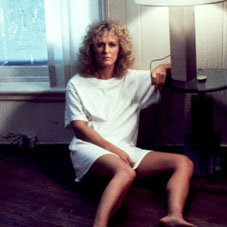
Fatal Attraction is a 1987 psychological thriller starring Glenn Close as childless, promiscuous singleton who becomes obsessed with a married man with whom she had an affair.
In all of these films the criminal, man or woman, is killed, reinforcing the idea violence against the mentally ill is acceptable.
But cinema simultaneously aligns female criminality with madness, violent behaviour, promiscuity, childlessness and unmarried.
In all cases cinema is reinforcing a definition of sanity for women, which is to be married, maternal, monogamous and submissive.
And if as a woman you step outside this male definition of female sanity, then expect to be labelled as mentally ill and men are justified in using violence against you, and you may end up dead.Which brings us to Angelina Jolie.
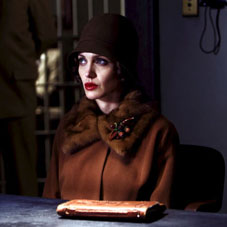
Check out the bars and that noose.
Changeling is a 2008 crime drama based on real-life events from California in 1928, and stars Angelina Jolie as a single woman called Christine, whose son Walter goes missing. But when she’s reunited with him,she realises the boy the authorities insist is her son, is a different boy entirely.
She is naturally angry and upset, which as a woman is not the correct mental state to be challenging the State’s authority, as being ’emotional’ allows the police and local government to define her behaviour as irrational, i.e. a sign of mentally illness, and she is vilified as delusional, labeled as an unfit mother, and confined to a psychiatric ward
A doctor diagnoses Christine as delusional and forces her to take mood-regulating pills. Steele says he will release Christine if she admits she was mistaken about “Walter” she refuses. And the film doesn’t end well for anyone.
So cinema shows women being labelled as irrational is an excuse for any manner of abuse by the state and/or medical profession.
And under the guise of ‘treatment’ a woman may suffer incarceration, drug regimes, invasive surgery and/or lobotomy, as well as losing possession of her kids. And the criteria for judging the success of any treatment is how submissive and quiet the female patient is afterwards.
Another criteria for madness is not being maternal, not liking children, women are forced into domesticity and punished when they fail. being labelled a bad mother makes it very easy for the authorities to teak your kids away from you.
There is no happy ending to this film. But it does show some of the nasty ways the mentally ill are treated in asylums.
One Flew Over The Cuckoo’s Nest
I love this film, made in 1975, and was the 2nd of only 3 films have won all four top Oscars, best actor, actress, film, and director.
It was filmed film in a real mental hospital, in the Oregon State Hospital, and consequently is very good on visualising the mechanics of mental health treatment, the bars on the windows, the forced drugs, the physical restrictions such as strait jackets, and the barbaric use of electro-shock treatment.
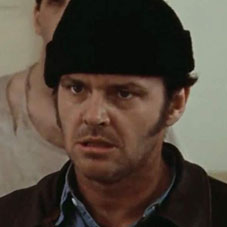
Nice hat, Chesaroo
Remember how in Hysteria a character faced being sentenced to either prison or an asylum?
Cuckoos Nest starred Jack Nicholson as convicted sex offender Randall McMurphy, who chooses asylum over prison because he wants to avoid a regime of hard labour to which he’s been sentenced. McMurphy thinks the asylum offers an easier existence, and he is of course, very wrong.
The central conflict in the film is between McMurphy and Louise Fletcher’s Nurse Ratched, who runs the hospital ward to which he is restricted.
The doctor won’t see you now
Presenting a sex offender as a hero was problematic, even for the 1970’s, and so the filmmakers down play the reason McMurphy is in the hospital, with his criminal behaviour rarely referred to beyond the opening scene.
And in the way Airplane! uses the audiences knowledge of cinema conventions to make a joke about hysteria, the filmmakers use the audiences knowledge of cinematic sanity to portray McMurphy as heroic, and to demonise Ratched.
McMurphy’s sanity is emphasised by showing him indulge with cinema’s male signifiers of sane male behaviour, such as playing cards and basketball, drinking, and having sex with a woman.
And it demonises the film’s authority figure Nurse Ratched by aligning her with cinemas traits of female insanity and criminality, such as being non-maternal, non-sexual, and non-submissive.
We’re asked to sympathise with and support an unpenitent rapist, a drunk, a brawler and gambler, and one who isn’t ill but wanting to avoid hard labour. Whereas the person we should be rooting for is the hard working and dignified professional, Nurse Ratched who’s been lumbered with the disruptive McMurphy.
In mental health in the movies, when woman succeed they remain defeated, and when men fail, they still win. It’s well, La La land.
The below is from the World Health Organisation website:
There are many different mental disorders, with different presentations. They are generally characterized by a combination of abnormal thoughts, perceptions, emotions, behaviour and relationships with others.
Mental disorders include: depression, bipolar affective disorder, schizophrenia and other psychoses, dementia, intellectual disabilities and developmental disorders including autism.
Dementia is caused by a variety of diseases and injuries that affect the brain, such as Alzheimer’s disease or stroke.
It’s up up and away on a hot air balloon ride in this handsomely crafted adventure which takes off well but sadly only fleetingly soars.
A pair of chaste Victorian pioneers go where no-one has gone before in an attempt to break the high altitude record, held by their pesky French rivals.
Having won an Oscar for playing Professor Stephen Hawking in 2014’s The Theory of Everything, Eddie Redmayne is reunited with his co-star Felicity Jones.
But playing another real life scientist, this time meteorologist James Glaisher, Redmayne must now take a back seat to Jones’ fictitious daredevil hot air balloon pilot, Amelia Wren.
In a varied and physical role Jones is a far more compelling and enjoyably flamboyant figure than she ever was in Rogue One: A Star Wars Story, and even in the quieter scenes her charisma burns Redmayne off the screen.
And yes his character is very much the archetypal stuffy and repressed Victorian gentlemen explorer, but it would be so much more fun for the audience if they were sparking off each other, rather than letting Jones do all the heavy lifting.
Much like 2013’s breathless sci-fi classic Gravity, this is the story of a woman coming to terms with grief, but where that film was non-stop action, every time the action builds up a decent head of steam here, we’re brought crashing to Earth for another flashback.
And unfortunately all this clumsily assembled emotional ballast unfortunately tethers the narrative to the ground, where Himesh Patel is waiting anxiously for something to do, and where veteran Tom Courtenay is tasked with making Glaisher a sympathetic character.
Plus despite frostbite, oxygen sickness, lightning storms and a malfunctioning craft, there’s a lack of jeopardy as the script fails to find much up in the clouds to sustain an adventure.
However the production design is excellent, the stunts when they arrive are thrillingly executed and the high altitude photography is epic, crisp and beautiful.
Although The Aeronauts isn’t a deflating experience, I was left feeling pumped up.
Bleak, compassionate, and powerful, this frighteningly realistic portrait of modern Britain by veteran director Ken Loach, is very much a companion piece to his devastating 2016 drama, I, Daniel Blake.
Kris Hitchen and Debbie Honeywood play a decent hardworking couple struggling to survive working as a delivery driver and a carer in the unforgiving regime of zero hours contracts, a system which values efficiency over humanity.
And in their damp and cramped rented home, their increasingly desperate and exhausted existence begins to impact on their two teenage kids.
Once again Loach fails to exploit the possibilities of Newcastle Upon Tyne as a location which offers plenty of opportunity to visually illustrate the UK’s wealth gap.
Plus there’s scant music and the dialogue is so functional and camerawork so perfunctory, it feels we’re watching a radio play.
Sadly there’s not much chance of this changing the world but it does make you think more kindly of white van men.
The talent of two of Hollywood’s greatest screen actresses is squandered in this solemn, superficial and dull drama.
Michelle Williams is happily running an Indian orphanage when she told she must travel to New York to secure a multi-million dollar donation from Julianne Moore’s mega successful media entrepreneur.
While there she attends a wedding where a devastating family secret linking the pair is revealed.
Lacking the wit to be satire or the campy fun of a soap opera, the super-wealthy characters mostly spend their time defending their right to be upset.
Taking itself far too seriously the script shamelessly uses an empty bird nest to illustrate the changing nature of parenting, and it’s passed about in the manner of a fizzing cartoon bomb.
Plus seeing Williams in a pashmina and meditating barefoot in an exclusive hotel suite, recalls Paul Hogan in 1980s comedy Crocodile Dundee, but without the acute social observations or self-mocking sense of humour.
Steven Soderbergh returns to the big screen in playful mood with this Netflix production to lay bare 2015’s Panama Papers scandal, which he turns into a smart, brisk, gleefully inventive and black comic drama.
It combines the social conscience the director demonstrated in his 2000 Oscar winning Erin Brockovich, and his keen eye for a contemporary issue as seen in his work such as 2011’s Contagion.
To make the rampant illegality on show palatable – though no less enraging – his dynamic visual approach makes deft work of clearly illustrating complex financial systems, and alongside a first class cast he employs flights of fantasy, some animation, and an occasionally jolly tone.
He skilfully weaves several stories together to illustrate the human cost of the industrial scale corruption, tax evasion and money laundering which was revealed when a hacker published millions of secret documents belonging to a Panamanian law firm.
Meryl Streep is full of surprises as a grieving granny who we follow on her search for a crumb of responsibility or accountability after her insurance company weasels on a payout.
She discovers contracts are not worth the paper they’re written on as she tries to penetrate a world of shady financial trusts where people literally moving bits of paper around to take advantage of favourable tax codes.
David Schwimmer’s on-screen likeability and ability to essay a good person greatly out of his depth is put to huge effect as a little guy getting screwed by big money.
Plus Sharon Stone, Matthias Schoenaerts, Jeffrey Wright, James Cromwell and Robert Patrick are among the talented supporting cast.
Meanwhile Gary Oldman and Antonio Banderas are a wonderfully theatrical double act as the self-justifying lawyers at the heart of affair, washing their hands while turning a blind eye as they launder eye-watering sums of money for the global elite.
Wearing tuxedo’s and sipping Martini’s, they justify in layman’s terms the amoral secret life of money, how ere privacy laws exist to protect the rich and powerful, and are indifferent as the criminality extends to fraud, extortion, organ harvesting and murder.
And as Streep makes clear in an impassioned plea for the liberty of information, the meek will not be inheriting the earth – or much else – anytime soon.






 chrishunneysett.uk
You must be logged in to post a comment.