Black Mass

Director: Scott Cooper (2015)

After series of flops including Mortdecai (2015), Transcendence (2014) and The Lone Ranger (2013), Johnny Depp’s career is in desperate need of a hit.

Here he hides his leading man looks under extensive make up, false teeth and a receding wig.

Although he’s great as the ruthless American gangster ‘Whitey’ Bulger, it’s a clunking biopic that’s far less than the sum of it’s parts.

It’s fine looking with a nice contrast between the faded grandeur of the locations and unfortunate 1970’s fashions.

Boston is inherently photogenic and offers a variety of unfamiliar settings.

But strong performances from a great cast are undermined by an unfocused script and uninspired direction.

Whitey feeds information on his mafia rivals to childhood friend turned FBI agent in return for a blind eye to his gangster activities.

Joel Edgerton’s central character is sidelined in order to give more screen-time to Depp.

Neither are sympathetic, despite early attempts to portray Whitey as a loving family man.

Supporting characters such as Jesse Plemons’ are introduced, forgotten about and wheeled back in again.

Benedict Cumberbatch’s role is even more reduced as Whitey’s Senator brother.

There’s an interesting story to be told how the lives of these two brothers took very different directions.

But the film ignores this, preferring to indulge in macho posturing and bloody violence.

The setting, soundtrack, language and violence are very much the milieu of director Martin Scorsese.

However not only does Black Mass feel like Martin Scorsese lite, it feels like poor Martin Scorsese lite.

Black Mass calls to mind the maestro’s weak, albeit Oscar winning The Departed (2006).

What’s more interesting is it’s also Ben Affleck light. Black Mass suffers in comparison with the actor turned director’s Boston set crime thrillers Gone Baby Gone (2007) and The Town (2010).

I say that as a fan of both Affleck’s films.

Depp may have to wait a while longer for his next success.

Love 3D

Director: Gaspar Noe (2015)

There’s little love but copious graphic sex scenes in this indulgent French flesh fest.

Take away the lengthy porn scenes and we’re left with unremarkable people and their dull, insular arguments.

Murphy is an American in Paris who on January 1st receives a phone call from the mother of his ex girlfriend, Electra.

She’s concerned her daughter may be suicidal having not seen her for some months.

This plunges the sullen, self-pitying film student into a bout of soul-searching.

We see the anger, fear and jealousy of their destructive relationship in flashback as the combustible couple spend their time at parties, bars, cafes and sex clubs.

The exes are played with naked enthusiasm by Karl Glusman and Aomi Muyock.

Klara Kristin plays Omi, the mother of Murphy’s baby son and the director isn’t above casting himself as a gallery owner, though we are mostly spared his nudity.

There’s confidence in the assured and repetitive rhythms of the fluid timeline as it slithers back and forth.

At 135 minutes the indulgent length allows us to admire the beautiful lighting, confident colour scheme and contained camerawork.

But the slight story and lack of emotional connection with those involved makes for an empty and unsatisfactory experience.

Steve McQueen the man and Les Mans

Director: Gabriel Clarke, John McKenna (2015)

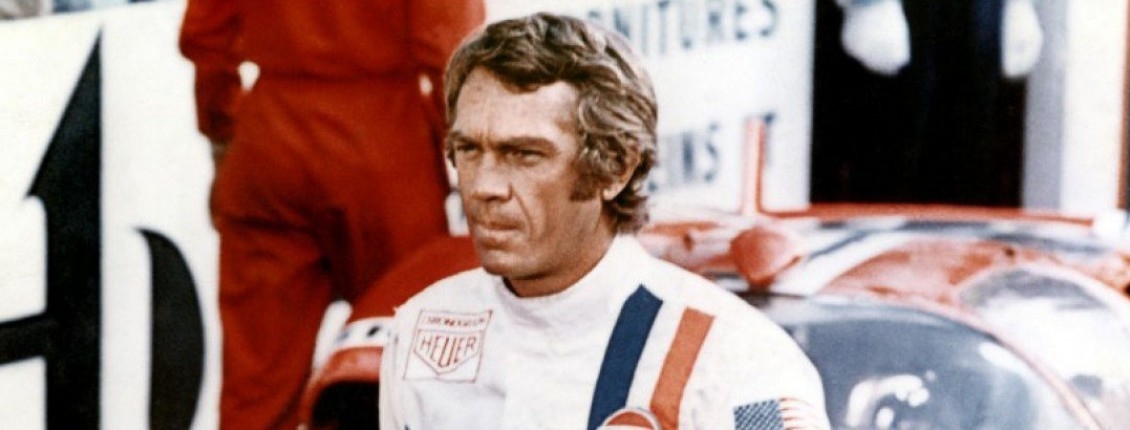
There’s a great documentary to made about the making of motor racing film Le Mans (1971), but this isn’t it.

Constructed by Hollywood star Steve McQueen as a float to parade his twin passions of fast cars and movies, the vehicle for his vanity crashed at the box office.

Filming started without a script, the original writer was the first of many fired, the director quit and it went considerably over it’s $6m budget.

John Sturges had helped create McQueen’s career by casting him in The Magnificent Seven (1960) and The Great Escape (1963).

As a veteran maker of crowd pleasing entertainments for the studios, the director walked off the set, frustrated at McQueen’s truculent refusal to adhere to established Hollywood storytelling.

McQueen’s desire was to represent the reality of the racing experience demonstrates a lack of understanding of Hollywood filmmaking, where emotional truths are revealed through the artifice of the medium.

Understandably upset at the aching slow progress, the studio wrested the steering wheel away from the King of Cool’s control.

The resulting film was a malfunctioning hybrid of approaches and was received with indifference by the public.

Too little technical information or financial detail is offered. We learn the cars are very fast and expensive. But not how much they cost or how many were involved.

There is a vague sense of wanting to rehabilitate McQueen’s reputation from taciturn action star to visionary producer.

But the tone lurches into blokeish banter as his on set infidelities were then covered up but are now leeringly discussed by the crew.

His first wife and their son Chad contribute interviews as do his then gopher, the racing team and the production crew.

McQueen is repeatedly described as being at the time the world’s biggest star.

It’s a description his contemporaries Paul Newman, Robert Redford, Sean Connery or Lee Marvin may have quibbled with.

As the helmet of the actor is lifted, behind the famous and startlingly blue eyes is revealed a deep well of ego.

It’s an oddly deflating experience, leaving us stalled on the starting grid.

The Hunger Games. Mockingjay Part 2

Director: Francis Lawrence

Jennifer Lawrence takes arms against the world for the fourth time as in this concluding chapter of the dystopian sci-fi series.

As freedom loving fighter Katniss Everdeen, Hollywood’s highest paid actress offers a typically excellent performance of weary intensity.

She is given far less opportunity to display her fighting skills in this sombre episode.

It’s handsome, well acted and thoughtful, yet the dialogue is often uninspiring and it’s a long march to the action.

By adding scenes with human shields and a trail of refugees the script plunders contemporary concerns but doesn’t offer comment.

Initially we’re forced to put in a few hard yards ourselves as we’re re-introduced to the motivations of the characters and it’s almost a relief when war starts whittling away their numbers.

As her comrades die in the cause of freedom, Katniss longs to fight.

But Julianne Moore’s scheming rebel commander Coin considers Katniss a useful propaganda tool and refuses to let her.

When the unified rebel army marches on the Capitol, Katniss is embedded in a media platoon which contains both points of her love triangle.

But there isn’t much tension between hunky warrior Liam Hemsworth Gale and Josh Hutcherson‘s brainwashed former turncoat Peeta.

Both are fairly dull characters but with Sam Claflin’s maverick warrior Finnick married off, she hasn’t much to choose from.

When her squad commander is killed, Katniss takes charge and leads her team on a suicide mission.

Her target is to assassinate Donald Sutherland’s evil despot President Snow who is holed up in an opulent and heavily guarded mansion.

As Katniss navigates the rubble strewn streets, she’s lumbered with a device which suspiciously resembles a game console.

It’s designed to detect Snow’s extraordinarily elaborate booby-traps.

The troops combat floods, flame, friendly fire and ferocious underground ghouls.

Friends and family are killed or captured as they trek through the terrain of the fallen city and Katniss has a suicide pill should her plan fail.

Though the foreboding tone is sensibly free of laughs, the regular supporting cast bring smiles of recognition.

Elizabeth Banks and Stanley Tucci don their fabulous costumes one last time and a shambling Woody Harrelson adds some welcome warmth.

The late Philip Seymour Hoffman has a surprisingly large amount of screen time in a final hurrah for his great talent.

Four years ago Lawrence was a little known actress.

Now due in no small part to The Hunger Games’ billion dollar success, she’s firmly and deservedly part of the A list.

By tackling the themes of war, freedom, suffering and sacrifice in a measured and occasionally spectacular fashion, this franchise has raised the bar for the Young Adult genre.

But as solid and satisfying as the Hunger Games are, I’ve had my fill and I couldn’t stomach another one.

Steve Jobs

Director: Danny Boyle (2015)

A terrifically talented cast are in perfect sync in this biopic of Steve Jobs, the charismatic and complex founder of the technology giant Apple Inc.

It’s as smooth, sleek and as tightly engineered as one of their computers or iPhones, but has problems with it’s memory and crashes at the worst possible time.

A binary figure who considered his employees to be with him or looking for a new errr, job, the Apple chief died in 2011.

Ashton Kutcher played him in the poorly recieved Jobs (2013) and he is rebooted here in a perfectly calibrated performance from Michael Fassbender.

Far from PC, he’s a bullying, vindictive and paranoid, a control freak with a messiah complex who inspires a noisy devotion in his disciples.

The university dropout was neither an engineer or a designer but was blessed with an intuitive understanding there are vast amounts of money to be earned through brand design and marketing.

Plus trapping his customers into an operating system incompatible with competing systems or products creates slaves of his customers.

This obsession with creating a closed operating system reflects Jobs emotional inner life. The prophet of the future surrounds himself with an  emotional firewall.

In contrast, sociable Apple co-founder Steve Wozniak who wants to create a more flexible, adaptable open system, while urging Jobs to acknowledge the role others have played in the success of the company.

They produced a computer so intuitive to use a five year old could begin to use it without instruction, the five year old being his daughter Lisa, played by Makenzie Moss.

The script is intelligent, sharp and scorchingly funny in its early stages, there’s no romance, sex or violence, except for when Jobs downloads a torrent of abuse on his colleagues, friends and family.

It’s a typically well-researched work by scriptwriter of the Facebook movie The Social Network (2010) Aaron Sorkin. He’s smart enough to wittily flag up the limitations of the structure.

Framed as a three act play, each act focusses on the press launch of a new Apple product: the expensive first Macintosh computer in 1984, the disastrous NeXT in 1988 and the revolutionary classic iMac in 1998.

As Jobs is celebrated, sacked and rises again the drama stalls.

A lack of a martyr makes for a dull finale as the self-mythologising messiah is allowed his moment of destiny defining redemption.

Ridley Scott‘s astonishing Orwellian themed TV advert for Macintosh is seen and discussed.

But it’s never pointed out the Big Brother imagery invoked to attack his rivals products could easily be used to criticise Jobs and Apple itself.

He is creepily aware of the small details of his colleagues’ lives. They form a dysfunctional surrogate family.

Kate Winslet sports a Polish accent and some unfortunate fashions as Joanna, Jobs’ head of marketing and his ‘work wife’. It says something about a corporation when the marketing department represents its compassionate soul.

Jeff Daniels is father figure John Sculley, the ill-fated CEO of Apple against whom Jobs rebels. Seth Rogen plays his ‘bro’ Wozniak.

Few directors possess director Danny Boyle’s consummate command of music to accentuate the visual drama, or have his ability to cajole convincing performances out of young children.

Though Boyle’s attempts to add some visual dynamism through his restless camerawork, he can’t illuminate the dark confines of a dialogue heavy script.

An early girlfriend aside any reference to Jobs’ romantic life is absent. The huge job cuts he instigated on his triumphant return to the company are glossed over.

Coldly calculating in it’s refusal to condemn Jobs for his sins smacks of legal compromise. It’s not possible to libel the dead but one suspects Apple employ extraordinarily expensive lawyers to police it’s brand.

By the end we’re far from convinced of Jobs’ genius, as his only identifiable talent seems to be in rude manipulation, at which he is extraordinary.

Brooklyn

Director: John Crowley (2015)

This beguiling tale about a young Irishwoman in New York is far and away the best film released this week.

Saoirse Ronan adds another fine performance to her CV as a thoughtful, amenable soul on a voyage of self-discovery. Her subtle strength is reflected in the quality of the filmmaking.

Based on Colm Toibin’s novel, it features a charming cast working from a smart script, a lovely eye for period detail and gorgeous photography.

Much creative budget-stretching gives it a polish and sweep much better financed films should envy.

Nick Hornby also wrote Reece Witherspoon’s Wild (2015) and has found a niche writing thoughtful, female character centred films.

I wouldn’t want to wish him out of a job, but it’s a poor commentary on the industry these films probably wouldn’t be made with a non-name female writer attached.

Eilis Lacey realises 1950’s Ireland has little to offer her and so suffers an undignified sea crossing in search of a future.

When Eilis steps from the gloomy immigration hall into the bright colour of the big apple, it’s a magical moment similar to Dorothy stepping into the wonderful world of Oz.

As Eilis struggles with homesickness, heartache and the harsh winter, a Christmas dinner for the homeless diaspora is a reminder of the unforgiving nature of the world.

Thankfully the fiddle playing is kept to a minimum.

Jim Broadbent’s kindly Father Flood finds her a job in a department store under the sternly glamorous gaze of Miss Fortini, played with panache by Jessica Pare.

Eilis must also carefully navigate the politics of her boarding house dining table, refereed by Julie Walters’ mother hen of a landlady, Mrs Kehoe.

As well as having every intention of keeping god away from her nylons, Mrs Kehoe warns her female-only clientele of the sinfulness of giddiness.

The many women Eilis meets offer small kindnesses, advice and insight to her own possible futures.

As she slowly builds a life for herself Eilis is torn between sweet suitors on either side of the pond.

Domhnall Gleeson Irish rugby fan is unknowingly pitted against Emory Cohen’s baseball fanatic Italian-American.

But a secret Eilis keeps even from her mother threatens to scupper her happiness.

As the cast disarms the audience with humour, the drama to creeps up with surprising power.

Though Ellis may not quite conquer New York, Ronan’s performance will capture your heart. And no doubt an award nomination or two as well.

Kill Your Friends

Director: Owen Harris  (2015)

Grab a backstage pass to the ’90’s music biz with this scathing satirical thriller.

It revolves around a London record company riddled with backstabbing office politics, extortion, blackmail and murder.

But this parade of sex and drugs and rock and roll is criminally ploddingly paced.

Nicholas Hoult plays Steven Stelfox, a cynical, talent spotting A&R man.

The company where Steven works is full of idiotic chancers and he’ll stop at nothing to secure a promotion.

But Steven’s career implodes when Tom Riley’s smooth talking rival competes to sign hot Swedish indie band The Lazies.

So Steven hatches a violent master plan to get himself back on top.

As the Simon Cowell of Unigram Records, Steven’s an equally unlikeable character, if not as irritatingly smug.

Based on biographical book by scriptwriter John Niven, the intervening years have dulled the sharp edge of the writing.

Due to TV shows such as X Factor, we all have far more knowledge of how the music industry works than we did back then.

It’s not much of a shock there’s drug use in the music industry or that bands are manufactured, packaged and sold to us.

Plus the script mistakes profanity for wit and the recurring diatribes aren’t nearly as funny as they’re imagined to be.

However the performances are sound.

Glamorous Georgia King is game as an ruthlessly ambitious PA while Ed Hogg shambles through his scenes as a Columbo-like copper with musical ambition.

James Corden appears as a hard drinking shaggy haired colleague.

Hoult delivers a calmly confident performance but fails to suggest rampant self loathing or devilish delight at his own behaviour.

As we neither sympathise with him or love to hate him, all we’re left with is a passing interest in whether his scheming will succeed.

And the moment when Steven hits rock bottom on an extended booze and drugs bender is not markedly different to the rest of his life.

He hates the music he sells to the public and isn’t interested in making art or political statements.

Though he repeatedly claims he’s driven by money, with his expenses fuelled lifestyle we never see him earning it, spending it or even enjoying it.

Despite a soundtrack of Oasis, Blur and Radiohead mixed with euro dance tracks, Kill Your Friends fails to create a sense of place or time.

Plus it lacks the chaotic zip and visual dynamism which characterised Michael Winterbottom’s Manchester based music drama 24 Hour Party People (2002).

Hopefully this film finally flags up the end of the Britpop party.

Scouts Guide To The Zombie Apocalypse

Director: Christopher B. Landon (2015)

There’s a bucketful of juvenile bad taste fun splashing about in this unsophisticated zomcom.

It’s a teenage boy fantasy of blood splattering adventure, available hot older babes, pneumatic policewomen and strippers.

After an incident featuring a janitor, a lab and a vending machine, the zombie apocalypse begins in a dull small town.

A trio of horny scouts find their outdoor skills come in unexpectedly useful.

Joey Morgan, Logan Miller and Tye Sheridan play the scouts and are respectively fat, loud and sensitive.

Loyalties are divided and the boys’ friendship is tested as they fight their way across town to gatecrash a secret rave.

David Koechner is their wig wearing Scout Leader whose Dolly Parton obsession extends to having her bust on his living room wall.

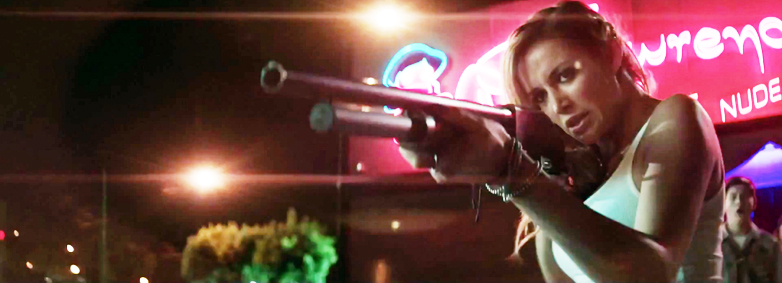
Sarah Dumont is a shot-gun wielding cocktail waitress in denim hot pants who offers leggy life lessons.

Cloris Leachman potters about as a secateur wielding senior citizen.

A vaguely mentioned viral outbreak is as much explanation as the script is interested in offering in explanation.

Instead the focus is on keeping the action brisk and the humour flowing.

It’s easy to imagine it as the spawn of the sci-fi biker sequence from John Hughes’ Weird Science (1985) stretched to a feature length.

Nor is it a million miles away from Life After Beth (2014) in tone, ambition or budget.

Teenage boys will love it but everyone else may want to avoid it like the zombie plague.

Under Milk Wood

Director: Kevin Allen (2015)

This trippy and licentious adaption of the famous Dylan play is entertaining, coherent and consistently bold.

It’s my introduction to his nightmarish verse of seaside misery and is an eye and ear opening experience.

Commissioned by BBC as a radio play and later adapted for the stage, the play was completed in by the Welsh poet shortly before his death in New York aged 39.

Set in the fictional Welsh fishing village of Llareggub. The name is pointedly ‘bugger all’ spelt backwards.

Described as ‘a small decaying watering place’, it hums to the sound of pagan rituals, a male voice choir, much organ music and a brass band.

The visual cacophony of saturated colours, blurred focus and obscure camera angles creates a vivid and disturbing dreamlike world.

A first film version in 1972 starred Hollywood greats Richard Burton, Elizabeth Taylor. This one has a grizzled Rhys Ifans and a comely Charlotte Church.

The artist formerly known as the voice of an angel gamely joins in the bawdy business. She’s confident on camera and showcases her talent with a touching torch song in a slow jazz style.

Ifans narrates through the character of the blind Captain Cat. The Welshman relishes the poetry and his confident, lyrical delivery is a major strength.

The Captain guides us through the dreams and fantasies of the sleeping inhabitants with names such as Nogood Boyo, Sinbad Sailors, Mrs. Willy Nilly and Organ Morgan.

They’re a collage of gossiping grotesques preoccupied with lust, loss, longing, murder and madness.

The play’s lack of narrative flow and moral navigation leaves us bobbing about on a murky tide of humanity without the safe harbour of a climax.

I watched the English language version and the Welsh language version is the UK’s submission for the Best Foreign Language award at next year’s Oscars.

I wish it the best of British luck.

Spectre

Director: Sam Mendes (2015)

From the breathtaking beginning to the doom laden finale, the 24th James Bond adventure is an extraordinary explosive and epic episode of the franchise.

The spy filled cinematic year has included reasonably received riffs on the genre including Kingsman, Spy, Mission Impossible: Rogue Nation and The Man From UNCLE.

Now the daddy of espionage returns to slap down the young pretenders.

Returning in his fourth and possibly final film of an extraordinarily successful tenure, the 47 year old Daniel Craig offers an interpretation of Ian Fleming’s alter-ego at least equal to the very best.

Spectre is fresh and ambitious despite the weight of history and expectation.

So spectacular, sexy and superb in all departments, it sometimes feels less than the sum of its magnificent parts.

Yet British director Sam Mendes is playing a bigger game than merely creating a standalone action thriller.

He’s also made a fabulous final chapter in a four film reinvention of an overly familiar character.

Prior to Craig each Bond movie was a self-contained story connected not by story but by character.

It’s now clear we’ve been watching a long form story which began way back with the Englishman’s debut in the role in Casino Royale (2006).

It’s a bold strategic 9 year move inspired perhaps by the 10 year long Harry Potter series and a forerunner of Marvel‘s creation of a cinematic universe.

This approach won’t harm the home entertainment box-set sales.

The famous gun barrel opening sequence is re-installed and few themes create a shiver of expectation as effectively as Bond’s does.

Following on from Skyfall (2012), a message from beyond the grave sends 007 off-piste and outside the law.

As he follows a trail of clues from Rome, to Austria and Morocco, he once more encounters the deadly Quantum organisation.

It’s a procession vodka martini’s, dangerous women, gorgeous locations, terrific stunts, powerful henchmen and a completely cuckoo villain. Bond’s car is quite beautiful even by his standards.

There’s paranoia, conspiracy, betrayal, torture, sex and death.

And as a riposte to those who suggest Craig’s interpretation lacks humour, it’s also very funny.

A trio of European stars add indispensable talent and glamour.

As the oldest actress to be cast opposite Bond, Monica Bellucci’s widow riffs on a character on in The Italian Job (1969).

Lea Seydoux is an excellent foil and Christoph Waltz mercifully keeps a firm hand on his inclination to camp.

An intelligent script works hard to give ample screen time to Naomie Harris, Ralph Fiennes and Ben Whishaw who return as MI6 stalwarts Moneypenny, M and Q.

They also contribute to the two and a half hour running time and if anything was to be trimmed, it would be this extra muscle.

As cinema owners will be forced to have fewer screenings per day to accommodate Bond’s length, it will be interesting to see if this affects the box office.

This potential shortfall may be compensated for by more expensive IMAX tickets. The opening Mexico sequence certainly warrants the extra cost to the cinema-goer.

It’s dynamically photographed by Dutch-Swedish Hoyte van Hoytema. His work on Interstellar (2014) was one of the few high points of Chris Nolan’s pompous ego trip.

But here the rich wreaths of shadows he wraps around the players are more reminiscent of his glorious work which contributed so much to the success of Tinker Tailor Soldier Spy (2011).

Sam Smith’s theme song sounds thin on the radio but works well in situ over the sensual opening titles.

Mendes encourages his actors to play every scene as if it’s their last. Which for Daniel Craig, may well be the case.