Teenage Mutant Ninja Turtles

Director:  Jonathan Liebesman (2014)

Crawling out of New York sewers after a seven year hibernation these turtles really stink.

This is a damnably dull and witless reboot of a dormant franchise cobbled together with the least possible inspiration.

The plot, for what it’s worth, follows ambitious TV reporter April O’Neil (Megan Fox) as she teams up with the four mutant turtles to thwart criminal samurai Shredder and his Foot Clan gang’s plan to rule New York.

O’Neil is unwittingly used as bait by the clan to catch a vigilante who foils a dockside heist. The vigilante turns out to the four computer animated kickass turtles – Leonardo, Michelangelo, Donatello and Raphael, voiced by Johnny Knoxville, Noel Fisher, Jeremy Howard and Alan Ritchson.

The quartet were raised in the sewers by the giant mutated rat and sensei master Splinter (Tony Shalhoub). They squabble, eat pizza, say ‘Cowabunga!’ and wear colour coded masks. Michelangelo is the most easily identifiable because he’s the most annoying.

April recognises them as the turtles she kept in her dad’s lab before he died in a mysterious fire. He was developing a mutagen that would eradicate disease. Luckily she kept all his scientific notes.

She tells her dad’s ex-partner turned industrialist Eric Sacks (William Fichtner) but he’s now in cahoots with Shredder and planning to use the turtles’ mutated blood to blackmail the city.

There are fights, chases, rocket launchers, exploding cars and remote controlled flying daggers. The film is sufficiently self-aware to be happy in pointing out how ridiculous it all is – but it’s the sloppy execution not the premise that’s the problem.

In another film Fox’s expressionless face and lack of dramatic range would be a severe hindrance – but here they’re just part of the overall ooze of ineptitude.

Mutants, ninjas and turtles all deserve better than this – probably teenagers as well.

☆☆☆☆

Nightcrawler

Director: Dan Gilroy (2014)

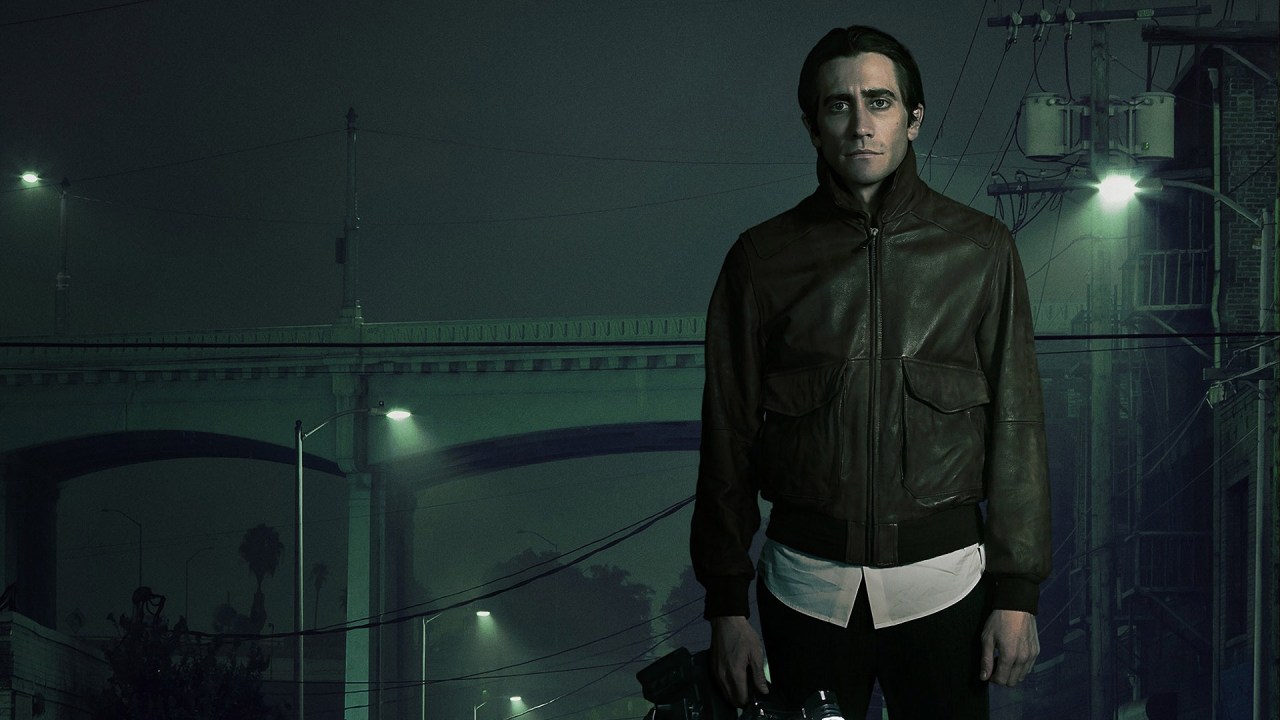
Cut-throat and violent, the dark world of TV news is under the spotlight in this slick satirical thriller that is sharply written, wonderfully observed and terrifically performed.

With his gaunt face, sunken eyes, manic grin, lank-hair and soft-spoken measured delivery, Jake Gyllenhaal is mesmerisingly intense as a nightcrawler; a feral TV paparazzo prowling for the most bloody news footage.

Ambitious, articulate and cunning, loner Lou Bloom (Gyllenhaal) is a fervent believer in the American Dream.

Seeing opportunity everywhere he is permanently touting his (limited) skill-set and promoting his enthusiasm to any potential employer.

Inspired when he sees TV cameramen film police rescuing a woman from a car crash, he buys a camcorder and begins cruising the streets of Los Angeles at night, filming crimes to sell to TV.

His inexperienced enthusiasm leads to taking risks, falling foul of the law and his competitors such as the abrasive Joe Loder (Bill Paxton).

But he quickly learns to manipulate criminal events to further his career,

He sells his graphic footage to morally compromised, ageing and acerbic TV News chief Nina (a wonderful Rene Russo and real-life Mrs Dan Gilroy).

Nina’s show is struggling in the ratings and despite Lou being infatuated, exploits her perilous employment situation to secure a sweetheart deal for himself.

A driver Rick (Riz Ahmed) is employed on exploitative terms and provides the film with more black comedy; but he’s mostly a script device to give Lou someone to spout corporate career advice to.

Without any moral framework to guide him and driven by his love of the dollar, he has no compunction manipulating events even they spiral into violence and gunplay.

Bloom is a cartoon monstrosity and had he an ounce of doubt or remorse the drama would be improved. Instead he’s a one joke act lecturing us on the vicious amorality of capitalism. It is however, one hell of a joke.

Fifty Shades of Grey

Director: Sam Taylor-Johnson (2015)

There’s lashings of domination but no romance in this steamy and silly fantasy as a billionaire grooms an eager student for his power-trip sex games.

A kinky combination of Pretty Woman and American Psycho lacking the charm of the former and the satire of the latter.

It’s based on the best selling novel by E. L. James and the writer keeps director Sam Taylor-Johnson on a short leash.

This is a shame as her great visual sense and sly wit are hamstrung by being bound tightly to the source material’s ropey plot and dialogue.

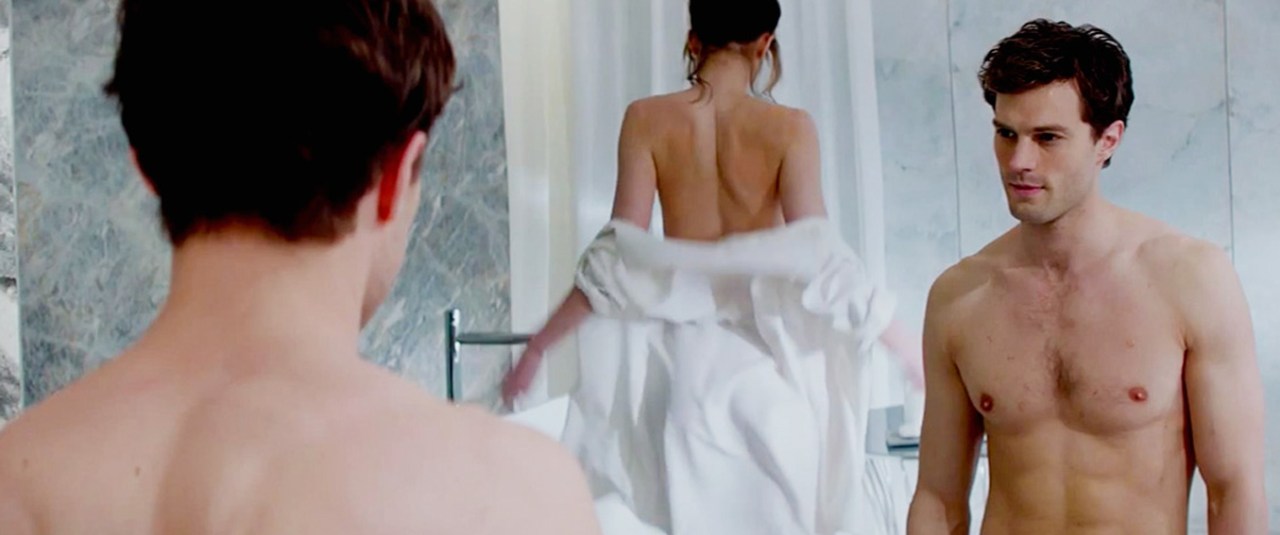
Anastasia ‘Ana’ Steele (Dakota Johnson) is a breathy, blushing brunette in a bad cardigan. She receives the opportunity to interview Christian Grey (Jamie Dornan) for the university magazine. He’s a hunky, mega-wealthy, smart-suited super-creep.

Christian recognises the virginal Ana as a  suitable victim to be tutored to serve his own specific needs and begins to ply her with gifts.

He turns up at the hardware store where she works to buy some hobby materials; electrical cabling, grips and so on.

Soon she’s introduced to his private and exquisitely stocked dungeon, ‘the red room’.

In an entertainingly boardroom scene Christian asks Ana to sign a legally binding contract. In eye-watering detail it lists everything permissible in their future activities.

She must agree to be the submissive participant in his bondage sessions which are to include blindfolds, handcuffs and whips.

Both actors have impressive modelling CV’s and demonstrate excellent skills at looking great naked.

The most convincing fetish here is for a designer lifestyle of clothes, suits, accessories and furnishings: it’s a glossy centrefold advert of a production so edgy it features music by pop muppet Ellie Goulding.

There’s a trip in a glider because that what’s rich people do to emphasise how free-spirited they are.

As Ana is overwhelmed by passion for her new found pursuits, she grows more assertive which threatens the strict dynamic of their relationship.

If you liked the book you’ll probably enjoy this film but don’t tie yourself up in knots if you miss it.

☆☆☆

Coherence

Director: James Ward Byrkit (2015)

When a passing comet causes a space-time anomaly, it turns a dinner party into disaster in this dull and derivative sci-fi thriller.

Glossy, arty, unlikeable and poorly established characters bicker their way through a catastrophic storm of hyperactive camerawork and weak writing.

When phone signals, the internet and external power fail, Hugh (Hugo Armstrong) and Amir (Alex Manugian) head off to the only other neighbourhood house with lights on.

They intend to call Hugh’s physicist brother who warned about possible ill effects of the comet, it’s a wonder the brother isn’t called Bill Mason.

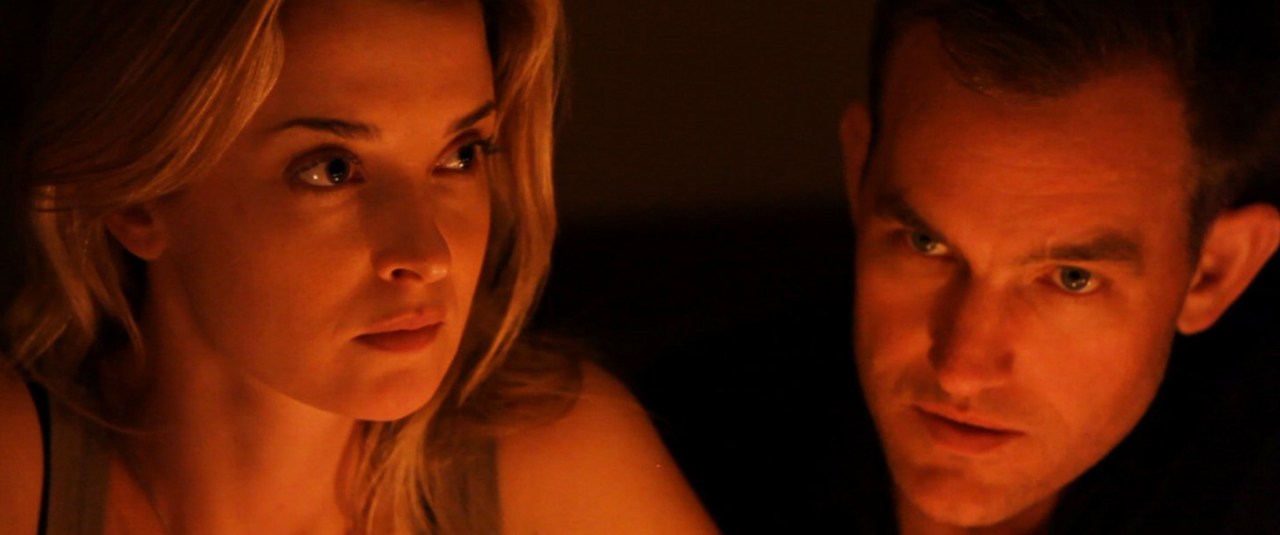
With no obvious leaders, the guests start squabbling like contestants on The Apprentice. Glamorous Emily (Emily Baldoni) starts to give partner Kevin (Maury Sterling) a hard time over a perceived slight at the table. Others make passes at each other’s partners. Their sense of priorities are more puzzling than their situation.

Someone turns to the bottle which seems a reasonable response to being cooped up with these idiots.

With close ups, shallow focus, jump cuts and restless shaky cam we’re treated to a full range of found-footage effects without this being a found-footage film – which is annoying when we realise there’s no character behind the camera to interact with the ones we can see.

Presumably the intention is to create intimacy and suggest forthcoming danger while visually preparing the ground for when these effects will be usefully employed.

But this distracting approach heightens the script’s failure to sufficiently identify the characters for the audience; we fail to engage with them or care what is happening. At times it would have been useful if they’d worn names on the backs of their clothes.

Having being lost in the dark space between houses, Hugh and Amir return injured and with a metal box. They’d encountered the inhabitants of the other house who were unfriendly and disturbingly looked exactly like themselves.

The box contains photos of themselves taken that very evening. Notes are stuck to their front door written in their own handwriting and personal items unexpectedly appear.

A book containing Hugh’s brother’s lecture notes is discovered in the back of a car. They offer a mercifully brief explanation using the coherence variation of quantum mechanics. Gwyneth Paltrow is mentioned alongside Schrodinger’s cat – which must be a first.

There’s more bickering and another splinter group wander off outside. A second Hugh arrives claiming to be the first Hugh and it dawns on the inmates there are more than two houses with identical occupants, increasingly mixed up between identical houses.

But when the comet passes the quantum anomaly will collapse and everyone must find their correct house – or be trapped in the wrong dinner party forever. Paranoia, suspicion and violence follow.

☆☆☆

Two Night Stand

Director: Max Nichols (2015)

This sweet twenty-something rom-com is happier cuddling on the sofa than swinging from the chandeliers.

A pair of perky performers employ their personalities to massage some heat into the weak script. It’s observations on dating or life are not fresh, clever or funny enough.

Megan (Analeigh Tipton) is an unemployed med-school dropout. One evening she’s to be sex-iled for the evening by fun-loving Faiza (Jessica Szohr) and her hot boyfriend Cedric (Scott Mescudi).

Their rampant relationship exists to highlight what a sad loser Megan is for being single.

To get her out of the apartment they kindly suggest Megan goes online to search for a hookup; guilt-free casual sex with a stranger.

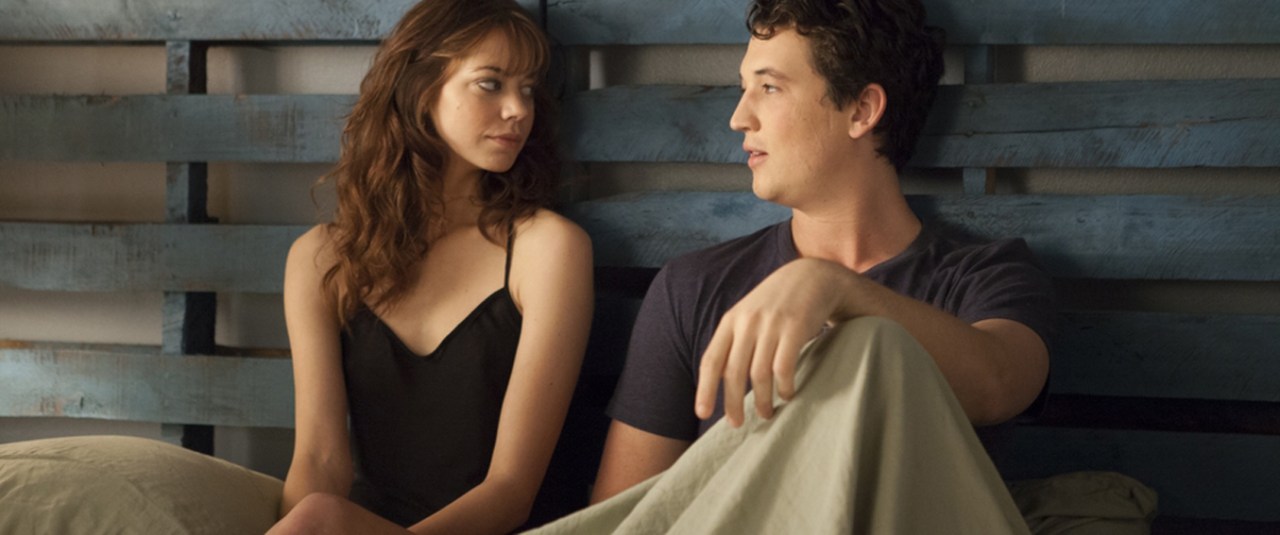
Signing up for the first time to a website, she quickly establishes a rapport with Alec (Miles Teller) and trots off to his place on the other side of New York.

He’s cocky, she’s ditzy and both are charming. Although it’s pleasant hanging out with the pair, our smiles never give way to laughter.

While trying to sneak out the morning after a night of passion, Megan accidentally wakes Alec up. Before Megan can say Meg Ryan they’re arguing – but an unexpected and heavy over night snowfall means she can’t leave the apartment.

Having fallen out but now forced to spend time together, they agree to pretend they didn’t have sex. They play ping pong, get high and build a den with fairy lights.

When Megan blocks the toilet and they break into next door to use the facilities, it’s a sign the script is straining; to keep us engaged and the couple at each other’s throats, not at each other’s pants.

But there’s only so much to occupy them before they are dragged by the gravity of romantic comedy back to the bedroom.

As the conversation returns to sex, they agree to critique last nights performances; discussing along the way topics such as whether girls should fake orgasms.

Generally the advice they share is not earth-moving but this is the standout scene. Otherwise neither have much to say.

Possibly through boredom, desperation or a desire to shut Alec up, Megan impulsively decides to road-test their advice.

Alec enthusiastically agrees. Forewarned is forearmed and their earlier critique leads to improved foreplay, as well as success in other departments.

As the medium to longterm outlook for the relationship seems full of promise, it’s discovered one of them has lied about their single status. There’s a fight, the snow storm abates and Megan heads home.

Once the snow is clear the script has little idea what to do and resorts to a New year’s Eve party and a night in the police cells. It jumps through hoops chasing a happy ending.

Two Night Stand takes a staggeringly optimistic view of online dating and raises unrealistic expectations of what one’s first online date will be like.

Rather than embracing its open approach to the singles sex scene it retreats to reinforce the persistently perpetuated myth of the perfect one existing somewhere for everybody.

For all it’s emphasis on honest talk, it never explains why Alec wakes up the morning after the night before wearing a T-shirt and boxer shorts.

☆☆☆

Fury

Director: David Ayer (2014)

Hollywood big gun Brad Pitt rolls into action as a battle-hardened tank commander in this mud and guts war epic that takes no prisoners.

Engineered to a familiar and straight-forward narrative, US army Private Norman (Logan Lerman) is sent straight from basic training to the frontline as the Second World War draws to a bloody conclusion.

Despite being a uniformed clerk, recent losses mean he has to join a Sherman tank unit under the merciless leadership of Sergeant “Wardaddy” Collier (Pitt).

Pitt is a trusted father figure to the crew who have been with him since the North African campaign  and include mechanic Boyd ‘Bible’ Swan – a barely recognisable Shia LaBeouf, plus driver ‘Gordo’ (Michael Pena) and gunner ‘Coon-Ass’ (Jon Bernthal).

Struggling to adapt to his close-knit and de-sensitised comrades, the raw recruit is pounded as their tank – nicknamed Fury – rumbles into a series of battles as they cross the muddy fields of Nazi Germany.

Bravery is matched by savagery as soldiers are blown up, burnt, decapitated, shot and stabbed. There’s a brief and tense period of R&R in a small town where liberation comes at a very personal price for the local women.

Then Wardaddy leads a convoy that encounters a militarily superior enemy Tiger tank and only the Fury survives to continue the mission to the ferocious finale.

Riveted together with excellent acting and direction, the phenomenal fight sequences leave you battered and bruised. Macho down to its army boots, this brilliant and brutal war movie that magnificently depicts war as hell.

Paddington

Director: Paul King (2014)

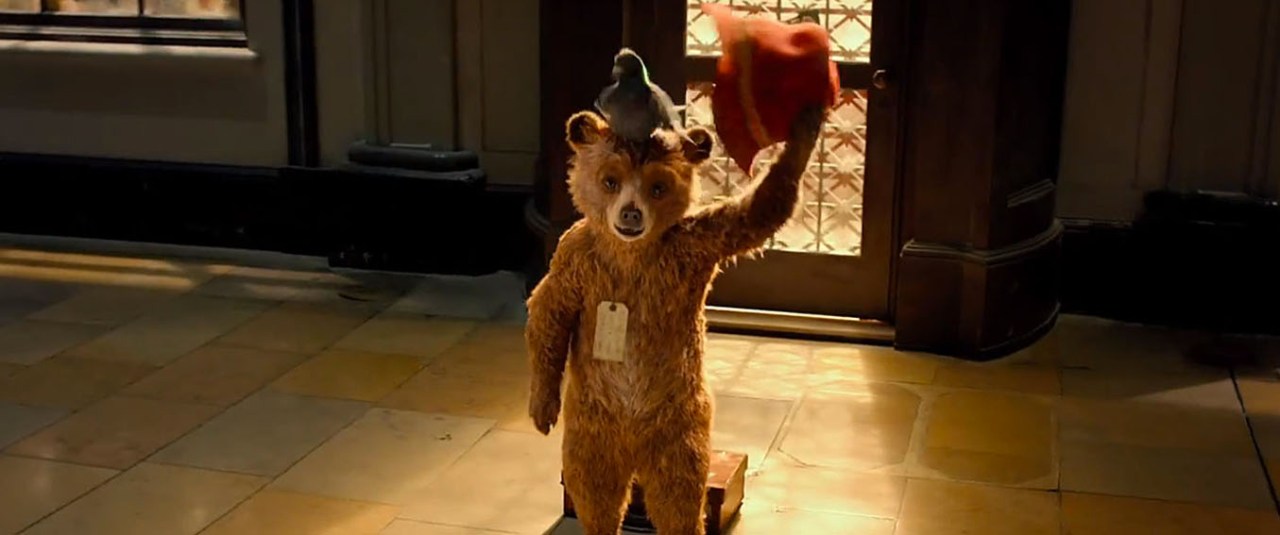
In a huge bear hug of fun to warm your family, Paddington the loveable orphan bear from deepest darkest Peru makes his big screen debut.

This marvellously magical and funny adventure retains all the silliness and charm of Michael Bond’s original books. And hidden in the script is a hatful of kind messages, handed around as often as Paddington offers out his beloved marmalade sandwiches.

The computer-animated bear, endearingly voiced by Ben Whishaw, blends seamlessly into his real-life surroundings.

When a British explorer in Peru found a family of extraordinary bears, he left them with a passion for marmalade and a gramophone for learning English.

Years later an optimistic young bear stows away to find the explorer but London is not as warm and welcoming as he has been led to believe.

As in the book, he’s discovered at Paddington station by the Brown family who name him after the first sign they see and then take him home for the night.

Mrs Brown (a wonderful Sally Hawkins) and son Jonathan (Samuel Joslin) take a shine to the bear. But teenage daughter Judy (Madeleine Harris) is embarrassed while uptight Mr Brown (Hugh Bonneville) simply wants rid of him.

Mrs Brown helps Paddington search for the explorer but wicked Millicent wants to add the talking bear to her collection of stuffed animals.

She’s played by a snakeskin-clad Nicole Kidman, who’s always better when she’s being bad. There is a brief showing from Jim Broadbent as antiques dealer Mr Gruber, Broadbent channels Benny Hill’s performance as The Toymaker in Chitty Chitty Bang Bang.

Paddington inadvertently causes mayhem in a series of imaginative stunts and the film romps along before the slapstick ending in an exciting night at the British Museum.

If young kids don’t enjoy this treat I’ll eat Paddington’s hat – and all his marmalade sandwiches.

Mr Turner

Director: Mike Leigh (2014)

Brilliant Timothy Spall was surprisingly overlooked by Oscar for his grunting, growling portrayal of superstar artist J.M.W.Turner.

This masterful biopic is a rich canvas covering the last 25 years of the genius’s life until his death aged 76.

Hangdog and whiskered, the man often hailed as Britain’s greatest ever painter is hard on his contemporaries, kind to his patrons and horrible to his servants and children.

With Spall dominant in the foreground, there is a wealth of emotional colour swirling around in the background to ponder.

Never married, Turner has complex relations with the many women in his life. He refuses to acknowledge the children he has with his former lover Sarah Danby (Ruth Sheen) despite her constant appeals.

Meanwhile the artist regularly takes sexual advantage of his devoted housekeeper – and Sarah’s niece – Hannah Danby, played by Dorothy Atkinson.

After the death of his beloved father William (Paul Jesson) Londoner Turner goes to the Kent coast to stay in the Margate lodging house of Mrs Booth (Marion Bailey), a warm, gentle and touching bond develops, accelerating on the death of her husband.

Supremely confident in his creative talent, Turner takes pains to guard his place at the top of the intensely competitive art world.

With his sketchbook for company, he strides across landscapes, walks for miles along the coast and pays prostitutes to show him their bodies for anatomy lessons, we’re left to ponder at what else he may be paying for.

He even has himself tied to a ship’s mast in a storm to study the light. As his work becomes ever more revolutionary he is mocked by satirists, which hastens his decline.

Rich and famous, Turner is still hurt when a young Queen Victoria and her husband Prince Albert – philistines both – are too shallow to appreciate his art.

The gentle ending, the most heartbreaking of 2014, is all the more powerful for lacking sentimentality.

X-Men: Days of Future Past

Director: Bryan Singer (2014)

Hugh Jackman sharpens his claws for the seventh time as superhero Wolverine in this action-packed adventure with added time-travel thrills.

The film has exciting set-pieces, a terrific cast, some good jokes and an entertaining new angle on the Kennedy assassination of November 1963.

Yet the script struggles to find time for a plot amid the cacophony of characters – so the special effects have to do the dramatic heavy lifting.

The story begins with mutants under attack by super-powered robots called the sentinels.

Mutant leaders Professor Xavier (Patrick Stewart) and Magneto (Ian McKellen) send the mind of Wolverine (Hugh Jackman) back to 1973 to inhabit his younger self’s body.

He has to find the young Xavier (James McAvoy) and convince him to help recruit Magneto (Michael Fassbender).

Magneto is jailed inside the Pentagon so they recruit a lightning fast mutant called Quicksilver (Evan Peters) to break him out.

This leads to a brilliant action comedy sequence set to the wonderful music of the late singer-songwriter Jim Croce whose music was also used in Tarantino’s bloody opus Django Unchained (2012).

Next the mutants have to stop the shapeshifting Mystique (Jennifer Lawrence) from carrying out a revenge killing of the scientist Bolivar Trask (Peter Dinklage).

She decides to take direct action not realising his death could lead to the annihilation of the mutants by giving the the US government the excuse they’re looking for.

Fassbender and McEvoy have great fun in costume but neither has to squeeze himself into an unforgiving blue leotard like Lawrence.

It’s not uncanny of the film-makers to put the world’s most popular actress centre story. But even she can’t steal the show from the prowling, growling Jackman.

☆☆

The Grand Budapest Hotel

Director: Wes Anderson (2014)

Let Ralph Fiennes lead you through the lobby for a romp around the rooms of this funny and sweet comic caper.

With typically deft and deliberate sweeps of his camera, director Anderson sculpts a sweet trifle and by virtue of keeping the screen-time of his regular actors Bill Murray and Owen Wilson to an absolute minimum, he’s created his best and funniest confection yet.

In the fictional middle-European country of Zubrowka, The Writer (Jude Law) is staying in the once opulent but now rundown hotel where he meets the aged Zero Moustafa (F. Murray Abraham).

The Writer is regaled with the tale of how as young man, Zero came under the tutelage of the now legendary hotelier Gustave H (Fiennes) and so eventually became the owner of the establishment.

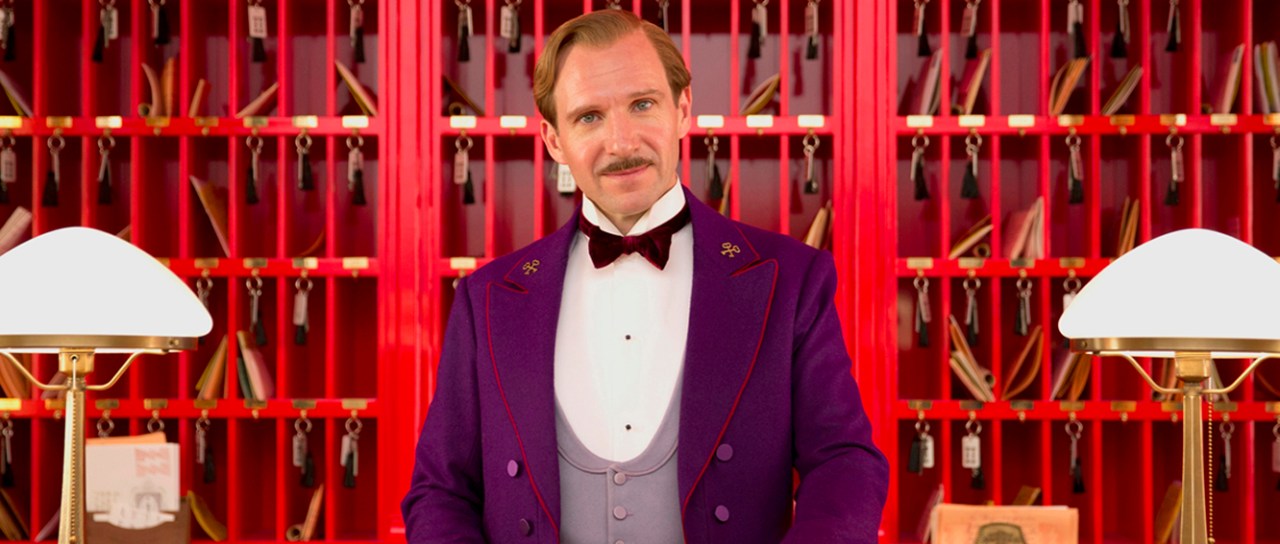
Known more for his intensity of his dramatic performances, uber-thesp Fiennes shows his flair for comic charm as Gustave H – a velvet-tongued concierge and romantic adventurer with a fondness for seducing the blonde, rich, vulnerable old ladies who frequented his hotel.

We see Gustave parade through the lobby issuing a multitude of instruction, insistent on respecting the correct manner in which everything must be done. Perpetually purple-clad and poetry quoting, even his perfume is called Panache.

Young Zero is played by Tony Revolori, he and Fiennes make an unlikely but lovely double act with Gustave showering his protege with advice, not least concerning the pastry girl (an excellent Saoirse Ronan) Zero has fallen is love with.

Gustave is bequeathed a very valuable painting, Boy with Apple by Madame D (Tilda Swinton). Her family whom hoped to inherit it are outraged.

Doors are opened, windows peered through and corridors ran down as Gustave and Zero are pursued by a villainous leather-clad investigator J.G. Jopling (Willem Dafoe).

What follows is unexpected violence, an alpine chase, punch ups, murders, an interrupted game of cards, a secret society of concierges and a most unfortunate cat.

Like the hotel of the title this immaculate pink and white wedding cake of a creation is textured, rich and slightly nutty – though it may be something of an acquired taste.

 ★★★★