Robocop

Director: José Padilha (2014)

This grim-faced mechanical reboot of the 1987 sci-fi classic stomps through the motions with all human interest surgically removed.

The action sequences are incoherent, dull and lacking in tension. And the gleefully satirical edge of the original is sadly absent.

Set in Detroit in 2028, the remake offers no sense of a wider society or vision of the future – it’s just like today but with robots and amazingly little internet use.

Joel Kinnaman is trigger-happy, straight backed and taciturn. And that’s before his character Alex Murphy is transformed into the relentless crime-fighting cyborg.

When Murphy’s life is saved by the technician’s of OmniCorp, he’s turned into a crime-fighting war machine and put back on the streets as the ultimate deterrent.

When investigating his own attempted assassination he uncovers a trail of corruption and once again becomes a target.

There is some lovely design work in the new streamlined suit. And when we first see the extent of Murphy’s injuries there is a promisingly nightmarish feel. But it’s quickly lost thanks to the plodding direction.

Computer-generated images mix unconvincingly with live action and although Robocop looks very cool when riding his neon and black motorbike, we see him doing it far more often than is necessary.

There is wit in the casting of actors associated with that other faceless crime-fighter Batman – but even the considerable talents of Michael Keaton and Gary Oldman can’t tease any humour from a dour script.

Keaton plays the duplicitous CEO of the powerful OmniCorp and Oldman co-stars as a technical genius with compromised principles.

And Samuel L. Jackson has fun as a TV commentator – but his scenes seem disconnected from events happening elsewhere.

Key catchphrases are lifted from the original to be chucked around. But the new dialogue is as leaden as Robocop’s thudding footsteps as Murphy hunts down the men who had tried to kill him – and unleashes powerful forces that are hellbent on finishing the job.

☆☆

Kill The Messenger

Director: Michael Cuesta (2015)

Despite a plot of international significance featuring political corruption, money laundering and drug dealing, this real-life thriller is surprisingly weak and muddled.

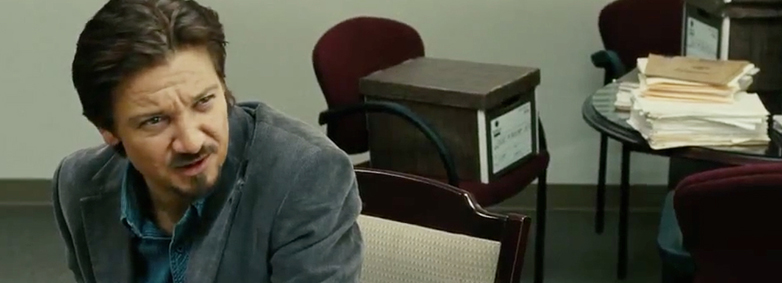
It’s a busy dramatisation of the fall from grace of investigative reporter Gary Webb (Jeremy Renner). Uncertain of tone it begins as a courtroom romp, rifles into an astonishing hard news story then dissolves into a dull human interest feature.

Renner hides behind a goatee bristling with self-righteous rage but his taciturn everyman act lacks charisma. His two Oscar nominations (The Town, The Hurt Locker) seem ever more indebted to strong direction than any tremendous ability.

A scruffy family man with a penchant for British cars, motorbikes and music, Webb works on the small San Jose Mercury newspaper.

In a 1996 newsroom teeming with now unimaginable numbers of staff, Webb is indulged by young editor Anna (Mary Elizabeth Winstead) and avuncular executive editor Jerry (Oliver Platt).

One day the glamorous Nicaraguan Coral (Paz Vega) drops a folder of confidential information into his lap. The first of many characters to pop up before being forgotten, she uses an unwitting Webb to have her boyfriend’s court prosecution collapse.

Following the info in the folder, Webb is soon interviewing incarcerated drug-dealer Rick Ross (Michael K. Williams). He claims the CIA turned a blind eye to Danilo Blandon (Yul Vazquez) importing industrial quantities of cocaine as it served their foreign policy purposes. The enormous sums of cash raised funded the Contra’s attacks on the communist Nicaraguan government.

It’s a doddle for Webb to bribe his way into a Nicaraguan jail to meet fearsome drug baron Norwin Meneses (Andy Garcia). Everybody is happy to tell the journalist exactly what he needs – which means there’s no tension or drama to his story-gathering.

Publishing his story online (a novelty at the time) attracts nationwide attention. Webb is nominated for journalist of the year but quickly competitors line up to challenge the story, mostly by pointing to his conspicuous lack of evidence.

Now painted as a conspiracy theorist, Webb himself becomes the story. He’s convinced the CIA are in cahoots with the Washington Post to discredit him and the pressure affects his relationship with wife Sue (Rosemarie DeWitt) and teenage son Ian (Lucas Hedges).

Blinded by his indignant anger to the realities of the world and consumed by a martyr complex, Webb is demoted to a backwater department but keeps obsessively working the case.

Government insiders Fred Weil and John Cullen (Michael Sheen and Ray Liotta) appear in cameos to confirm Webb’s theories. They could well be figments of his imagination.

As his paranoia increases Webb sees prowlers in the dark and enemies everywhere. When his bike is nicked he stupidly smashes up his own car and harangues passes-by. As Webb’s mental state deteriorates his attire becomes progressively sharper.

Webb suffers a tragic end but the film fails to provide sufficient evidence to support it’s theory as to why.

★☆☆

Hyena

Director: Gerard Johnson (2015)

With it’s line-up of dull characters and drab dialogue there’s nothing to laugh at in this grim and grimy tale of London lowlifes.

It’s a tawdry and tiresome tale to be added to the canon of dispiriting British gangster flicks.

Unkempt and unlikeable, bent copper Michael (Peter Ferdinando) moonlights as an enforcer for a criminal kingpin known as The Turk and uses his police Task-force colleagues as muscle. One member Keith (Tony Pitts) looks and sounds like Vic Reeves on steroids and peps up our interest whenever he appears.

Michael has £100k invested in the new drugs supply route from Afghanistan but when vicious Albanian brothers Nikolla and Rezar Kabashi (Orli Shuka and Gjevat Kelmendi) muscle in on the deal, Michael demands a cut of their profits or his money back.

Then Michael is re-assigned to the Vice squad to investigate the Kabashi’s. This means he must spend a lot of nervous energy trying to keep his drug deal alive and his new colleagues in the dark.

To make matters worse Vice is ran by Michael’s old colleague David Knight (Stephen Graham). He and Michael share a fraught career history. Despite some unconvincing behaviour Graham raises the quality bar in his few scenes.

At the same time Michael is being investigated for corruption by the smarmy Nick Taylor (Richard Dormer). He’s treated with comic contempt until he’s needed as a serious player.

An eclectic soundtrack and itchy camerawork try to power proceedings along as on a diet of champagne and cocaine, Michael visits cafes, nightclubs and brothels.

Suspects are beaten and interrogated while elsewhere limbs are hacked off and people are raped and beheaded.

Due to Michael’s poor investigative skills, a trafficked Albanian Ariana (Elisa Lasowski) is sold to another gang to work as a prostitute. She’s the only sympathetic character in a film that lacks any moral grounding.

The other female is Lisa (MyAnna Buring). We learn nothing of her but she is granted one scene to emote.

Too much screen-time is spent driving in cars and as Michael’s life unravels, the script hasn’t the courage or wit to resolve its own plot.

★☆☆☆

The Hundred Foot Journey

Director: Lasse Hallström (2014)

There’s a generous helping of charm and humour in this culinary culture clash.

Talented young Indian chef Hassan (Manish Dayal) is taught to cook by his mum but when she dies in a riot, his Papa (Om Puri) moves the family to Europe for safety.

The family are rescued from a car crash in rural France by local beauty Marguerite (Charlotte Le Bon). An aspiring chef, she cycles about in vintage frocks with the doe-eyed appeal of Audrey Hepburn.

Seduced by the quality of the local food and setting, Papa decides to open an Indian restaurant. The family then energetically set about renovating a derelict bistro into a loud and colourful eatery.

Gifted Hassan manages to mix traditional Indian recipes with French cuisine, much to the anger of Madame Mallory who owns a restaurant a hundred feet away. She’s played by a terrifically tart Helen Mirren who has great fun as the extravagantly accented workaholic widow.

Normally I would choke on the film’s symbolic use of food, adoration of cooks and idealised view of the French. But the deft direction, spicy script and engaging performances make for an indulgent blend.

As Madame Mallory and Papa lock horns, the younger ones lock lips – but simmering passions cool when she poaches Hassan and promotes him above Marguerite. Further success sees Hassan working in Paris but Michelin stars and celebrity fail to feed his soul.

The finale serves up no surprises and if living in France were as satisfying as this film suggests, we’d all be moving there.

☆☆

The Hunger Games: Mockingjay – Part 1

Director: Francis Lawrence (2014)

She’s scared and angry but Jennifer Lawrence fights on as reluctant warrior Katniss in this third, darker episode of the spectacular sci-fi series.

Mockingjay resumes the story with rebels led by President Coin (Julianne Moore) regrouped in a huge hidden bunker in the desolate District 13.

The Hunger Games arena, where children fought to the death, has been destroyed and a popular uprising was crushed by soldiers from the Capitol.

Coin, whose silver hair and two-faced nature mirror despotic leader President Snow (Donald Sutherland) wants Katniss to be the Mockingjay, a symbol of rebellion to inspire the repressed districts to rise against the Capitol.

Despite her fears, Katniss agrees. But only if her traitorous best friend Peeta (Josh Hutcherson) is rescued and given a pardon.

As bombs and bodies start to fall, she and self-pitying soldier Gale (Liam Hemsworth) get closer and he volunteers to lead a daring mission.

Katniss is an expert archer and inspirational Games survivor yet, disappointingly, she barely fights because people are so protective. In the movie’s best sequence she is attacked when visiting a hospital.

There are speeches at the expense of action, the pace is thoughtful not thrilling and the story suffers as it is a bridge to the fourth and final film.

But the rebel base and splendid Capitol look excellent and Lawrence is so good that she makes ordinary actors like Hemsworth seem poor – and fabulous actors such as Sutherland and Moore look ordinary.

☆☆

The Hunger Games: Catching Fire

Director: Francis Lawrence (2013)

Jennifer Lawrence once again suffers the slings, swords and arrows of outrageous fortune in this excellent sequel to 2011’s sci-fi blockbuster.

This is a handsome, exciting and intelligent adventure that throws in plenty of humour among the thrilling combat scenes.

Lawrence is as brilliant as ever as the heroine Katniss Everdeen and carries this huge movie on her slender frame. She’s skilled, brave and loyal yet also unsure and vulnerable. It’s another terrific performance from an actress who’s yet to deliver a poor one.

Having survived gladitorial combat in the first movie, expert archer Katniss (Lawrence) is back living in borderline poverty with her sister Prim (Willow Shields).

She’s enjoying the company of the handsome Gale (Liam Hemsworth) while lovestruck fellow survivor Peeta (Josh Hutcherson) sulks.

As masked soldiers are cracking down on the skulls of the starving population, ruthless  President Snow (Donald Sutherland) and Plutarch Heavensbee (Philip Seymour Hoffman) are having great fun plotting the demise of a growing rebellion.

Stanley Tucci as Caesar Flickerman and Elizabeth Banks as Effie Trinket dress with camp flamboyance as vain and vacuous media darlings who provide much needed background info and no little levity.

Even though Katniss and Peeta are forced into a media friendly sham marriage to protect their families, they still find themselves back in the combat arena.

The set design is epic, the soundtrack is haunting and the story rattles along like the express train that shuttles Katniss to the Capitol to do battle.

This time they’re fighting former champions – each one a fully trained killer – and doing it  on a tropical island filled with angry baboons, poison fog and rains of blood.

Although it ends strongly it is also anti-climactic being the middle film of a trilogy, sorry, tetralogy.

Plus it takes its time getting to the Games themselves and Peeta is such a dull person you wonder why such efforts are made to protect him. But what he lacks in charisma, Lawrence is always there to more than compensate.

The Boy Next Door

Director: Rob Cohen (2015)

A reckless one night stand leaves school-teacher Jennifer Lopez fearing more than detention in this sensationally silly stalker flick.

Indifferent direction, terrible dialogue and a soundtrack that rumbles with unintentional comic effect make this a thriller to avoid.

Struggling mum Claire (Lopez) is rescued from a descending garage door by the hunky Noah (Ryan Guzman). New to the neighbourhood he’s the 19 year old great nephew of the cancer sufferer next door.

With chiselled good looks, perfect grooming and oiled-up abs, Noah looks and acts as if he’s stepped out of a coke commercial. It turns out he’s a transfer pupil to the high-school where Claire teaches.

Noah fixes the family car and makes himself useful around the house. He befriends Claire’s teenage son Kevin (Ian Nelson), intervenes with the local bullies, takes him for target practice and teaches him to box.

As soon as Claire’s estranged husband Garrett (John Corbett) takes Kevin on a camping trip, Noah and Claire are bonding over literature. He pops round to gift Claire a first edition of Homer’s The Iliad.

One dark and stormy night while the boys are away, Noah seduces Claire with the aid of a frozen chicken. She’s quickly demonstrating a nice line in lingerie and her own buff abs – but their steamy night of passion is secretly filmed.

When Claire wakes up she realises her career, family and life are at stake. But overnight Noah has developed a raging Oedipal complex and breathtaking anger management issues.

Claire’s attempts to gently reject him are not well received and Noah takes to playing rock music really loudly in his car as a sign of how truly peeved he is.

Noah tries to pressure Claire into a repeat performance by leaving incriminating graffiti and photographs around the school, so she confides in her vice-principal and best friend Vicky (Kristin Chenoweth).

There’s an unconvincing car crash, some computer hacking, a fractured skull and people are tied up in a barn.

Dutch camera angles, an awry colour palette and a shuddering dissonant soundtrack are employed to illustrate Noah’s inner anguish and rage. Possibly because Guzman is reluctant to project it himself.

Lopez is a decent actress who excels with strong direction, a decent script and talented co-stars – none of which she benefits from here.

This could have been a gleefully vicious and hilarious black comedy similar to The Guest, instead it’s an insipid and stupid compendium of recycled riffs and ideas.

☆☆☆☆

It Follows

Director:  David Robert Mitchell (2015)

The sex life of a young girl returns to haunt her in this teen queen scream horror show.

Employing intelligence, tremendous technique and a great central performance, this is an original, nerve-rippingly tense and supremely scary shocker.

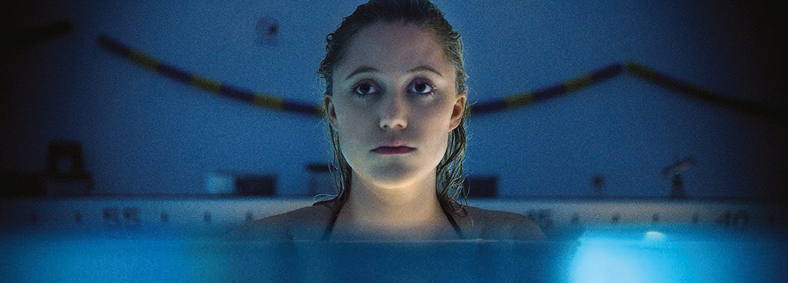
Jay (Maika Monroe) is attacked by kind-of-boyfriend Hugh (Jake Weary) after sex in the car. She wakes to find herself strapped into a chair in an abandoned carpark.

As a naked woman slowly walks towards them, Hugh explains he has passed a curse onto Jay.

Unless she can pass the curse on through sex to someone else, she will be stalked forever by the monster – the It – until she’s caught and killed. When she’s dead the monster will move back down the line to Hugh and kill him and so on.

The relentless, slow moving It always takes on the form of a loved one and is disturbingly effective as it lumbers after Jay

Armed only with a conscience Jay shies away from what she sees as nuclear option of making others a victim to save herself. Her sister Kelly (Lili Sepe) and friends Paul, Yara and Greg (Keir Gilchrist, Olivia Luccardi and Daniel Zovatto) rally to help.

Everything is played at face value and is more involving for it. There’s no comedic meta banter about how teenagers behave in horror films.

Up to the point when Jay’s willpower breaks there’s intrigue in guessing who her choice will fall on. The film is canny enough to suggest she pays an emotional price for her behaviour.

Cinematographer Mike Gioulakis carefully controlled camera is often stationary but will occasionally turn in hypnotic loops. The editing by Julio Perez IV is equally seductive.

Set in Detroit, the decaying city is a major character, suggestive of an Eden destroyed. After a few days hiding, their shared bedroom begins to resemble a drug-ridden squat.

The first house we see is number 1492, linking the history of America with sex, violence and death.

Although set in contemporary USA, the production design is rooted in the past with cathode ray TV’s, clamshell phones and classic films playing at the cinema. There is too much stonewashed denim.

Sparse dialogue is punctuated by a thunderous industrial synth soundtrack that belongs in the 1980’s, strengthening the It as an AIDS metaphor. But there’s no heavy-handed message to interrupt the assured and creepy storytelling.

The Second Best Exotic Marigold Hotel

Director: John Madden (2015)

In this sedate comedy drama sequel, the ex-pat British residents of the Indian hotel offer comfy accommodation and make few demands on your attention.

A colourful backdrop can’t brighten up dull goings-on as familiar faces tread a predictable path over a well worn plot.

Sonny (Dev Patel) and Muriel (Maggie Smith) want to expand their hotel business by buying the Hotel Splendid. So they travel to San Diego to meet potential investors to finance the deal.

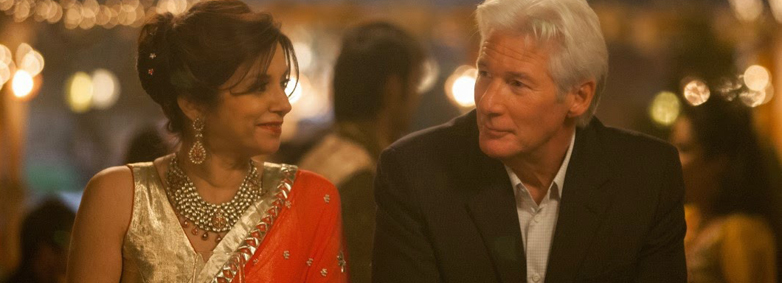
Back in Jaipur, silver haired and silver tongued American writer Guy Chambers (Richard Gere) arrives unannounced. Snobbish and insecure idiot Sonny is convinced he is a secret inspector sent by the investors to spy on their business.

Sonny is so pre-occupied with keeping Guy happy he neglects bridezilla fiancee Sunaina (Tena Desae), pushing her towards the handsome, wealthy Kushal (Shazad Latif).

Patel’s agitated playing grates rather than charms or entertains, Smith’s cockney charlady accent is inconsistent while Desae mostly spends her time dancing or scolding.

Meanwhile it’s all a little Are You Being Served? on the Costa Plonka as several hotbeds of passion are in full swing. Guy has his glad eye on Sonny’s glamorous mother Mrs. Kapoor (Lillete Dubey). Madge (Celia Imrie) is after anything in or out of trousers.

As Evelyn (Judi Dench) and Douglas (Bill Nighy) work up the courage to seize the day – and each other – his wife Jean (Penelope Wilton) turns up.

There’s a bit of a carry on when Norman (Ronald Pickup) inadvertently hires a tuc tuc driver as a hit-man to assassinate his girlfriend Carol (Diana Hardcastle).

Among the stunning scenery of rural Jaipur there are elephants, cows and camels. Street markets bustle with hard bargaining and backhand payments. Mumbai has airports, air conditioning, business conferences and heavy traffic.

Residents are affected by the universal ailments longing, loss and loneliness but room is also found for optimism in late middle age.

The ending suggests a loss of nerve by the scriptwriters who otherwise bandy creaky knee jokes about with abandon. As well as equally creaky ones about hips, eyes, backbones and mortality.

The actors aren’t asked to exert themselves so much as to risk an injury and it’s all far too familiar to be exotic. Definitely second best, at best.

☆☆☆

Focus

Director: Glenn Ficarra & John Requa (2015)

Using the glossy glow of its stars and dazzling colour palette, this stupid and sexist heist movie tries to distract our focus from its failings.

In a buddy movie without a buddy, there’s no intelligence, danger, tension, fun or sexual frisson. Jokes fall flat from a 1980’s throwback of a script with Will Smith‘s once assured delivery the most culpable.

With no-one to riff off he delivers an unusually tired performance from a self-satisfied script. It works like patchwork not clockwork and seems stitched together from other films, all better than this one.

Incompetent pickpocket Jess (Margot Robbie) fails to hustle super-slick conman Nicky (Smith). It’s hard to tell whether Jess is playing dumb or simply dumb.

Nicky explains that a successful con relies like a magic trick on distracting the victim’s focus. One of his cons is strikingly similar to the work of British illusionist Derren Brown.

Persuading Nicky to mentor her, Jess joins his huge crew of high-living con-men as they fleece unsuspecting tourists in New Orleans. We’re supposed to be impressed by their flash tricks as they callously steal wallets, cameras, phones and watches from ordinary people.

Jess and Nicky share an over-abundance of banter but no chemistry and can’t keep their hands off each other.

There’s an interlude at an American football game which has no relevance to the rest of the story. It does at least have an entertaining performance from BD Wong as the wealthy gambler Liyuan.

Characters such as Nicky’s right hand man Horst (Brennan Brown) are written in and out on a whim and act without comprehensible motivation.

After making a huge stash of cash, Nicky abruptly terminates their relationship for no explained reason and abandons her at the airport, albeit with a considerable financial advantage.

Three years later in Argentina, Nicky is hired by racing car team boss Garriga (Rodrigo Santoro) to indulge in a little corporate skulduggery.

In the close knit world of professional racing Nicky pretends to be a disgruntled engineer defecting with technical secrets to the opposition, ran by boorish Australian McEwen (Robert Taylor).

However when Jess turns up as Garriga’s girlfriend Nicky must confront his feelings for her, threatening the big con.

We’re given no reason to like the lead characters other than they’re insanely glamorous. He has a vaguely troubled personal history and she’s avoided becoming a prostitute. Far from being a romance the most important relationship is between Nicky and his father.

Nicky is always presented as powerful; wearing shades and suits while leaning out of soft-top cars. Jess suffers the camera leering over her as she parades in bikini and heels.

The coarse and laugh-free dialogue has Nicky spouting science says women are easily persuaded by soft words and trinkets. He stalks, seduces and exploits Jess before reducing her to being a nurse with a meal ticket.

Jess is possibly the only female with a speaking role.

It ends with an astonishingly predictable sting in the tail stolen from a far superior couple of con-men.

★☆☆☆☆