Good People

Director: Henrik Ruben Genz (2015)

Temptation brings danger to a struggling young couple in this silly and dingy thriller.

Americans Tom and Anna are the good people making a fresh start in London after suffering a domestic tragedy. They’re neither especially bright nor particularly likeable.

Though we’re told they’ve been together for a long time, there’s an unfortunate lack of chemistry between James Franco and Kate Hudson in the lead roles.

Having inherited Tom’s grandmother’s large house, they’ve accumulated large debts trying to renovate it.

When they discover £220,000 of much needed cash in the flat of dead neighbour, they can’t resist helping themselves.

Danish director Gnez has his cinematographer Jorgen Johansson dress the city in the gloom typical of Scandinavian noir, adding an extra layer of dreariness to proceedings.

The moral question of taking the money is quickly glossed over as the plot descends into bloody, predictable, tension-free violence. It occasionally strays unintentionally close to farce.

Tom Wilkinson plays a grieving cop chasing Sam Spruell’s villain who is trying to recover his stolen drugs money.

As Omar Sy wanders through as an urbane Frenchman trying to muscle in on the London heroin trade, the always engaging Anna Friel is wasted in a role requiring her to cradle a baby, squeal at a washing machine and perch precariously up a ladder.

As threats are issued, hands broken and furniture is destroyed, nail guns and snooker cues are put to use which probably affect their warranty.

Trainwreck

Director: Judd Apatow (2015)

This comedy about a young woman on the path to redemption feels like a series of sketches strung together by a threadbare plot.

Amy Schumer writes and stars and though she and co-star Bill Hader are engaging, their charm and talent can’t overcome the limitations of the script or the dead hand of director Apatow.

It is indulgent in length, grossly sentimental, fawning to celebrities, loosely improvisational and insufficient scenes to are brought to a strong close. Too often too many characters are allowed to waffle.

Drunk and promiscuous journalist Amy Townsend (Schumer) has a varied if unfulfilling sex life and is merrily chasing promotion at work at edgy magazine S’nuff.

Her colleagues are irritating idiots and her boss Dianna is played by an alarmingly accented Tilda Swinton. The hard-faced career woman is contrasted with Amy’s sister Kim (Brie Larson). She’s a warm, soft role model of stable maternity.

A happy homeless man offers a warning as to how Amy’s life may develop if she doesn’t change her wanton ways. She enables him in the worst possible way.

Dianna sends Amy off to interview Dr. Aaron Conners (Hader). He’s a knee surgeon famous for saving the careers of sportspeople I’ve mostly never heard of.

Before she realises it she’s falling in love, rejecting her former life of drugs and fun and embracing sobriety and monogamy.

Amy pulls a reverse Sandy (Olivia Newton-John) from Grease (1978). She migrates from independent woman to a person subservient to the needs of her un-inspirational boyfriend. But he’s a doctor, so that’s alright.

Even Grease’s Danny Zucco (John Travolta) recognises he has to compromise his behaviour to win the heart of Sandy. But Aaron is oblivious of the potential to change and so Amy must bend to meet his needs. The leader of the T’Birds is far more progressive than anyone on show here.

By the end Amy is publicly humiliating herself to prove her worth in a way that would have made her earlier, more attractive persona shudder.

Embracing family and domesticity is presented as the pinnacle of female endeavour. Her career success is dependent on the reflected glory of her beau.

The story is in thrall to the sexual politics of the ’50’s, the 1850’s. Even Charlotte Bronte (Jane Eyre pub. 1847) would blush to write a female so eager to be defined by a man for happiness and fulfilment.

There’s a funeral, a baby shower, an invasive medical procedure and several dates. It’s not the least embarrassed to lift from Woody Allen’s Manhattan (1979).

Featuring far too much basketball, someone called LeBron James features prominently as an emotional mentor to Aaron. Daniel Radcliffe, Marisa Tomei, Matthew Broderick and err, former Tennis champ Chris Evert all appear.

Amy gives a 16 year old – a legal minor – alcohol, assaults him and then attempts to have sex with him. Good luck switching the genders and getting away with that scene.

All of these failings could be overlooked if the film was rip-roaringly funny and entertaining – but it rarely musters a chuckle. The funniest scene is the first one – and Schumer isn’t in it.

The Man From U.N.C.L.E.

Director: Guy Ritchie (2015)

This big budget update of a much loved 1960’s spy series is sumptuous, smooth and stylish.

Although the loose vibe and fabulous locations are seductive, sadly the script and the chemistry aren’t.

4 series of the U.N.C.L.E. TV series ran from 1964 to 1968, plus there was the TV movie The Return of the Man from U.N.C.L.E. (1983).

Robert Vaughn starred as the American Napoleon Solo and British actor David McCallum as the Russian Illya Kuryakin.

Beyond the concept, period setting and character names not much remains of the show.

There’s not a radio pen in sight, no opening of Channel D, nor a hint of T.H.R.U.S.H. The U.N.C.L.E. (United Network Command for Law and Enforcement) organisation of the title receives a very belated introduction.

Director Guy Ritchie suffered a career slump with the inglorious mis-steps of Swept Away (2002) and Revolver (2005).

He painstakingly rebuilt his reputation as a safe pair of blockbuster hands with the excellent Sherlock Holmes franchise: Sherlock Holmes (2009) and Sherlock Holmes: Game of Shadows (2011).

Here he’s content to reject his customary zip and go against the grain of contemporary action movies. He is wilfully dismissive, almost contemptuous of his own plot.

Instead of constant wham bam action scenes he focuses on character and builds a mood of glamorous, languid indulgence which is rich in period detail.

It’s an admirable if potentially career-harming move by the writer/director/producer.

Having given Ritchie a name cast and a $75million budget, one can only imagine the horror of the studio’s executives on their first screening.

Certainly Ritchie can argue he included all the elements they wanted; cars, guns, girls, stunts, jokes – but the way he has editor James Herbert put it all together must have them tearing their hair out.

Even the sexually available and semi-naked hotel receptionist seems a studio imposition.

Elsewhere however there is a worrying confluence of violence and foreplay and a fair amount of dull macho posturing for which Ritchie can’t escape responsibility.

In 1963 the US and the USSR are threatening each other with nuclear annihilation.

Rogue nazi sympathiser Victoria Vinciguerra (Elizabeth Debicki) has stolen a computer disc. She’s a deliciously tall and cool glass of cyanide.

The disc contains data on how to super-enrich uranium to make nuclear bombs far more powerful than in existence, threatening the uneasy balance of the super-hot cold war. Whomever has the disc controls the world.

Top man at the CIA and art expert Napoleon Solo (Henry Cavill) is unwillingly teamed up with ferocious KGB agent Illya Kuryakin (Armie Hammer).

Both receive orders to recover the disc at any cost.

But the two leads are hamstrung by dull, innuendo-laden banter and a desire to project a faultless accent.

While the British Cavill plays an American, the American Hammer plays a Russian.

Hammer has less dialogue and is more able to cope but Cavill’s lumbered with laborious exposition. His careful enunciation slows scenes to a crawl.

Doing his best work when not required to speak, Cavill’s – and the film’s – best moment comes when Solo takes time to appreciate the finer aspects of life as the action goes on behind him.

It’s possible he would have been a brilliant silent movie star back in the day.

With his chiselled features and broad frame he’s the most classically movie star-looking movie star since James Garner. He steps through the film with the stately and exquisitely tailored grace of the ageing Cary Grant in To Catch A Thief (1955).

The two spies recruit an East German motor mechanic Gaby Teller (Swedish Alicia Vikander). Her rocket scientist father is held by Victoria and the boys intend to use Gabby’s connections to infiltrate Victoria’s outfit.

Sporting a chic collection of outfits but metaphorically trouser-wearing, Gabby refuses to yield superiority to the boys in any department.

A grey-haired Hugh Grant shuffles on for a couple of scenes to deliver a masterclass in light comedy.

With a storming pop operatic soundtrack throughout, Ritchie saves his visual dynamism for the finale when the screen erupts into a frenzy of split screens, fast cuts and twisted camerawork.

With beautiful production design by Oliver Scholl captured with glossy delight by cinematographer John Mathieson, it makes for a very easy on the eye experience. Berlin in 1963 is expertly rendered.

Ritchie should be applauded for making a film with a strong identity and has the courage to stand or fall on it’s own terms.

But for all it’s speedboats, helicopters and a terrifically synchronised car chase, it’s a pity it’s not more full throttle.

Edge of Tomorrow

Director: Doug Liman (2014)

This blistering sci-fi spectacular sees Tom Cruise destined to fight the same battle over and over again.

Exciting and intriguing, it flares up with a charismatic cast, ferocious action, dynamite design and maze-like plot.

An alien species called Mimics have conquered mainland Europe and are ready to strike at London. They’re whirling dervishes of tentacles and teeth.

On the eve of a major retaliatory attack, Major William Cage (Cruise) is accused of deserting, dumped on the frontline and then caught in an alien ambush.

The brilliantly staged battle is filmed in a palette of blues and greys which channel the authenticity of Spielberg’s Saving Private Ryan (1998) – any other colour generally means something or someone’s on fire. (Cinematography Dion Beebe).

Aided by the rhythm of the editing (James Herbert, Laura Jennings), humour pierces the action like shrapnel.

Cage is killed in action but is shocked when he awakes fully intact back on the parade ground, the day before the attack.

Stuck in a time-loop he has to continually fight and die, learning each day how to survive a little bit longer.

Unlike the similarly structured classic Groundhog Day (1993), there’s no moral solution to the problem.

When Cage meets the famously tough and beautifully buff sergeant Vrataski (an excelllent Emily Blunt), he discovers she has had a similar experience.

Vrataski has learnt the aliens are responsible for the time-loop and that by destroying their hive mind, humans can win the war.

The lack of romantic chemistry between Cruise and Blunt works in the films favour as they form an effective team.

Bill Paxton is hugely entertaining as the swaggering Sergeant Farrell. He relishes every on-screen moment and turns them to his scenery chewing, comic advantage.

Cruise brings his usual intensity but makes Cage likeable by gamely being the punchline of many jokes.

Which is just one of many great reasons to watch this movie again. And again.

The Amazing Spider-Man 2

Director: Marc Webb (2014)

A swinging good time is guaranteed in this superhero sequel which comes fully charged with a shocking finale.

During the many amped–up action sequences, the swooping, dipping camera captures the dynamic thrills of the original comic artwork.

They crackle with humour which Brit actor Andrew Garfield supplies through his upbeat charm and gift for physical comedy.

He reminds us how much exuberant giddy fun can be had as a web-spinning, crime–fighting superhero.

Especially when he’s up against an enjoyably preposterous super-villain called Electro (Jamie Foxx).

Garfield has less fun as alter ego Peter Parker and spends a lot time out of costume mooning over his sassy girlfriend Gwen Stacy (Emma Stone).

However the real-life couple share a hugely likeable and engaging on–screen chemistry.

Parker’s dramatic declarations of love bode ill for the future of their relationship, especially as Gwen surprises him by applying to study at Oxford University here in Blighty.

Spider–Man’s friendly neighbourhood persona mask hides Parker’s emotional pain caused by being abandoned by his parent as a boy.

While he’s making a discovery that leads to the truth about their death, a lonely electrical engineer Max Dillon (Foxx) develops an obsession with Spider-Man.

Meanwhile the new head of Oscorp Harry Osborn (a pale and interesting Dane DeHaan) is suffering from a genetic disease and believes Spider–Man’s blood will save him from an early death.

An ignorance of health and safety regulations and a giant vat of electric eels leads to  a workplace accident – transforming Dillon into the glowing blue-skinned Electro.

After an electrifying confrontation in Times Square, Electro is locked up and blames Spider–Man. Osborn frees him and together they join forces to track down Spidey.

Brit guitarist Johnny Marr contributes to the high voltage soundtrack – appropriately he was once in band called Electronic.

Transformers: Age of Extinction

Director: Michael Bay (2014)

Hardcore fans may enjoy this fourth episode of the fighting robot franchise – but for everyone else it’s a long dull road to cinematic oblivion.

If you strip this film down to its component parts: alien robots, metal dinosaurs, spaceships and good performances by Marky Mark Wahlberg and Stanley Tucci, it should be a lot of fun.

But it’s mangled construction means that no amount of flashy explosions – and there’s an awful lot of them – can jump start the story into life.

Since the Battle of Chicago the surviving autobots (the good transformers) and the decepticons (the baddies) have been hiding from the authorities, particularly sinister CIA boss Harold Attinger (Kelsey Grammer).

He’s teamed up with corrupt millionaire designer Joshua Joyce (Tucci) and they’ve hired mercenary transformer Lockdown (voiced by Mark Ryan) to hunt down the robot cars.

They plan to use the alien technology to build their own indestructible army.

Meanwhile struggling inventor Cade Yeager (Wahlberg) rescues a broken-down truck which turns out to be autobot leader Optimus Prime.

Along with Yeager’s useless daughter Tessa (Nicola Peltz) and her idiot boyfriend Shane (Jack Reynor) they’re soon on the run from Lockdown.

Beneath the special effects sheen there’s a clapped-out engine of mechanical dialogue, shoddy plotting and a repetitive structure of chases and fights.

Devoid of excitement, logic or wit, it lasts a brain melting and bum-numbing two hours and forty five minutes – but seems at least twice as long.

It screams along in second gear at a hundred miles an hour, culminating in another huge battle which includes three dinobots.

As far as autobots go, I’ve watched far more entertaining episodes of The Octonauts.

Gravity

Director: Alfonso Cuaron (2013)

George Clooney and Sandra Bullock are lost in space and out of this world in this gripping, transcendental sci-fi thrill-ride.

Excellent performances from the charismatic actors combine with suffocatingly tense action sequences and incredible visuals.

Dizzying camerawork (Emmanuel Lubezki) and elegantly restrained editing (dir. Alfonso Cuaron, Mark Sanger) thrust us into the heart of the electrifying action.

Astronauts Lieutenant Matt Kowalski (Clooney) and Dr Ryan Stone (Bullock) who are on a spacewalk working on their space shuttle when disaster strikes.

They are cast adrift when their craft, orbiting 372 miles above Earth, is destroyed by a storm of debris.

Roped together, their hope for survival rests on a dwindling supply of fuel in their jet packs. They pray it is enough to propel them to a nearby abandoned Russian space station before their oxygen runs out.

To add to their problems, the hail of debris had become trapped in orbit and will return to punish them every 90 minutes.

There’s humour in the sparse dialogue and chemistry between the stars as they struggle to deal with the physics of their situation.

Having lost radio contact with Mission Control, the astronauts become angels flailing in limbo between the cold, dark heavens and the inviting warmth of the earthly paradise below.

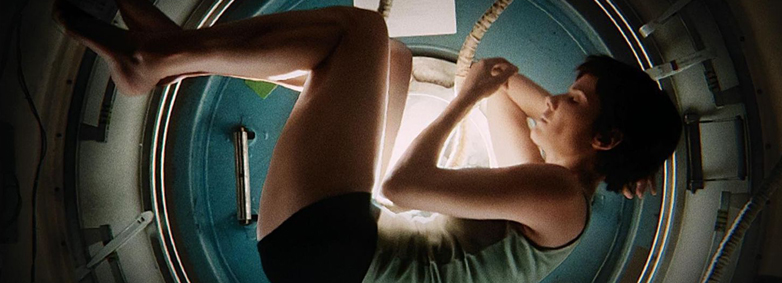
Gravity’s finest moment is a single, sexy, sublime shot when Bullock does a free-fall striptease that climaxes with the birth of hope and the possibility of redemption. It’s a journey within a journey – think Barbarella (1968) meets 2001: A Space Odyssey (1968).

As a Hollywood action thriller this is exceptional entertainment; as an exploration of what makes us human it is, quite simply, divine.

Postscript.

Gravity received a 10 Oscar nominations and won 7.

Best Director: Alfonso Cuaron

Best Cinematography: Emmanuel Lubezki

Best Visual Effects: Tim Webber, Chris Lawrence, David Shirk, and Neil Corbould

Best Film Editing: Alfonso Cuaron and Mark Sanger

Best Original Score: Steven Price

Best Sound Mixing: Skip Lievsay, Christopher Benstead, Niv Adiri and Chris Munro

Best Sound Editing: Glenn Freemantle

Kowalski (Clooney) is the name in an urban myth involving astronaut Neil Armstrong. But it’s far too rude to print here.

* in some versions it’s Gorsky.

Star Trek Into Darkness

Director: JJ Abrams (2013)

This spectacular looking but disappointing sequel to 2009’s brilliant franchise reboot is a bumpy retread of the best Star Trek film, The Wrath of Khan (1982).

It’s shamefacedly self-referential, surprisingly violent and riddled with plot-holes.

The cosmic cast returns with Chris Pine as Kirk, Zachary Quinto as Spock, Zoe Saldana as Uhura, Karl Urban as ‘Bones’ McCoy and Simon Pegg as Scotty.

After breaking Starfleet protocols on an alien planet, Kirk is recalled to Earth where former agent Harrison (Benedict Cumberbatch) is conducting a terror campaign.

Harrison escapes to Qo’noS, the Klingon home world, and Kirk hunts him down only for the Enterprise to be stranded, powerless on the edge of the Neutral Zone.

Photon torpedoes, phaser fights, space battles and armour-suited Klingons zip past in a blur of CGI.

As Kirk and Spock’s bickering bromance continues, Cumberbatch’s purring villain brings much needed intelligence and depth.

Director JJ Abrams has difficulty juggling his large cast and some are wheeled on and off at warp speed to pay lip service to the character.

Alice Eve is particularly ill-served as a scientist required to get her kit off to defuse bombs.

Plus the irritating Pegg has far too much screen-time, his comic delivery is laboured and light on humour.

As it’s played at a breakneck speed throughout, it demonstrates Abrams has little time for, or possibly understanding of, dramatic relief.

Abrams is happy to fly at lightspeed past the emotional hub of the film in order to pursue a far less interesting – and over extended – fist fight.

Abrams may wish to be considered the new Spielberg but this appropriately, is more worthy of a latter-day George Lucas.

Pacific Rim

Director: Guillermo del Toro  (2013)

Giant battle-robots stomp through the most thrillingly monumental sci-fi film of 2013.

It’s powered by winning performances, tremendous design and brilliant special effects. The script scatters plenty of humour that is broad and wry and dry.

In the near future, reptiles called Kaiju – the size of skyscrapers – have emerged from a fissure in the Pacific seabed and set about attacking the world’s advanced cities.

Earth’s resources are pooled and colossal two-man robotic fighting machines called Jaegers are built to combat their cataclysmic threat.

But then global governments change their defence policy and the Jaegers are retired in favour of a massive wall to keep out the fearsome Kaiju.

Because history demonstrates how well a wall-building policy worked for the Chinese, Romans and Soviets.

Research scientists are ignored after they predict ever more intense attacks – and the defensive barriers are breached under the terrifying onslaughts from the creatures.

In his military base in Hong Kong, military commander Stacker Pentecost (Idris Elba) has a plan to save the world. He recommissions the four remaining Jaegers to go on the offensive.

Plasma-cannons blitz acid-spitting monsters as terrifically exciting battles take place at sea in thunderstorms – which may explain why the dialogue is a little rusty.

Whenever the film threatens to topple under the weight of its preposterous nature, Elba’s titanic personality heaves it back on to its feet.

Charlie Hunnam stars as pilot Raleigh Becket and is an efficient rather than overly charismatic lead.

But he shares a nice chemistry with Japanese actress Rinko Kikuchi who plays Mako, a military technician with a tragic past.

This dazzlingly entertaining, hugely engaging heroic adventure keeps hitting the audience with unexpected punches. The final knockout blow leaves you reeling with enjoyment.

The Wolverine

Director: James Mangold (2013)

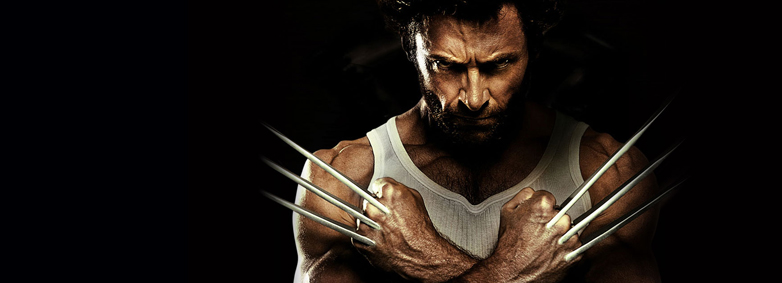
Hugh Jackman returns once again as the adamantium-clawed superhero in a movie that barks loudly but has too little bite.

Wolverine has left  the X-Men and is now known simply as Logan. He living a hermits existence in the wilds of Alaska when he is visited by the dangerous punk haired samurai Yukio (Rila Fukushima).

She transports him to Tokyo where he is introduced to her mentor, the dying Yashida (Hal Yamanouchi) whose life Logan once saved.

When Yashida’s beautiful daughter Mariko (Tao Okamoto) is attacked, Logan becomes involved in a dangerous battle of rival clans involving political intrigue and betrayal.

The film starts brilliantly and ends in a huge fight but the middle sags as Logan battles his inner demons.

There is a terrific fight on the roof of a bulllet train but the many ninja’s can’t execute the simplest attack without somersaults, pikes, twists and triple salchows – which must be exhausting and possibly not even neccessary.

They also insist on wearing their trademark all-black costumes when fighting in the snow. This isn’t displaying the requisite discretion these stealth warriors are famed for.

Jackman is an engaging screen presence and is most fun when he’s angry. He never shirks an opportunity to demonstrate his monstrously buff physique.

Okamoto is a graceful willow to Jackman’s hefty oak. But she lacks animation and there’s not a great deal of chemistry.

Much more fun are Yukio and Viper (Svetlana Khodchenkova). One is a fiesty and flirtatious foil for Logan, the other a glamorous poison-spitting mutant adversary.

This Wolverine is neutered by the 12A rating.  With his bladed hands slashing through his enemies,  the original comic turned to soggy pulp from all the red ink used in the fight scenes – but this is a noticeably bloodless affair.

As is the passionless romance which suffers from Logan mooning over his dead lover Jean Grey (Famke Janssen) while distractedly wooing the insipid Mariko.

This is an honourable and diverting attempt to bring depth to a familiar character but isn’t hugely rewarding.