Edge of Tomorrow

Director: Doug Liman (2014)

This blistering sci-fi spectacular sees Tom Cruise destined to fight the same battle over and over again.

Exciting and intriguing, it flares up with a charismatic cast, ferocious action, dynamite design and maze-like plot.

An alien species called Mimics have conquered mainland Europe and are ready to strike at London. They’re whirling dervishes of tentacles and teeth.

On the eve of a major retaliatory attack, Major William Cage (Cruise) is accused of deserting, dumped on the frontline and then caught in an alien ambush.

The brilliantly staged battle is filmed in a palette of blues and greys which channel the authenticity of Spielberg’s Saving Private Ryan (1998) – any other colour generally means something or someone’s on fire. (Cinematography Dion Beebe).

Aided by the rhythm of the editing (James Herbert, Laura Jennings), humour pierces the action like shrapnel.

Cage is killed in action but is shocked when he awakes fully intact back on the parade ground, the day before the attack.

Stuck in a time-loop he has to continually fight and die, learning each day how to survive a little bit longer.

Unlike the similarly structured classic Groundhog Day (1993), there’s no moral solution to the problem.

When Cage meets the famously tough and beautifully buff sergeant Vrataski (an excelllent Emily Blunt), he discovers she has had a similar experience.

Vrataski has learnt the aliens are responsible for the time-loop and that by destroying their hive mind, humans can win the war.

The lack of romantic chemistry between Cruise and Blunt works in the films favour as they form an effective team.

Bill Paxton is hugely entertaining as the swaggering Sergeant Farrell. He relishes every on-screen moment and turns them to his scenery chewing, comic advantage.

Cruise brings his usual intensity but makes Cage likeable by gamely being the punchline of many jokes.

Which is just one of many great reasons to watch this movie again. And again.

Transformers: Age of Extinction

Director: Michael Bay (2014)

Hardcore fans may enjoy this fourth episode of the fighting robot franchise – but for everyone else it’s a long dull road to cinematic oblivion.

If you strip this film down to its component parts: alien robots, metal dinosaurs, spaceships and good performances by Marky Mark Wahlberg and Stanley Tucci, it should be a lot of fun.

But it’s mangled construction means that no amount of flashy explosions – and there’s an awful lot of them – can jump start the story into life.

Since the Battle of Chicago the surviving autobots (the good transformers) and the decepticons (the baddies) have been hiding from the authorities, particularly sinister CIA boss Harold Attinger (Kelsey Grammer).

He’s teamed up with corrupt millionaire designer Joshua Joyce (Tucci) and they’ve hired mercenary transformer Lockdown (voiced by Mark Ryan) to hunt down the robot cars.

They plan to use the alien technology to build their own indestructible army.

Meanwhile struggling inventor Cade Yeager (Wahlberg) rescues a broken-down truck which turns out to be autobot leader Optimus Prime.

Along with Yeager’s useless daughter Tessa (Nicola Peltz) and her idiot boyfriend Shane (Jack Reynor) they’re soon on the run from Lockdown.

Beneath the special effects sheen there’s a clapped-out engine of mechanical dialogue, shoddy plotting and a repetitive structure of chases and fights.

Devoid of excitement, logic or wit, it lasts a brain melting and bum-numbing two hours and forty five minutes – but seems at least twice as long.

It screams along in second gear at a hundred miles an hour, culminating in another huge battle which includes three dinobots.

As far as autobots go, I’ve watched far more entertaining episodes of The Octonauts.

Gravity

Director: Alfonso Cuaron (2013)

George Clooney and Sandra Bullock are lost in space and out of this world in this gripping, transcendental sci-fi thrill-ride.

Excellent performances from the charismatic actors combine with suffocatingly tense action sequences and incredible visuals.

Dizzying camerawork (Emmanuel Lubezki) and elegantly restrained editing (dir. Alfonso Cuaron, Mark Sanger) thrust us into the heart of the electrifying action.

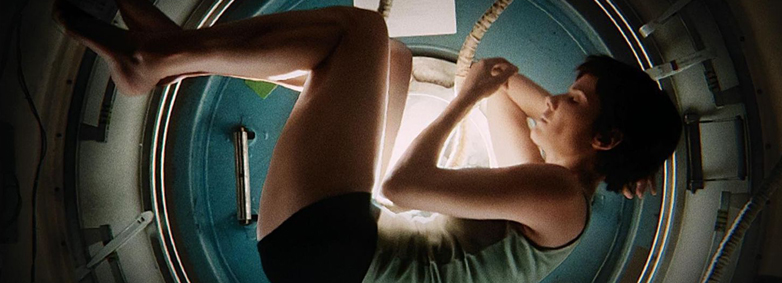
Astronauts Lieutenant Matt Kowalski (Clooney) and Dr Ryan Stone (Bullock) who are on a spacewalk working on their space shuttle when disaster strikes.

They are cast adrift when their craft, orbiting 372 miles above Earth, is destroyed by a storm of debris.

Roped together, their hope for survival rests on a dwindling supply of fuel in their jet packs. They pray it is enough to propel them to a nearby abandoned Russian space station before their oxygen runs out.

To add to their problems, the hail of debris had become trapped in orbit and will return to punish them every 90 minutes.

There’s humour in the sparse dialogue and chemistry between the stars as they struggle to deal with the physics of their situation.

Having lost radio contact with Mission Control, the astronauts become angels flailing in limbo between the cold, dark heavens and the inviting warmth of the earthly paradise below.

Gravity’s finest moment is a single, sexy, sublime shot when Bullock does a free-fall striptease that climaxes with the birth of hope and the possibility of redemption. It’s a journey within a journey – think Barbarella (1968) meets 2001: A Space Odyssey (1968).

As a Hollywood action thriller this is exceptional entertainment; as an exploration of what makes us human it is, quite simply, divine.

Postscript.

Gravity received a 10 Oscar nominations and won 7.

Best Director: Alfonso Cuaron

Best Cinematography: Emmanuel Lubezki

Best Visual Effects: Tim Webber, Chris Lawrence, David Shirk, and Neil Corbould

Best Film Editing: Alfonso Cuaron and Mark Sanger

Best Original Score: Steven Price

Best Sound Mixing: Skip Lievsay, Christopher Benstead, Niv Adiri and Chris Munro

Best Sound Editing: Glenn Freemantle

Kowalski (Clooney) is the name in an urban myth involving astronaut Neil Armstrong. But it’s far too rude to print here.

* in some versions it’s Gorsky.

Star Trek Into Darkness

Director: JJ Abrams (2013)

This spectacular looking but disappointing sequel to 2009’s brilliant franchise reboot is a bumpy retread of the best Star Trek film, The Wrath of Khan (1982).

It’s shamefacedly self-referential, surprisingly violent and riddled with plot-holes.

The cosmic cast returns with Chris Pine as Kirk, Zachary Quinto as Spock, Zoe Saldana as Uhura, Karl Urban as ‘Bones’ McCoy and Simon Pegg as Scotty.

After breaking Starfleet protocols on an alien planet, Kirk is recalled to Earth where former agent Harrison (Benedict Cumberbatch) is conducting a terror campaign.

Harrison escapes to Qo’noS, the Klingon home world, and Kirk hunts him down only for the Enterprise to be stranded, powerless on the edge of the Neutral Zone.

Photon torpedoes, phaser fights, space battles and armour-suited Klingons zip past in a blur of CGI.

As Kirk and Spock’s bickering bromance continues, Cumberbatch’s purring villain brings much needed intelligence and depth.

Director JJ Abrams has difficulty juggling his large cast and some are wheeled on and off at warp speed to pay lip service to the character.

Alice Eve is particularly ill-served as a scientist required to get her kit off to defuse bombs.

Plus the irritating Pegg has far too much screen-time, his comic delivery is laboured and light on humour.

As it’s played at a breakneck speed throughout, it demonstrates Abrams has little time for, or possibly understanding of, dramatic relief.

Abrams is happy to fly at lightspeed past the emotional hub of the film in order to pursue a far less interesting – and over extended – fist fight.

Abrams may wish to be considered the new Spielberg but this appropriately, is more worthy of a latter-day George Lucas.

Pacific Rim

Director: Guillermo del Toro  (2013)

Giant battle-robots stomp through the most thrillingly monumental sci-fi film of 2013.

It’s powered by winning performances, tremendous design and brilliant special effects. The script scatters plenty of humour that is broad and wry and dry.

In the near future, reptiles called Kaiju – the size of skyscrapers – have emerged from a fissure in the Pacific seabed and set about attacking the world’s advanced cities.

Earth’s resources are pooled and colossal two-man robotic fighting machines called Jaegers are built to combat their cataclysmic threat.

But then global governments change their defence policy and the Jaegers are retired in favour of a massive wall to keep out the fearsome Kaiju.

Because history demonstrates how well a wall-building policy worked for the Chinese, Romans and Soviets.

Research scientists are ignored after they predict ever more intense attacks – and the defensive barriers are breached under the terrifying onslaughts from the creatures.

In his military base in Hong Kong, military commander Stacker Pentecost (Idris Elba) has a plan to save the world. He recommissions the four remaining Jaegers to go on the offensive.

Plasma-cannons blitz acid-spitting monsters as terrifically exciting battles take place at sea in thunderstorms – which may explain why the dialogue is a little rusty.

Whenever the film threatens to topple under the weight of its preposterous nature, Elba’s titanic personality heaves it back on to its feet.

Charlie Hunnam stars as pilot Raleigh Becket and is an efficient rather than overly charismatic lead.

But he shares a nice chemistry with Japanese actress Rinko Kikuchi who plays Mako, a military technician with a tragic past.

This dazzlingly entertaining, hugely engaging heroic adventure keeps hitting the audience with unexpected punches. The final knockout blow leaves you reeling with enjoyment.

Terminator Genisys

Director: Alan Taylor (2015)

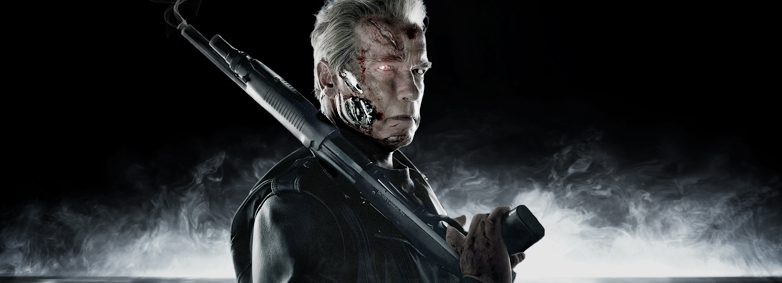
The psychotic cyborg franchise suffers a serious metal fatigue as it clanks into gear for a fifth time.

Despite a sprightly comedy turn by Arnold Schwarzenegger, it’s a dull and stupid sci-fi clunker with a confused script, curious casting, a jokey tone and variable CGI.

It’s little more than a rusty collection of old parts bashed together in a wreckers yard and re-tooled as a generic family friendly action movie.

In 2029, the leader of the resistance John Connor (Jason Clarke), leads the war against the machines and the Skynet operating system.

Skynet sends a Terminator (Schwarzenegger) to the year 1984 to kill John’s mother Sarah (Emilia Clarke). So John sends his trusted lieutenant Kyle Reese (Jai Courtney) back in time to protect her.

What follows is a time-hopping mess full of routine action scenes devoid of character worthy of our interest.

It ends up in 2017 where the good guys have to save the future of mankind by attempting to unplug an app called genisys. That’s right, the big bad is an app.

The app is played by former Dr Who Matt Smith and it’s appearance and manner will seem familiar to anyone who remembers The Red Queen in Resident Evil (2002).

Because quantum nexus nonsense something, there are multiple versions of Terminators, explosions, cheap laughs and no chemistry between the romantic leads.

Emilia Clarke has the  unenviable task of replacing Linda Hamilton as Sarah Conner. She lacks the ripped intensity, plays her part like a stroppy teen and isn’t given any opportunity to suggest she can carry a major movie.

Famous for her frequent nudity in the TV series Games of Thrones, fans of the show may be disappointed she is always fully dressed.

Courtney was in the most recent and most terrible entry in the Die Hard franchise, A Good Day To Die Hard (2013). Here he’s awful: bland, smug and possessing less range and vitality than the robots.

Never more human than when he’s playing a robot, Schwarzenegger plays his once menacing character for broad, kiddie-friendly laughs.

It’s a vaudeville grandfather performance and I expected him to start handing out Wether’s Originals and pulling out silver pennies from behind a small child’s ears.

J.K. Simmons plays a bald cop, replacing Lance Henriksen who played a bald cop in the original film.

We see the Golden Gate Bridge destroyed in a tsunami of pixels. That’s not something I’ve seen in the cinema since Dwayne Johnson’s disaster movie San Andreas (2015) appeared last month.

Where the first two films arrogantly smashed their way into cinemas, this shuffles on with an apologetic air and tries to pander to the audience. And no-one likes a needy and pathetic kiss ass.

The Terminator (1984) was a ferocious sci-fi thriller and Terminator 2: Judgment Day (1991) was an SFX action spectacular.

Officially referred to as a reset not a reboot or a sequel, this film ejects Terminator 3: Rise of the Machines (2003) and Terminator Salvation (2009) form the canon. There was also a TV spin off show.

Both benefitted from James Cameron’s extraordinary storytelling but we have no such master-craftsman here. At one point the director is really confused and riffs on Cameron’s navy SEALs in space shoot ’em up Aliens (1986).

There’s lots of humour but little that’s funny, just a lot of knowing winks to the first film which may confuse anyone not familiar with the first film, made thirty years ago.

Skeletal robots are frequently walking out of exploding walls of fire.

Lines cherished in geekdom such as ‘I’ll be back’ and ‘Come with me if you want to live’ are delivered and followed by a pregnant pause, presumably for the audience to register and laugh.

But if this is your first Terminator film, it will be just a weirdly delivered line of no particular relevance.

It all makes little sense and by halfway through I didn’t care if the machines and Skynet won.

Tomorrowland

DIrector: Brad Bird (2015)

Take a smooth roller-coaster ride with George Clooney in this well-oiled but preachy theme park-based adventure.

Inspired by the Disneyland Tomorrowland attraction which opened in 1955, the film wants to inspire us to be creative and free – but only if we follow the Mickey Mouse rules.

Disney have had huge success turning their Pirates of the Caribbean ride into a Johnny Depp starring mega-movie franchise and no doubt secret plans are already afoot for a sequel.

Young Casey Newton (Britt Robertson) sneaks out at night to blow up the bulldozers who are due to tear down Nasa‘s defunct launch pad at Cape Canaveral.

Not only will the closure of the base put her engineer Dad Eddie (Tim McGraw) out of work – but it will also signal the end of humanity’s dreams of a gleaming future among the stars.

Casey finds a small badge decorated with a corporate logo which miraculously transports her to another dimension.

The badge only works when it touches Casey’s skin – with heavy-handed symbolism she has to literally grasp the future.

It transports her to the futuristic city of Tomorrowland where citizens use jet-packs to fly among the soaring silver skyscrapers. It gleams with orderly sunshine and prescribed happiness – and she’s wowed.

Amusingly Casey has to navigate the geography of both world’s simultaneously, allowing for some well-executed physical comedy.

When the battery power of her badge runs out, Casey finds herself back home but determined to return.

Tracking down another badge, Casey is attacked by sharp-suited robot agents with laser-guns and rescued by a mysterious 13 year old called Athena (Raffey Cassidy).

Part bodyguard and part spirit-guide, Athena is named after the Greek goddess of wisdom, courage, and inspiration who’s also the patron saint of cities. She delivers Casey to the home of reclusive and grumpy inventor Frank (Clooney).

He was ejected from Tomorrowland for building a machine which broke the future – but he’s persuaded Casey can fix the machine he created. So the three of them team up to try to save the world.

Brad Bird has a mixed directorial track record; The Incredibles (2004) is brilliant, Ratatouille (2007) is dull and Mission Impossible: Ghost Protocol (2011) is excellent but only in parts.

With it’s love of the space-age, hints of government conspiracy and a young boy with a robot best friend; Tomorrowland is similar to Bird’s wonderful The Iron Giant (1999) – though not as entertaining.

Demonstrating Tomorrowland’s admirable if misguided confidence in itself, the opening scene riffs on The Princess Bride (1987). Also easily recognised as influences are The Wizard of Oz (1939), The Phantom Toll Booth (1970) and The Matrix (1999). The ghost of Pinocchio is never far away.

The wheels of this roller-coaster are greased by glorious design. Referencing the work of modernist architect John Lautner and filmed in the City of Arts and Sciences in Valencia; the sleek buildings and costumes have a retro-futuristic feel.

This contrasts with the gorgeous Jules Verne-inspired steampunk rocket-ships which riff on Disney’s Nautilus from 20,000 Leagues Under the Sea (1954).

Charming performers navigate the decent action scenes with aplomb and employs freeze rays, time bombs and flying robots to dazzle the eye.

But it never reaches the emotional pitch it aims for or delivers the magic and wonder the orchestral score by Michael Giacchino frequently promises.

The plot is powered by an on-brand corporate message rather than drama, excitement or internal logic, and it’s too easily distracted by its own whizzy visuals.

The talented trio of bickering leads do their best to distract you from a message-laden script. In true baby-boomer fashion the film suggests all the the world needs to be a better place is to transmit a positive vibe. Man.

It also demands we choose to feed the wolf of our optimism not the wolf of despair. It’s a small world after all.

The closest there is to a villain is rival inventor David Nix (Hugh Laurie) – but the subdued TV star seems reluctant to project any of the menace, gravitas or camp the role needs and he desperately resorts to comedy swearing.

Even when playing grumpy Clooney is reliably charming. He is generous to his younger co-stars and careful never to overpower their performances. Not that they give him much opportunity to do so.

Robertson gives Casey a feisty energy and is courageous, smart and likeable. However the real star of the film is Cassidy who has a deft comic touch and whose calculated poise is remarkably effective at suggesting wisdom beyond her years.

In order to save the world Frank must reclaim his childhood innocence and imagination by symbolically destroying the source of his unhappiness and negativity.

However this means he also rejects adulthood and those messy adult complications such as love, sex and fear.

The film openly derides the dystopias of Orwell’s 1984, Bradbury’s Fahrenheit 451 and Huxley’s Brave New World and their negative view of the future, while Frank equates politics and bureaucracy with greed.

But Frank’s vision of utopia is an exclusive enclave of beautiful creative thinkers with admission by invitation only. It’s a sterile, sexless land of infantilised adults and scarily squeaky-clean children who could have sprang from The Village Of The Damned (1960) – now where does that remind you of?

If suitable names are already taken, perhaps Frank could call it Hollywoodland.

Spring

Director: Justin Benson and Aaron Moorhead (2015)

A young American suffers the holiday romance from hell in this seductive supernatural shocker.

Having lost his mother and his job and finding himself wanted by the police, Californian cook Evan (Lou Taylor Pucci) high-tails to Italy to sort his head out.

Having hooked up with foul-mouthed Brits Tom and Sam (Nick Nevern, Jonathan Silvestri) Evan accompanies them on a road trip to the beautiful port of Bari.

Once there Evan is picked up in a bar by a raven-haired beauty in a startling red dress. She says she’s called Louise (Nadia Hilker).

She’s a forthright and well-travelled genealogy student who has a secret skin-care regime and may be lying about her age. Louise is also averse to having her photograph taken and says she tries to be vegetarian.

Evan is smitten and as his Brit friends disappear to Amsterdam, he takes a labouring job on a farm in order to stay close to the enigmatic Louise.

His boss is taciturn widower Angelo (Francesco Carnelutti) whose melancholic devotion to his crops adds depth to the slowly gestating romantic tone.

Evan tries to woo Louise with dinner dates, boat trips and museum visits. Together they’re charming and funny and we want them break through the emotional barriers keeping them apart.

Unknown to Evan, Louise suffers a condition and it’s getting worse. Macabre tones twist up through the romance as maggots, insects and snakes begin to intrude.

For reasons which become horribly clear, Louise enjoys unprotected sex and there are discarded needles on her bathroom floor.

We appreciate the danger Evan is in long before he does and the fate of their relationship is dependent on the arrival of the imminent spring equinox.

Inventive, intriguing and gently hallucinogenic, Spring benefits from deliciously visceral physical effects, a confident and precisely constructed script and two likeable leads who share an engaging chemistry.

Their deadpan banter is cut from a similar vein to the horror classic An American Werewolf In London (1981) – but also sweet and tart like the fruit of Angelo’s grove.

Co-director Benson wrote the script and his partner Moorhead acted as cinematographer. Both are in healthy command of their respective disciplines and combine to create a film substantially more than the sum of its low budget parts.

Moorhead’s camerawork is fluid and controls the rhythms of the story, contributing to the sly and slightly trippy tone. He makes the old town quarter of Bari look fabulous, as much a character as Vienna was in Don’t Look Now (1973).

The romantic touchstones would be Richard Linklater’s Before Sunrise (1995) and of course F.W. Murnau’s masterpiece Sunrise: A Song Of Two Humans (1927).

With it’s expertly mixed combination of horror, comedy and romance, Spring is a smart, enjoyable and accomplished addition to the cinema of 2015.

Mad Max: Fury Road

Director: George Miller (2015)

This barkingly brilliant reboot of the 1979 action classic brings the Road Warrior thundering back into cinemas in a cacophonous cloud of craziness.

Writer/director George Miller returns and though the central character is a former cop called Max (Britain’s Tom Hardy in the role Mel Gibson made famous) there are few connections to the original trilogy.

The Mad Max franchise began with the low budget Mad Max (1979) followed up with the western influenced Mad Max 2: The Road Warrior (1981) before concluding with the weak Beyond Thunderdome (1985) which co-starred Tina Turner.

This is altogether a bigger, badder and more bonkers movie. Clearly there was a meeting where all ideas were left on the table and ended up on the screen.

A reckless pursuit of spectacular entertainment which could have easily ended up as a six lane motorway pile-up. It’s credit to Miller and his team we’re not watching another Dune (1984) or Jupiter Ascending (2015).

They’ve created a frantic metal circus on wheels and populated it with clowns, midgets, acrobats, showgirls and bare-chested warriors. Then they’ve sent it blasting across the desert to the power chords of it’s own onboard guitarist.

An exhilarating chase, it is far closer in epic sweep, energy and colour to Mel Gibson’s Apocalypto (2006) with which it would make a dazzling demented double-bill. Gibson has no connection to this production.

It’s another left turn for Miller who directed Babe (1995) the charming family fantasy about a talking pig. He then went on to win the Academy Award for Best Animated Feature for Happy Feet (2006).

The  script is co-written by artist Brendan McCarthy who first achieved success as an artist on 2000AD‘s Judge Dredd comic strip. Dredd himself was visually influenced in part by the poster for Death Race 2000 (1975) which itself was an influence on the first Mad Max movie.

The dialogue is as sparse and hard as the desert location with location work in Namibia, South Africa and Miller’s native Australia – where the first films were made.

Miller is aided in his pursuit of a no-holds barred cinema experience by cinematographer John Seale, editor Margaret Sixel and production designer Colin Gibson.

Seale’s colour palate is dominated by blues and oranges with controlled explosions of white and green, a moving canvas created with the absolute control of Mondrian. His saturated colour levels add to the intensity of the action.

Sixel’s manic and itchy editing puts us inside the addled mind of Max. Although it generates a ferocious pace it allows time for us to draw breath before the next assault on our senses.

Colin Gibson’s designs are nasty, brutal and far from beautiful – but they are brilliant. 150 wildly different vehicles are fused from different eras and give a new meaning to the expression ‘hybrid motor’.

The greatest of them is Furiosa’s War RIg, a character in itself and one resembling a giant rusting Ninky Nonk. There are also design nods to The Cars That Ate Paris (1974) and The Dark Crystal (1982).

Dutch multi-instrumentalist, producer Junkie XL provide an incredible, raucous, unforgiving soundtrack.

There’s conspicuous CGI to facilitate the 3D experience but the CGI used for the background vistas is convincingly realised.

In the original film, Max is driven to righteous anger by the murder of his family – this time he is insane from the start; a feral, lizard-eating animal. He gradually acquires a new identity and Max’s emerging sanity is reflected through his shifting appearance.

Interested only in his personal survival, Max is haunted by the loss of his daughter in the oil wars that have turned the world into a barren wasteland. It’s a post-apocalyptic future and all resources are in short supply, especially gasoline and water.

Captured by the tribe of War Boys, Max is made a slave of the Citadel and chained to a warrior called Nux (Nicholas Hoult) who is farming Max for his blood.

The Citadel is a water-producing fiefdom owned by Immortan Joe (Hugh Keays-Byrne – he played the psycopathic villain Toecutter in the first film). People are property; cattle for producing milk, blood and babies.

Max escapes and reluctantly teams up with the renegade Imperator Furiosa (Charlize Theron) who’s stolen a War Rig and a tanker full of precious fuel.

Also on board are are Immortan Joe’s five wives. He’s not best pleased at losing his valuable property and unleashes three heavily armed war parties to bring them back.

The wives are angelic beauties who possess economical clothing and extravagant names  – such as The Splendid Angharad (Rosie Huntington-Whiteley).

Whereas the rest of the toothless population are blistered and ravaged by disease, these girls resemble chastity belt-wearing Victoria Secrets models.

Though suspicious of each other Max and Furiosa team up to and what follows is a ridiculously rollicking race from A to B across the desert to the Green Zone of Furiosa’s youth.

There is no romance but through deeds not words the two lost souls begin a healing process in each other. Character is action and there is nothing here but character and action.

Both are the product of a tight script and propelled by demented performances. The actors are uniformly excellently, especially the three leads; Hardy, Theron and Hoult.

Hoult puts his youthful zeal to good use and commits to the madness in a strikingly physical performance and also contributes much to the tender heart of the film.

Theron eschews glamour for cast-iron attitude and she’s as damaged and driven as Max; a feminine hard-nut to rival Ellen Ripley of Aliens (1986).

Although women are treated badly they are portrayed as tough, courageous, resourceful, compassionate and in all ways the equal of men.

In Locke (2013) Hardy did nothing but talk – here he barely talks at all, mostly grunting and occasionally barking out demands.

The mythology is as patched together as the vehicles and just as entertaining. The name Fury Road is an allusion to the Greek furies; goddesses of vengeance – Furiosa is their battle-hardened representative on Earth.

Her cargo of wives represent the classical virtues, identified by Furiosa as hope, life and redemption. The War Boys seek a glorious death to enter their viking Valhalla.

Though madness screams from every character, scene and stunt, it’s optimistic about humanity’s return from the brink of destruction and offers green shoots of hope.

In conception and execution this is a thrill-ride of chaos, an extraordinarily epic and apocalyptic nitrous charge of pure cinema.

You’d be mad to miss it.

Lost River

Director: Ryan Gosling (2015)

A mother struggles to keep her family safe in this challenging and contemporary nightmarish fairytale.

Director Gosling can’t be faulted for a lack of ambition in his directorial debut, it’s the Hollywoods heart-throb’s execution of his underdeveloped story that let’s him down.

Billy (Christina Hendricks) is three months behind on the mortgage and local bank manager Dave (Ben Mendelsohn) suggests she takes a job with Cat (Eva Mendes)

She runs a local cabaret, owned by Dave. It’s a strange, credit card-accepted-only place where the acts involve the dismemberment of beautiful women. The audience gleefully lap up this conflation of sex and violence as bloody entertainment.

However it’s downstairs in the secret chamber where the girls can make the real money but the fearful Billy is reluctant despite the pressure to do so.

Meanwhile her eldest son Bones (Iain De Caestecker) is friendly with Rat (Saoirse Ronan) who lives next door with her grandmother.

Their tentative relationship is threatened by the local hardman called Bully (Matt Smith). Bones has fallen foul of Bully for stealing copper pipes and the plier-wielding psychopath is out for revenge.

It is an apocalyptic setting, there’s no internet for a start. The bureaucracy still operates though.

The destruction of the man-made environment is ongoing; sledgehammers smash through walls, bulldozers rip down houses, buildings are burnt to the ground, there are burnt out cars and dinosaur statues. The elemental power of fire and water are recurring motifs.

Detroit and its astonishing urban decay are exploited to good effect; roads are swamped by a green and aggressive mother nature. Zoos are empty, neighbourhoods are abandoned.

Encounters with random people seem unscripted and there’s far too much improvisation to too little effect. Dialogue is sparse and there are no real conversations but lots of questions asked in an open-ended teenage way.

Insufficient menace and tension are generated by a languid pace.

In natural light Gosling throws in every shot he has heard of with no rythym or reason; dutch angles, tracking shots, overhead pans, shifting focus – and all in the first five minutes.

It does possess a strong sense of colour with many scenes saturated, giving Hendricks hair and complexion a startling vivacity.

There’s nothing wrong with the work of editors Nico Leunen and Valdis Oskarsdottir or of cinematographer Benoit Debie – just a lack of cohesive thought in preparing the shoot.

The soundtrack is a curious combination of industrial noises and old melodies; Mendelsohn gives an unexpected performance of Bob Nolan’s 1936 western song Cool Water.

As an actor Gosling has made some interesting work with director Nicholas Refn and is strongly influenced by his work. There’s also touches of David Lynch though this is not necessarily a compliment.

More random ideas bandied about include the character of Rat’s Grandmother who has been mute since her husband died building a reservoir. She watches the video of her wedding day on a loop, echoing Miss Havisham in Great Expectations.

All the actors commit themselves to the directors vision and some are familiar with him. Both Mendelsohn and Mendes worked with Gosling on The Place Beyond The Pines (2012) while Hendricks appeared in the Refn’s Drive (2011) with Gosling. Ronan appeared in the similarly fairytale inflected Hanna (2011).

Lost River feels like a film shot with the intention of finding itself in the edit. It may still be looking.