X-Men: Apocalypse

Director: Bryan Singer (2016)

Yawn your way to the end of the world in this inert episode of the increasingly under powered superhero franchise.

Bloated and boring, an exasperting multitude of characters are poorly served by laboured direction, haphazard editing and dialogue empty of any lyricism, humour or subtlety.

Lines of exposition are expanded to scene length and decorated with close ups of actors indifferent to the weightless CGI events occurring behind them. Presented with a lacklustre script, the top drawer cast offer up correspondent performances.

James McAvoy returns as Professor X, the wheelchair bound and telepathic leader of supergroup the X-Men who believes in peaceful co-existence with non-mutants. As his one time friend Magneto, Michael Fassbender wants the world to feel his pain.

Minor characters pose in heroic silence as the pair once again rehash their world views. In a film adverse to brevity, their relationship is underlined by the inclusion of footage of earlier films.

Oscar Isaac is barely recognisable and mostly immobile as the eponymous Apocalypse, a mutant from ancient Egypt who is resurrected by devout yet curiously security lax followers.

With the  ability to turn people to earth and metal, Apocalypse wants to build a better world from the ashes of the present one and starts recruiting mutants to serve him in his nefarious plan.

Jennifer Lawrence looks bored as the shapeshifting Mystique who seems to have mutated into a thin copy of her character Katnis Everdeen from The Hunger Games series (2012-15).

Now a reluctant global poster girl for mutants in hiding, Mystique needs convincing to take arms against Apocalypse.

Hugh Jackman cameos as Wolverine while Rose Byrne is beginning to rival Fassbender for being the best actor making the weakest career choices.

Evan Peters and Kodi Smit-McPhee as Quicksilver and Nightcrawler are the best of the B team. Olivia Munn, Ben Hardy, Alexandra Shipp and Sophie Turner are eager but forgettable.

The setting of 1983 allows for pop culture references to be scattered around but there’s a lack of the wit to exploit their comic potential.

Though the Cold War and the nuclear arms race are a major subplot, a nuclear launch occurs and is promptly forgotten about while our focus hurries away elsewhere.

Director Singer kickstarted with his career with the masterful The Usual Suspects (1995) and launched this series with the energetic X-Men (2000) but this is closer in muddled mediocrity to his Jack The Giant Slayer (2013).

The end of the world can’t come soon enough for this flatlining franchise.


These Final Hours

Director: Zak Hilditch (2016)

With the end of the world only twelve hours away, society has descended into an orgy of sex, suicide, booze, drugs and violence.

And that’s just the first five minutes of this scorchingly apocalyptic Australian road movie.

A meteorite has caused Europe, Africa and the Americas to be engulfed in an rolling inferno, and Perth is last on the list.

Nathan Phillips is well cast as buff surfer dude James, desperately racing to a party to be with his girlfriend.

With it’s vehicle hopping, dry humour and brutal violence, this is arguably an unofficial and worthy prequel to George Miller’s magnificent Mad Max: Fury Road (2015). It offers an explanation of how society reached there from here.

The smart script by the director Hilditch offers James choices whose actions flesh out his character. Further bonus points are gained by never compromising the central premise.

Cinematographer Bonnie Elliot exploits the local light in extraordinary ways by saturating the screen in blistering red, orange and yellow.

Plaudits also to the production designer Nigel Davenport for stretching the budget and providing vehicles in a suitably searing shades of ochre.

Similarly to Max, James is defined by the relationships he has with the women in his life.

Jessica De Gouw and Kathryn Beck offer bikini clad support as James’ girlfriends Zoe and Vicky. Lynette Curran steals a scene as his mother.

En route to see Vicky, James’ rescues a young school girl from a pair of paedophiles.

Angourie Rice gives a remarkable performance as the sweet and straight talking Rose, who insists on being taken to her waiting father.

These reluctant fellow travellers offer each other the possibility of redemption as they work out what is really important in the short time they have left.


Midnight Special

Director: Jeff Nichols (2016)

This downbeat road trip takes you on a mild goose chase with no particular place to go.

A messiah metaphor without a message, the story is bogged down by it’s own dour incoherence.

Stern Michael Shannon and vulnerable Jaeden Lieberher play  Roy and Alton, a father and son on the run.

Alton is considered a weapon by the FBI and a saviour by the cult his father has just escaped him from.

Alton’s speaking in tongues has revealed location to which they are heading, but time is running out.

With his health is worsening, Alton has to wear goggles and headphones for protection – except for when he doesn’t.

Kirsten Dunst and Joel Edgerton offer solid support while Adam Driver brings as much humour to the role of an FBI analyst as he dare smuggle in.

Every line of dialogue is delivered with ponderous import but script has nothing to say about religion, belief or faith.

Car chases and shoot outs compete with earthquakes, meteor showers and power cuts but due to Alton’s increasing cosmic powers, there’s not much tension.

High-Rise

Diretor: Ben Wheatley (2016)

This towering cinematic achievement offers the audience a dark view of modern life.

British director Ben Wheatley brings to J.G. Ballard’s 1975 blood soaked satirical sci fi novel vividly to life.

With The Kill List (2011) Sightseers (2012) and A Field In England (2013) under his belt, he has the most singular vision of any British director working today.

Aided by his scriptwriter and wife Amy Jump, Wheatley has erected another uniquely English construction of comedy, horror, politics, sex and violence.

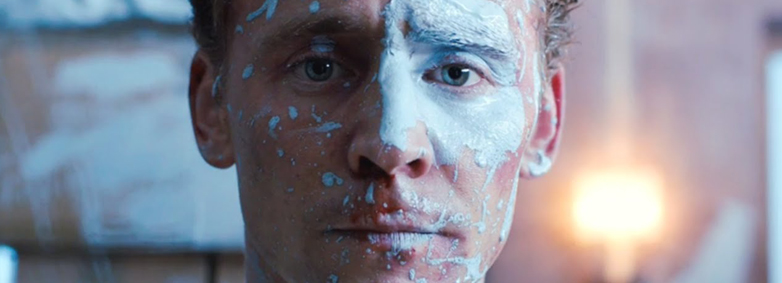
Currently starring in TV’s The Night Manager, Tom Hiddleston is hugely impressive as Dr. Robert Laing.

He’s just moved into a skyscraper and is determined to fit in to the rigid social hierarchy.

Living in the penthouse with his nostalgia obsessed wife and her private menagerie is the pointedly named Anthony Royal.

It’s another intelligent performance from Jeremy Irons. The buildings architect a godlike figure who can’t understand the free will of the chaotic people who populate his creation.

Royal believes he has left one crucial ingredient out of his building, but he hasn’t taken account of the effect of the building on the people who live there.

Laing has a short lived affair with the single mother who lives on the floor above. As the seductive and brittle Charlotte, Sienna Miller relishes the opportunity offered by the role to essay a complex character and delivers a strong and memorable performance.

Luke Evans and Elisabeth Moss as the fertile working class couple on a lower floor are among the strong supporting cast.

As it’s cutting edge 1970’s technology fails, the high-rise deteriorates and Laing starts to suffer a nervous breakdown.

While the penthouse hosts regency themed cocktail parties and swingers accumulate on the shag pile rug, the poor are blamed for their own misfortunes.

There are riots in the supermarket and violent class war descends into animal behaviour.

Styled in the 1970’s the decade the book was written, it’s a concrete, plastic and polythene world dressed in lurid shades of nylon sportswear.

The concept of recycling is in the future, nature is absent or seen as polluting, a hindrance, and a threat. Organic matter is something to be fenced off, bagged up and removed.

A smart script, great design, excellent performances and brilliant use of music combine in powerful critique of social engineering.

Although containing many ideas which are prescient, the power cuts, bodies and bin bags piling up are powerful reminders of headlines of the decade but the historical relevance may need explaining to a younger audience.

But seen from a distance, none of this undermines the soaring strength of the storytelling technique.


Star Wars: The Force Awakens

SPOILER ALERT

While care has been taken to not give away major plot points, if you desire an untainted viewing experience you may wish not to read this until after you have seen the film.

Director: JJ Abrams (2015)

Strap yourself in for a light speed blast of fun in this epic seventh episode in the long running sci-fi saga.

Visually spectacular, fast, funny and very, very familiar, it’s a huge relief this is a vast improvement on the last three thunderingly dull films.

Director Abrams is such a super Star Wars (1977) fan and loves the original film so much he’s gathered all his favourite bits together.

Then he’s mixed them about, souped them up and sent them roaring back into the cinema.

There’s lightsabers, lasers, robots, aliens, stormtroopers and a bigger, badder Death Star called the Star Killer.

It’s the original surname given to hero Luke Skywalker in the early drafts of the first film, another of the geek orientated references littering the galaxy far far away.

Yes it’s the series’ third space travelling super weapon which contains enough fire power to destroy whole planets.

This one is controlled by the First Order, the new identity of the old evil Empire whose resurgence is threatening to destroy the peaceful New Republic.

Harrison Ford makes an emotional return as the swashbuckling space pilot Han Solo. Alongside Peter Mayhew as hairy first mate Chewbacca, he is once more in debt and on the run.

The first appearance of his battered spaceship the Millennium Falcon is brilliantly handled but as with many jokes in the film, it’s a moment which mainly plays to the fans.

Another persistent problem is using the film’s ferociously paced planet hopping to glide over the minor plot holes scattered about the universe.

As anyone who’s seen Star Trek Into Darkness (2013) will be aware, Abrams has never been particularly punctilious about plotting and simply uses his ample momentum to rocket across them.

Solo falls in with a scavenger, a renegade stormtrooper and a small orange beach ball style of a robot called BB8.

They’re trying to return the droid to it’s master as it contains information vital to the future of the galaxy.

Brit actors Daisy Ridley and John Boyega are brilliantly refreshing as Rey and Finn, bringing humour and energy to enthuse the old stagers.

2016 has been a great year for kick ass action heroines and in Rey it’s snuck another one in under the wire. She’s a physical, feisty and frequently surprised at her own abilities.

Stalwarts of the first trilogy Carrie Fisher, Mark Hamill and Anthony Daniels appear briefly as General Leia Organa, Luke Skywalker and C-3PO.

Cinematography Daniel Mindel is experienced with working on big budget CGI heavy sci-fi movies such as Abrams’ two Star Trek movies.

Though equally fabulous looking this is a less glossy, more dynamic affair. Following the Millennium Falcon in flight, his camera arcs, dips and spins in breathtaking manoeuvres.

Plus his camera is careful to capture the excellent production design by Rick Carter and Darren Gildford.

Their work gives the bashed, bruised and broken worlds the weight of history, anchoring the fantastical elements in their own mythology.

As the third best Star Wars film, the force is strong with this one.


The Hunger Games. Mockingjay Part 2

Director: Francis Lawrence

Jennifer Lawrence takes arms against the world for the fourth time as in this concluding chapter of the dystopian sci-fi series.

As freedom loving fighter Katniss Everdeen, Hollywood’s highest paid actress offers a typically excellent performance of weary intensity.

She is given far less opportunity to display her fighting skills in this sombre episode.

It’s handsome, well acted and thoughtful, yet the dialogue is often uninspiring and it’s a long march to the action.

By adding scenes with human shields and a trail of refugees the script plunders contemporary concerns but doesn’t offer comment.

Initially we’re forced to put in a few hard yards ourselves as we’re re-introduced to the motivations of the characters and it’s almost a relief when war starts whittling away their numbers.

As her comrades die in the cause of freedom, Katniss longs to fight.

But Julianne Moore’s scheming rebel commander Coin considers Katniss a useful propaganda tool and refuses to let her.

When the unified rebel army marches on the Capitol, Katniss is embedded in a media platoon which contains both points of her love triangle.

But there isn’t much tension between hunky warrior Liam Hemsworth Gale and Josh Hutcherson‘s brainwashed former turncoat Peeta.

Both are fairly dull characters but with Sam Claflin’s maverick warrior Finnick married off, she hasn’t much to choose from.

When her squad commander is killed, Katniss takes charge and leads her team on a suicide mission.

Her target is to assassinate Donald Sutherland’s evil despot President Snow who is holed up in an opulent and heavily guarded mansion.

As Katniss navigates the rubble strewn streets, she’s lumbered with a device which suspiciously resembles a game console.

It’s designed to detect Snow’s extraordinarily elaborate booby-traps.

The troops combat floods, flame, friendly fire and ferocious underground ghouls.

Friends and family are killed or captured as they trek through the terrain of the fallen city and Katniss has a suicide pill should her plan fail.

Though the foreboding tone is sensibly free of laughs, the regular supporting cast bring smiles of recognition.

Elizabeth Banks and Stanley Tucci don their fabulous costumes one last time and a shambling Woody Harrelson adds some welcome warmth.

The late Philip Seymour Hoffman has a surprisingly large amount of screen time in a final hurrah for his great talent.

Four years ago Lawrence was a little known actress.

Now due in no small part to The Hunger Games’ billion dollar success, she’s firmly and deservedly part of the A list.

By tackling the themes of war, freedom, suffering and sacrifice in a measured and occasionally spectacular fashion, this franchise has raised the bar for the Young Adult genre.

But as solid and satisfying as the Hunger Games are, I’ve had my fill and I couldn’t stomach another one.

The Martian

Director: Ridley Scott (2015)

Blast off to the red planet in this breathless, big budget sci-fi adventure which rockets along to a disco beat.

Based on Andy Weir’s 2011 novel, director Ridley Scott has rarely had so much fun or provided so much clever, crowd pleasing entertainment.

Scott washes away his reputation as a dry visual perfectionist by splashing wild torrents of humour and humanity over his typically brilliant design and cinematography.

When a Nasa team is forced to abort their experiments on the surface of Mars, Mark Watney is assumed dead and left behind.

Intelligent and likeable, Matt Damon is terrifically cast as the marooned astronaut forced to improvise to survive.

His resourcefulness allows him to farm water, oxygen and food but is constantly beset by technical problems, not least having no communications with colleagues in space or on Earth.

The operation he performs on himself is not as graphic as the one Noomi Rapace endured in Scott’s flawed Prometheus (2012) but still not for the squeamish.

Meanwhile Jessica Chastain, Kate Mara and Michael Pena begin the long journey home in their spacecraft.

When a Nasa technician discovers Watney’s alive, his now not-dead presence presents a tricky PR problem, especially if they fail to keep him alive a second time.

It’s a race against time, budgets, office politics and technical limitations.

As harassed Nasa officials, the comic ability of Jeff Daniels and Kristen Wiig are used to good effect in straight roles.

British Oscar nominated star of misery memoir 12 Years A Slave (2013) Chiwetel Ejiofor brings charm and warmth.

Sean Bean is a gruff conscience who brings heart to the constant equation crunching and scores for a big laugh.

The huge success of Marvel’s Guardians of the Galaxy (2014) combination of humour, action, state of the art effects and pop tunes is clearly an influence. But this is more grounded and less smug.

With the exception of a strangely retro-titled ‘advanced supercomputer’, an excellent script offers plenty of plausible sounding sciency stuff.

Remember the killer scene in Apollo 13 (1995) when the Nasa techies have to improvise a new gizmo from old hairdryer parts and a vacuum cleaner? Most of The Martian is that scene – but bigger.

There are scenes in China which may well be extended when the film is released in that market. Unlike films such as Iron Man 3 (2013) the Chinese element feels a necessary part of the narrative.

Ideas and motifs touched upon in Silent Running (1972) Robinson Crusoe On Mars (1964) appear.

There’s little bitterness, fear or insanity but vast amounts of hope, hard work and optimism.

The Martian celebrates the courage, ingenuity and loyalty of humanity. It is a cry from the heart for the return of to an age of space exploration.

Cinematographer Dariusz Wolski worked on Scott’s flawed Exodus: Gods and Kings (2014). Scott often has him shoot from a low angle to include ceilings and skies in his shot, heightening the sense of Watney’s captivity and suffocating isolation.

Special effects by British SFX house Framestore bring the same bravura technical skills we saw employed to Oscar winning effect in Gravity (2013).

Having made two definitive pieces of sci-fi early in his career with Alien (1979) Blade Runner (1982), Scott has finally added a markedly different but triumphant third at the tail end of it.

Although much of the humour is as dry as the beautiful Martian landscapes, with music by Abba, Donna Summer and the O’Jays, there’s no shortage of atmosphere in this outer space epic.

Infini

Director: Shane Abbess (2015)

Daniel MacPherson gives an aggressively agitated performance as a marooned musclebound marine in this sci-fi thriller.

Sent to investigate a lethal biological outbreak, Whit Carmichael beams out to the galaxy’s most distant off-world mining-facility, leaving behind his pregnant wife.

Whit’s’s followed by an elite Search and Rescue team and together they must prevent the biohazard from reaching Earth.

It’s gruesome, violent and sadly derivative.

There’s impressive design throughout and it differentiates nicely between down here and out there.

However the use of JJ Abrams’ lens flare is one of many visual lifts from other, stronger films, such as Blade Runner (1982) and Aliens (1986).

Occasionally the Aussie writer-director over complicates his camerawork and there’s much pointing of guns while walking down corridors.

Plus it has much leaping out of dark spaces while soldiers take turns to out grunt each other.

At times the exposition is as cumbersome as a spacesuit and there’s a vacuum where characters should be.

Time is stretched for Whit due to the deep distances travelled. Similarly the film has nice moments but some very long minutes.