The Birth Of A Nation

Director: Nate Parker (2016) BBFC cert: 15

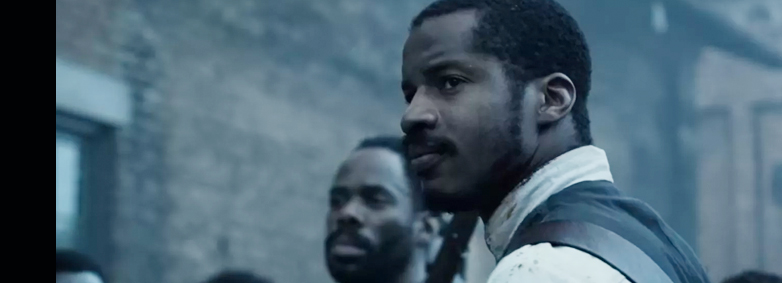
This well staged period drama is based on the little known life of Nat Turner, a messianic Virginian slave who led a short lived rebellion in 1831.

He’s played with impassioned sincerity by Nate Parker, whose considerable ambition exceeds his determined grasp as he produces, writes and stars in his directorial debut.

Parker doesn’t shy away from the brutality of the slaves lives nor the bloody retribution they visit on their owners. But moments of soap opera mix uneasily with melodrama, the finale is undermined by the budget and the story template is familiar from Spartacus (1960) and Braveheart (1995).

Turner rightly points out the bible is employed to justify both sides of the conflict. As such the central struggle within The Birth Of A Nation could be interpreted as a religious war as much as a racial one. However no-one pauses to consider the good book may be part of the problem, not the solution.

The changing economic climate of the period is suggested as an exacerbating factor to the insurgency, but again Parker misses the opportunity to link the issue to contemporary politics.

The heavy handed use of Nina Simone’s Strange Fruit serves to denude the song of power rather than enrich the film as presumably intended. It’s a cheap exploitative move worthy of Zack Snyder, and hopefully one Parker will avoid in future.

An episode from the directors personal life has overshadowed the film which was once considered a contender for best picture at the Oscars. But I doubt it would have gone the distance anyway.

@ChrisHunneysett

A United Kingdom

Director: Amma Asante (2016) BBFC cert: 12A

The sincerity of this solid historical drama is undermined by the overly flattering portrayal of its subjects, the real life mixed race rulers of Beuchanaland, Seretse and Ruth Khama.

As played by Brit actors David Oyelowo and Rosamund Pike, they are paragons of quiet dignity and determination. Oyelowo is impressively impassioned as the law student turned politician who believes in equality, inclusion and unity. However, with Pike’s accent as well cut as her cheekbones, the supposedly middle class Ruth frequently comes across as far more regal than her royal husband.

As they fight to bring independence to what is today Botswana, the devoted couple face the considerable forces of colonialism, exploitation, prejudice, propaganda and ridiculous ceremonial pomp. Together they battle the Empire, their own citizens, his disapproving family and piratical American mining corporations.

Racially segregated in practice but not in law, the then British protectorate of Bechuanaland was one of the one of worlds poorest countries. It suffered malaria, malnutrition, drought and poverty.

The Khama’s marriage is considered by the Empire to be inflammatory at a time when neighbouring South Africa is instigating apartheid. And stability is South Africa is paramount to the Empire, the UK’s gold supplies are dependent on it.

Styled the black king and white queen by the British press, the Khamas are not prepared to be pawns in the Empire’s game of global politics. Representing the Empire is Jack Davenport‘s wonderfully oily Sir Alistair Canning. Jack Lowden appears as Tony Benn MP. True to form, the self-styled conscience of the parliamentary Labour party spends his time battling his own side.

A companion piece to her period piece Belle (2014), Asante fashions her material with deft confidence and produces an engaging and handsome work. The opening scene is a joy of character and thematic economy. We witness Seretse taking part in a university boxing match. He is shown to be a courageous but naive fighter who is defeated at the hands of treacherous former public school boys.

London is believably stuffy and smog-filled, contrasting well with the bright open and faint optimism of Bechuanaland. There is a smooth dexterity in the handling of scenes which alternate between the intimate and the epic.

However the story struggles against the inertia of reality. The script is stretched having to cover a distance of thousands of miles and a time scale measured in years. Nor does it help having the central duo spend long periods on different continents.

The scant awareness of this story in the west lends the film a fresh appeal. It’s handsomely crafted and well played. It’s an overwhelmingly positive portrayal of an African nation and a celebration of democracy. All of which is welcome. But as a drama I wished it had more grit.

@ChrisHunneysett

The Light Between Oceans

Director: Derek Cianfrance (2016) BBFC cert: 12A

Wade into a sea of grief, madness and death with this mournful melodrama. Solid performances and breathtaking locations bring the best selling book by M. L. Stedman to windswept life.

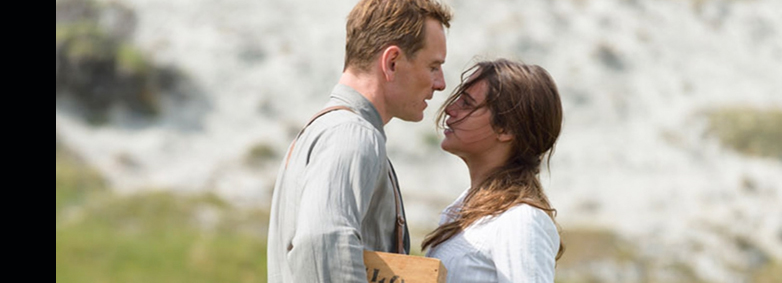
Michael Fassbender and Alicia Vikander star as Tom and Isabel Sherbourne. He is a black clad and brooding veteran of the First World War’s western front, she is a vivacious local girl in angelic white.

The happiness of Australia’s most photogenic lighthouse keepers hits the rocks due to a repeated failure to have a child.  Demented by grief, Isabel persuades Tom to abandon the ship of common sense when a baby girl is washed ashore. They pass the child off as their own, with the only clue to her identity an expensive silver rattle.

As a period romance this is more gothic tragedy than uplifting celebration of love. Imagine Emily Bronte’s Cathy and Heathcliff escaping Wuthering Heights to spend a day out at the seaside.

There are tales of suicide, ghostly images, wild walks on stormy nights, wailing widows and mourning mothers. There are letters from beyond the grave. In flashback we see the dead, living. Beneath breathy voice overs, the script shovels on unlikely occurrences and coincidences.

The lighthouse island is named after Janus, two headed god who looks to the future and the past. Tom looks one way, Isabel the other. When Isabel shaves off Tom’s moustache, she is defenestrating his stiff upper lip and removing his emotional barrier to the world. Not only does this indicate he prepared to reveal his emotions, but it places him in her power. It is redolent of Samson having his locks shorn and is the harbinger of their doom.

As the drama sinks under the weight of this heavy handed symbolism, eventually the over-wrought storytelling cops out and dissolves into sentimentality. A lack of social smoking undermines the carefully constructed period detail.

Filmed in Tasmania and off the New Zealand coast, the coastline is a character and the crashing waves are a soundtrack. Rachel Weisz offers strong support as Hannah, the daughter of local businessman. It’s always great to see Bryan Brown on screen, even when playing Septimus Potts, as unpleasant a man as his name suggests.

Fassbender and Vikander became a couple while on set and the early scenes have an earthy crackle of electricity. I hope they achieve more happiness than their characters do.

@ChrisHunneysett


Love And Friendship

Director: Walt Stillman (2016)

Like TV’s Downton Abbey but with wit and considerably better breeding, this adaptation of Jane Austen’s novella Lady Susan is an elegant waspish joy.

There’s corsets for the ladies and mutton chops for the chaps. With a full carriage of wealthy suitors, impoverished friends and watchful servants, it’s a sharp eyed trot though the drawing rooms of nineteenth century stately homes.

Kate Beckinsale is ravishing in scarlet as the penniless widow out to secure a good marriage for herself and her daughter. As young Frederica an impressive Morfydd Clark suffers her mother’s machinations with determined grace.

Tom Bennett is marvellously silly as the stupid, wealthy and available Sir James Martin. Chloe Sevigny, Jemma Redgrave and Stephen Fry are swept up with the gossip, intrigue and social commentary as it flits between London the crisp English countryside.

Under the comic assault of Austen’s withering writing, the cast contrive to keep a straight face with far more success than I managed to do.

Though the selfish, arrogant and manipulative Lady Susan is a collection of unattractive traits, we warm to her because she is alarmingly funny, decisive, intelligent and not to be denied her pleasure because society frowns upon her doing so.

It would be intriguing to read Austen’s thoughts on the gender divide in 2016, a year in which it’s possible to argue this year’s best role for a fortysomething actress was written by herself 200 years ago.


@ChrisHunneysett

Trumbo

Director: Jay Roach (2016)

Romping through the career of a Hollywood screenwriter, this entertaining biopic suffers from a self-gratifying script filled with too much lightweight sentiment.

Enjoying a privileged lifestyle as one of Hollywood’s elite in 1947, Dalton Trumbo was one of many writers and actors illegally blacklisted for refusing to testify against communists to the US government.

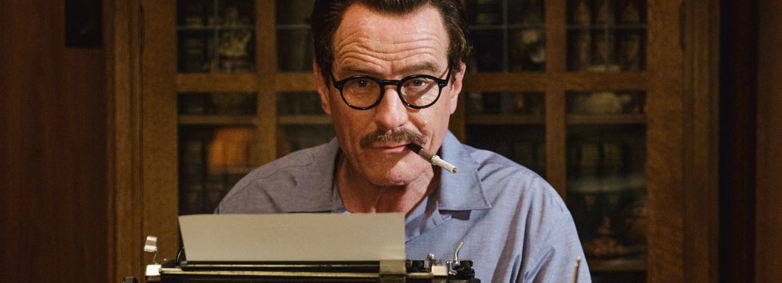
Breaking Bad star Bryan Cranston stars as the irascible scribe who types in the bathtub with a cigarette holder and glass of whiskey in hand.

Trumbo’s a less than loveable eccentric who patronises the masses who watch his movies and fund his comfortable lifestyle.

A honey throated spinner of yarns who invokes the constitution to serve his own ends, Trumbo reminds us of another historic US public figure given a recent cinematic makeover.

There’s a clear parallel between Cranston’s performance and Daniel Day Lewis’ Oscar winning turn as the ill-fated US President in Steven Spielberg’s Lincoln (2013).

The script even includes a similar moment wherein a colleague refuses to listen to any more of Trumbo’s stories, lest he be converted to his cause.

We fail to sympathise for the champagne communist when he suffers the indignity of downsizing from his country manor to a large house with a pool.

Being aggressively covered in fizzy pop isn’t nice and holidays are interrupted. But a brief and uneventful stint in prison aside, nothing too worrying happens to him.

As an illustration of the rarefied social circles Trumbo moves in, a friend can afford to sell the drawing room Van Gogh to pay for their lawyer’s fees.

Meanwhile Trumbo’s career goes from strength to Oscar-winning strength. Under various pseudonyms he works with Hollywood directors and stars of huge stature.

The timeline covers some forty years giving the handsome film a breathless feel despite it’s stately pace.

Part of the problem is a desire to cram in many era-famous faces. As the story lacks drama, this is possibly to compensate for a suspected deficiency of audience interest.

Michael Stuhlbarg as Edward G. Robinson is one of several examples of casting capable peformers as famous cinema actors. They’re not as charismatic or talented and physically aren’t great matches.

David James Elliot essays John Wayne as an unconvincingly magnanimous presence.

At least Dean O’Gorman as Kirk Douglas is given a gift of a line which is guaranteed to bring the house down with laughter.

Helen Mirren is terrific as the waspish society columnist Hedda Hopper. But by making her the villain of the piece, the male dominated hierarchies of cinema and politics are let off the hook for their behaviour.

Hopper suffers a poorly articulated rationale for for the intensity of her attacks on communism and there’s no hint her anti-union publisher is any way pulling her editorial strings for their own ends.

Diane Lane plays Trumbo’s wife Cleo with nothing to do except add glamorous scolding and sympathy.

Elle Fanning as their daughter Nikola fairs little better, being ushered down a civil rights movement cul-de-sac.

John Goodman plays to his strengths as a down market producer offering a broad comic performance which recalls his turn in ben Affleck’s Argo (2012).

Never convicted of any criminal charge, Trumbo presents himself as a fearless defender of the first amendment and the script bequeaths him a suspiciously retro-fitted sermon on the importance of the constitution.

There are great lines in the film but one suspects they’re lifted from the scripts or diaries belonging to one of the many scriptwriters portrayed on screen.

The Danish Girl

Director: Tom Hooper (2016)

Oscar winner Eddie Redmayne aims for more Academy gold as a transgender artist in this period drama.

As in The Theory Of Everything (2015) where he played scientist Stephen Hawking, the British actor gives a committed performance as Einar Wegener.

However he is outshone by Swedish co-star Alicia Vikander as his on-screen wife Gerda who offers strong marital support.

She acts with her eyes and he with his mouth. Some of his alarming lip quivering reminds us of his space camp turn in the terrible Jupiter Ascending (2015).

Gorgeous costumes, polished interiors and fresh exterior locations give Copenhagen of 1926 a living, picturesque appeal.

But it’s suffocatingly sincere and suffers from banal dialogue and a lack of conflict.

Plus director Tom Hooper inflicts on us the same close ups and curious framing which marred his films The King’s Speech (2011) and Les Miserable (2013).

Gerda producers portraits and wears the trousers while Einar paints landscapes and discovers he enjoys wearing frocks.

As he discovers himself more comfortable in women’s clothes than men’s, Einar adopts the alter ego of ‘Lili’.

Gradually she becomes his dominant personality and seeks to make a permanent transformation to womanhood.

Redmayne is a pretty boy in real life but no great beauty as a woman, especially when stood between to his gorgeous on-screen wife and her ballerina best mate Oola, played by Amber Heard.

Lili’s selfish behaviour fails to garner much sympathy and nor does she meet much resistant to her life choices. Society is indifferent to Lili’s plight. So was I.


In The Heart Of The Sea

Director: Ron Howard (2015)

It’s all hands on deck for an epic old fashioned adventure on the high seas.

Based on the events which inspired Herman Melville‘s classic novel Moby Dick, it’s a shipshape and manly yarn full of arrogance, greed and danger.

The story is anchored by the reliable talents of Ben Whishaw and Brendan Gleeson as novelist Melville and drunken old sea-dog Thomas Nickerson.

One dark night in 1850, Melville pays Nickerson to tell the truth behind the voyage of the whaling ship The Essex, on which he served on as a cabin boy thirty years earlier.

Whaling is a dangerous and potentially lucrative industry, harvesting the seas for oil to serve America’s fast growing population.

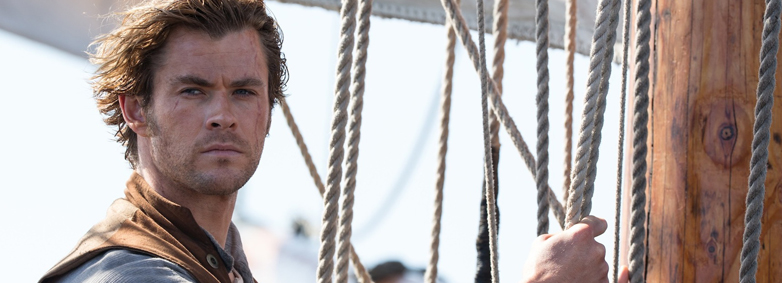
Back then Nickerson was in the charge of Owen Chase, an experienced first mate, played with manly gusto by Chris Hemsworth.

The star of Marvel’s Thor always gives good smoulder and here he glowers with resentment.

Impoverished and eager to provide for his pregnant wife, Chase’s ambitions to captain his own ship are thwarted by the shipping company directors.

They make him serve under Benjamin Walker’s novice Captain Pollard, the privileged son of an important investor.

Lashed together in mutual antipathy and greed, they sail from Nantucket round Cape Horn to the Pacific ocean.

The scenes where the crew row out in tiny boats to manually harpoon their enormous prey are terrific.

But the increasingly desperate hunt for whales goes awry with the crew facing fires, storms, mutiny and of course a very angry white whale.

The heart of the sea becomes a very dark place indeed as despair and madness grip the sailors.

Following Rush (2013) the biopic of motor racing star James Hunt, this is the second film Ron Howard has made with Hemsworth.

Exciting, intelligent and respectful to it’s source In The Heart Of The Sea is the sort of film Hollywood is now accused of not making any more.

Well now they have so you really should go and see it.


The Revenant

Director: Alejandro G. Inarritu (2016)

Gripping, grisly and grizzly, this epic revenge western is the first must see film of 2016.

Leonardo DiCaprio goes hunting for the best actor Oscar in this thrilling and icily apocalyptic adventure.

Despite his best efforts, notably his portrayal of a ravenous financier in The Wolf of Wall Street (2014), the Academy award has so far eluded him.

But on this form as fur trapper and explorer Hugh Glass, there’s every chance he’ll bag it.

While on an expedition in the uncharted Northern frontier, Glass is brutally mauled by a bear.

I could barely endure the ferocious scene as the angry beast tears away at Glass with it’s hot breath steaming the camera lens.

He just about survives only to see his son murdered and find himself abandoned.

Driven by his pain and suffering Glass begins a 200 mile odyssey across the wild, wild west, intent on killing the man who betrayed him.

On the lonesome trail Glass endures being washed away, buried alive, burned and stabbed.

There’s visceral violence and dialogue as sparse and unforgiving as the environment.

For those who aren’t convinced by DiCaprio’s acting ability, they should see how much he conveys here while speaking very little.

Meanwhile as an old native American leads a war party in search of his missing daughter, a party of French hunters are wreaking destruction across the landscape and complicating Glass’ progress.

A huddle of orphaned children, murdered sons, forgotten wives and rich fathers are offered as a limited backstory for various characters, tying them together in a litany of loss.

With long stretches of screen time dialogue free, character is conveyed though action. The principals are aware of the conflicts in the damnable choices they face.

A trio of British actors offer brilliant support to DiCaprio.

With Mad Max: Fury Road (2015), Legend (2015) and Locke (2014) Tom Hardy is enjoying a great run of projects.

He plays the pipe smoking trapper Fitzgerald, a vicious pragmatist rather than evil incarnate.

Even more blessed with an uncanny knack of choosing great projects is the likeable, versatile and always interesting Domhnall Gleeson.

He comes of age as Captain Henry, the leader of the hunting expedition who is out of his depth.

Will Poulter is Jim Bridger, the youngest of the troop and arguably the closest it carries to a conscience.

Editor Stephen Mirrione previously worked on Birdman (2015) and won an Oscar for Steven Soderbergh’s Traffic (2000).

His signature long edits create an intensive immediacy and putting us uncomfortably in the centre of the action.

Cinematography Emmanuel Lubezki won consecutive Oscars for Gravity (2014) and Birdman (2015) and may well earn a third here.

Director Inarritu won best film, director and screenplay Oscars for Birdman (2015) and it would it not be undeserved if he repeated the trick in 2016, though in the adapted screenplay not original screenplay category as in Birdman (2015).

As in Birdman (2015) Lubezki’s ceaselessly circling camera work puts us in the middle of the action whether on horseback, on boats or underwater.

We witness an avalanche, rape, castration, shoot outs, knife fights, a hanging, a massacre and the aftermath of several more.

The landscape is alive with moose, wolves, horses, fish, buffalo and ants, demonstrating how ill geared humanity is to surviving in this fierce winter wonderland.

Set in Wyoming the production went snow chasing through Canada, the United States and Argentina to achieve the frostbitten extremes of the American frontier.

Grounded in fire, rock and ice, the elemental force of the film is captured in blues,whites and greys, with explosive moments of orange punctuating the palette.

Visual reference points are Robert Altman’s McCabe And Mrs Miller (1971) and Werner Herzog’s Aguirre: Wrath of God (1972).

Thematically the story draws on Ridley Scott’s Gladiator (2000) and John Ford’s The Searchers (1956). It is based on Michael Punke’s 2002 novel of the same name inspired by the exploits of the real Hugh Glass.

Ideas of commerce and colonisation swirl around the contemporary issues of the ownership of natural resources, the conflict between races and the role of the military in a civil society.

The Revenant means ‘the returned’ and refers to a person who comes back from the dead.

It sounds like a combination of ‘revenge’ and ‘covenant’, god’s code of behaviour issued to Moses in the Old Testament.

These two ideas compete within Glass for supremacy as he battles towards his prey.

Glimpses of Glass’ late wife through fragments of memories remind us of his spirituality even as he symbolically swathes himself in bearskin.

Eating its flesh shows his growing connection with the environment but also suggests a departure from the rational to an animal state.

In fables there is always a limit to how long one can adopt the shape of another creature before losing one’s humanity for ever.

Glass’ quest for revenge becomes a battle for his soul from which he may never recover.

A chilling final frame questions the audience as to how they would behave in Glass’ circumstances. It’s an electrifying end to a remarkably realised endeavour.

@ChrisHunneysett