Cinderella

Director: Kenneth Branagh (2015)

There are no surprises in this sweet, stately and straight-forward fairytale which Disney intends to be universally accepted the definitive version.

A non-revisionist extension of the Disney brand, it begins with once upon a time and ends happily ever after.

Unlike Disney’s earlier folklore forage this year Into The Woods or last year’s Maleficent which added a different perspective to European fairytales, Cinderella adds nothing new. Renaming Prince Charming as Kit is as far as reinvention goes.

Instead it’s determinedly old-fashioned, resolutely traditional telling of the tale; majestic, confident, warm and enchanting. At it’s centre is a message of how important it is to have courage and be kind.

With the magical assistance of her fairy godmother, the put-upon Cinderella is saved from an unjust life of drudgery by her handsome Prince Charming.

From cast to costumes to carriages, it is astonishingly beautiful, taking sumptuous pleasure in the smallest detail and director Brannagh keeps the pace steady enough to enjoy them.

Following the death of her wealthy father, Cinderella (Lily James) is left at the mercy of her icy stepmother Lady Tremaine (Cate Blanchett) and spoilt step-sisters Anastasia and Drizella (Holliday Grainger and Sophie McShera).

Tremaine is a black-hearted widow who is deeply disappointed with life, as wasp-tongued as Cinders is wasp-waisted,

Our heroine is forced to sleep in attic and performs all the household chores. Her only friends are four animated cute and charming mice.

While out riding she meets the dashing Prince Kit (Richard Madden) and both pretend to be other than they are. Both are smitten but called away to their duties.

The dying King (Derek Jacobi) orders Kit to find a wife to provide an heir and protect the future of the Kingdom. So Kit holds a fabulous ball and demands attendance of all the maidens in the land, noble or common.

Barred from attending by her step-mother, Cinder’s fairy godmother (Helena Bonham Carter) appears.

She turns a pumpkin into a carriage, mice into horses and lizards into footmen. Cinders dons a pair of glass slippers and is off to the ball – but of course only until midnight when the magic will wear off.

Meeting each other on the dance floor, Kit and Cinderella are a handsome pair, not wildly exciting but pleasant with graceful dance moves – expect copycat routines on the next series of Strictly Come Dancing.

Cinderella’s race to return home is the most fun part of the film. It’s an exciting, energetic and humorous race against time.

Bonham Carter has fun as the fairy godmother and Jacobi adds acting gravitas as the King.

Rob Brydon appears briefly and manages to be funny and outstay his welcome, neatly encapsulating his entire career in a cameo.

Production Designer Dante Ferretti provides an astonishing wealth of detail amid glorious sets, extravagant furnishings giving texture to the fairytale world.

Costume Designer Sandy Powell dresses the cast in fabulous clothes and uniforms. Their heightened colours offer a promise of magic.

With many gasps, groans, giggles and growls padding out the vocal performances, the dialogue is far less imaginative than the design. It’s regularly abandoned in favour of the music of composer Patrick Boyle.

While his orchestral score swells and falls like Cinderella’s corseted bosom, Branagh delivers a series of sweeping camera moves that reveal yet more opulent design.

Dubbing for international markets seem to at the forefront of the film’s construction which opens and begins with a voice over.

The actors finish their lines with open mouths and the editing and direction provide an unusual amount of speaking off-camera. It’s a wonder they didn’t go full Leone and put cigars in everyones mouths to disguise the lip movement.

Disney of course have their own 1950 animated version which the script acknowledges with a Bibbidi Bobbidi Boo as the Fairy Godmother casts her spells.

But this is not just a movie, it’s an irresistible cavalry charge of cultural colonisation. The House of Mouse have mobilised their creative heavy armaments to annex the world of Cinderella and indisputably incorporate it as part of the Disney Empire. Having claimed forever the rich, fertile and lucrative source material, they’ll sweat the asset in due course.

It’s no surprise Cinderella’s mice play a pivotal role in the finale.

Preceded by a short featuring the characters from Frozen which is either utterly amazing or annoyingly entertaining depending on your view of that massively successful film.

The end of Cinderella shows the newly wed royal couple being presented on a snowy balcony to an adoring public with snow-clad mountains in the background.

Unless I’ve missed a memo and this is old news, it seems as if Disney are tying the two films together in a continuous universe, not unlike Disney’s rmega-franchises; Marvel and Star Wars, with Kit and Cinderella the parents of Elsa and Anna.

This lends Frozen some of Cinderella’s folklore resonance and makes the more staid Cinderella more palatable to the little ones.

As strong and monumental as this film is, even in playful homage it’s always dangerous to reference your cinematic betters – as Cinderella does with a throwaway ‘As you wish.’

Wreck-It Ralph

Director: Rich Moore (2013)

Smashing its way through several levels of fun, this fun-filled blast of candy coloured, sugar flavoured confection from Disney is inspired by old video games.

Genial giant Wreck-It Ralph, voiced by John C. Reilly, is the unfairly maligned bad guy of an arcade game called Fix-It Felix Jr – a lot like the 80s gaming classic Donkey Kong.

At night after shut-down the other characters socialise in their penthouse. Ralph, left all alone, starts to ponder his lot in life and goes to a support group.

He confesses that after 30 years he doesn’t want to be the bad guy any more. Ralph decides to ‘turbo’ – arcade-speak for invading another game.

So he breaks into another machine – a violent and scary shoot-’em-up called Hero’s Duty, before landing in a racing adventure called Sugar Rush.

But Ralph going missing means Fix-It Felix Jr is considered broken – putting the lives of its other inhabitants under threat. What’s more, during his hopping around between games he inadvertently lets loose a computer virus which threatens the existence of every game in the arcade.

Teaming up with tiny, racing-obsessed Vanellope von Schweetz (Sarah Silverman), Ralph begins a digitised adventure with a quest.

Combining the insane world of arcade games with the upside-down logic of Alice in Wonderland, the film generates slapstick fun as it powers its way through its own levels.

The animation is mind-blowingly good, with tremendous amounts of invention, but it is all a bit too sickly sweet and garish.

Also, Vanellope’s rival King Candy (Alan Tudyk) is more fun than von Schweetz or Ralph. But Glee’s Jane Lynch is on great form as the tough-talking, space marine commander.

Oscar-nominated Wreck-it Ralph was made by people who obviously have a deep love of arcade games.

They have great fun dropping in cameos with Pac Man, Sonic, Q*bert, Frogger and old favourites from Street Fighter all turning up. But there’s more than enough to enjoy even if you don’t get the references.

Like the title character, this film is a digital hard-nut with a soft centre. Bright and cheerful, it will keep you entertained all the way through to Game Over.

Home

Director: Tim Johnson (2015)

A fugitive alien and a streetwise girl team up to save the world in this bright and busy animated adventure.

Based on Adam Rex’s 2007 children’s book The True Meaning of Smekday, it’s a technicolor blast of fun for the little ones that adults will be happy to doze through.

Proud of their cowardice, the many tentacled Boov are small, roundish and look as if moulded out of purple bubblegum.

They change colour depending on their mood; red when they’re angry, green when they lie, orange when scared and so on.

Although they seek safety in numbers, the Boov prefer to spend their time on their alien smartphones than talk to each other.

Engaged in a galactic game of cat and mouse with their angry armoured enemy, the Grog, the Boov conquer a new planet whenever they need a new home.

Lead by the blustering prevaricator Captain Smek (Steve Martin) – who’s not unlike the Wizard of Oz – they descend on Earth.

Using giant tubes attached to their flying saucers, the Boov suck up all the humans. This leaves the buildings intact to be their living spaces.

The people are deposited safely in a purpose-built, sunshine-soaked suburbia. It’s a fairground-filled, pastel coloured ghetto out of Tim Burton‘s worst nightmare – but is actually in Australia.

An optimistic but naive Boov called Oh (Jim Parsons) emails an invitation to his house-warming party but sends it to the entire galaxy by mistake – including to the Grog. As a result he becomes a fugitive.

Due to the vast galactic distance the it has to travel, the Boov have forty hours to hack Oh’s password, prevent the Grog from receiving the email and discovering where they are.

Meanwhile Oh encounters a human who accidently escaped relocation. She’s a curly haired poppet called Tip (Rihanna) and is desperate to find her mother Lucy (Jennifer Lopez). Instead of a pet dog named Toto, Tip has a cat called Pig.

Parsons riffs on his super-nerd persona of Sheldon in the TV series The Big Bang Theory. Rihanna is adequate playing a headstrong if whiny character.

In the credits I counted 6 songs by Rihanna, 1 by Jennifer Lopez and non by Parsons.

Reluctantly teaming up, Oh turns Tip’s family car into a flying mobile. Now powered by a slush drink dispenser, the car conveniently serves cinema snack food such as nachos, popcorn, hotdogs and the like.

Together they confront the Grog and discover not everything they have been told is true.

Their good-natured squabbling becomes annoying though the film achieves a reasonable emotional depth when they shut up.

With the animators allowed to work uninterrupted, they conjure up a dazzling image or two.

The script is keen on cramming in an exhausting list of life lessons; keep promises, tell the truth, appreciate art, take care of your family, be web safe, be brave, learn a foreign language, shushing people is bad..

There’s a lot of toilet jokes, a reasonably zippy pace and the movable skulls of the brainy Boov made me smile. Though not the least challenging, it is a genial good time.

The Tale of the Princess Kaguya

Director: Isao Takahata (2015)

Magical and moving, this animated folktale is charming, moving and a beautifully crafted joy, bursting with humour and life.

When sent to the Earth as punishment, a young Moon spirit discovers that mortal life involves responsibility and pain as well as love.

Deservedly nominated for best animated feature at the Oscars, it’s a captivating combination of glorious pencil-work and delicate pastel colours.

Working in a secluded grove, an old Bamboo Cutter (James Caan) is startled when a bright light reveals a tiny female form inside a tree. The kindly man takes her home to his wise wife (Mary Steenburgen) where the sprite changes miraculously into a baby.

Being without children they resolve to look after the baby as if she were their own. She grows at a prodigious rate, sprouting from baby to toddler in a single crawl.

The Princess is named ‘Li’l Bamboo’ by the local children and joins the gang of Sutemaru (Darren Criss) with whom a strong emotional bond develops.

Loyal, clever, impetuous and mischievous, Li’l Bamboo accelerates through a joyous, gentle and comic childhood in a wonderful rural adventure land. It’s alive with gorgeously animated birds, frogs, spiders, pigs, snakes, squirrels, beavers, fish and deer.

Returning to the magic grove the Bamboo Cutter finds a tree filled with money, then another with swathes of fine cloth. He concludes Li’l Bamboo is a true princess and must be raised as one.

So he builds his daughter a palace in the Capital and when she turns 13 years old he moves the family there to live, away from her friends.

Stern Lady Sagami (Lucy Liu) is employed to teach Li’l Bamboo courtly social graces but the spirited girl rails against her tutoring and the subduing of her personality. She mocks the painful beauty procedures and rejects the subservient idea of womanhood.

At a three day banquet to mark her coming of age, she is given the name Princess Kaguya and to please her father tries to become an obedient, studious daughter. With her great beauty and social skills she attracts a multitude of suitors, including the greatest nobles in the land.

But the Princess isn’t impressed by their status and to her father’s consternation Kaguya issues them impossible tasks to prove their love.

However she’s aghast when one by one they return to make her keep her word and she makes a rash wish which changes her life.

It is more measured in pace and tone and lacks the delirious colours and engineered wackiness of contemporary megaplex crowd pleasers such as Disney’s excellent Big Hero 6. Plus with a running time of 137 minutes it is for older rather than younger children.

With it’s strong-willed country girl who learns of life in the city it’s similar to the story of Heidi which director Takahata adapted in 1974. It is a tale celebrating life but also reflective of grief, loss and suffering, heralding the virtues of honesty and friendship over wealth and looks, taking to task the way female identity is constructed for the benefit of men.

The animation is impressionistic in style with characters and backgrounds being drawn on the same page – unlike in traditional cel animation where characters are drawn separately and superimposed onto the background. It is a wonderfully immersive and suitably organic technique, emphasising the passion for the story in every exquisite and entertaining frame.

Paddington

Director: Paul King (2014)

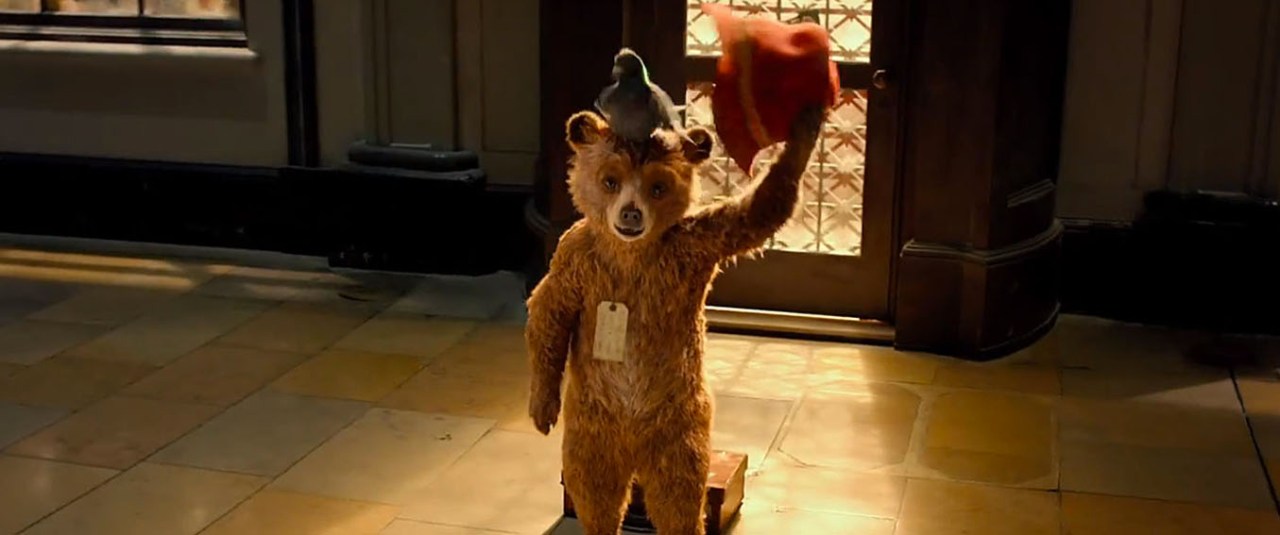
In a huge bear hug of fun to warm your family, Paddington the loveable orphan bear from deepest darkest Peru makes his big screen debut.

This marvellously magical and funny adventure retains all the silliness and charm of Michael Bond’s original books. And hidden in the script is a hatful of kind messages, handed around as often as Paddington offers out his beloved marmalade sandwiches.

The computer-animated bear, endearingly voiced by Ben Whishaw, blends seamlessly into his real-life surroundings.

When a British explorer in Peru found a family of extraordinary bears, he left them with a passion for marmalade and a gramophone for learning English.

Years later an optimistic young bear stows away to find the explorer but London is not as warm and welcoming as he has been led to believe.

As in the book, he’s discovered at Paddington station by the Brown family who name him after the first sign they see and then take him home for the night.

Mrs Brown (a wonderful Sally Hawkins) and son Jonathan (Samuel Joslin) take a shine to the bear. But teenage daughter Judy (Madeleine Harris) is embarrassed while uptight Mr Brown (Hugh Bonneville) simply wants rid of him.

Mrs Brown helps Paddington search for the explorer but wicked Millicent wants to add the talking bear to her collection of stuffed animals.

She’s played by a snakeskin-clad Nicole Kidman, who’s always better when she’s being bad. There is a brief showing from Jim Broadbent as antiques dealer Mr Gruber, Broadbent channels Benny Hill’s performance as The Toymaker in Chitty Chitty Bang Bang.

Paddington inadvertently causes mayhem in a series of imaginative stunts and the film romps along before the slapstick ending in an exciting night at the British Museum.

If young kids don’t enjoy this treat I’ll eat Paddington’s hat – and all his marmalade sandwiches.

How To Train Your Dragon 2

Director: Dean DeBlois (2014)

This animated family-friendly sequel soars and roars in a fabulous flight of fantasy.

It’s a handsomely designed adventure with extraordinary animation that conjures up magical images – especially of dragons flying en masse.

The coming-of-age story of Hiccup and his fight to save his village is well-crafted and exciting but a lack of laughs is a major flaw.

Brave and resourceful viking Hiccup (Jay Baruchel) is 20 and his home of Berk is living in harmony with the dragons. His dad, chief Stoick the Vast (Gerard Butler) expects him to take the throne but Hiccup is unsure about ruling or his own future.

So, armed with a fiery sword, he flies off on his dragon Toothless to discover himself and explore the northern lands.

There he meets mysterious Valka (Cate Blanchett) who warns him of warlord Drago’s plan to enslave all dragons. Meanwhile Hiccup’s adventurous girlfriend Astrid (America Ferrera) and her friends are captured by Drago and his pirate fleet.

The ensuing battle between dragons, vikings, pirates and bewilderbeasts – giant alpha dragons with mind-control powers – is spectacular but ends in the death of a loved one.

Hiccup must try to defeat Drago’s army, rescue the dragons, free his village and generally live up to his father’s expectations.

Dragon 2 is good natured and tender at times but the few jokes are mostly gentle slapstick, such as people falling into snow drifts or getting their faces licked by dragons.

While weak sidekick characters fail to provide enough fun and their amorous behaviour is ill-judged in a film aimed at younger kids.

The viking village has lots of nicely designed mechanical gizmos but no-one seems to realise the bat-suit wings that Hiccup sports to glide around may one day make the dragons redundant.

But Dragon 2’s lesson – that it’s never too late to start listening to your dad – is an important one that my son may learn… one day.

★★☆☆

The Lego Movie

Director: Phil Lord, Christopher Miller (2014)

Despite the astonishing Oscar snub, this is a brilliant, witty, inventive animation which kids will enjoy almost as much as their parents will.

As the opening song says, ‘Everything is Awesome!!!’. And it is. It’s stupid in a clever way, clever in a funny way and is continually exciting, hilarious and even subversive.

Assembled with huge energy and a wicked sense of fun, every brick of the plot is correctly placed to support the dizzying flights of imagination and yet more jokes.

During the ferocious chase scenes random street parts are rapidly fashioned into vehicles, destroyed and rebuilt into  succession of err, other vehicles.

Among the mayhem it even manages to visually referencing sci-fi classics such as Tron and The Matrix.

Brickburg is a modern plastic city with busy roads, extortionately priced of coffee and constant CCTC surveillance. Everyone and everything fits together and works correctly.

When construction worker Emmet Brickowski (Chris Pratt) has an accident, he loses his vital rule book but discovers the Piece of Resistance.

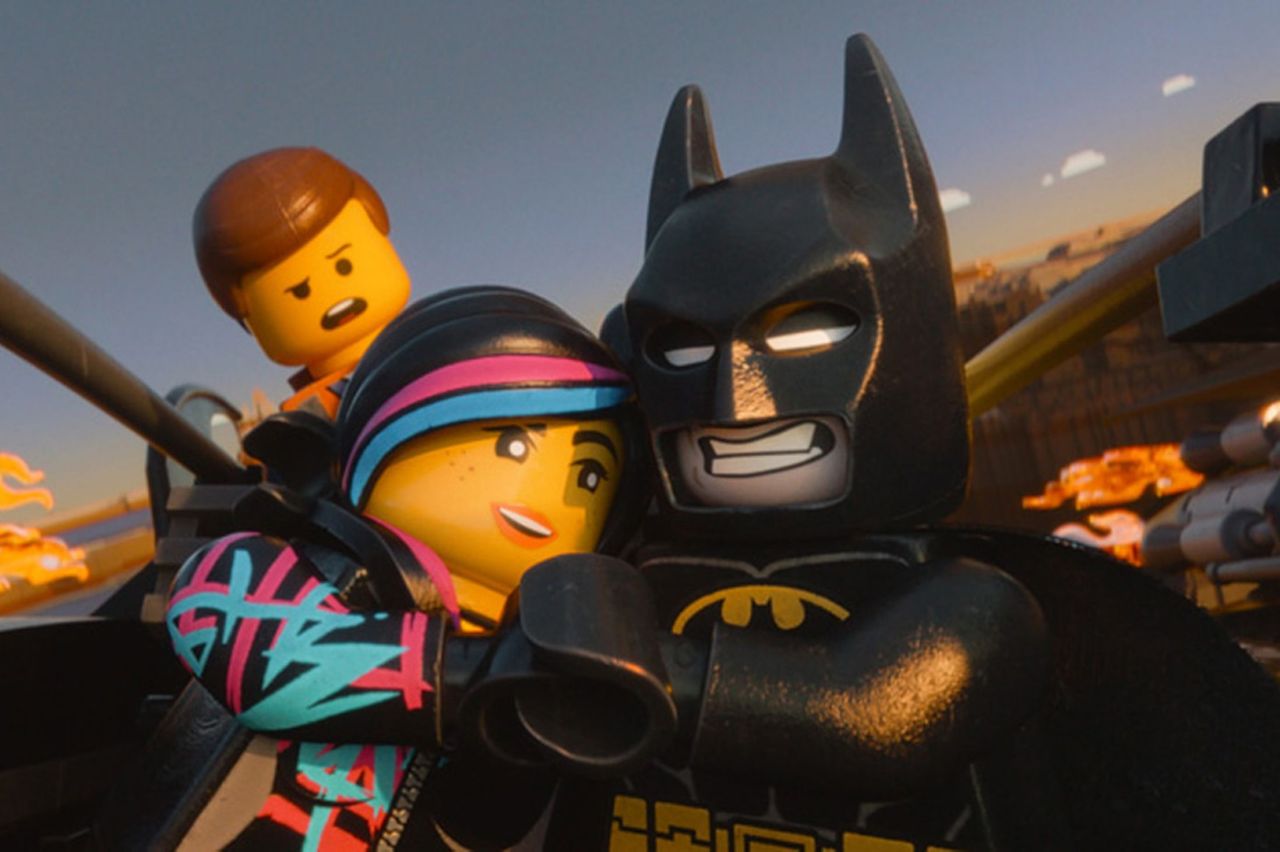
Arrested by Bad Cop (Liam Neeson) he is freed by Wyldstyle (Elizabeth Banks) who believes him to be the prophesied ‘special’.

Only the Piece of Resistance can prevent the tyrannical President Business (Will Ferrell) from using his super-weapon called the Kragle to destroy the Lego universe.

Emmet and Wyldstyle set out to to prevent the President’s evil plan and are helped by Vitruvius (Morgan Freeman) and other Master Builders.

They include famous lego–made characters who help make this the second best Batman movie and the fourth best Star Wars film.

Naturally enough the film emphasises the importance of invention and bonding but to say more will spoil the fantastic and emotional twist towards the end.

In a word, awesome.

 ★★

Big Hero 6

Director: Don Hall, Chris Williams

Robots and superheroes collide in this dazzling dayglo delight from Disney.

Beautifully animated and pop bubblegum fabulous to look at, it’s hilarious, joyous and thrilling.

At heart a touching tale of friendship, it’s alive with loveable characters, great jokes, exciting battles and gizmos and gadgets galore.

In the futuristic fusion city of San Fransokyo 14 year old Hiro (Ryan Potter) is a self-taught robotics genius who lives with his older brother Tadashi (Daniel Henney) and their Aunt Cass (Maya Rudolph).

Hiro spends his time winning money in illegal backstreet robot bouts (think TV’s Robot Wars but far more exciting).

Meanwhile Tadashi’s developed an inflatable talking robot healthcare companion called Baymax (Scott Adsit).

Soft talking and slow moving, it looks like a walking marshmallow and the animators have great fun with his ungainly girth and relentlessly gentle manner.

Tadashi and the wily professor Callaghan (James Cromwell) use reverse psychology to persuade the contemptuous prodigy Hiro to apply to college.

When Hiro demonstrates his newly invented, hugely powerful microbots, smooth-talking tech-entrepreneur Alistair Krei (Alan Tudyk) wants to buy to them.

But after Hiro rejects the offer there’s a mysterious fire that kills Tadashi and Callaghan.

Obeying his programming to heal, a warm and humorous bond slowly develops between Baymax and Hiro.

Jokes are cleverly constructed with the audience laughing at the same time but for different reasons such as when Baymax’s low battery causes speech and mobility impairment. Hiro has to smuggle him home in the manner of drunk teenagers sneaking in.

As Hiro grieves, his remaining microbot mysteriously activates leading he and Baymax to discover a factory making thousands where they’re attacked by a Kabuki-wearing stranger, massively menacing in dynamic expressionless splendour.

Escaping with the help of his nerd-school friends, Hiro upgrades Baymax with fighting abilities, armour and powered flight. His sensors lead them to a quarantined island, where they find industrial espionage and military conspiracy.

With industrial espionage, military conspiracy and an epic battle, it embraces noble sacrifice, death, grief, puberty and err, fart jokes.

With Disney owning Marvel Studios it’s allowed to be all very meta.  There’s unmistakable Iron-Man references, a Stan Lee cameo and the final showdown nods at 2012’s Avengers Assemble.

Taking charge of Pixar and has given the venerable Disney Studio an insulin boost of creativity, producing a wonderfully fresh if unexpected high point. Pixar now are relegated to junior partner producing inferior sequels to the hits of yesteryear.

Mashing up East and West in the cultural melting point in the fictional San Fransokyo is not only a canny ploy aimed at capturing the important Asian market but is clearly creatively driven by a love of Japanese cinema.

Japan’s Studio Ghibli is a driving influence both in tone and style. There is more than one wink to the masterpiece My Neighbour Totoro, notably in the Fat Cat restaurant owned by Hiro’s Aunt Cass and in the end credits.

But Big Hero 6 also has sufficient strength of character and identity to be franchise in it’s own right which is certainly the aim.

Just as in a Marvel movie it’s worth staying until the very, very end – by which time I was so enamoured of the movie I wanted my own Baymax.

I guarantee your kids will too.

P.s. In the manner of Pixar the main feature is preceded by the short cartoon Feast, an enjoyable lightweight snack that will whet your appetite for the main course to follow.

★★★★★

Boxtrolls

Director: Graham Annable, Anthony Stacchi (2014)

Funny and exciting from the off, this delightfully dark fairytale is a painstaking miracle of old school stop-motion animation.

For ten years since the Trubshaw baby was kidnapped there’s a nightly curfew in the cobble-stoned city of Cheesebridge.

Despite the horror stories about them devouring children, the Boxtrolls are actually peaceful, kind and incredibly inventive.

Their subterranean grotto is a Heath Robinson paradise, a magical place full of weird and wonderful contraptions built out of all the junk the city-folk have thrown away.

Living with the Boxtrolls is a boy named Eggs (Isaac Hempstead Wright). They’ve raised Eggs so successfully he thinks he’s a troll and the well-intentioned ‘trolls have difficulty explaining the painful truth.

Meanwhile First citizen Lord Portley-Rind and his white-hatted councillors employ the ferocious red-hatted exterminator Archibald Snatcher (Kingsley) to hunt down the cardboard box-wearing trolls.

If he can hunt down and destroy all the creatures, social-climber Snatcher is promised a white hat – an honour only bestowed to the cheese-gobbling upper classes.

Cheese-eating is the ultimate in conspicuous consumption for these burghers who drip with delicious self absorption. In the best tradition of Roald Dahl the films designers and animators delight in every exaggerated ill-mannered slurp.

One night as Eggs and the Boxtrolls venture out to tidy the city, his adopted dad Fish (Dee Bradley Baker) is captured by the fearsome Snatcher and his crew.

As the voices of Snatcher’s henchman Pickles and Trout, Richard Ayoade and Nick Frost are a curious casting choice with neither offering much energy or spark, they’re adequate with added whimsy.

Pickles is the more interesting of the two, constantly questions the validity of his dark deeds even as he perpetrates them. This is a lengthy set-up for a beautifully crafted gag which pays off tremendously in the final reel when Ayoade provides a wonderfully delivered monologue culminating in a brilliant reveal.

Eggs attempts to rescue Fish, teaming up with Portley-Rind’s spoilt, headstrong and argumentative daughter Winnie (Elle Fanning) along the way.

Breaking into Snatcher‘s factory they discover the captured Boxtrolls and the truth about the fate of the Trubshaw baby. It’s dangerous information and the resulting battle threatens to tear Cheesebridge apart in an action-packed finale.

Unwrap these Boxtrolls with care and you won’t be disappointed.

★★★★☆