ON THE BASIS OF SEX

Cert 12A 120mins Stars 3

Hollywood gives a makeover to a spartan legal warrior in this earnest and easy to follow biopic of US lawyer, Ruth Bader Ginsberg.

Now an 85 year old Supreme Court judge and a popular media figure who’s known to her devotees as RBG, she made her name fighting gender inequality.

Her long career is boiled down here down to a landmark legal case of 1972. When Charles Moritz is denied to claim a caregiver’s tax deduction because he’s a man, RBG argues in the Appeals court discrimination on the basis of sex is unconstitutional.

As well as demonstrating her willingness to fight for men as well as women, the timeframe allows for the box office friendly casting of Star Wars: Rogue One star, Felicity Jones as the young firebrand.

The Brit actress gives an impassioned portrayal alongside screen husband, Armie Hammer, whom the script is contradictorily over keen to crowbar in at every opportunity, leaving us to think RBG deserves better. 


TOLKIEN

Cert 12A 112mins Stars 2

Reeking of radioactive levels of unthinking snobbery, this dreary account of the early life of the acclaimed author of The Hobbit fatally overestimates the appeal of being cooped up for two hours with self-regarding and over-privileged public school boys.

Nicholas Hoult is sincere as J.R.R. Tolkien, Lily Collins is a bright spark as his sweetheart and Derek Jacobi’s professor is fun, but there’s nothing to learn and it lacks the epic grandeur of Peter Jackson’s Lord of The Rings trilogy.

Despite being orphaned and enduring the horrors of the First World War frontline, the film paints Tolkien’s earliest darkest hour as briefly having to slum it among the working classes of Birmingham.

He’s rescued by Colm Meaney’s kindly priest and sent to a posh establishment where he enjoys the fellowship of a semi-secret club who quaff champagne, mock waitresses and are as sympathetic as UK MP Boris Johnson’s Bullingdon Club.

Tolkien’s family have disowned the film and I don’t blame them. 

BOHEMIAN RHAPSODY

Cert 12A Stars 5

In a year when musicals have ruled cinema, this supersonic biopic of Freddie Mercury allows rock band Queen to claim their rightful crown as the champions of the box office.

Sympathetic, moving, funny and filled with some of the greatest rock anthems ever recorded, at a rare lick we see Freddie’s rise from airport luggage handler to global superstar.

As the band’s outrageous and supremely gifted vocalist, he struggles to break free of his traditional family, beginning the film by chasing what he wants and ending up with what he needs.

Powered by his finding somebody to love, 1985’s famous Wembley charity gig, Live Aid, becomes a redemptive, poignant and climactic celebration.

Though the film steers away from showing anything graphic, Freddie’s rockstar party life leads to his being diagnosed with AIDS, the disease which would kill him at 45 years old.

Rami Malek is tremendous as Freddie, and who cares if the American-Egyptian doesn’t particularly look like the Parsi Indian Brit, he absolutely captures the essence of the man as we’d like to remember him, dynamic, creative, outrageous and a world class crowd-pleasing frontman.

With the actors miming to the bands actual recordings, Queen’s chart-topping and lengthy back catalogue supercharges the script, and it’s worth the ticket price to hear the soundtrack, which rockets through their best-selling greatest hits album.

The majestic title track is the first song I can remember hearing that wasn’t a church hymn, and the scenes of its recording imbue the song with deeply personal meaning, a trick used repeatedly on songs such as, Love of My Life.

Band members, Brian May and Roger Taylor are executive-producers, and you might expect more of a contribution from their characters. Efforts are made to emphasise their contribution to the group, but even in their own band they were always the supporting act.

It’s a kind of magic this films is as great as it is, after the original director, Bryan Singer, was sacked with two weeks of filming to go. For the sake of brevity some of the dialogue is very direct, but it’s not afraid to ask the important questions, such as ‘how many Galileo’s do we need?’.

For his Tom Hanks-starring 1994 drama, Philadelphia, director Jonathan Demme persuaded Bruce Springsteen to contribute a title track. Demme argued the Boss’ song would encourage people who otherwise might  be disinclined, to go see a film about a gay man who dies of AIDS.

Similarly the music of rock royalty Queen will draw in an audience to this determinedly mainstream Hollywood biopic where they’ll watch a drama which celebrates the life of a much-loved performer who dies from AIDS.

And though this isn’t a ‘message’ film, if it kickstarts a discussion among parents and young teens of sexual health then that can only be a good thing.

Also in this film is a scene featuring a passionate, tender snog between two men, conducted without shame or fear. How many other broad-appeal saturation release Hollywood films will be showing that this year, next year or the year after?

It’s unlikely the upcoming Fantastic Beasts: The Crimes of Grindelwald will feature Jude Law’s young wizard Dumbledore snogging Johnny Depp’s titular villain. The Star Wars, Marvel and Fast Furious franchises fail repeatedly to do anything more than pay lip service to gay representation at best, and the decision to cut a gay kiss from Star Trek Beyond tells us all we need to know about Hollywood timidity.

I loved last year’s gay drama, God’s Own Country as much as anyone else who saw it, but far more people will see , and I suspect many will be people who wouldn’t normally consider to pay to watch a gay love story.

 isn’t a warts and all expose of the life of Freddie Mercury, it’s the unapologetically enjoyable, accessible, music-laden celebration it sets out to be. It promises a good time and it delivers.

And for once don’t worry about the size of the cinema screen, see this at the venue with the biggest sound system. And this will rock you.


FILM STARS DON’T DIE IN LIVERPOOL

Cert 15 106mins Stars 4

The unwieldy title of this moving real life romantic drama refers in part to the reticence of actors to leave the limelight.

And true to form we have two headliners wrestling for the spotlight in this adaptation of Peter Turner’s touching memoir.

Veteran Annette Bening is terrific as the sexy and vulnerable Gloria Grahame, a 1950’s Oscar winner now eking a living on stage in northern England in 1981.

Falling ill Gloria seeks respite at the Merseyside family home of her former lover, Peter.

In flashback we see their romance begin with a brave invitation to dance from the 55 year old Gloria.

Especially as 26 year old Peter is played by the former Billy Elliot, Jamie Bell. The Teesside born star gives his most complete performance yet.

This is a rare excursion from the world of James Bond for producer Barbara Broccoli. Given Bell now has a physique to rival 007 Daniel Craig, maybe she was scouting for his replacement.


HIDDEN FIGURES

Director: Theodore Melfi (2017) BBFC cert: PG

Equations lead to equality in this astronomically uplifting biopic.

When NASA find themselves behind communist Russia in the space race, three groundbreaking African American female mathematicians prove they have the right stuff.

Their brain power is instrumental in figuring out how to to return an astronaut alive from Earth orbit.

Taraji P. Henson, Janelle Monae and Octavia Spencer bring warmth, integrity and humour to their roles. The latter was up for the best supporting actress Oscar, but all of them are deserving of an award.

The real life characters they play may have been hidden from history, but they’re easily identifiable in the labs occupied by white men.

Rather than preach, the script uses humour to mock the stupidity of racism and sexism. And the science is pitched at a level so dummies like myself can easily understand it.

Stirring, sentimental and sweet, it’s a powerful and entertaining story of heroism in the face of prejudice.

@ChrisHunneysett


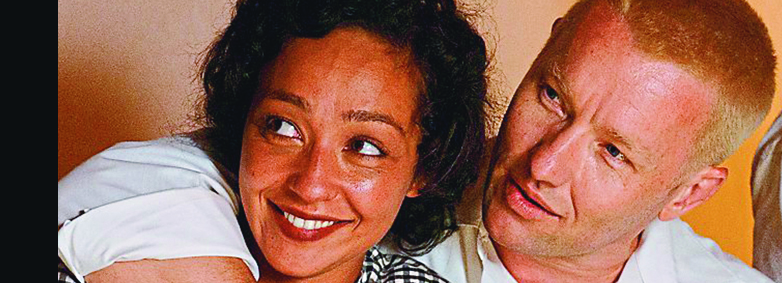
Loving

Director: Jeff Nichols (2017) BBFC cert: 12A

There’s no beginning to the drama in this earnest portrait of the lives at the centre a constitutional storm.

It concerns the 1967 US Supreme Court decision to invalidate the prohibition of interracial marriage.

Sadly there’s an over emphasis on the extreme ordinariness of Richard and Mildred Loving. Joel Edgerton is strong and silent. Ruth Negga is quietly dignified.

It’s a wonder why Negga has been Oscar nominated for the performance, as it seems to owe as much to the directors instruction as to her interpretation of the character.

Marrying legally in Washington DC, they’re arrested at home in Virginia where the law doesn’t recognise their mixed-race union.

A civil rights liberties group employs an ambitious lawyer to appeal their case. Years pass, the case grinds on and the finely crafted realism of writer/director Jeff Nichols leaves no domestic detail unturned.

I understand the point of the film is to offer a portrait of the private couple at the centre of – and yet removed from – a constitutional crisis. But the absence of clever courtroom wrangling, or sensationalist scenes of violence leaves us aching for some creative licence. Who needs to go to the cinema to be told how dull real life can be?

Loving is an eloquent plea for tolerance and equality. They have my sympathy, admiration and sometimes my interest, but I was far from loving it.

@ChrisHunneysett

Christine

Director: Antonio Campos (2017) BBFC cert: 15


Astonishingly overlooked by the awards season, Brit acting royalty Rebecca Hall gives a superb performance in this serious and sensitive portrait of a real life suicide.

Christine Chubbuck was a highly intelligent twenty nine year old American television news reporter, who had a history of depression. She shocked the nation by ending her own life, live on air, on July 15, 1974.

We see how a collision of domestic and career disappointments prompt the desperate and provocative act. Hall is tremendous at suggesting how uneasy Chubbuck is in her own skin, her life is full of prickly relations and social misjudgements.

The balanced script raises many issues relevant today, including how women best pursue a family life and a career, attitudes in the workplace, the access to appropriate health care, and much more.

Fashions are unflattering, the off-screen office politics convincing, and the attention to period detail of the analog electronics are a treat for technology nerds.

Chubbuck’s demeanour creates a barrier between herself and her acquaintances, but also between herself and the audience. So while she retains our sympathy, we remain distant to her, preventing us from engaging fully with her plight.

@ChrisHunneysett

Hacksaw Ridge

Director: Mel Gibson (2017) BBFC cert: 15

Disgraced star Mel Gibson battles his way back to career success with this storming Second World War drama which has been nominated for six Oscars.

Gibson’s well publicised personal problems seemed to have shot his Hollywood popularity to pieces. But having spent time out of the firing line of bad publicity, this is a rollicking return to the filmmaking frontline for the devout Catholic.

The Oscar winning director of 1995’s Braveheart takes a barely believable story of real life heroism and transforms it into an apocalyptic account of faith under fire.

In the first half Gibson provides a treacle coated view small town America, and in the second he blasts us with the brimstone of battle.

Brit actor Andrew Garfield carries the film with open faced charm and innocence as Desmond Doss. Despite being a pacifist Christian, the conscientious objector won the US Medal of Honour in the war against the Japanese.

After a Tom Sawyer-ish upbringing in rural Virginia, Desmond becomes engaged to a pretty nurse called Dorothy. Teresa Palmer and Garfield share a sweet rapport in sentimental scenes which seem to last too long. But the astute Gibson is simply softening us up for the fireworks to follow.

Desmond signs up as a combat medic but he refuses to learn how to shoot. On the Pacific island of Okinawa, the platoon buckle under a blistering barrage. The combat rivals the famous ferocity of the opening scene in Spielberg’s war classic, Saving Private Ryan (1998).

With Desmond’s suffering persecution for his beliefs, his air of martyrdom and determination to succeed in an overwhelmingly hostile environment, it’s hard not to read his journey as an allegory for Gibson’s personal tribulations.

And rather than being a plea by the director for absolution for his misdemeanours, this is Gibson forgiving Hollywood for casting him out. And he does it with a superbly crafted, finely acted and tremendously entertaining film.

@ChrisHunneysett

Denial

Director: Mick Jackson (2016) BBFC cert: 12A

Book yourself a grandstand seat at the Old Bailey for this courtroom drama of international importance. Smartly crafted from a real case, it provides plenty of evidence that great writing, performance and direction make for gripping cinema.

Brit actress Rachel Weisz sports red hair and a US accent as forthright Jewish university lecturer, Deborah Lipstadt. It’s an impassioned performance fuelled by an unbending sense of moral certainty, full of  sharp intelligence, wit and determination.

There’s a very American feel to proceedings, with an emphasis on the sanctity of free speech and the virtues of jogging. Lawyers of course, are celebrated.

Deborah is forced to to come to London to defend herself when she is sued for libel by British historian and holocaust denier, David Irving.

Timothy Spall is magnificent as the self-taught and social climbing bigot on the make. Endowing him with charm, dignity and sincerity, Spall makes Irving’s reprehensible  arguments appear dangerously and falsely reasonable and seductive.

The case hinges on Irving’s denial of  the true purpose of Auschwitz. He claims the death camp in Nazi occupied Poland during the Second World War wasn’t geared for industrial genocide. The cost of Deborah losing will be Holocaust denial being legitimised by a court of law, potentially allowing for a legally backed downgrading of Nazi atrocities.

Various Characters are denied their voice in court, not least the vociferous Deborah who is frustrated at having to allow her barrister, Richard, to speak on her behalf. Tom Wilkinson is wry, irrascible and fond of red wine as her much experienced advocate.

There’s a strong supporting cast throughout, even if the presence of Andrew Scott and Mark Gatiss from TV’s Sherlock occasionally lend the air of superior Sunday evening TV fare.

However a winter visit to Auschwitz offers some welcome visual gravitas and underlines the utter importance of the case. And when the verdict comes in, there’s no denying the audience is the winner.

Lion

Director: Garth Davis (2017) BBFC cert: PG

This real life long distance drama covers a lot of hard miles on its struggle around the globe.

Searingly sincere and with few surprises, we follow the footsteps of Saroo, an illiterate Indian boy adopted by a wealthy white Australian couple.

Played by the endearing Sunny Pawar, the six year old inadvertently goes on an epic train journey before ending up in the claustrophobic chaos of Calcutta. There’s a touch of Charlie Chaplin’s Tramp in the sad soulfulness of the streetwise urchin.

Saroo is eventually adopted along with another boy by Nicole Kidman in a bad haircut. Suddenly it’s twenty five years later and he’s a strapping surfer dude, played by the charming presence Dev Patel.

Suffering an identity crisis at university, Saroo begins the struggle to find his birth family. Rooney Mara plays the most generic of girlfriends, forced to parachute in and out to give Saroo someone to explain himself to.

It’s a seemingly impossible task given Saroo doesn’t know his surname, the name of his home town and he has search area with a radius over twelve hundred kilometres long.

Fortunately in the intervening years some clever bod has invented google maps, which helps his quest no end. I’ve had less effective sat navs when trying to find an open garage. Too little time is spent on the detective work and the solution feels woefully under-earned.

There’s a spiritual core to the film which helps us cope with the poverty porn, the frequent suggestions of abuse and extended bouts of moping. Identity, culture and language are all touched upon but sadly not explored.

And after a sure footed sprightly start,it becomes a long slog under the weight of some heavy emotional baggage. Plus the presence of Patel reminds us another, finer film. At times it feels like we’re watching Slumdog Millionaire 2: The Backpacker Years.

Ultimately, what the film says is just because you’ve gone to Oz, there’s still no place like home.

@ChrisHunneysett