DADDY’S HOME 2 Cert 12A Running time 99 minutes Stars 2

Two years ago Will Ferrell and Mark Wahlberg took an entertaining co-parenting comedy and used their star power to grab £184m at the global box office. Which is pretty impressive on a modest £38m budget.

This festive themed sequel doubles down on the dads by adding Mel Gibson’s smirking sex goblin and John Lithgow’s man-toddler, but dilutes the fun by half.

Plus the strong language and innuendo means this isn’t the joyous family film it thinks it is.

Most of the action takes place in a hunting lodge where the boys’ blended families are preparing the perfect ‘together Christmas’.

Among the macho posturing, childish squabbles and limp slapstick, there’s jaw-dropping misjudged rendition of Band Aid’s ‘Do They Know It’s Christmas?’

Poor Linda Cardellini’s role is to nag everyone while feeling inadequate for not looking supermodel hot.

Everyone sees a fake Christmas movie starring Liam Neeson called Missile Tow, now that’s the film I’d rather be watching.

A CURE FOR WELLNESS

Director: Gore Verbinski (2017) BBFC cert: 18


Gore Verbinski administered shock treatment to Johnny Depp’s career by directing the first three Pirates of the Caribbean films, and the magnificent mess, The Lone Ranger.

The appropriately named director now turns his hand to horror, with equally mixed results.

It’s beautifully designed on a grand scale, and stunningly photographed.

Brit actor Jason Isaacs is wonderfully measured as the governor of an exclusive Swiss sanitarium. Forever pale and interesting, Dane DeHaan is suitably cast as a young US executive sent to Switzerland to rescue his CEO from hydrotherapy.

In the vein of the venerable Hammer House of Horror, the story draws heavily on the European folktales which inspired Dracula and Frankenstein.

Distended on a diet of eels and red herrings, the constipated storytelling puts a strain on the audience. It needs a good dose of leeches. Movement in the bowels of the castle allows for a necessary and explosive purge of plot, providing great relief all round.

@ChrisHunneysett

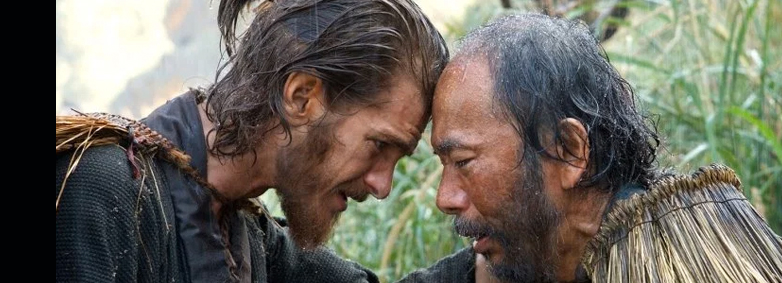
Silence

Director: Martin Scorsese (2017) BBFC cert: 15


Cleanse your spirit of festive excess with this raw religious historical drama.

Director Martin Scorsese’s last film was The Wolf Of Wall Street (2014), an unholy marathon of money,  booze, drugs and sex. I loved it. Now the veteran filmmaker is insisting we suffer penance  for enjoying his cinematic  sins, by making us watch this powerful portrait of pain and suffering.

We follow a seventeenth century devout Portuguese priest who smuggles himself into feudal Japan. Foreigners have been barred and converted Christians are being put to death in inventively gruesome ways.

Brit actor and former Spider-man star, Andrew Garfield is a revelation as Father Rodrigues, the Jesuit missionary. Sporting a runaway beard and raggedy clothes, his soul baring intensity carries the film as Rodrigues’ faith in God is put to the test.

Better known as Kylo Ren from the Star Wars: The Force Awakens (2016), Adam Driver demonstrates his elastic acting range as Rodrigues’ more cynical fellow priest, Father Garrpe.

Rodrigues is trying to discover the fate of his former mentor. Father Ferreira has been reported as renouncing his faith and taking a Japanese wife. As the missing priest, Liam Neeson is back to the form which saw him Oscar nominated for Schindler’s List (1993).

Twenty years in the planning  and filmed on location across harsh mountains, beaches and seas, this has been labour of love for Scorsese. And there’s no doubt the actors are suffering for his art. We see drownings, crucifixions and villagers being burnt alive. The very first scene features torture and heads on spikes.

With its heavy themes of faith, loyalty and guilt, traumatic scenes of execution and extensive use of subtitles, this is far from a multiplex crowd pleaser.

This is Scorsese’s homage to some of his favourite epics; the John Ford western The Searchers (1956), Akira Kurosawa’s adaptation of Shakespeare’s King Lear, Ran (1985), and Francis Ford Coppola’s epic war movie Apocalypse Now (1979).

And by creating this intense masterpiece, Scorsese is elevated to cinema’s pantheon of directorial deities.

@ChrisHunneysett

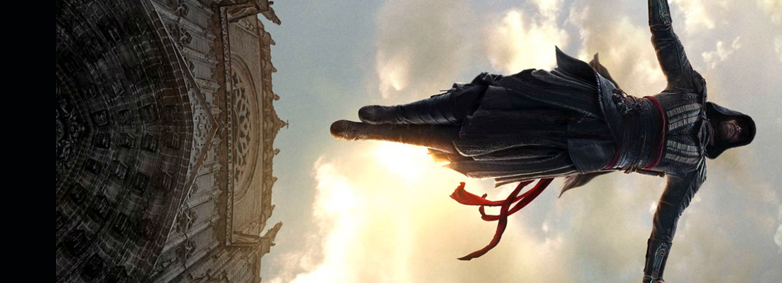
Assassin’s Creed

Director: Justin Kurzel (2017) BBFC cert: 12A

With a recognisable brand, a built in fan base, a great cast and a serious budget, this could have been a fun action spectacular.

But even with its wretched history of adapting video game adaptions, it’s difficult to believe how brazenly Hollywood murder this one before your very eyes.

Michael Fassbender stars as Callum, a swaggering death row convict prisoner turned scientific guinea pig.

Marion Cotillard teams up with Fassbender for the second under Kurzel’s direction, after his version of Shakespeare’s Macbeth (2015). The French actress plays Sophia, the chief of a mysterious foundation which has developed an machine for a covert purpose. Jeremy Irons plays Sophia’s father, and generates the films only laugh.

When Callum is plugged in to their experimental machine, his DNA accesses the memories of his fifteenth century ancestor, an assassin. He’s a medieval Jason Bourne (2016) who bounces across rooftops while juggling with a jelly-like plot – with predictably disastrous results.

Plus it’s a visual vomit of back lighting, lens flare and dust clouds, meaning the poor CGI action is hard to see.

Assassin’s Creed is a souped up sword and sci-fi version of The Da Vinci Code (2006), but lacking the necessary cloak and dagger.

@ChrisHunneysett

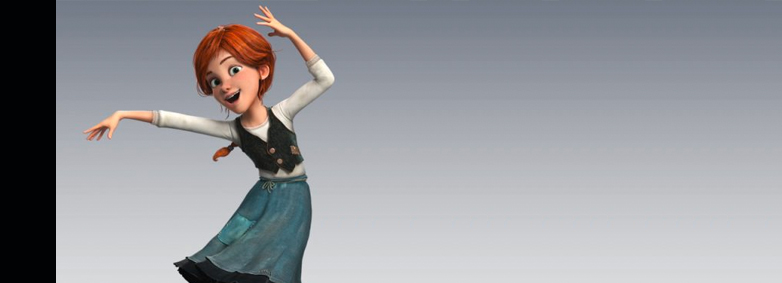
Ballerina

Director: Eric Summer, Eric Warin (2016) BBFC cert: U

This dancing twist on the Cinderella story tangos with the Strictly format, but fails to impress the judge, me.

Felicie is an eleven-year-old girl who dreams of becoming a ballerina. Escaping the orphanage for a prestigious dance school in Paris, she must survive several elimination rounds in order to audition for a role in The Nutcracker ballet.

Her main competition is a spoiled, rich girl with a murderously pushy showbiz mother. Among the other, crudely drawn characters, are a snaggletoothed hunchback and a limping cleaning lady.

It’s a French/Canadian production with Elle Fanning dropped in to voice the lead and add a light sprinkle of Hollywood sparkle.

The animation is mediocre, the humour is broad slapstick, and it has a relaxed attitude to its young heroine being at the sharp end of a love triangle.

Lagging in the wake of Moana, Disney’s forward looking and far superior recent offering, this seems strangely old fashioned.  And not just because it’s set in 1879.

Offering limited fun for dance-mad tweens, everyone else may find themselves wishing Ballerina would foxtrot off.

@ChrisHunneysett


Passengers

Director:Morten Tyldum (2017) BBFC cert: 12A

Hollywoods hottest stars make cosmic love in this glossy sci-fi mystery romance.

On paper this looks like a winner: Jennifer Lawrence and Chris Pratt are talented, attractive and likeable, with a strong record of blockbuster success. Director Morten Tyldum comes straight from the Oscar nominated hit, The Imitation Game (2014.)

The huge budget allows for top draw special effects. And in a change from cinemas littered with adaptations, reboots, sequels and remakes, Passengers has an original story.

A shame then, the film is such a morally dubious and often dull mess.

Pratt plays a mechanic called Jim, in suspended animation alongside 5000 others on an automated spaceship heading to colonise a new world. An asteroid storm causes his sleep pod to malfunction, and he awakes to find his journey still has about 90 years to go.

This opening is the strongest part of the film, and it’s no hardship spending time with Pratt as he explores the ship. There are some decent jokes here about corporate identity and status.

Jim spends a year slowly going stir crazy with only an android barman for company. It’s played by the brilliant, movie stealing talent of Michael Sheen. Wandering through the ship, Jim falls in love with Jennifer Lawrence’s sleeping beauty, called Aurora.

Cyberstalking Aurora by accessing the ships files, Jim also holds vigils next to her glass pod before deciding to wake her up, knowing she will not survive the voyage.

He blames the ship and the film refuses to condemn him for this selfish evil act, portraying it as an act of love. Then the script rewards Jim with some hot space nookie as she finds his goofy yet capable man-child irresistible. This is Stockholm syndrome in space.

Not that it excuses Jim’s behaviour, but Aurora turns out to be an irritating investigative journalist with daddy issues. She only really comes to life when she’s angry.

For the second week in a row following Rogue One: A Star Wars Story (2016), the robot is the most sympathetic character.

The design and CGI are fabulous and there are interesting nods to Stanley Kubrick classics 2001: A Space Odyssey (1968) and The Shining (1980).

But the film abandons its early attempts at psychological horror to play the romcom card before becoming an action movie with some dull peril and explosions to bring the story to a close.

Being lost in space for ninety years together is the least this pair deserve. You have to feel sorry for the android though.

@ChrisHunneysett

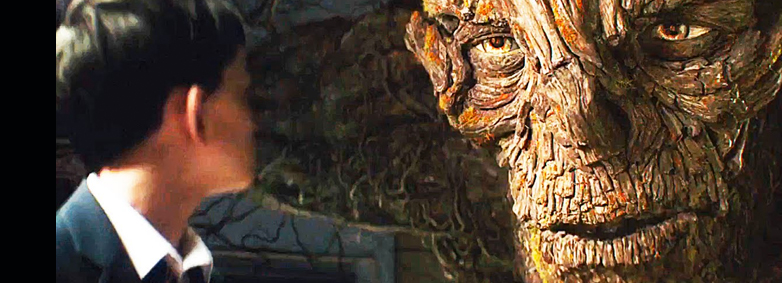
A Monster Calls

Director: (2016) BBFC cert: J. A. Bayona

This abominably heart breaking fable brings the new year roaring to life. It’s an exceptional mix of live action, awesome animation, CGI destruction and a very intimidating monster.

Lizzie is a single mother with a terminal disease, living with her quiet teenage son, Connor. They live in a modest house which backs onto a graveyard, home to a huge, ancient and knotty yew tree.

Felicity Jones shows far more range as Lizzie than she was able to in the recent humdrum Rogue One: A Star Wars Story (2016). And fourteen year old Lewis MacDougal delivers a remarkable performance of devastating honesty which will leave you in tears.

An elegant Sigourney Weaver is tightly wound as Conor’s distraught grandmother. Even at sixty seven I’m not sure I’m ready for the kick ass star of Alien (1979) to be playing a grandmother.

Conor sees her as a wicked step mother figure and she is one of several possibilities for the monster of the title, until the real one is revealed.

After Conor experiences a series of violent incidents, the yew tree transforms into a fearsome monster, made more terrifying by Liam Neeson’s ferocious bass growl.

He’s a hard and abrasive creature who seems to have come directly from Arthurian legend. The monster tells Conor dark and morally complex fairytales full of murder and betrayal.

Beautifully and vividly animated, these fantastical elements are used to communicate emotional truths to Conor, forcing him to confront the biggest and meanest monster of all.

With warmth and charm to spare, it’s a moving and at times scarily exciting exploration of grief, guilt and love.

It’s based on the best selling children’s book by Patrick Ness and is the first great film of 2017, though perhaps a little scary for the very little ones.

Don’t wait for the monster to call on you, get to the cinema and pay him a visit.

@ChrisHunneysett

The Eagle Huntress

Director: Otto Bell (2016) BBFC cert: U

A teenage girl soars in this inspirational and jaw dropping documentary.

Thirteen year old Aisholpan is from the nomadic Kazakh tribes of Asia. She faces formidable obstacles as she trains to  become the first female to become an Eagle Hunter.

It’s a centuries old, male only occupation which involves stealing an eaglet from its eyrie and training it to hunt foxes. While on horseback. In the snow. In the mountains.

The schoolgirl is brave, determined, skilful, and modest as she climbs, rides, and practises. She does so without complaint, a smartphone or a social media account.

Competing in a tournament against seventy bemused and fearsome looking blokes, she  challenges tradition and ignorance.

It’s beautifully photographed, skilfully edited and brilliantly told. ‘You are awesome’ says her father on the eve of her first tournament. And she is.

@ChrisHunneysett

Rogue One: A Star Wars Story

Director: Gareth Edwards (2016) BBFC: 12A

This spin off of Disney’s Star Wars sci-fi franchise will please hardcore fans far more than the average audience member.

In terms of chronology and entertainment, Rogue One sits between the swashbuckling first Star Wars (1977) film and the ponderous bloat of the Phantom Menace (1999) prequels. 

It has all the virtues and flaws of director Gareth Edwards previous effort, Godzilla (2014). That monster box office success was visually stunning but dramatically inert, revealing Edwards tremendous ability for conjuring up beautiful images but a fatal lack of aptitude for character, dialogue or drama.

The strength of JJ Abrams billion dollar success The Force Awakens (2015) was to capture the joyous spirit of the 1977 original film, while paying service to the fans with the inclusion of favourite characters, scenarios and design. Lacking Abrams gift for zippy showmanship, self confessed super fan Edwards plays loudly to his fellow nerds in the gallery but forgets to bring the fun for everyone else. The attention to drama is perfunctory while cool looking space stuff is drooled over from too many angles.

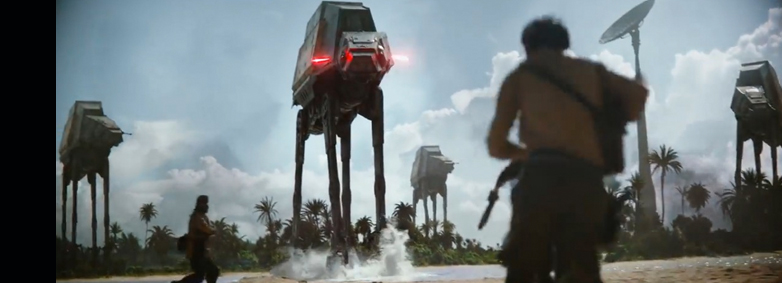
This film isn’t short of ravishing vistas and gloriously detailed design and there’s no faulting Edwards attention to detail. Graphics, costumes, sets and uniforms are lovingly recreated in an appropriate style. The CGI is faultless, except when it’s deployed to bring back to life characters from the first film. At first shocking and intriguing, the longer we spend with these unconvincing creations the deeper we’re lost in an uncanny valley of dead eyed CGI.

The filmmakers are so proud of their technical cleverness they pause the film so the audience can gasp at the marvel of the inclusion of yet another minor character. This kills momentum and makes the galaxy seem a very small place indeed, undermining all the impressively epic world building.

Edwards seems to share a belief with Batman Vs Superman (2016) director Zack Snyder, that looking cool is more important than coherent cinematic storytelling. For example a moment of intended poignancy is undermined by the directors insistence we bask in the gloriously beautiful glow of laser powered mass destruction. We’re encouraged to passively admire a billowing cloud of annihilation as we would a particularly colourful sunset. This is at odds with our natural reaction which would be to recoil in horror.

It’s worth comparing how in Terminator 2 (1991) James Cameron treated a similar piece of large scale obliteration as angry and painful. In the hands of Edwards the tone suddenly shifts towards the romantic, because nothing says ‘I love you’ more than a mushroom cloud. Cameron did use a mushroom cloud to invoke passion, love and reconciliation in True Lies (1994), but did so in a cohesive manner which combined story and character in a succinct and tonally satisfying image. Edwards fails to do this, opting for ‘gee, doesn’t this look cool’, instead. We’re not looking at the characters which would us insight into their emotional state, the cameras eye is on the beautiful scenery. 

Similarly to Godzilla, we begin with a short scene which introduces the major characters while killing off a significant other. And again, all of this is immediately redundant as the story skips several years to find the child at the centre of the scene is now an adult. All the information we are given in this first segment is offered again at regular intervals. The dialogue is nothing if laboriously functional in providing us with what we need to know. 

With her face set to stern and her laser gun set to kill, Felicity Jones stars as Imperial prisoner Jyn Erso. She’s co-opted into the rebel alliance because her dad is the designer of the evil Empire’s new fangled super weapon, called the Death Star. A team of assassins, spies and saboteurs is gathered and off they pop to break into a highly secure imperial base to steal the technical plans, in order the Death Star can be destroyed. Far too much time is spent with Ben Mendelsohn’s career minded evil scientist, Orson Krennic.

Despite Jones being at the centre of the action, it’s a male dominated film, with all her key relationships being with men. She’s a daddy’s girl through and through. Her gang are racially diverse, but she is the token female smurf, err woman. There are as many robots on the team as there are women.

Alan Tudyk voices droid K-2SO and gives the comic sidekick a degree of warmth notably missing elsewhere. Though the heavy handed robot humour isn’t hugely funny, we should be grateful for these scraps. I suspect the widely reported weeks of costly reshoots involved crowbarring this character into as many scenes as possible, he’s a jack in the box of intrusive appearances.

For a leading proponent of sci-fi, George Lucas has never shown any interest in exploring the moral and dramatic possibilities inherent in Asimov’s three laws of robotics.

The rebel alliance is reliant upon deserters, traitors and fifth columnists. There are shifting allegiances and employments as people are variously press ganged, manipulated and sold down the river. In an attempt to add dramatic weight to acts of derring do, contemporary political signifiers such as militant splinter groups, friendly fire and the destruction of ancient religious artefacts are included. 

Ruling the galaxy with a tyrannical fist must be exhausting and we see how Darth Vader spends his down time. This removes another layer of mystique and menace from the most feared cyborg in the galaxy. Taking a cue form The Revenge of the Sith (2005), he also gets his own flying Yoda moment. The man has a million stormtoopers at his disposal, but honestly, you just can’t get the staff and he has to do it all himself. Still, it looks cool,and that’s Edwards primary interest.

Rogue One begins abruptly and ends in a similar fashion. It dispenses with the opening crawl and the  classic John Williams theme is mostly absent.

 Technically Rogue One is episode III and a 1/2, but that’s half a star too many.


Life, Animated

Director: Roger Ross Williams (2016) BBFC: PG

There are elements of artifice which sit uneasily with the uplifting message of this well meaning documentary.

At three years old Owen Suskind developed severe autism. This left him unable to process the world around him, so he withdrew into himself and spoke only gibberish.

However through watching classic Disney animated films such as The Lion King, he found a way to understand and reconnect with the world. Through adopting the voices of Disney characters, he became able to express himself.

Twenty years later we follow him as he prepares to leave home and find a job, sharing the same dreams and fears as his contemporaries.

There are interviews with his family and doctors, plus home videos and some beautiful specially commissioned animations illustrating Owen’s own stories.

A couple of Disney voice stars turning up to Owen’s film club is a cute stunt, presumably orchestrated by the filmmakers.

More damaging to their carefully constructed narrative is the brief and unexplained reference to Owen’s medication regime, suggesting there’s a lot more science involved in Owen’s miracle recovery than they want to let on.

@ChrisHunneysett