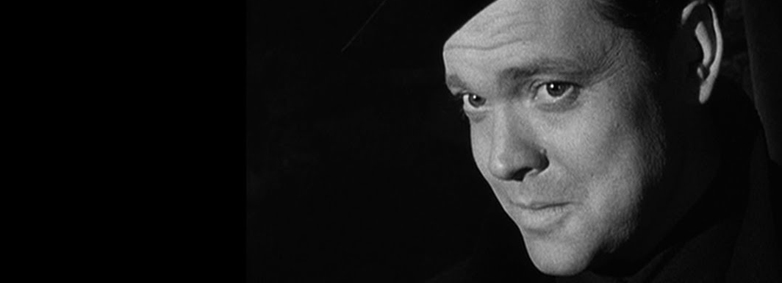
Magician: The Astonishing Life of Orson Welles

Director: Chuck Workman (2015)

There’s plenty of magic but little mystery in this documentary of Orson Welles, the hugely talented cinematic showman and raconteur.

It’s an enjoyable and celebratory rocket-ride through the much repeated highlights of his extraordinary career but has nothing new to say.

Best known as the star, director, producer and co-writer of his masterpiece Citizen Kane (1941) at the precocious age of 25, it draws on photographs, illustrations, interviews, clips of his work and footage from his many TV interviews.

His work casts a long expressionist shadow from which emerge a host of top drawer filmmakers to pay homage. These include directors Steven Spielberg, Martin Scorsese and Richard Linklater.

However Tim Burton doesn’t feature which is surprising considering how much debt his work owes to Welles. The director even featured Welles (Vincent D’Onofrio) as a character in his finest work, the biopic Ed Wood (1994).

Various other screen portrayals of Welles are seen: Christian McKay in Linklater’s Me and Orson Welles (2008), Jean Guerin in Heavenly Creatures (1994), Liev Schreiber in RKO281 (1999) and even John Candy in a TV skit opposite Billy Crystal.

All of which underline the stature in which he is held, as well as cementing his place in popular culture.

With the contributors agreeing Welles is a titan of cinema, no-one says a word in anger against him and there’s absolutely no muck-raking.

It’s an excellent introduction to the work of a man who above all else was a consummate if unreliable story-teller.

Slow West

Director: John Maclean (2015)

A lovestruck Scot hits the trail way out west in this confident and compelling western.

It rustles up great performances, pitiless action, majestic scenery, bone dry humour and a melancholy soundtrack.

Cast from the mould of Don Quixote, 16 year old Jay (Kodi Smit-McPhee) is a naive and romantic doe-eyed Bambi of an un-rough youth.

He dreams of building railway to the moon and is given to gnomic utterances such as ‘love is universal, like death’ – though he has no real understanding of either.

Riding a horse weighed down with the gentlemanly essentials of a teapot and guide book, he has abandoned his privileged Sottish home to find his love Rose (Caren Pistorius) in the wild west of Colorado.

She left Scotland after an accident and now lives in rural isolation. We see their romance in flashbacks.

Through shoot-outs, robberies and flash-floods he encounters Native Americans, musicians, writers, orphans, soldiers and outlaws.

Unprepared for the violent and treacherous road, he employs a taciturn, cigar chomping sharp-shooter called Silas (Michael Fassbender) as a guide. He has more knowledge of Rose than he lets on.

Even next to the experienced and charismatic Fassbender, Smit McPhee sits tall in his acting saddle and never in the shade.

The chemistry between these travellers reveal facets of their character, altering our perception of them.

Fassbender gives a thrillingly controlled performance, hinting at nerves and a conscience hiding behind the facade of an ice-cold killer.

The film is so well constructed his voice over seems redundant – perhaps it was a commercial decision made by the producers.

With it’s surrogate family-building subplot there are echoes of Eastwood’s directorial masterpiece The Outlaw Josey Wales (1976).

Not content with riffing on one classic, Slow West also utilises the three pronged dynamic of Sergio Leone’s magnificent spaghetti western The Good, The Bad and the Ugly (1966).

While Silas has strong echoes of Clint Eastwood‘s The Man With No Name, a dog-collared bounty hunter called Angus The Clergyman (Tony Croft) draws on Lee Van Cleef’s introduction as The Bad where he is similarly attired.

Ben Mendelsohn completes a trio of competing mercenaries as an outlaw called Payne. He’s a swaggering presence in a bearskin coat, reminiscent Butler (Hugh Millais) in McCabe and Mrs Miller (1971).

Though the scale of Slow West is smaller than those films, it hits it’s ambitious targets with a Silas-like accuracy.

This a wonderfully composed movie; cinematographer Robbie Ryan only moves his camera if it serves his purpose. He previously shot Fassbender on Andrea Arnold’s gritty Brit drama Fish Tank (2009).

Musical supervisor Lucy Bright has the London Contemporary Orchestra provide a mournful string accompaniment to Ryan’s strong eye.

This is the second excellent western of the year after Kristian Levring’s The Salvation, suggesting the genre is a long way from Boot-hill. That was filmed in South Africa, Slow West was shot in New Zealand.

Despite disparate location work, both offer a fresh and defiantly European perspective on the ultimate American genre. They are intelligent, action-orientated and intense additions to the canon.

Minions

Director: Pierre Coffin, Kyle Balda (2015)

Bask in the giggly yellow glow of the golden-hearted helpers of Despicable Me (2010) as they take centre-stage in this animated prequel.

Supremely silly from singing start to riotous finish, this fabulous fanfare of fun is your kids new favourite film.

Following their film-stealing role in Despicable Me 2 (2013) this is the third outing for the employees of wannabe super-villain Gru (Steve Carell).

Prior to working for Gru the minions have happily toiled for the most despicable figures of history; the Pharaohs, Napoleon and err, a Tyrannosaurus Rex.

But now in 1968 the minions are miserable without someone telling them what to do.

So Kevin, Stuart and Bob (all voiced by co-director Pierre Coffin) leave their brethren and set off to find a new master to serve.

A feast of frivolity follows as the innocents abroad search for a father-figure.

Kevin the tall one is the leader of the trio. Bob the youngest carries a teddy bear, Stuart plays guitar.

In Orlando the trio are employed by the world’s first female super-villain, Scarlet Overkill (Sandra Bullock).

She’s zooms about in nuclear-powered armoured dresses, lives in a castle and acts as if she’s the evil doppelganger of Lady Penelope from Thunderbirds.

Her inventor husband Herb (Jon Hamm), equips the yellow trio with a stretch suit, a hypnotising helmet and a lava lamp laser gun.

Scarlet instructs them to steal the crown of Queen Elizabeth II. The toothy monarch has nerves and fists of steel and enjoys a royal night out.

She’s voiced by Jennifer Saunders in easily her funniest comic performance.

Steve Coogan played Silas Ramsbottom in DM2, here he appears as a nutty Professor and a Tower Guard. Geoffrey Rush narrates.

Michael Keaton and Allison Janney have brief roles as Walter and Madge Nelson. Along with their baby-faced son they pick up our hitch-hiking heroes.

Elderly beefeaters, tea-drinking bobbies and fake moon-landing conspiracies bump against Arthurian legend as the jokes play fast and loose with history and geography.

Swinging London town is painted yellow to a soundtrack of The Beatles, The Rolling Stones and suitably Donovan’s Mellow Yellow.

The familiar songs kick in to give oomph to the weaker action sequences suggesting a lack of confidence in certain scenes.

Although the tie-dye colours of the ’60’s make for a colourful spectacle, there’s no benefit gained from being set in 1968. Plus it makes Gru more a grandfather than a father to his adopted children.

That said the year feels like an idea abandoned halfway through production. It has no bearing on the plot and isn’t explored in depth – which is something of a relief.

Madcap chases and choreographed song and dance numbers are joyously created by the top class animation.

A hall of mirrors, the Palace of Westminster, Trafalgar Square and especially the feathering on Scarlet’s hair are all beautifully rendered.

My good-natured giggles regularly erupted into huge guffaws and if you don’t enjoy this movie, I’ll set my minions on you.

Everly

Director: Joe Lynch (2015)

Despite starring the pneumatic Salma Hayek as an imperilled prostitute, this exploitation action thriller repeatedly falls flat.

If you consider my intro to be tasteless and/or sexist then it’s a pretty accurate reflection of the film.

The concept of Everly has strength in it’s simplicity; blood-licking Yakuza boss Taiko (Hiroyuki Watanabe) has discovered his sex slave Everly (Hayek) is trying to shop him to the police.

Taiko is determined Everly will never leave her apartment so she has to defend her daughter Maisey (Aisha Ayamah) and mother Edith (Laura Cepeda) from waves of hit-men sent to assassinate her.

But the premise crumbles under pressure of a weak script, terrible dialogue, mediocre performances, an uncertain tone and blunt stabs at humour. A couple of moments of choreography aside, the direction is uninspired.

Other than tag-team villains The Sadist and The Masochist (Togo Igawa, Masashi Fujimoto) the bad guys are indistinguishably dull cannon fodder. Plus they don’t seem terribly clever, competent or keen to accomplish their mission.

It is frequently unintentionally and insufficiently funny.

Hayek looks fabulous and gives good shout but is miscast playing a role which feels written for a considerably younger actress.

Her cinema break-through was in Robert Rodriguez’s Desperado (1995) and followed it a role with in his From Dusk Till Dawn (1996) written by her co-star Quentin Tarantino.

Both twenty years ago. Dear Lord.

Rodriguez and Tarantino teamed-up on their Grindhouse (2007) double-bill. The creators of Everly are apparently in thrall to that poorly received work.

This is worse; a poor pastiche of the master magpies of cinema.

Following her nomination for a Best Actress Oscar for her self-directed Frida (2002), Hayek has combined TV work with Adam Sandler comedies Grown Ups (2010) and Grown Ups 2 (2013).

Now a naturalised US citizen, Hayek first established her acting credentials as soap opera star in her native Mexico.

Here she demonstrates the depth of her soap opera training, oscillating between angry and scared but never both at the same time.

Possibly inspired by the late success of the older Sandra Bullock (48 years against 50) as a sort of action heroine in Gravity (2013), Hayek could be applauded for taking her career in a new direction.

The excellent box office of Scarlet Johansson’s Lucy (2014) demonstrates a demand for female-led action movies – but this is a poor choice of material.

Hayek seems to lack the subtlety, wit or desire to make her character interesting or entertaining and her Jessica Rabbit-esque frame amply reflects her character’s cartoon quality.

The framing of cinematographer Steve Gainer draws attention to Hayek’s breasts at every opportunity generating an unthinkingly voyeuristic feel.

And in it’s gleeful offing of prostitutes in non-inventive ways and violent prosecution of the lead, the film seems determined to punish all the women onscreen.

However with it’s protective mother dynamic Hayek presumably imagines the film errs on the side of redemption not misogyny.

Everly is a series of unexplained contradictions failing to be a coherent character: She massacres a room full of men but is squeamish about frisking their dead bodies.

She can operate a variety of weapons with deadly effect while straight-faced suggesting she’s never held one before. She forgets she has wounds and brushes off explosions and blood loss and worries about her choice of outfits.

For a single location film – essentially an apartment block turned brothel but mostly taking place in the one room – the geography is poorly articulated, making for confusing action scenes.

Despite it’s 18 certificate, brothel setting and cast of prostitutes, there’s a staggering lack of sex or nudity.

Unlike the excellent John Wick there’s no sense of a coherent wider society existing beyond the gangland world exists within, creating a drama-and-suspense-killing lack of consequence.

There’s an Edgar Wright-style burst of energetic editing when a drink is served but rather than feeding the rhythm of the film, it trips it up.

Similarly a gag involving Hayek’s leopard-print heels isn’t developed, leaving it on the shelf without a punch line.

It’s typical of the film this idea is not followed up, just another idea thrown thoughtlessly into the mix along with sulphuric acid, an Alsatian dog and a pink teddy bear.

The Christmas setting allows us to be treated to a selection of festive follies on the soundtrack, another example of the misjudged humour and wavering tone.

In more than one way Everly’s final shot is the best.

Les Combattants

Director: Thomas Cailley (2015)

A hot summer in southern France leads to a smouldering romance to in this tinder dry romcom.

Landscape gardener Arnaud (Kevin Azais) is tricked into a self-defence exercise at an army recruitment fair.

His sparring partner is the aggressive Madeleine (Adele Haenel) against whom he resorts to cheating to win.

Commissioned with his brother to build a wooden garden frame Arnaud is shocked to discover his clients are Madeleine’s parents.

He’s intrigued and quickly enamoured of the intense Madeleine, a university drop-out whom Arnaud sees undertaking a punishing exercise regime.

Madeleine’s a strong, sexy, sarcastic and an aggressive problem solver who is convinced the end of the world is nigh.

She’s applied to a military camp for survivalist training. Intrigued by her intensity, Arnaud signs up for the course too.

The plastic inflatable beds and stalls of the army are contrasted with Arnaud’s natural and solid constructions.

In a gender twist typical of the intelligent script, it is Arnaud who gently applies the camouflage makeup on Madeleine.

The two great leads are captured by fluid camerawork and natural light. The pace is picked up by a scorching 1980’s-inspired synth soundtrack.

It‘s just a shame the story doesn’t commit fully to Madeleine’s character or to it’s apocalyptic leanings.

Mr Holmes

Director: Bill Condon (2015)

The game is afoot for the last time in this elegiac postscript to the magisterial career of retired detective Sherlock Holmes.

As the Baker Street sleuth, Ian McKellen delivers a beautifully honest performance. It’s full of humour and sadness without ever lurching into sentiment or self-pity.

We see Holmes at two points in his life: first as a semi-invalid retiree who is all too aware of his fast diminishing mental faculties. Secondly as the arrogant Victorian investigator at the height of his fame and intellectual power.

Beginning in 1947, the 93 year old former detective spends his time beekeeping on the Sussex coast

He has returned from a trip to Japan where he was the guest of Matsuda Umezaki (Hiroyuki Sanada) on a mission to secure a herb called Prickly Ash.

Holmes hopes to use it as a remedy to halt the decline of his once brilliant mind, an idea looked upon with scorn by housekeeper Mrs. Munro (Laura Linney).

Together with her 10 year old son Roger (Milo Parker) the three form a surrogate family whose combustible chemistry threatens the uneasy equilibrium of their existence.

We expect and receive great performances from the McKellen and Linney but young Parker is also at times exceptional.

In order to understand his present a frustrated Holmes is trying to remember the details of his last case.

He knows it’s unsatisfactory conclusion lead to his retirement but he can’t fathom why.

Several mysteries run in parallel as through flashback we see the Case of the Grey Glove which occurred 30 years earlier.

Holmes is commissioned by Thomas Kelmot (Patrick Kennedy) to investigate the behaviour of his grief-stricken wife Ann (Hattie Morahan).

With a story involving vials of poison, exotic musical instruments and forged cheques, Holmes is lead to the mysterious music teacher Madame Schirmer, played by a show-stopping Frances de la Tour.

Discussions of the afterlife are filtered through his failing memory, adding to a layering of fictions.

There are frequent references to the gap between the image of Holmes and his reality. He is not the infallible scientist of public and private perception.

He struggles to engage his emotions or accept leaning on his lifelong crutch of logic will not protect him from regret, loneliness, or guilt.

We see Holmes reading Dr Watson’s novelisations of their adventures and in the cinema watching his fictionalised life portrayed by actors. (Nicholas Rowe is credited as ‘Matinee Sherlock’.)

Presenting versions of Holmes draws the sting of familiarity from previous incarnations and makes McKellen’s Holmes all the more real, boosting the emotional power of the gripping final scenes.

Mr Holmes is adapted from Mitch Cullin’s 2005 book ‘A Slight Trick of the Mind‘ with a screenplay by playwright Jeffrey Hatcher.

The dignified score by Carter Burwell strikes a sombre tone from the off is combined with the graceful cinematography by Tobias A. Schliessler.

They create a richly sympathetic and melancholy tone similar to the tone of the excellent The Madness of King George (1994).

From Basil Rathbone to Roger Moore and Robert Downey JnrArthur Conan Doyle‘s enigmatic detective has been portrayed by more than 70 different actors in over 200 films.

He’s also been portrayed on radio, on stage and of course extremely successfully in the slick TV series starring Benedict Cumberbatch.

This intelligent and moving version is produced with admirable care and is always true to the spirit of Conan Doyle‘s brilliant novels.

It doesn’t take Sherlock Holmes to deduce this will be an award-winning movie.

Entourage

Director: Doug Ellin (2015)

As well as being lazy, stupid and devoid of laughs, this spin-off of the US TV show is appallingly smug and horrifically misjudged.

Loosely based on the experiences of Marky Mark Wahlberg and his early years in Hollywood, it ran for eight series of which I never watched a second. Sadly I’ve now seen too much.

It was produced by the HBO channel which also responsible for the similarly glossy Sex And The City, a ground-breaking show which suffered two uninspired movie sequels.

Wahlberg produces and appears briefly in this big screen version which continues the careers and love-lives of talentless ‘A’ list actor Vincent Chase (Adrian Grenier) and his witless and charmless team of hangers-on.

Supposedly the central character, Vincent is anonymous in his own movie and even in his own gang.

It consists of his manager and best friend Eric, his brother Johnny and friend Turtle. (Kevin Connolly, Kevin Dillon and Jerry Ferrara).

We’re supposed to enjoy hanging out with the boys and find them amusingly out of their depth and adorably dim.

Jeremy Piven (UK TV’s Mr Selfridge) gives an energetic performance as Vincent’s stressed-out agent Ari Gold.

But when he’s not on screen the energy levels drop alarmingly along with quality and entertainment value.

Vince has left his wife after nine days of marriage and is undergoing a bout of soul-searching – while partying on an enormous babe-filled luxury yacht.

He decides to do something meaningful with his life and insists on directing his next movie

Maybe that’s a jokey reflection on Hollywood values but the self-satisfied tone makes it difficult to tell.

His movie is called Hyde, a trashy high concept sci-fi thriller which looks like a mash-up of The Matrix (1999) and Dredd (2012).

I’d much rather be watching that movie than this one.

Unfortunately Eric – the sensitive one with a pregnant ex-girlfriend – is as inadequate a producer as he is a manager.

When he allows the production to go over-budget, Ari has to go cap-in-hand to Texan billionaire Larsen McCredle (Billy Bob Thornton) for more money to finish the movie.

Larsen sends his son Travis (Haley Joel Osment) to Hollywood to oversee the film’s progress but he ends up causing more problems than he solves.

Among the relentless tedium of the boys rampant idiocy, there’s acting auditions, sex-tapes, dates, lunches, parties and meetings.

Employing a high nipple count, each scene seems to begin with a perfectly pert posterior parading past the camera.

Women exist only as targets to be ‘banged’ and a viagra-spiked pool party has a decidedly rapey feel.

The boys aren’t redeemed by going googoo over a newborn girl – especially in the light of a joke about an aged Lothario screwing his high-school daughter’s friends.

If that doesn’t make you laugh there’s plenty of homophobic abuse directed towards a gay Asian character called Lloyd Lee (Rex Lee).

As it’s all performed in inverted comma’s it’s presumably OK.

Liam Neeson and Kelsey Grammar appear in the stream of lacklustre acting cameos alongside a bunch of US sports stars I didn’t recognise.

When the former footballer Thierry Henry wanders through for absolutely no reason, it’s a snapshot of the Premier League levels of bantz and fawning indulgence towards anyone famous.

Entourage is for die-hard fans of the series only – even If such people exist – though judging by the weak box office ($26m at the time of writing) achieved on it’s home turf, perhaps it’s not even for them.

West

Director: Christian Schwochow (2015)

A mother and her young son escape from East Germany to West Berlin in this slow burning Cold War drama.

Though there are brief moments of sex and violence it avoids cheap action thrills and nurtures a furtive and paranoid atmosphere.

With a finely nuanced performance the charismatic lead Jordis Triebel heroically provides a great deal of the dramatic heavy lifting.

It also provides a textbook example of the use of costume in cinematic storytelling.

In 1978 Nelly Senff (Triebel) and son Alexei (Tristan Gobel) cross the border and check into the Marienfelde Refugee Centre.

Similar obstacles exist either side of the Wall to prevent the pursuit of happiness and Nelly finds the West’s bureaucracy as invasive as the East’s.

Though she’s funny, resilient and sharp, as Nelly tries to organise their basic needs such as accommodation and schooling, she finds it difficult to trust anyone.

What’s really holding Nelly back is her memory of Alexei’s much-travelled father. Doubts of how well she knew him are sown in her mind by a smooth American Embassy official John Bird (Jacky Ido).

Nelly’s paranoia increases when she believes she sees her long lost love on the street corner.

The cast are great though many supporting characters are under-explored as Triebel dominates the centre ground, talking a good fight and always suggesting she’s hiding her true thoughts.

Equal to Triebel in the importance to the film is costume designer Kristin Schuster. Her costumes are setting, character, mood and at key moments controls our gaze and sense of geography.

Clothing is seen as an extension of personal identity but is also a tool of the political machine.

As the border guards’ uniforms demonstrate political conformity, a boy’s scarf suggests indoctrination. Strip searches are a powerful means of humiliation and also used to validate one’s suitability to join society.

The many extras are dressed in suitably cheap and crumpled contemporary 1970’s fashion.

When a nondescript jumper is passed from boy to man it becomes a symbol of anointment representing love, loss and loneliness, the past and the future.

Costume also shows character development; the Nelly we see at the beginning of the film is very differently dressed to the Nelly at the end.

When we see Nelly for the last time her clothes reflect her view of the future, domestic role, economic status and political allegiance.

Carefully introduced prior to a crowd scene, the small Alexei wears a contemporary jacket with a yellow band across the shoulders. It’s vital in identifying Alexei from behind so we can follow him through a group of much bigger people.

It’s an a great example of how the less herald departments in movie-making are so important in contributing to the success of a film, especially in a thoughtful and character-lead movie such as West.

London Road

Director: Rufus Norris (2015)

Based on the Suffolk Strangler killings, this bleak and complex musical drama is an admiral adaption of the National Theatre production of the same name.

In late 2006 Steve Wright murdered five Ipswich prostitutes and the film explores the peculiarly and resolutely British response to the crimes.

All the words spoken and sung are taken from recordings of contemporary interviews, with the locals expressing a confusion of thoughts and fears.

Following an arrest the police cordon off part of their street and a house is boarded up. Helicopters, paparazzi and news-teams invade the quiet close.

The residents struggle with the massive intrusion and the way their area is portrayed in the national media. Some people sell up and leave.

There’s sympathy – not particularly in the words – for the working girls who have been killed and for those remaining on the streets.

The greatest condemnation is reserved for the rubberneckers outside court waiting the suspect to arrive.

In the mire of despair a sense of community takes root. Watered with copious cups of tea it flowers into a gardening contest.

Olivia Colman leads the excellent cast and is supported by Kate Fleetwood, Clare Burt and Paul Thornley.

As a taxi driver called Mark actor Tom Hardy is behind the wheel of a car for the third film in a row – following Locke (2014) and Mad Max: Fury Road (2015).

As the biggest name in the cast he is all over the promotional material and is excellent in his very brief role.

Clear directorial vision uses fine performances, stilted choreography and muted colours to create an unsettling, paranoid tone which fills the dramatic gap created by the lack of input from either the victims or the villain.

The tunes are repetitive and insistent. As the worried, angry voices rise in a percussive chorus, the use of short focus wide lens and leering close-ups make for a disturbingly intense experience.

That’s fine, it’s a horrible subject deserving an appropriate, intelligent treatment. But the consistently downbeat atmosphere is wearing and makes for a demanding watch.

Although the finale is painted in primary colours, the tone is far closer to a requiem or a wake than a celebration.

Jurassic World

Director: Colin Trevorrow (2015)

Strap yourself in for a prehistoric thrill-ride of fearsome fun as the theme park dinosaurs return in this bone-snapping action sequel.

Despite being very familiar this is a supremely confident and wildly entertaining monster movie, a determinedly old fashioned, family-friendly adventure with no sex, drugs, booze or rock and roll swearing to scare the parents.

Filmed on a budget conservatively guesstimated at a monstrous $150million, it’s a fast-paced and smartly scripted blend of expert SFX, exciting action and lovely comic moments. It’s everything last year’s Godzilla should have been but wasn’t.

Twenty years on from Jurassic Park (1993) Jurassic World is Jurassic Park IV in all but name. Rather than hiding from or ignoring the original film by rebooting the franchise, it openly and affectionately embraces it’s memory.

Dialogue openly refers to the previous disaster and T shirts and jeeps from the original park are incorporated into the action.

The central mall of the park is named after the avuncular scientist John Hammond (Richard Attenborough) who first extrapolated the dinosaur DNA from amber leading, to the resurrection of the dinosaurs.

It’s set once again on the idyllic tropical island of Nublar, off the coast of Costa Rica. A new Jurassic World theme park has risen from the cold bones of the old one.

It’s bigger, glossier holiday experience with scientists experimenting with genetics to create beasts that are larger, more deadly and more cool. This maintains audience interest and attendance, boosts profits and keeps the shareholders happy.

Uptight corporate chief Claire Dearing (Bryce Dallas Howard) is the park operations manager in charge of the safety of 20,000 customers. They are ferried around on monorails not dissimilar to the youthful utopia of Logan’s Run (1976).

Claire is horrified when avarice and hubris combine to unleash a Frankenstein’s monster to destroy this Babel of vacationing people.

The new star attraction Indominus rex escapes it’s heavily-guarded compound and rampages across the island towards the unsuspecting holidaymakers.

Genetically modified Indominus is driven by carnal desires to eat, hunt and mate. Fashioned in a test tube and reared in isolation, the beast is essentially insane; a reflection of the minds of those who created her.

It represents humanity gone wild, similar to the creature of the Id from Disney’s Forbidden Planet (1956).

Adding to her woes, Claire’s two young nephews Zach and Grey (Nick Robinson, Ty Simpkins) are lost on the island.

So she recruits hunky velociraptor trainer Owen Grady (Chris Pratt) to help her rescue them, defeat the beasts and restore the ordained natural order.

Employed as a dinosaur whisperer with his own pack of semi-trained velociraptors, Grady’s a tequila-loving, board-short sporting dude who lives in a beachside shack and repairs classic motorbikes in his spare time.

Meanwhile head of security Vic Hoskins (Vincent D’Onofrio) sees a financial opportunity in the chaos.

There’s a lot of bone crunching action as various red-shirts are despatched and the customers take a beating from mother nature in the form of  brilliantly rendered dinosaurs.

The work of dinosaur consultant Phil Tippett is brought magnificently to life by the effects powerhouse Industrial Light and Magic. Both worked extensively on the original film.

After his work on time-travel flick Safety Not Guaranteed the director Colin Trevorrow was handpicked by executive producer and director of Jurassic Park I and II, Steven Spielberg.

Barrelling through his story, the young protege has clearly been studying his master’s work. He fills the film with lovely moments using dripping blood and reflective surfaces to provide slow reveals and create tension. Plus he has a nice line in jokey misdirection.

An extensive sound department provide a terrific range of prehistoric roars and wince-inducing snapping and crunching noises.

There are quibbles if you want them. Official walkie-talkies frequently go on the fritz but cell phones work perfectly.

Though broken-family resolution is a common theme in most of Spielberg’s work, women’s careers, childlessness and impending divorce are directly identified here as the reasons for placing the boys in peril.

Based on the film’s trailer, Avengers director Joss Whedon’s offered unsolicited comments of Jurassic World’s presumed hoary sexist stereotypes. But his ‘she’s a stiff, he’s a life force‘ criticism is unfair and ill-judged

Whedon may have more justification being irked at the similarity the tech-savvy character Lowery Cruthers (Jake Johnson) has to space-pilot Wash in his sci-fi adventure Serenity (2005).

B.D. Wong is the only original cast member credited with returning but I believe there’s a one-line cameo from a now very famous face – if appearing only in silhouette.

There’s an unfortunate informal hierarchy among the supporting cast is but I doubt this is the result of any racism in the script/casting – more of an insight into the relative value the producer’s place on the different markets in the global market place.

It’s no reflection on the actor’s involved China and Asia are clearly more important markets than Africa.

While Indian actor Irrfan Khan appears as slick billionaire Simon Masrani and Asian-American B. D. Wong plays brilliant scientist Dr. Henry Wu, French-Senegalese Omar Sy is lumbered with playing Owen’s colleague Barry, an example of a ‘black best friend’ role recently derided by Brit actor David Oyewolo.

For a film set in Central America and filmed in Hawaii, there’s a lack of local faces except for a young, bored and undertrained ride operative.

It’s worth noting the script doesn’t suggest wealth and intelligence is a guarantor of morality.

As the self-confessed alpha male Grady, Pratt reins in the juvenile cocky exuberance from Guardians of the Galaxy (2014) and is all the more engaging for it.

He’s well cast in a role that demands he be smart, funny, charming and rugged; a leading man and action hero. It’s a shame then his character development is non-existent. He’s exactly the same at the beginning as at the end.

However his sparring partner Claire goes through a fundamental change through her experiences.

Beginning in a flawless starched white uniform and ending with a far more organic look, Bryce Dallas Howard (daughter of director Ron) essays her character from perfectly presented management wonk to a gun-toting lioness and defender of her young.

Howard and Pratt share an enjoyable chemistry that is closer to squabbling jungle adventurers Michael Douglas and Kathleen Turner in Raiders Of The Lost Ark (1982) rip-off Romancing The Stone (1984).

Without doubt the second best in the Jurassic Park franchise, Jurassic World is also the third best Indiana Jones movie.

It could easily be read as an extended audition by Pratt for a mooted reboot of Raiders (directed by Spielberg), donning the fedora of Harrison Ford as the whip-cracking professor Indiana Jones.

There’s a subplot where the military want to co-opt the scientific work and use it to replace soldiers and drones with dinosaurs. (A pigeon was awarded the Victoria Cross in WWII so it’s possibly not even the military’s most stupid moment.)

With a direct reference to The War on Terror, heavily armed soldiers are flown in and use an ops room for remote attacks as they try assert their dominance over nature.

Grady’s attempt to thwart the army’s desire to weaponise genetically modified dinosaurs is no different in essence to Indiana Jones racing to prevent Nazi’s using the Ark of the Covenant to win WWII. Both seek to use powers they can’t fathom.

Based on the novel by Michael Crichton, Jurassic Park became the highest grossing film of all time, surpassing Spielberg’s own E.T. the Extra Terrestrial (1982) before being superseded in turn by Titanic (1997).

Two more sequels followed: The Lost World: Jurassic Park (1997) and Jurassic Park III (2001) though only the first sequel was directed by Spielberg.

Unsurprisingly neither were as groundbreaking, well-received or as successful as the first. 

In 1996 Universal Studios opened in Universal Studios Hollywood and now following the recent fad for theme park rides turned movies, Tomorrowland, Pirates of the Caribbean, it’s now evolved into a movie again.

As a summer entertainment this meaty monster movie will be sure to tear chunks out of the box office competition.