The Age Of Adaline

Director: Lee Toland Krieger (2015)

A woman who never grows old falls for a much younger man in this weird fantasy romance.

Adaline Bowman (Blake Lively) lives alone, is kind to her dog, speaks in a breathy register and laughs at her own jokes.

Although really 107 years old, a mysterious event when she was 29 has prevented her from ageing.

Ever since the FBI tried to arrest her for being a suspected threat to the US, she’s been dodging the authorities and running away from love and commitment.

She changes addresses and identities every ten years, allowing the Costume and Make-up deptartments (Angus Strathie, Monica Huppert) to make Lively look lovely in all the major fashions of the twentieth century.

Plus it usefully acts as a visual shorthand for whatever decade we find ourselves in during one of the many flashbacks.

Her only friend is piano player Regan (Lynda Boyd) which suggests Adaline has been seeking out blind people to hang with as they don’t recognise her lack of ageing.

At a New Year’s Eve party she meets the hunky, needy, pushy yet altruistic internet millionaire Ellis (Michiel Huisman).

He’s not as endearing as the film imagines him to be and Adaline tries to reject his advances due to their secret age difference.

There are several dates, shooting stars, snow storms, two car accidents and a drive-in movie.

Despite Adaline’s reservations she agrees to visit Ellis’s parents where someone kindly explains the rules of Trivial Pursuit for those watching who haven’t played it.

It leads to a big surprise for his dad Bill (Harrison Ford) on the eve of his fortieth wedding anniversary to Kathy (Kathy Baker).

Ford seems energised for the first time in years and is allowed a door-smashing moment. Perhaps being back home on the Falcon is therapeutic.

However it’s at this point the heavy air of sentimental nostalgia curdles and becomes creepily uncomfortable.

A gravelly voice over by Hugh Ross offers the only grit available as well as the illusion of a patina of science.

San Francisco looks fabulous and the true romance on show is between the city and cinematographer David Lanzenberg.

Scriptwriters J. Mills Goodloe and Salvador Paskowitz are also enamoured of the city, highlighting it’s history as a leader of technological innovation.

Somebody ought to point out to the writers gifting first editions of famous novels only counts as romantic if there is a financial, emotional or other cost to the donor.

A millionaire dishing out rare works to relative strangers they wish to bed smacks not of romance but thoughtless opportunism.

The Age Of Adaline suggests grey hair and wrinkles are the gateway to true love; a sly commentary on women who can’t accept growing old and resort to going under the knife.

But if you want to send this sort of message then it’s important to create an effective and engaging delivery system first.

Big Game

Director: Jalmari Helander (2015)

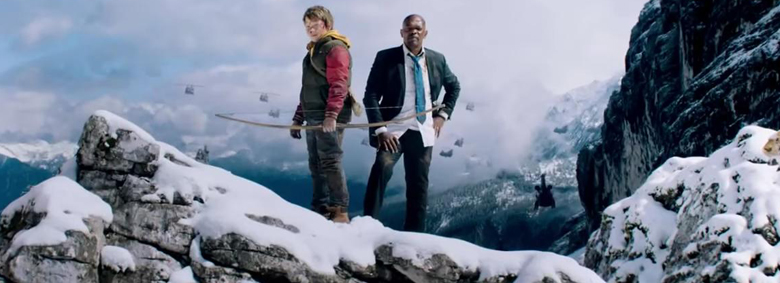
A President, terrorists and wild bears are the targets in this goofy action adventure romp which provides a forest full of explosive entertainment.

The son of a famous hunter, 13 year old Oskari (Onni Tommila) is sent into the remote mountains of his native Finland.

Armed only with a sharp knife and a bow and arrow he can barely control, the determined teen must spend a day and night hunting wild bear in a traditional coming of age ceremony. Guns are not allowed.

Meanwhile high above, Air Force One ferries the unnamed US President (Samuel L. Jackson) to a G8 summit in Helsinki. The plane is shot down by terrorist Hazar (Mehmet Kurtulus).

He’s the psychotic son of a Sheik who’s so enjoyably evil he shoots a man in the back with a surface-to-air-missile, and then is rude about the quality of the Chinese made weapons.

Ejected to ground in an escape pod, the barefoot and hapless President is found by a startled Oskari.

However the boy has commendably little respect for the authority of the Oval Office. Even with Hazar in pursuit, Oskari will only take the President to safety after his bear hunt is successfully completed.

Another survivor loose in the wood is the girdle-wearing, pill popping Chief-of-security Morris (Ray Stevenson). He once took a bullet for the President.

Meanwhile back in the Pentagon‘s command bunker, a tank-top wearing, sandwich eating analyst called Herbert (Jim Broadbent) is offering advice to the Vice President (Victor Garber) and General Underwood (Ted Levine).

They’re rapidly falling to pieces quickly at the situation, having definitely picked the wrong day to quit smoking, drinking etc.

Arching an eyebrow alongside the men is the token woman with a speaking role; the CIA Director (Felicity Huffman).

As the script builds betrayal upon betrayal, the most well-intentioned is the most affecting.

Among the the sky-diving, missile attacks and shoot-outs, the special effects aren’t terribly special –  and some of the outdoor locations look suspiciously indoor.

At every possible interlude rousing blasts of orchestral music are accompanied by sweeping helicopter shots of the glorious mountains.

The director coaxes a guileless performance from the young Finnish lead actor and Jackson enjoys himself playing against type as a man definitely not in control of events. Kurtuluş has fun channeling Hans Gruber (Alan Rickman) from Die Hard (1988).

With it’s young hero suffering daddy issues and familiar visual gags and stunts, it’s easy to recognise inspiration drawn from the ’80’s work of Steven Spielberg; specifically E.T. and The Temple Of Doom – but the tone is closer to that of Richard Donner’s The Goonies (1985). (Story and Executive produced by S. Spielberg)

However exciting and fun as it all is, the message one is not a man until you’ve killed something is far from typically Spielberg.

Phoenix

Director: Christian Petzold (2015)

Greed, betrayal and revenge are surgically spliced in this intriguing post-war thriller.

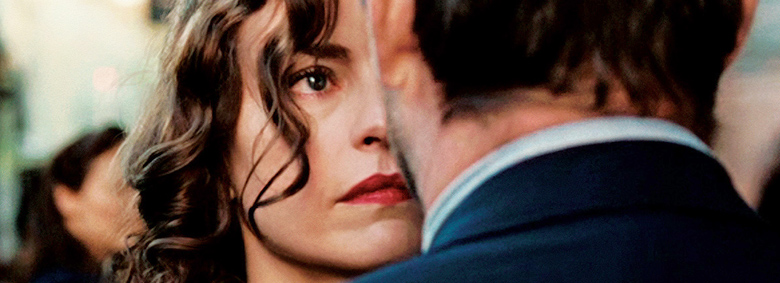
Holocaust survivor Nelly (Nina Hoss) is a former singer rescued from the ‘camps in the East’ and brought to a private asylum to recuperate.

With doctor’s using techniques still in their infancy, Nelly undergoes plastic surgery to rebuild her shattered face.

The motives of her friend and saviour Lene (Nina Kunzendorf) are ambiguous. She is evangelical about escorting Nelly to Palestine and using Nelly’s wealth to help establish a homeland for the Jewish diaspora.

Also her physical intimacy suggests a more emotional, less platonic reason for keeping close to Nelly.

Rejecting Lene’s plans for the future, Nelly haunts the bombed out buildings of Berlin looking for her husband Johnny (Ronald Zehrfeld) – who may have betrayed her to the Nazi’s.

She’s finds ‘Johannes’ working in The Phoenix cabaret club. He doesn’t recognise her but thinks with a make-over and coaching she could pass as his late wife, enabling him to collect her inheritance.

With brisk deliberation the script questions the truth of relationships and raises issues of identity and trust. With Nelly’s memories as fragile as her skin grafts, everyone’s motivation is suspect.

The involving finale gathers close friends together and the casual way they’re introduced to us suggests entire scenes were trimmed in the edit – but not at the expense of the measured tone, subtle performances and claustrophobic, nightmarish atmosphere.

Girlhood

Director: Celine Sciamma (2015)

Teenage tribulations are a trial in this un-involving French drama.

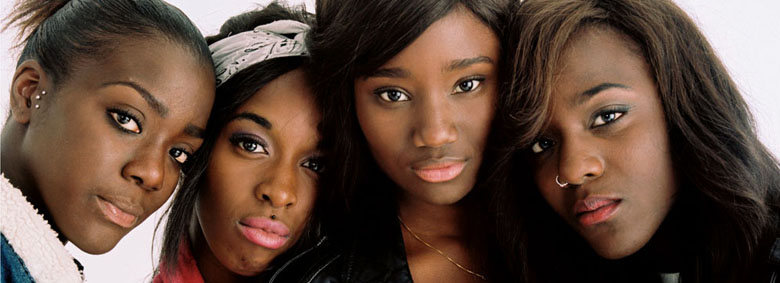
When Marieme (Karidja Toure) fails her final year at school, she rejects the offer of vocational courses.

Instead she embraces the limits of her horizons and joins the local girl gang. The glamorous Lady (Assa Sylla) is the leader of Adiatou and Fily (Lindsay Karamoh, Marietou Toure) and Marieme brings their number up to the seemingly requisite four.

Together they’re loud, aggressive, popular with the opposite sex but content to accept their circumstances.

Even my pidgin French understands the French title ‘Bande de Filles’ doesn’t translate as Girlhood, but ‘gang of girls’ or less literally ‘girl hood(ies), so it’s safe to assume the title was created to catch the coat-tails of residual goodwill from last year’s brilliant coming of age drama Boyhood.

Marieme – re-named Vic, for victory – is soon sporting the obligatory black leather jacket and straightened hair. Then she’s off out smoking, drinking and robbing along with the others. Her character development is traced though her changing haircuts.

Cinematographer Crystel Fournier has nice eye for colour and texture but the plot is weak and the girls are dull. We’re asked to sympathise with them but they’re impressive only in their ordinariness.

Their behaviour may be typical but it’s not pleasant – especially the way work-shy Vic amuses herself by bullying shop girls and organising fights against other gangs.

Eventually she takes the only job she’s prepared to do – working as a drugs mule for the local dealer Abou (Djibril Gueye) but even this potentially interesting development fizzles out.

Girlhood is being lauded for being an unpatronising portrait of black female French teenagers rather than the refined middle class types we’re more frequently presented with.

Unfortunately the story lacks insight; presenting the girls as real people is not the same as showing them in an interesting light.

The girls’ give nicely natural performances but like the gang, the film needs a stronger sense of urgency instead of ambling along without direction and achieving little.

Anti-social

Director: Reg Traviss (2015)

Illegal street art and armed robbery collide with no great interest in this poorly executed London thriller.

Just as the talent of a graffiti artist offers an escape from his sink-estate upbringing, his hard fought-for future is threatened when he’s dragged into brother’s criminal world.

Believing in the script far more than I did, the earnest cast give their all in this functional collection of uninspired confrontations, punctuated by woeful dialogue.

It has no views on contemporary Britain other than a concrete belief in the integrity of the street and keeping it real.

Neither slick and flash or gritty and hard-edged, it’s edited with energy but not enough control – too many scenes are padded out for no particular reason.

Meanwhile it’s shot through with whip-pans, fast-cuts and lots of shaky-cam – with the occasional slow-motion dropped in.

The soundtrack is loud, busy and contemporary, adding to the overall sense creative decisions were made on the basis of being cool – instead of serving the story.

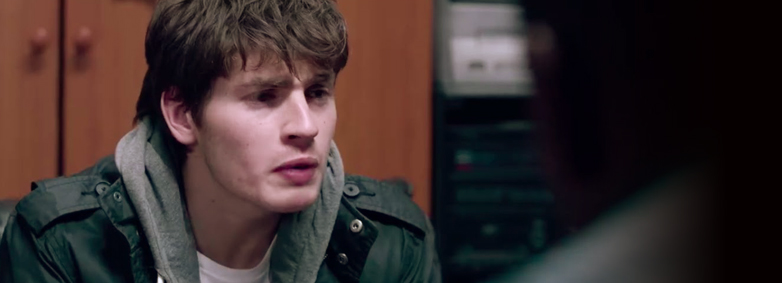
Skilled and daring artist Dee (Gregg Sulkin) is on the cusp of international fame. He has a model girlfriend, a part-time job as courier and spends his evenings being chased by the police for defacing property with spray cans.

Meanwhile his step-brother Marcus (Josh Myers) is out robbing diamonds with his gang of axe wielding super-bike riders. Myers has a rough-edged lairy charm and a suitably imposing physique but is given the very worst of the dialogue.

They have a likeable chemistry; part brother, part father/son relationship.

When Marcus invests his big score in a drugs deal, he falls foul of the violent West Grove crew leaving him in debt to a feared firm and the target of hit-men. There’s also a police grass at large on the estate.

Dee is called on to help out among the welter of drugs, sex, shoot-outs, rapes and beatings, putting pressure on his fledgling career and on his relationship with girlfriend Kirsten (Meghan Markle).

His mother Nadine (Maria Fernadez Ache) is Spanish and spends her time stoned in her flat and is one of the many weakly written woman who suffer abuse in a variety of ways and are forgotten about by the end.

The unfortunate molls Emma and Tara (Sasha Frost and Sophie Colquhoun) take the worst of it. Only Rochelle (Caroline Ford) serves the story in any way and even her plot arc is left dangling as loose as her over-sized ear-rings.

Though more than one person dies, no-one learns anything or develops as a character. There may be a decent idea buried underneath the geezer posturing and street language the film-makers are overly-enamoured of, but it’s not worth persevering with to unearth it.

We Are Monster

Director: Anthony Petrou (2015)

Based on a true crime, this slow-burning psychological drama explores the build-up to a brutal prison murder.

Due to failings in a famously not-fit-for-purpose criminal justice system, petty thief Zahid Mubarek (Aymen Hamdouchi) is forced to share a cell in Feltham Young Offenders Institute with known violent racist Robert Stewart (Leeshon Alexander).

As the system sleepwalks a tragedy unfolds with horrific consequences; the result of missing personal files, reports un-actioned and pleas to be rehoused in a different cell ignored.

A weak mental state is exacerbated through the indifference of officers charged with the welfare of inmates.

Isolation breeds Stewart’s paranoia, fear and anger at the perceived injustices of his circumstances.

He is increasingly lost in a world of literal and metaphorical shadows as his psychological dark side envelopes him.

There’s domestic violence, self-harm, bullying and strong language.

This is a confidently hypnotic film with strong cinematography by Simon Richards who delivers excellently framed shot composition and masterful control of light.

Fred Portelli provides the music and helps create a bewildering soundscape of unsettling noises that help create an atmosphere of alienation.

By offering a sympathetic light on the troubled personal history of Stewart, the horror of what happens to his cellmate Mubarek is undermined, making him a minor character in his own murder.

Samba

Director: Olivier Nakache & Eric Toledano (2015)

This inter-racial romance among immigrants in Paris breaks hearts and cultural barriers with an abundance of humanity and humour.

Working-class Senegalese trainee chef Samba Cisse (Omar Sy) has lived illegally for ten years in Paris. He is arrested at work and placed in a detainment centre next to the airport.

Highly-strung case-worker Alice (Charlotte Gainsberg) helps him with his court case. They are both passionate and give good anger. She’s warned by the younger, sexier, more cynical Manu (Izia Higelin) not to become involved with her clients.

Released and required to leave France but under no pressure to do so, Samba returns to work in a succession of unskilled, casual, cash in hand jobs in security, construction, window cleaning and so on. They all posses an element of danger.

Samba is accompanied by his effervescent Brazilian friend Wilson (Tahar Rahim) and they make a likeable double-act, helping and protecting one another from criminals and the police.

As the tentative relationship between Samba and Alice develops, they have a beneficial effect on the other’s personalities – but Samba’s all too human needs and weaknesses return to threaten his potential happiness and fragile stability.

The ambitious opening scene is a lengthy shot beginning in a lively, wealthy wedding reception. We follow a fabulous wedding cake as it’s transported off the dance floor through the hotel corridors and into the depths of the kitchen where the camera stops and lingers on the men washing dishes.

It is no coincidence these are the first black faces we see and in one wordless, dynamic shot, the film’s occupations with identity, status and employment are established. The shot has echoes of both the opening of The Great Beauty (2014) and the Copacabana scene form Goodfellas (1990).

There is also a virtuoso and vertiginous shot looking down an office block which was sufficiently well constructed to make me dizzy.

Stephane Fontaine’s cinematography avoids making Paris a chocolate box of delight but is presented as a busy, complex, working city. In this film of contrasts, light and colour are used to differentiate between calm and chaos, wealth and poverty.

The music is sparse but used to terrific effect. We hear a confusion of languages which helps the exploration of identity; how it is defined for us but also how we can choose to define ourselves.

An intelligent script takes great delight in pointing out the absurdities and failings of the bureaucratic immigration system, not least in making the observation people are seeking asylum from places the French middle-class go on holiday.

Alice and Samba are hard-working, charming and flawed. In a cafe they’re filmed in shallow focus to block out the world around them, encouraging us to concentrate on their beautiful faces.

They enjoy each other’s company and we enjoy being with them. They’ll always have Paris.

Far From The Madding Crowd

Director: Thomas Vinterberg (2015)

Passion, obsession and betrayal burst from every frame of this compelling, fresh and faithful adaption of Thomas Hardy‘s classic Victorian novel.

His rustic romance of a headstrong heiress and her three wildly different suitors is powered by a first-rate cast on their best form. Carey Mulligan is captivating as Bathsheba Everdene, famously played by Julie Christie in the 1967 version.

The orchestral score swells over the green and pleasant land of a production rich in period detail. The handsome locations are shot on film  – not digitally – in the county of Dorset (Wessex) where the book was set. This beds the story deep in historical and local context.

In an economical piece of character sketching, we first meet the beautiful, intelligent and impulsive Bathsheba (Carey Mulligan) riding freely on horseback. She is seen by the good shephard Gabriel Oak (Matthias Schoenaerts) who is diligently watching his flock. She is sporting a sleek, red riding-jacket, he is dressed in practical working clothes.

Valuing her independence above all else, Bathsheba is saved from an uncertain future when she inherits her uncle’s farm and determines to restore it to it’s once prosperous profitability.

Bathsheba is a political beast who doles out praise and punishments to her workers in public, she not only helps on the farm but is careful to be seen to be helping out on the farm.

She’s aided and abetted by her servant Liddy (Jessica Barden) who’s a useful source of village gossip and accompanies Bathsheba in making merry mischief.

As circumstances turn darker so Liddy slips from the frame. This is a shame as they share a sweet and believable friendship and it offers Bathsheba an extra dimension, preventing her from being defined by her relationship with men.

Bathsheba recognises men are attracted to her but sees it as a trap with no value – until she struggles in the man’s world of business. At the local market she’s reduced using her charm to encourage the local merchants to at least try her merchandise.

Farming life is a wild meadow of activity. As well as harvests, sheep dips and recruitment fairs, there’s bare-knuckle boxing, swordplay, gambling, storms, fires, madness and the tragic death of an infant.

The plot revolves around the ill-considered sending of a valentines card. When she is kissed for the first time Bathsheba is shocked by the strength of her own reaction. It derails her social sure-footedness and leads to choices which shreds her independence and happiness.

Bathsheba receives three propose; from the honest shepherd Gabriel, swaggering soldier Sergeant Troy (Tom Sturridge) and the emotionally fragile landowner William Boldwood (Michael Sheen). She sings a duet with one, rides tandem with another and marries a third.

Though the script sensibly streamlines the novel, it remains emotionally articulate and frequently funny. The focus is so tight on Bathsheba, outside of her suitors and Liddy, there’s barely another character who has a speaking role of note.

This is the weakness of the film as we’d like to spend longer here, perhaps wander around the countryside and meet a few more of the interesting looking characters who populate the village.

As the tone grows darker and the story more violent, the assured pacing of Danish director Vinterberg delivers dramatic action which is always underpinned by strong character motivation.

At quieter moments he is able to capture the nuance of social status, such as when characters wordlessly shift seats around a dinner table to accommodate an unexpected, superior guest.

Vinterberg is assisted by the vivid cinematography of Charlotte Bruus Christensen and the briskly seductive editing of Claire Simpson.

Although unquestionably a fine and suitably physical actor with the requisite intelligence and stillness of purpose, it’s curious to cast the Belgian Matthias Schoenaerts in a role who embodies what Hardy saw as the great virtues of the English.

Michael Sheen demonstrates his tremendous ability to suggest torrents of inner turmoil with a bare twitch of the mouth. As Boldwood struggles for the correct words, his quiet pleading is magnificently crafted from tight smiles and difficult pauses.

It has echoes of Prince Charles questioning the meaning of love when announcing his engagement to the considerable younger Diana Spencer.

The remarkable Carey Mulligan gives a rich and nuanced performance of acute emotional resonance. Her doe eyes convey Bathsheba’s vulnerability, strength and desire as well as her growing self-awareness and changing values.

Mulligan may not win next year’s best actress Oscar or even make the final cut, but she’s the early high-score on the leader board.

It’s easy to fathom why the men fall for Bathsheba, it’s more of a wonder why more men don’t.

A Pigeon Sat on a Branch Reflecting on Existence

Director: Roy Andersson (2015)

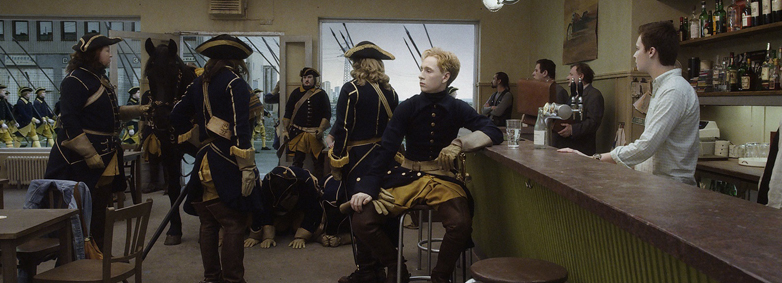
As befits a black comedy filmed in beige, there’s an absolute lack of glamour in this weird Swedish whimsy.

Like the slowest of comedy sketch shows, it consists of a series of scenes loosely connected by recurring actors, locations and characters.

In museums, bars, cafes and street corners we encounter dance students, singing barmaids, a newborn baby, a ferry captain and a King.

Jonathan and Sam (Holger Andersson and Nils Westblom) are morose grey-suited salesman selling novelty items because they want to make people laugh.

In a sly comic riff on hit-men in pulp thrillers, they also attempt to collect their arrears from shopkeepers.

Their journey takes them through the pain of existence, encountering war, love, depression and death. There is dance, song and music.

People rue their bad luck in life and search for excuses for their unhappiness. Their loneliness is exacerbated by the laughter of strangers.

Philosophy  and forgiveness are all brought to a premature end because people have to be up early in the morning for work.

The rigid adherence to a life centred on work stifles creativity, torture is ignored and several deaths cause bafflement; to paraphrase Douglas Adams, no one seems to know what to do about the bodies.

The art direction is as measured and controlled as the static camerawork (Istvan Borbas and Gergley Palos). It is equalled by the precise timing of the actors.

With a colour palatte taking in every shade of beige, the worn locations are lent a dreamlike timelessness.

The pigeon appears in a poem, as an exhibit in a museum and off-camera in song. Quite what he makes of it is anyone’s guess – but he probably thinks humans are all cuckoo.

The Falling

Director: Carol Morley (2015)

Mass hallucination, sexual exploration and death combine to cast a spell of barely believable boredom in this boarding school drama.

After tragedy strikes a strict English girls’ school, a mysterious fainting epidemic breaks out. With the authorities denying anything is wrong, it’s up to the pupils to deal with events.

Schoolgirl Lydia (Maisie Williams) is a moody, bookish brunette, her closest friend Abigail (Florence Pugh) is an annoying, more attractive blonde.

They spend their time embracing each other, licking each other’s fingers and sharing bubblegum. They also read poetry to one another and carve their initials in a tree like lovers do.

The actresses deliver literal line-readings and never come close to suggesting their characters possess interior lives.

Abigail sports love-bites and too-short hemlines. Despite her affection for Lydia she openly enjoys the attention of boys who drive fast cars.

Following nosebleeds and medical examinations, Lydia develops a serious twitch and there’s an outbreak of falling over among the school’s population. This becomes laughable the more people it affects.

There’s a suggestion it could all be caused by a magic spell cast by Lydia’s weird brother Kenneth (Joe Cole) – but doctors insist nothing is wrong with the girls.

Lydia’s mostly mute mother Eileen (Maxine Peake) is a homebound hairdresser who silently suffers a great deal of angry abuse from her daughter.

Greta Scacchi and Monica Dolan play stern school-heads who antagonise Lydia by refusing to take her seriously.

The 1969 setting seems designed to avoid the internet and isn’t exploited for any other purpose, certainly not to create a much needed sense of otherworldly timelessness.

Prosaic camerawork and lighting fail to generate any sense of operatic grandness while the pacing is erratic with scenes alternately dragging or rushing. The editor includes many slow-panning shots of leaves and trees.

There’s a lot of poetry and an alarmingly intrusive rock-folk soundtrack – but none of the disparate elements heighten the gothic undertone in the script; consequently an interesting mood of mystery or fear fails to materialise.