Coherence

Director: James Ward Byrkit (2015)

When a passing comet causes a space-time anomaly, it turns a dinner party into disaster in this dull and derivative sci-fi thriller.

Glossy, arty, unlikeable and poorly established characters bicker their way through a catastrophic storm of hyperactive camerawork and weak writing.

When phone signals, the internet and external power fail, Hugh (Hugo Armstrong) and Amir (Alex Manugian) head off to the only other neighbourhood house with lights on.

They intend to call Hugh’s physicist brother who warned about possible ill effects of the comet, it’s a wonder the brother isn’t called Bill Mason.

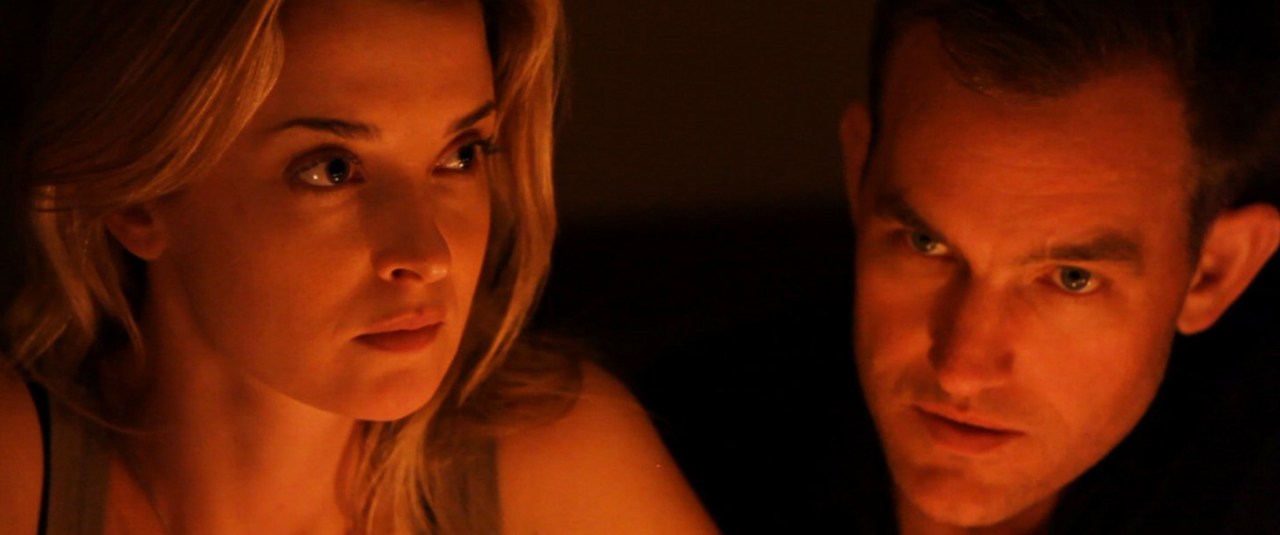
With no obvious leaders, the guests start squabbling like contestants on The Apprentice. Glamorous Emily (Emily Baldoni) starts to give partner Kevin (Maury Sterling) a hard time over a perceived slight at the table. Others make passes at each other’s partners. Their sense of priorities are more puzzling than their situation.

Someone turns to the bottle which seems a reasonable response to being cooped up with these idiots.

With close ups, shallow focus, jump cuts and restless shaky cam we’re treated to a full range of found-footage effects without this being a found-footage film – which is annoying when we realise there’s no character behind the camera to interact with the ones we can see.

Presumably the intention is to create intimacy and suggest forthcoming danger while visually preparing the ground for when these effects will be usefully employed.

But this distracting approach heightens the script’s failure to sufficiently identify the characters for the audience; we fail to engage with them or care what is happening. At times it would have been useful if they’d worn names on the backs of their clothes.

Having being lost in the dark space between houses, Hugh and Amir return injured and with a metal box. They’d encountered the inhabitants of the other house who were unfriendly and disturbingly looked exactly like themselves.

The box contains photos of themselves taken that very evening. Notes are stuck to their front door written in their own handwriting and personal items unexpectedly appear.

A book containing Hugh’s brother’s lecture notes is discovered in the back of a car. They offer a mercifully brief explanation using the coherence variation of quantum mechanics. Gwyneth Paltrow is mentioned alongside Schrodinger’s cat – which must be a first.

There’s more bickering and another splinter group wander off outside. A second Hugh arrives claiming to be the first Hugh and it dawns on the inmates there are more than two houses with identical occupants, increasingly mixed up between identical houses.

But when the comet passes the quantum anomaly will collapse and everyone must find their correct house – or be trapped in the wrong dinner party forever. Paranoia, suspicion and violence follow.

☆☆☆

Dawn of the Planet of The Apes

Director: Matt Reeves (2014)

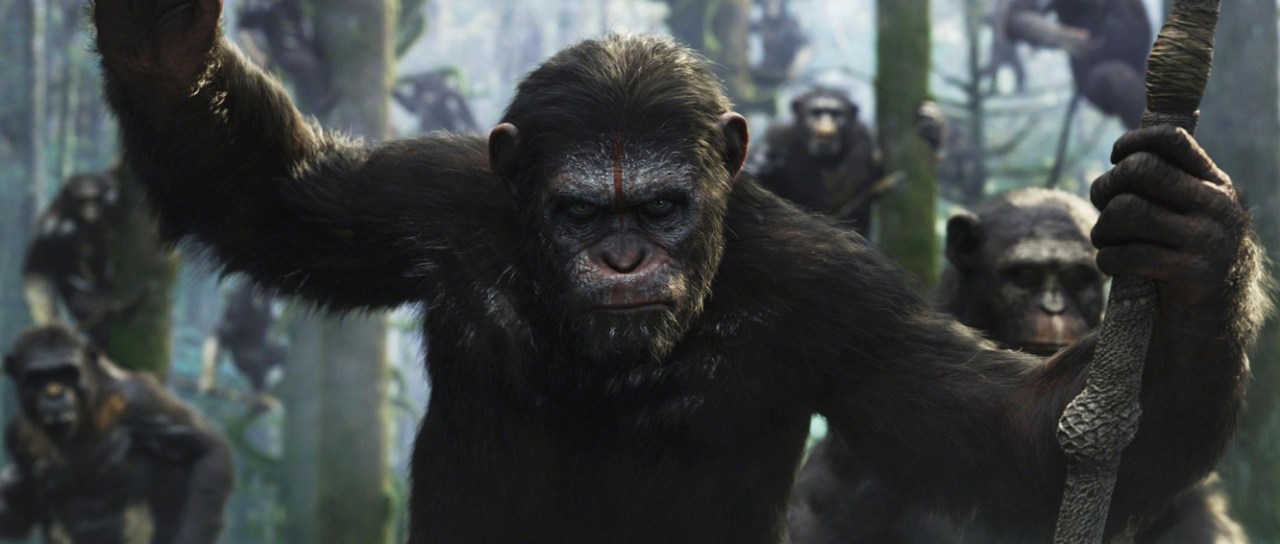
Few creatures are more terrifying than an angry ape with a grudge and a gun – and this spectacular sci-fi epic has a forest full of them.

It pits ape against human and each against their own kind in a series of hugely exciting battles.

The movie is also majestic to look at and the intelligent script touches on issues such as an energy-supply crisis and how the treatment of prisoners can lead to radicalisation.

It is ten years since super-intelligent chimp Caesar (Andy Serkis) escaped to the Californian forest.

His species has developed art, architecture and a peaceful society while a virus has devastated human civilisation.

In a sly nod to George Orwell’s Animal Farm, the apes have rules marked on to a wall. No1 is: “Ape does not kill ape.”

Human survivor Malcolm (Jason Clarke) leads a recce into the apes’ domain looking to kickstart a hydro-electric dam.

There’s a bloody stand-off and in a desperate attempt to avoid more violence, Malcolm and Caesar tiptoe to a tentative truce.

In San Francisco, Dreyfuss (Gary Oldman) gives Malcolm three days to succeed or he’ll use his arsenal to annihilate the apes.

Meanwhile, the brutal Koba (Toby Kebbell) plots to overthrow Caesar, isolate his son Blue Eyes (Nick Thurston) and make war on humans.

Serkis is brilliant as Caesar. With his heavy brow and slow deliberations he echoes Marlon Brando in The Godfather – but with added teeth and muscle.

Director Reeves cleverly uses long edits to create tension and put the audience at the very centre of the action such as when an ape on horseback attacks a tank.

Marvellous visuals, engaging performances and dramatic plot twists made this one of the action movies of 2014.

Enemy

dir. Denis Villeneuve

Fantasy, identity and memory are twisted in this dark, expressionist, psychological thriller.

Sly and finely-crafted, it is based on José Saramago’s 2002 novel The Double.

There’s minimal dialogue and a mournful soundtrack while the absence of clocks and times add to the alienating atmosphere and contribute to a memorable finale.

After a chance conversation, history professor Adam Bell (Jake Gyllenhaal) is caught in an opaque web of intrigue, mistrust and betrayal.

Stuck in a failing relationship with the beautiful Mary (Mélanie Laurent) Adam is a listless drone with a life of dull routine, failing to inspire his bored students with his lectures on the political denial of self expression.

Only his mother, Isabella Rossellini is concerned or interested in him, leaving voice mails he doesn’t respond to.

One day a casual exchange with a nameless colleague leads Adam to watching a locally filmed movie ‘Where There’s a Will There’s a way’.

It’s a colourful comedy, disturbing the Enemy’s carefully established austere mood. In the background Adam sees a bellboy, played by an actor who looks uncannily similar to himself.

Intrigued, Adam discovers he’s called Anthony Saint Claire (Gyllenhaal again) and hunts down his other movie appearances.

Anthony is signed to a local agency and when Adam visits their offices he’s mistaken for his doppelganger, exploiting the mistake to pick up a parcel intended for the actor.

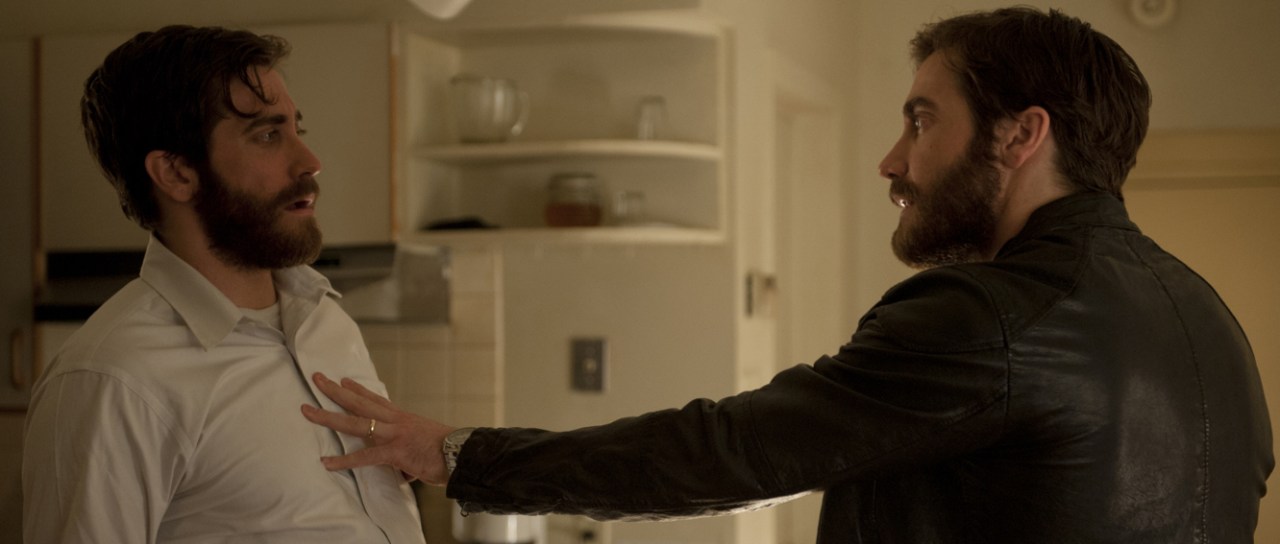
Behaving like an excited stalker, Adam instigates a meeting with Anthony which develops into a confrontation.

They’re physically identical but different in attitude, lifestyle and crucially in relationships. Anthony’s pregnant wife Helen (Sarah Gadon) is suspicious of her husband – with very good reason.

With deft deliberation Nicolas Bolduc’s camera follows as character stalks character, capturing scenes in unhealthy yellow register and bold shadows.

Architecture is an oppressive character while cars are cocoons for their faceless, voiceless commuters as they drive around the stark cityscape.

Gyllenhaal’s character is a memorable addition to the cinematic gallery of actors portraying identical characters on screen, joining luminaries such as Leonardo DiCaprio, Jesse Eisenberg, Jeremy Irons, even Elvis has done it

Made in 2013 it’s released now to capitalise on the success of Gyllenhaal’s excellent movie Nightcrawler.

It’s hard to believe the same creative team of Gyllenhaal and Villeneuve who made this were also responsible for 2013’s preposterous  thriller, Prisoners.

★★★★☆

Jupiter Ascending

Director:  The Wachowskis

There’s little that makes sense and less that’s interesting in this mega budget mess from the sci-fi siblings who many moons ago made the magnificent The Matrix.

There’s majestically designed spaceships, gadgetry and costumes but that counts for little due to flat characters, terrible plotting, woeful dialogue, incoherent action scenes and a vacuum of a performance by Mila Kunis in the title role.

Impoverished illegal immigrant Jupiter Jones (Kunis) and her squabbling comedy Russian family clean the houses of the wealthy Chicago elite.

Her cousin Vladie (Kick Gurry) – the scamp – persuades her to sell her eggs to a fertility clinic so he can buy a really big TV and she a telescope. But as she lies on the operating table she’s attacked by space imps.

Fortunately she’s rescued by a gun-toting former space legionnaire. Hunky man-wolf Cain Wise (Channing Tatum) is temping as a bounty hunter for interstellar bad guy Titus (Douglas Booth) – a member of the powerful cosmic dynasty, the House of Abrasax.

Cain and Jupiter find fellow ex-legionnaire Stinger (Sean Bean) beekeeping in a country shack. It’s these bees that identify her as a queen and she takes it in her sullen stride.

Stinger and Cain beat each other up for a bit until Stinger’s daughter is sarcastic at them. Then she’s forgotten about and there’s another kidnap attempt.

It turns out Jupiter is the reincarnation of a queen who bequeathed to herself her most prized possession – the planet Earth.

Meanwhile Titus is competing against his siblings Balem (Eddie Redmayne) and Kalique (Tuppence Middleton) to control Jupiter and her inheritance.

This trio of fine Brit actors deliver their lines with as much camp energy as they can muster – possibly out of frustration at the quality of the script.

Earth is the richest supply of raw product for the lucrative market in human genetic material, used to keep everyone in space forever young.

Jupiter Jones is a dull, gullible, joyless soul, blithely accepting of her promotion to queen of the galaxy and owner of Earth.

Alien worlds, space travel and terrifying creatures with murderous intent are all greeted with the same doe-eyed indolence.

Formalities dictate she has to truck on down to the dole office to get her stamp before she is formally recognised in her new position.

Desperate stabs at humour are provided by queues of simpering lawyers and corrupt bureaucrats, all performed with embarrassing grotesque campery which are not funny as presumably intended.

Terry Gilliam appears in cameo and must be appalled at the multi-millions of dollars squandered when he can barely scrape together pennies for his own far superior work.

This is a universe which has nudity and space orgies but no sexual energy. Kunis and Tatum share zero chemistry but she falls for him anyway, without hesitation, conviction or reason.

Tatum enjoyed a fantastic 2014 with wonderful, wildly different performances in 22 Jump Street and Foxcatcher. But here he’s lumbered with dodgy tattoos and scar tissue in a generic action role where he spends most of his time sternly whizzing about on flying space boots.

Cinematographer John Troll chooses to drown cosmic cityscapes in a honey glow which is thematically sound but wearing after a couple of hours. There’s nothing groundbreaking among the visual effects to wow us the way bullet-time did back in the day.

The orchestral score of Michael Giacchino tries manfully to suggest excitement but to no avail.

There’s battles, betrayals, kidnappings and then another battle; each more confusing, longer and repetitive than the last. Then there’s another kidnap attempt but despite how busy it all is, there’s little fun or excitement.

Not since The Phantom Menace have shenanigans in the inter-galactic stock-market seemed so dull.

☆☆

Guardians of the Galaxy

Director: James Gunn (2014)

The strangest group of heroes Marvel comics ever created blast off into space in this visually sensational sci-fi action adventure.

They’re a mismatched motley alien crew consisting of an Earthling called Peter (Chris Pratt), a beautiful green-skinned assassin Gamora (Zoe Saldana), a genetically-engineered raccoon called Rocket (Bradley Cooper) and tree-like humanoid Groot (Vin Diesel).

It is a fun-filled knockabout romp with stellar design, tremendous special effects and CGI characters blending seamlessly with the real actors.

But it’s gratingly pleased with itself but nowhere near as funny or as smart as it believes itself to be.

It takes far too much juvenile pleasure in rude words and drowning scenes with 1970’s pop tunes quickly wears thin – an unusually needy and heavy-handed attempt at cross-audience, all quadrant appeal by the mighty Marvel studio.

The self styled Star-lord and deluded scoundrel Peter Quill (Chris Pratt) was abducted from Earth as a kid and raised by intergalactic thieves known as the Ravagers.

He hasn’t a lot of experience fighting or leading or coming up with plans. Or having ideas in general. In fact, he’s not all that smart. Plus, generally unskilled.

Nevertheless he manages to steal an orb of mysterious power which is also wanted by the psychotic Ronan (Lee Pace) who secretly works for the powerful Thanos (Josh Brolin). who wants the orb to wage war on his enemies.

Quill is thrown into a space-prison called The Kyln where he meets a warrior called Drax the Destroyer (Dave Bautista) who has sworn vengeance on Ronan.

In a fantastic action sequence they break out alongside Gamora, Rocket, Groot and a spare leg but the script shoots itself in the foot in a space-walk sequence which drains the rest of the film of tension.

When Quill discovers the true danger of the orb he discovers the hero inside himself and cajoles the squabbling misfits to fight a desperate and spectacular battle to guard the galaxy against destruction.

Much like the Hulk in Avengers Assemble, Groot steals every scene he’s in, despite only being able to say the words ‘I am Groot’ – which to be fair, is as much as the Hulk ever managed.

British actress and former Dr Who star Karen Gillan is impressively agile and deliciously villainous and shares a history and a terrific fight scene with Gamora.

Pratt is less endearing than the film supposes and his reprising of a peril-inspired song and dance routine similar to which he performed in The Lego Movie wears thin here.

Guardians of the Galaxy is entertaining enough though not Marvel’s finest hour; after The Winter Soldier it’s not even Marvel’s best film of 2014.

And the joke at the end of the film’s credits isn’t worth hanging around for.

☆☆

Interstellar

Director: Christopher Nolan (2014)

This plodding, muddled and bombastic sci-fi flick doesn’t fly – despite having talented Matthew McConaughey at the controls.

Even the star’s rocket-fuelled charisma can’t stop the space-travel, dimension-hopping, time-twisting tale from drifting aimlessly.

Cooper is working as a farmer, the sort who is cheerily content to cruise a truck through his own crops.

His daughter Murph (Mackenzie Foy) is left coded messages by a ghost.

Solving this riddle leads them to a super secret Nasa base run by Professor Brand (Michael Caine).

He’s fond of quoting Dylan Thomas while scribbling equations on a blackboard in a sciency manner. Normally in Nolan films it’s Morgan Freeman‘s job to do that.

Despite having hugely limited resources – what with the break down of civilisation due to the crops not growing – Brand decides Cooper is the man they’ve been waiting for to pilot a spacecraft into a plothole, sorry, wormhole, near Saturn.

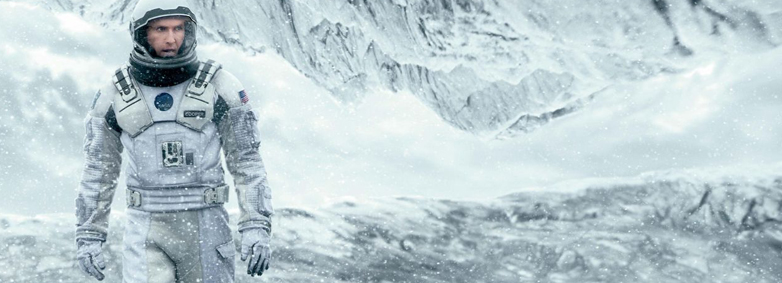
It’s tunnel to another galaxy where three astronauts are lost. Cooper is to rescue them if possible while scouting for worlds that could support human life.

He returns home to say a guilt-ridden goodbye to Murph but she’s not best pleased.

In Cooper’s crew are Brand’s scientist daughter Amelia (Anne Hathaway) and a robot called TARS; a cross between a giant iPod and a Swiss army knife.

It’s unusual and impractical design seems only for the purpose of demonstrating director Nolan is familiar with the work of Stanley Kubrick. TARS jokes are misplaced among the grim solemnity.

Hibernating en route they awake to hear a signal from one of the lost men and investigating they encounter the effect gravity has on time.

There is courage, sacrifice and stupidity. When the crew land on a watery world they are surprised by an enormous laws of physics-defying wave. Twice.

A betrayal results in a shortage of fuel means Cooper has to choose between returning home to his daughter or saving the world.

In space no-one can hear you scream because of the ear-piercing soundtrack. Cinematographer Hoyte van Hoytema conjures up spectacular images but Nolan offers but no depth or mystery to accompany them.

While the dialogue is functional at best and occasionally laughable in it’s portentousness, the weak script signposts the twist which is possible to see from light-years away.

Later the galaxy’s most intelligent man repeatedly yells “override” to a password-protected computer. Which is showy but not very clever – like this film.

★★☆☆☆

Lucy

Director: Luc Besson (2014)

Chemically enhanced Scarlett Johansson goes into overdrive in this bonkers but brilliant bloody thriller.

The time-travelling, superhuman heroine tackles Chinese Triad gangs, French cops and dinosaurs in this knowingly daft sci-fi film.

Lucy (Johansson) is studying in Taiwan when she’s kidnapped by gangster Mr Jang (Min-sik Choi). He surgically inserts a bag of a wonder drug, CPH4, into her stomach so he can illicitly transport it to Europe.

But a henchman beats her up, the bag rips and Lucy absorbs a potentially fatal dose. Instead of killing her, the CPH4 unleashes her full brain power. Normally humans use only 10% but hers is rocketing.

Luckily Morgan Freeman (Professor Norman) is on hand to do what Freeman always does in such situations: spout sciency-sounding stuff to explain what’s going on.

Accelerated evolution gives Lucy access to secrets of the universe but also threatens to destroy her. As she develops super-agility, mind control and telekinesis, she’s becomes a deadly shot and goes on the rampage.

Director Luc Besson can’t see a corridor without having an actor sashay along it waving firearms – and he needs no excuse to follow Johansson’s famous curves.

With her cool detachment and deadpan delivery, the more powerful Lucy becomes the sexier she is. She joins forces with police to trace the other drugs mules.

When Jang’s heavily armed mob arrive in Paris for shoot-outs and a great car chase, Lucy begins to travel in time and space and it’s not just her mind that’s blown.

★★★★☆

Ex Machina

Director. Alex Garland (2015)

Sexy, sharp and stylish, this brilliant British sci-fi thriller explores man’s relationship to machines with verve, wit and polish.

Precision-tooled to perfection with sumptuously seductive design, it combines the brains of Blade Runner, the gloss of James Bond, and the sly satire of cult comic 2000AD.

This makes it an astonishingly assured directorial debut by Alex Garland, the novelist turned scriptwriter of Dredd, and 28 Days Later.

Domhnall Gleeson’s expert computer programmer, Caleb, wins an in-house company competition to spend a week with his boss, Oscar Isaac’s reclusive genius.

Nathan lives in an isolated underground home and research facility reached only by helicopter, where the only other occupant is Sonoya Mizuno’s beautiful but mute Japanese servant, Kyoko.

The engagingly geeky Gleeson is cunningly cast while the bearded Isaac is solicitous, funny and quietly menacing as the heavy-drinking megalomaniac Nathan.

Caleb is introduced to Alicia Vikander’s AVA, a semi-transparent chrome and plastic robot with the face and figure of a beautiful woman, designed for the movie by awesome concept artist Jock.

Under surveillance Caleb has to test Ava to establish whether she has achieved a state of artificial intelligence and therefore not a machine.

This would represent a scientific breakthrough of huge significance to Nathan and of great consequence to the world.

Though interrupted by mysterious power cuts, a rapport develops and Ava warns Caleb that Nathan can’t be trusted leading to tension between the men.

Garland provides cracking dialogue but crucially understands when to shut his characters up and let the images tell the story.

Unerringly paced and with an inventive soundscape and bold use of colour it’s very much in the mould of mentor Danny Boyle, at his best.

If Garland is the future of sci-fi then it’s in very safe hands. Unlike Caleb.

Love classic sci-fi? Check out my website HERE

Read my review of Disney’s fabulous 1954 20,000 Leagues Under the Sea, HERE