X+Y

Director: Morgan Matthews (2015)

An autistic teenage maths prodigy seeks a formula for love in this humorous, gently uplifting and supremely moving British drama.

While exploring the delicate relationship between Nathan (Asa Butterfield) and his mother Julie (Sally Hawkins), the plot follows the template of an underdog sports movie, based on the world of international competitive maths.

The story was inspired by the director’s own BAFTA nominated documentary ‘Beautiful Young Minds‘ featuring real maths competitors. Here he makes sure the maths is always interesting and understandable, keeping a firm grip on tone by adding as much humour as possible so scenes are never maudlin.

Cinematographer Danny Cohen  harks back to his work on Dead man’s Shoes and This is England, offering the film low-key realism and economically communicating Nathan’s complicated world view.

Nathan suffers from autistim and synthesia; though highly gifted at maths he is socially awkward and sensitive to changes in light and colour. He must have his toast divided into geometrically exact slices and food such as prawns served in prime number portions.

He is struggling to come to terms with his father’s death in a car crash. In flashback we see the close connection he shared with his father Michael (Martin McCann).

This loss is accentuating Nathan’s condition and isolating his mother. She is barely coping with life and her blunt speaking son has no idea how hurtful his words frequently are.

Although his condition leads to small domestic accidents such as a broken window and a flooded kitchen, Nathan finds beauty and peace in the perfection of maths and its practical application such as the geometric shapes in bridge underpasses.

Through school Nathan is introduced to scruffy, swearing teacher Mr Humphreys (Rafe Spall). Himself a former maths prodigy, he now suffers from Multiple Sclerosis, depression and loneliness.

As Humphreys tutors Nathan a bond develops and the teen qualifies for a trial for the International Maths Olympiad UK team.

Nathan is flown to Taiwan by UK team leader Richard (Eddie Marsan) with sixteen extremely intelligent maths students. It’s the first time Nathan is painfully average.

They meet young competitors from different countries and all are under pressure. Refreshingly the film doesn’t pander to the audience by providing subtitles for the Chinese speakers – angry is angry regardless of the language.

Nathan’s shy charm unexpectedly leads him to being at the sharp end of a love triangle between fellow students Rebecca (Alexa Davies) and as Zhang Mei (Jo Yang).

Along the way there’s self-harm, accusations of nepotism and a dash to the station in rom-com style.

Only the best six students will be chosen to represent the UK at the Olympiad to be held at Cambridge University – as we’re only really introduced to half a dozen of the students, it’s not hard to work out who’ll survive the cut.

But the lack of tension is not important as the film is more interested in character than narrative. The real pleasure lies in this quality cast enjoying their acting and creating characters we care about.

Butterfield is the pick of a winning young cast whose quietly expressive performance carries the film with open-faced innocence. Marsan offers the closest anyone comes to grandstanding but always to serve the needs of the film. His upbeat performance is calculated to provide balance through optimism, comedy and tempo.

Spall is given the most choice lines and in his most affecting performance to date delivers them deadpan to great comic effect. Hawkins is as wonderful as ever, she plays Julie with brittle finesse and is the maternal soul the story coalesces around.

The Hundred Foot Journey

Director: Lasse Hallström (2014)

There’s a generous helping of charm and humour in this culinary culture clash.

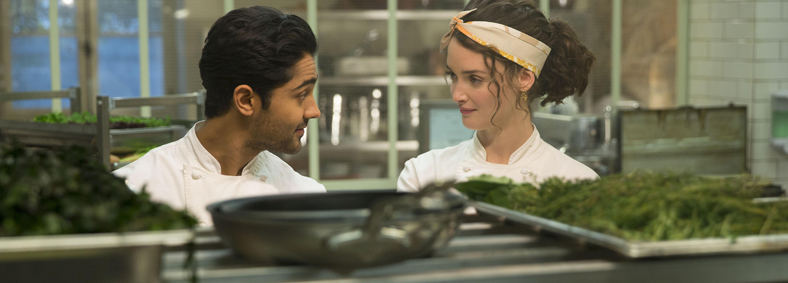
Talented young Indian chef Hassan (Manish Dayal) is taught to cook by his mum but when she dies in a riot, his Papa (Om Puri) moves the family to Europe for safety.

The family are rescued from a car crash in rural France by local beauty Marguerite (Charlotte Le Bon). An aspiring chef, she cycles about in vintage frocks with the doe-eyed appeal of Audrey Hepburn.

Seduced by the quality of the local food and setting, Papa decides to open an Indian restaurant. The family then energetically set about renovating a derelict bistro into a loud and colourful eatery.

Gifted Hassan manages to mix traditional Indian recipes with French cuisine, much to the anger of Madame Mallory who owns a restaurant a hundred feet away. She’s played by a terrifically tart Helen Mirren who has great fun as the extravagantly accented workaholic widow.

Normally I would choke on the film’s symbolic use of food, adoration of cooks and idealised view of the French. But the deft direction, spicy script and engaging performances make for an indulgent blend.

As Madame Mallory and Papa lock horns, the younger ones lock lips – but simmering passions cool when she poaches Hassan and promotes him above Marguerite. Further success sees Hassan working in Paris but Michelin stars and celebrity fail to feed his soul.

The finale serves up no surprises and if living in France were as satisfying as this film suggests, we’d all be moving there.

☆☆

The Wolf of Wall Street

Director: Martin Scorsese (2014)

Making money has never seemed so debauched as in this glossy, foul–mouthed and darkly comic biopic.

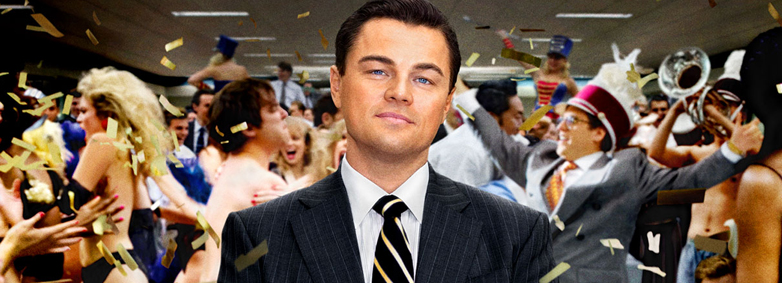
The fifth collaboration between director Martin Scorsese and Leonardo DiCaprio colourfully captures the outrageous world of crooked Wall Street trader Jordan Belfort.

It’s a blisteringly charismatic turn by DiCaprio as Belfort, a rampant, ravenous and depraved monster whose ego dominates the film.

Margot Robbie plays his underdressed trophy wife Naomi, but to her credit she isn’t overwhelmed by DiCaprio’s gleeful grandstanding.

In typical Scorsese style, dynamic camera-work and a storming soundtrack thrust us through criminal, chemical and domestic abuse while dressed in trashy clothes and driving a fleet of flash cars.

It is Scorsese’s finest film since his mobster masterpiece Goodfellas (1990). It’s similarly structured and high with comedy – at times it’s hilarious.

As Belfort talks directly to camera while walking you through his life, the dialogue even features some of the same key words and phrases to underline how crooked Wall Street is.

A ruthlessly brilliant salesman – imagine Gordon Gekko on Class A drugs – Belfort’s rapid rise is powered by his ability to foster corrupt practises among his employees and his business partner Donnie (Jonah Hill).

He doesn’t bother to explain in detail to the audience how it works but points to his huge spoils to prove hat it does. There are beds full of cash, planes full of prostitutes, showers of drugs, monkeys on rollerskates and dwarf-throwing contests.

Eventually the FBI chase him for his insider trading and his career, house and marriage are at risk.

In his most exhilarating movie since Casino and his best since Goodfellas, Scorsese points out that the wolf can only exist as a result of our greedy gullibility.

It failed to win any of the Oscars it was nominated for; best film, director, male lead, male support for Hill and best adapted screenplay. As DiCaprio couldn’t win a golden statue for this titanic effort – he may as well give up trying.

Serena

Director: Susanne Bier (2014)

Love, madness and corruption collide with catastrophic results in this compelling Depression-era drama.

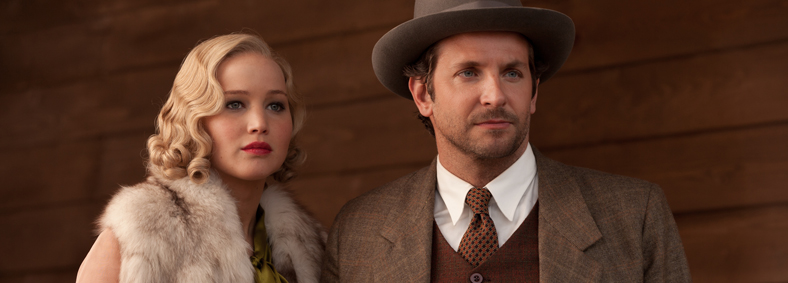
Based on the novel by Ron Rash, it brings together Jennifer Lawrence and Bradley Cooper as on-screen lovers for the second time in an exquisite exploration of the pernicious power of passion.

George Pemberton (Cooper) is a logging company owner in North Carolina. In the wake of the Wall St. crash he’s struggling to finance an ambitious business project in Brazil.

Meanwhile as he tries to fend off central government plans for a National Park on his land, the local sheriff McDowell (Toby Jones) is investigating his firm for corruption.

At a society party George is smitten by the beautiful, strong-minded Serena (Lawrence). Following an impetuous romance, he whisks her off to the Smoky Mountains where she wins over a sceptical workforce with her knowledge and attitude.

With his leading man looks decked out in stubble, leather jacket and wide brimmed hat, Cooper is solidly convincing as the panther-hunting entrepreneur. Lawrence has yet to deliver a poor performance and doesn’t disappoint here. There is an easy comparison to be made between the characters of Serena and Lady McBeth – but Cleopatra may be a better fit.

Talented and handsome, the leading couple share a resonant chemistry. They nicely underplay a ripe script which helps to navigate some unsteady plotting littered with symbolism and told at a measured pace.

The Swedish director is fascinated with cultural context, mixing superstition and religion with labour disputes and a keenly observed social hierarchy. It’s a shame the many interesting minor characters are too often pushed into the background.

Electricity, the railroads and mechanisation are changing a landscape filled with bears, eagles, snakes and horses; the impressive attention to period detail and epic landscapes are captured by the rich cinematography of Morten Søborg.

Gradually George’s devotion to his bride begins to cloud his judgement and she exploits every opportunity to encourage his independence away from his business partner Buchanan (David Dencik). An accident sees a hunting guide called Galloway (Rhys Ifans) declare his loyalty to her.

When Serena is unable to provide George with the healthy heir they crave; deceit, jealousy and murder follow.

Cake

Directed: Daniel Barnz (2015)

Jennifer Aniston learns suicide is far from painless in this dark, rich and tasty drama.

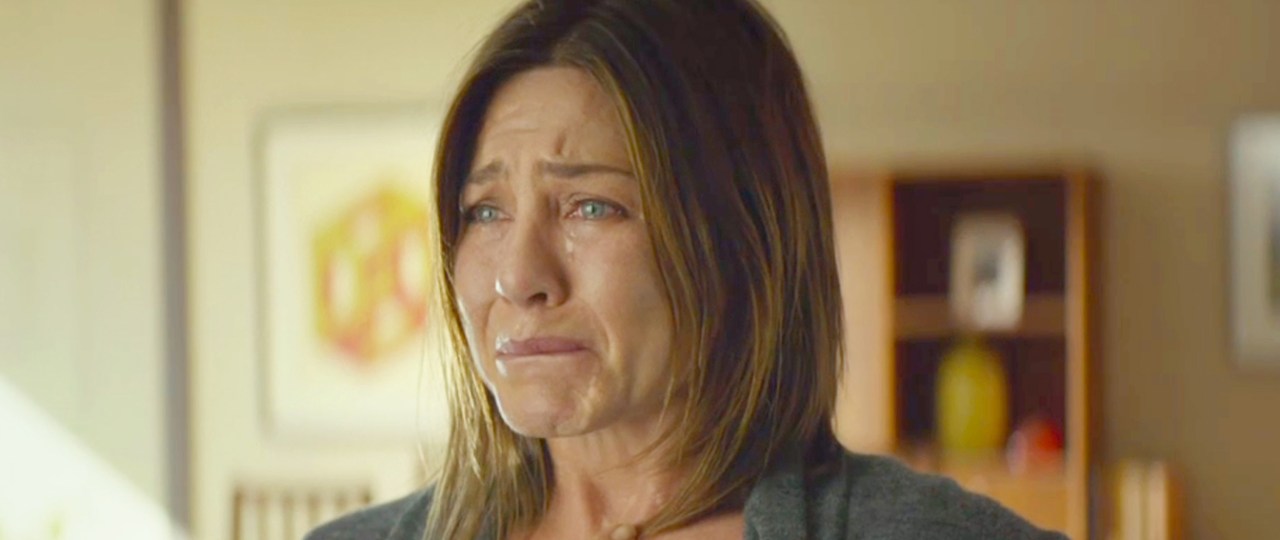
Playing a chronic pain sufferer who’s also coping with complex emotional issues, Aniston demonstrates how superb she can be with strong material. Hopefully this is a kick-start to an interesting new phase of her career.

With bad hair, baggy clothes and no make-up but copious scar-tissue, Claire Bennett (Aniston) is a divorcee with low self-esteem and high pain levels; sitting is awkward, standing is tricky and walking is difficult.

Despite months of physical therapy following an accident, her condition hasn’t improved. So Claire is self-medicating with wine and painkillers.

Doctors are scared of her and loyal maid Silvana (Adriana Barraza) is shouldering the emotional fallout as Claire indulges in unsatisfying trysts with the married pool guy and is kicked out of a support group due to anger management issues.

Nina (Anna Kendrick) was a support group friend who committed suicide by throwing herself from a multi-level motorway leaving only a succinct suicide note.

As an expression of Claire’s mental state, Nina now pops up for frequent fantasy conversations – in restaurants, in bed, even at a drive-in. Though Nina encourages Claire to commit suicide, these episodes are far more funny than morbid due to Kendrick’s sparky performance.

Claire is compelled to examine Nina’s life; visiting her grave, seeing the place where she died and even pitching up at the house where she lived – to the bemusement of widower Roy Collins (Sam Worthington).

Worthington’s screen presence can be underwhelming but here his dead pan delivery is warmly engaging and enjoys a sweet comic chemistry with Aniston.

Roy is not afraid to admit he’s bitter at his Nina’s choosing to leave him and their daughter. He and Claire bond over nachos, beer and anger issues. Both are looking for comfort and affection more than sex.

Aniston is the central ingredient of this sensitive, balanced, consistent and surprisingly humorous movie. With charm, intelligence, excellent timing and dramatic delivery she maintains our sympathies even when playing a complex, prickly and manipulative character.

Dusted with a light icing of hope this Cake is deeply satisfying, indulge yourself.

Wild

Director: Jean-Marc Vallée (2015)

Reese Witherspoon abandons her clean cut perky persona for sex and drugs in this meandering march to personal redemption.

Justifiably Oscar nominated she’s as engaging as ever playing the real-life Cheryl Strayed on whose memoir the story is based.

In order to distance herself from her chaotic past, Cheryl punishes herself by hiking alone over a thousand miles along the picturesque Pacific mountain trail; the barren deserts, snowy mountains and lush forests are all captured with tourist propaganda beauty.

Promiscuity, alcohol and drugs have contributed to a failed marriage, pregnancy and subsequent failed therapy. Despite her mother Bobbi (Laura Dern) being a warm, inspiring and optimistic presence, it’s Bobbi’s story that has compounded Cheryl’s self-destructive behaviour and the trigger for her long walk.

Despite Cheryl’s anger issues we warm to her charm and humour, admiring her dogged determination and perseverance in maintaining a relationship with ex-husband Paul (Thomas Sadoski).

With insufficient preparation she battles grief, guilt and remorse as well as extreme temperatures, rattlesnakes, gun-toting hillbillies, loneliness, lack of food, inelegant toilet facilities and large amounts of unwanted male attention.

Even so the walk itself is fairly uneventful and she receives the frequent help of strangers plus a welcome taste of romance.

With a far from satisfactory script structure from Brit writer Nick Hornby, the reasons for her trek revealed in a series of flashbacks. This means most of the drama has happened before the film has even begun, creating a void where the tension should be.

In heavy-handed fashion inspirational phrases are scrawled across the screen as if we’re not capable of listening to or understanding literature. Worse, there’s no consistent application of the conceit.

It’s an unusual criticism to make – but what this film seems to be lacking most is a train of camels.

☆☆

Grace of Monaco

Director: Olivier Dahan (2014)

How is it possible to have made a terrible film like this out of such a remarkable story – the life of a Hollywood star who married into European royalty?

The tale of Grace Kelly, later Princess Grace of Monaco, has terrific elements – real-life drama, Tinseltown glamour, riches and royalty, fast cars, great locations, intrigue and international conflict.

But this is an insult to our intelligence. It is poorly cast and packed with unsympathetic characters who deliver dreadful dialogue with appalling accents. The script is terrible and the film looks like it has been edited with a hacksaw.

Stunningly beautiful and an Oscar-winner, Grace gives up her film career for a fairytale life in Monaco on the French Riviera. But now she is bored.

You need an actress who can make an audience sympathise with the plight of a beautiful, pampered, wealthy woman. Instead we get ice queen Nicole Kidman.

The self-pitying princess passes time watching videos of her wedding and, preposterously, is portrayed as an international diplomacy mastermind.

Alfred Hitchcock (Roger Ashton-Griffiths) pops by to offer her the title role in the film Marnie – playing a disturbed woman who was molested as a child. Grace, with the backing of her hubby Prince Rainier (Tim Roth), gladly accepts.

Dithering Rainier is trying to preserve his family’s lengthy rule by keeping Monaco as a tax haven for wealthy petrol-heads and gambling addicts.

However he’s driven to chain-smoking by the grasping president Charles de Gaulle (Andre Penvern) who wants to impose taxes on Monaco, exploiting the ‘scandal’ of Grace’s planned return to acting by trying to tax Monaco and threatening to blockade it.

In desperation, Grace takes a shopping trip to Paris and organises a jolly banquet to bring everyone together. Hoorah! And Marnie? In the end the role was taken by Tippi Hedren.

☆☆☆☆

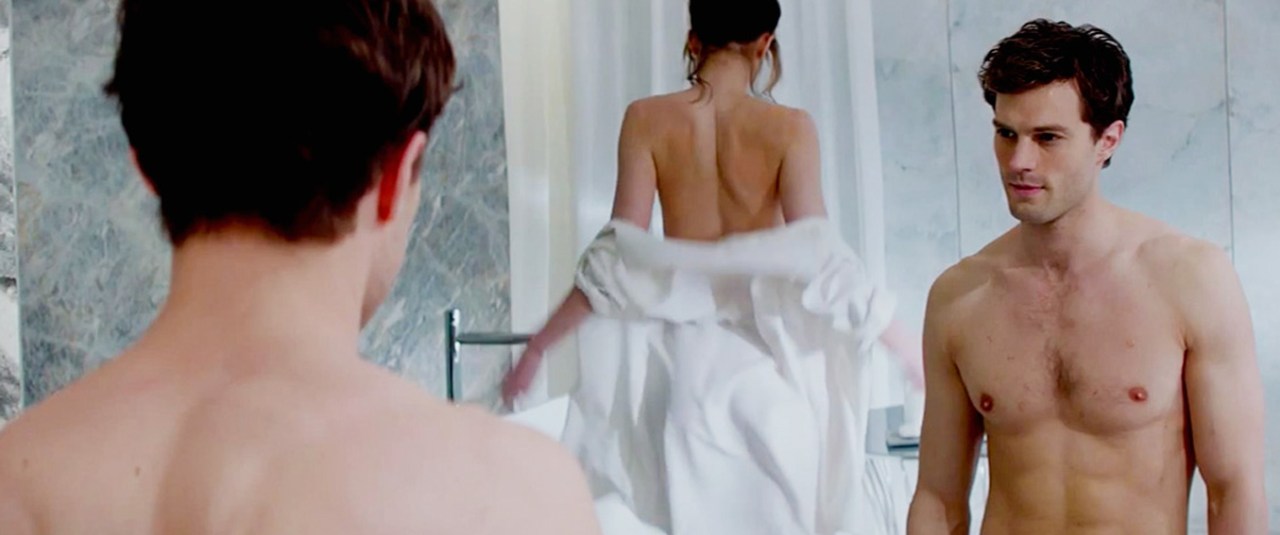
Fifty Shades of Grey

Director: Sam Taylor-Johnson (2015)

There’s lashings of domination but no romance in this steamy and silly fantasy as a billionaire grooms an eager student for his power-trip sex games.

A kinky combination of Pretty Woman and American Psycho lacking the charm of the former and the satire of the latter.

It’s based on the best selling novel by E. L. James and the writer keeps director Sam Taylor-Johnson on a short leash.

This is a shame as her great visual sense and sly wit are hamstrung by being bound tightly to the source material’s ropey plot and dialogue.

Anastasia ‘Ana’ Steele (Dakota Johnson) is a breathy, blushing brunette in a bad cardigan. She receives the opportunity to interview Christian Grey (Jamie Dornan) for the university magazine. He’s a hunky, mega-wealthy, smart-suited super-creep.

Christian recognises the virginal Ana as a  suitable victim to be tutored to serve his own specific needs and begins to ply her with gifts.

He turns up at the hardware store where she works to buy some hobby materials; electrical cabling, grips and so on.

Soon she’s introduced to his private and exquisitely stocked dungeon, ‘the red room’.

In an entertainingly boardroom scene Christian asks Ana to sign a legally binding contract. In eye-watering detail it lists everything permissible in their future activities.

She must agree to be the submissive participant in his bondage sessions which are to include blindfolds, handcuffs and whips.

Both actors have impressive modelling CV’s and demonstrate excellent skills at looking great naked.

The most convincing fetish here is for a designer lifestyle of clothes, suits, accessories and furnishings: it’s a glossy centrefold advert of a production so edgy it features music by pop muppet Ellie Goulding.

There’s a trip in a glider because that what’s rich people do to emphasise how free-spirited they are.

As Ana is overwhelmed by passion for her new found pursuits, she grows more assertive which threatens the strict dynamic of their relationship.

If you liked the book you’ll probably enjoy this film but don’t tie yourself up in knots if you miss it.

☆☆☆

Mr Turner

Director: Mike Leigh (2014)

Brilliant Timothy Spall was surprisingly overlooked by Oscar for his grunting, growling portrayal of superstar artist J.M.W.Turner.

This masterful biopic is a rich canvas covering the last 25 years of the genius’s life until his death aged 76.

Hangdog and whiskered, the man often hailed as Britain’s greatest ever painter is hard on his contemporaries, kind to his patrons and horrible to his servants and children.

With Spall dominant in the foreground, there is a wealth of emotional colour swirling around in the background to ponder.

Never married, Turner has complex relations with the many women in his life. He refuses to acknowledge the children he has with his former lover Sarah Danby (Ruth Sheen) despite her constant appeals.

Meanwhile the artist regularly takes sexual advantage of his devoted housekeeper – and Sarah’s niece – Hannah Danby, played by Dorothy Atkinson.

After the death of his beloved father William (Paul Jesson) Londoner Turner goes to the Kent coast to stay in the Margate lodging house of Mrs Booth (Marion Bailey), a warm, gentle and touching bond develops, accelerating on the death of her husband.

Supremely confident in his creative talent, Turner takes pains to guard his place at the top of the intensely competitive art world.

With his sketchbook for company, he strides across landscapes, walks for miles along the coast and pays prostitutes to show him their bodies for anatomy lessons, we’re left to ponder at what else he may be paying for.

He even has himself tied to a ship’s mast in a storm to study the light. As his work becomes ever more revolutionary he is mocked by satirists, which hastens his decline.

Rich and famous, Turner is still hurt when a young Queen Victoria and her husband Prince Albert – philistines both – are too shallow to appreciate his art.

The gentle ending, the most heartbreaking of 2014, is all the more powerful for lacking sentimentality.

Still Life

Director: Uberto Pasolini (2015)

With plenty to say about the current state of Britain this contemplative drama is a graceful reflection on the importance of honouring the dead.

John May (Eddie Marsan) is a middle-aged, mac-wearing local civil servant.

He’s responsible for contacting relatives of the recently deceased, if none can be found he must organise the disposal of the bodies.

Dedicated, meticulous and compelled to give his clients as much dignity as possible, he draws on their belongings to write eulogies, choose appropriate music and opts for expensive church services rather than cheaper cremations.

Working from a prodigiously neat basement office and living in an equally grey and organised flat, John has a quiet and unassuming life with no friends, family or social life.

Though never complaining being over-involved in his job is a clearly a coping mechanism for his loneliness.

When John recieves his notice at the council from the unctuous Mr Pratchett (Andrew Buchan) he is determined to successfully close his last case but has only three days in which to do so.

Unknown to each other Billy Stoke lived on John’s anonymous housing estate in the flat opposite, suffereing a sad, lonely and alcoholic demise.

Well-honed detective techniques sees John travel the country by road and rail, meeting family and former colleagues, trying to find Stoke’s daughter Kelly (Joanne Froggatt).

The Italian writer-director turns a coldly critical eye on contemporary Britain, seeing a land of abandoned ex-servicemen and uncaring institutions.

Among the alienation, homelessness and terrible food, we love our dogs, hate our families and neglect the elderly.

Cinematographer Stefano Falivene makes a virtue of stillness, capturing an urban landscape with a harsh, eerie beauty and adding to John’s keenly observed sense of isolation.

There are subtle suggestions John could be a modern day version of Raymond Chandler’s Philip Marlowe, a good man keeping true to his personal code of honour.

Or possibly he’s a non-denominational celestial do-gooder trying to save the world one funeral at a time.

Marsan carries the film with maximum economy, conveying a variety of moods with tiny changes of expression while Downton star and Golden Globe winner Froggatt is as engaging and excellent as ever – but it would be nice to see her having on-screen fun in a glamorous role for a change.

For a moment the script seems to lurch towards a conventional conclusion instead it supplies a sweetly haunting and gently optimistic ending.

☆☆