The Danish Girl

Director: Tom Hooper (2016)

Oscar winner Eddie Redmayne aims for more Academy gold as a transgender artist in this period drama.

As in The Theory Of Everything (2015) where he played scientist Stephen Hawking, the British actor gives a committed performance as Einar Wegener.

However he is outshone by Swedish co-star Alicia Vikander as his on-screen wife Gerda who offers strong marital support.

She acts with her eyes and he with his mouth. Some of his alarming lip quivering reminds us of his space camp turn in the terrible Jupiter Ascending (2015).

Gorgeous costumes, polished interiors and fresh exterior locations give Copenhagen of 1926 a living, picturesque appeal.

But it’s suffocatingly sincere and suffers from banal dialogue and a lack of conflict.

Plus director Tom Hooper inflicts on us the same close ups and curious framing which marred his films The King’s Speech (2011) and Les Miserable (2013).

Gerda producers portraits and wears the trousers while Einar paints landscapes and discovers he enjoys wearing frocks.

As he discovers himself more comfortable in women’s clothes than men’s, Einar adopts the alter ego of ‘Lili’.

Gradually she becomes his dominant personality and seeks to make a permanent transformation to womanhood.

Redmayne is a pretty boy in real life but no great beauty as a woman, especially when stood between to his gorgeous on-screen wife and her ballerina best mate Oola, played by Amber Heard.

Lili’s selfish behaviour fails to garner much sympathy and nor does she meet much resistant to her life choices. Society is indifferent to Lili’s plight. So was I.


Hector

Director: Jake Gavin (2015)

A homeless pensioner begins a long road to self forgiveness and redemption in this touching British drama.

The always watchable Peter Mullan is once again excellent in the title role.

Hector has been gentleman of the road for fifteen years and though in poor health and history of mental illness, he lacks self pity and  retains a welcome Scots wit.

A chance meeting in Glasgow sets Hector off to Newcastle and London in search of his estranged family.

Britain is a bleak landscape of rain lashed service stations and shuttered shopfronts.

He is mugged and accused of theft but also receives small unexpected kindnesses. Each makes a mockery of the tatty commercialisation of Christmas littering the country.

In a test of faith loaded with potential for disaster, Hector frequently asks strangers to mind his suitcase.

This sense of trust in his fellow man makes us warm to him.

Though with his portly frame, white beard and orange hi vis coat, Hector’s the spirit of Christmas present no one wants a visit from.

When we discover his reason for his homelessness, this suitcase he drags around takes on a meaning worthy of Dickens’ A Christmas Carol (pub. 1843).

There’s strong support from Gina McKee and Ewan Stewart as his siblings who retain issues with each other while Stephen Tompkinson swears enjoyably as a cash conscious car dealer.

Without preaching the script gently reminds us of the need for compassion and charity, filling Hector with an abundance of festive spirit and warmth.

Merry Christmas.

By The Sea

Director: Angelina Jolie Pitt (2015)

With bickering, boozing and bust ups, life’s far from a beach in this exasperating period drama.

Written and directed by Jolie Pitt, it’s a moody, beautiful and sincere exploration of grief and love.

It’s also seriously dull and a far cry in tone and scale from her last directorial effort, the entertaining second world war action epic Unbroken (2014).

Jolie Pitt’s ambition to stretch her range is admirable and she’s crafted a well acted movie with a consistent tone.

She co-stars with real life hubby Brad Pitt as an unhappily married couple holidaying in the south of France.

But Jolie’s writing strands them both with unappealing characters and some awful dialogue.

Vanessa is a pathetic, self-pitying and pill popping former dancer.

Roland’s a hard drinking chain smoking novelist who seems to model himself on Ernest Hemingway.

They’re nursing an unspoken grief the eventual revelation of which is predictable and a very long time coming.

Their strained relationship changes when passionate young newlyweds check into the hotel suite next door.

They’re played by the beautiful and frequently naked pair of Melvil Poupaud and Melanie Laurent.

What  follows is sunbathing and shopping as well a lot of voyeurism and a little violence.

There’s a vague sense of By The Sea being a thriller without a crime or a heist without a con.

It could be set in any time or place and still achieve the lavish levels of dramatic inertia.

Malta stands in for Cote D’Azur and is suitably ravishing while the1973 setting allows for extremely glamorous clothes and cars.

Brad sports some fabulous looking flannel which is exactly what this film amounts to.

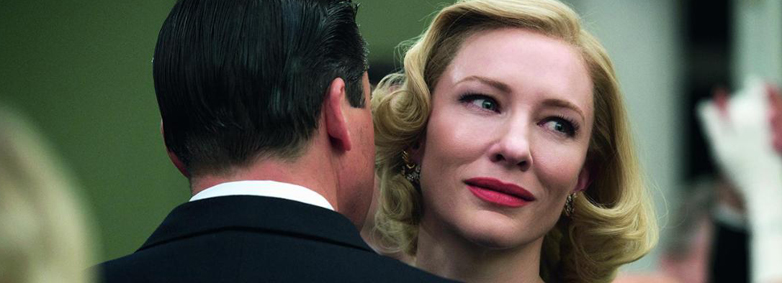
Carol

Director. Todd Haynes (2015)

There’s tremendous quality to admire in this intelligent, assured and elegant period piece.

A shame it lacks the drama the tremendous acting, design and writing promise but don’t deliver.

It’s based on a novel by Patricia Highsmith who also wrote The Talented Mr Ripley (1999).

Cate Blanchett was award nominated for that film and certainly will be again her immaculate performance here.

In the title role she’s a moneyed, married mother who begins an affair with shop girl Therese.

Rooney Mara’s quiet reserve essays a delicate flowering of awareness.

It’s her finest performance to date and hopefully it will be recognised as such by the Academy.

They take a road trip with a camera in one suitcase and a gun in another.

This leads to a showdown with Carol’s seemingly decent husband, played by the dependable Kyle Chandler.

The presence of the gun acknowledges the problem with a script which doesn’t have a lot going on once the couple consummate their relationship.

So the gun is clumsily thrown in to add a frisson of drama where none exists.

As the romance develops and what obstacles exist seem to melt away, we realise we’re witnessing a beautifully played and sumptuous soap opera.

Love 3D

Director: Gaspar Noe (2015)

There’s little love but copious graphic sex scenes in this indulgent French flesh fest.

Take away the lengthy porn scenes and we’re left with unremarkable people and their dull, insular arguments.

Murphy is an American in Paris who on January 1st receives a phone call from the mother of his ex girlfriend, Electra.

She’s concerned her daughter may be suicidal having not seen her for some months.

This plunges the sullen, self-pitying film student into a bout of soul-searching.

We see the anger, fear and jealousy of their destructive relationship in flashback as the combustible couple spend their time at parties, bars, cafes and sex clubs.

The exes are played with naked enthusiasm by Karl Glusman and Aomi Muyock.

Klara Kristin plays Omi, the mother of Murphy’s baby son and the director isn’t above casting himself as a gallery owner, though we are mostly spared his nudity.

There’s confidence in the assured and repetitive rhythms of the fluid timeline as it slithers back and forth.

At 135 minutes the indulgent length allows us to admire the beautiful lighting, confident colour scheme and contained camerawork.

But the slight story and lack of emotional connection with those involved makes for an empty and unsatisfactory experience.

Brooklyn

Director: John Crowley (2015)

This beguiling tale about a young Irishwoman in New York is far and away the best film released this week.

Saoirse Ronan adds another fine performance to her CV as a thoughtful, amenable soul on a voyage of self-discovery. Her subtle strength is reflected in the quality of the filmmaking.

Based on Colm Toibin’s novel, it features a charming cast working from a smart script, a lovely eye for period detail and gorgeous photography.

Much creative budget-stretching gives it a polish and sweep much better financed films should envy.

Nick Hornby also wrote Reece Witherspoon’s Wild (2015) and has found a niche writing thoughtful, female character centred films.

I wouldn’t want to wish him out of a job, but it’s a poor commentary on the industry these films probably wouldn’t be made with a non-name female writer attached.

Eilis Lacey realises 1950’s Ireland has little to offer her and so suffers an undignified sea crossing in search of a future.

When Eilis steps from the gloomy immigration hall into the bright colour of the big apple, it’s a magical moment similar to Dorothy stepping into the wonderful world of Oz.

As Eilis struggles with homesickness, heartache and the harsh winter, a Christmas dinner for the homeless diaspora is a reminder of the unforgiving nature of the world.

Thankfully the fiddle playing is kept to a minimum.

Jim Broadbent’s kindly Father Flood finds her a job in a department store under the sternly glamorous gaze of Miss Fortini, played with panache by Jessica Pare.

Eilis must also carefully navigate the politics of her boarding house dining table, refereed by Julie Walters’ mother hen of a landlady, Mrs Kehoe.

As well as having every intention of keeping god away from her nylons, Mrs Kehoe warns her female-only clientele of the sinfulness of giddiness.

The many women Eilis meets offer small kindnesses, advice and insight to her own possible futures.

As she slowly builds a life for herself Eilis is torn between sweet suitors on either side of the pond.

Domhnall Gleeson Irish rugby fan is unknowingly pitted against Emory Cohen’s baseball fanatic Italian-American.

But a secret Eilis keeps even from her mother threatens to scupper her happiness.

As the cast disarms the audience with humour, the drama to creeps up with surprising power.

Though Ellis may not quite conquer New York, Ronan’s performance will capture your heart. And no doubt an award nomination or two as well.

Under Milk Wood

Director: Kevin Allen (2015)

This trippy and licentious adaption of the famous Dylan play is entertaining, coherent and consistently bold.

It’s my introduction to his nightmarish verse of seaside misery and is an eye and ear opening experience.

Commissioned by BBC as a radio play and later adapted for the stage, the play was completed in by the Welsh poet shortly before his death in New York aged 39.

Set in the fictional Welsh fishing village of Llareggub. The name is pointedly ‘bugger all’ spelt backwards.

Described as ‘a small decaying watering place’, it hums to the sound of pagan rituals, a male voice choir, much organ music and a brass band.

The visual cacophony of saturated colours, blurred focus and obscure camera angles creates a vivid and disturbing dreamlike world.

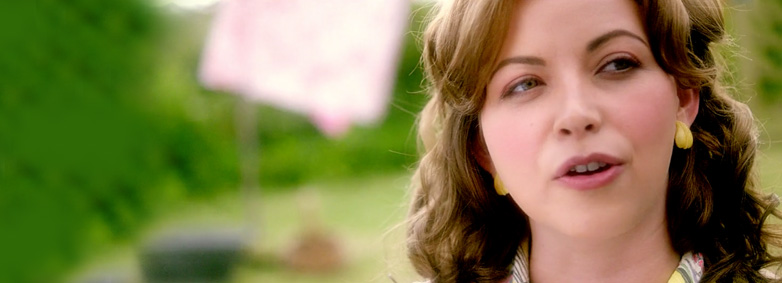
A first film version in 1972 starred Hollywood greats Richard Burton, Elizabeth Taylor. This one has a grizzled Rhys Ifans and a comely Charlotte Church.

The artist formerly known as the voice of an angel gamely joins in the bawdy business. She’s confident on camera and showcases her talent with a touching torch song in a slow jazz style.

Ifans narrates through the character of the blind Captain Cat. The Welshman relishes the poetry and his confident, lyrical delivery is a major strength.

The Captain guides us through the dreams and fantasies of the sleeping inhabitants with names such as Nogood Boyo, Sinbad Sailors, Mrs. Willy Nilly and Organ Morgan.

They’re a collage of gossiping grotesques preoccupied with lust, loss, longing, murder and madness.

The play’s lack of narrative flow and moral navigation leaves us bobbing about on a murky tide of humanity without the safe harbour of a climax.

I watched the English language version and the Welsh language version is the UK’s submission for the Best Foreign Language award at next year’s Oscars.

I wish it the best of British luck.

Mississippi Grind

Director: Anna Boden, Ryan Fleck (2015)

A pair of gamblers chase a pot of gold at the end of a rainbow in this engaging bitter-sweet fable.

It’s flush with award worthy performances, an intelligent script and a tremendous soundtrack.

Ben Mendelsohn plays a real estate agent in hock to debt collectors. He spends his nights at spit and sawdust casinos.

Gerry’s luck changes for the better when he meets the charming Curtis at the tables.

Ryan Reynolds gives a career best performance as the charismatic storyteller with dreams of travelling to Machu Picchu in Peru.

Gerry is as untrustworthy and entertaining as a leprechaun. The first image we see is of an enormous rainbow which stretches across the screen.

Believing Curtis to be his lucky charm, Gerry throws the dice on a trip to New Orleans.

Together they plan to win enough money en route playing poker to buy their way into a high stakes game.

The Mississippi River leads the jokers into dangerous waters as they encounter whiskey, cardsharps and working girls.

Sienna Miller and Analeigh Tipton provide the possibility of redemption and soften what could be but never is a very macho experience.

Directors Anna Boden, Ryan Fleck co-wrote the script and Boden also edited. Cinematography is by Andrij Parekh and the film was well received and picked by at Sundance this year. (2015).

In a satisfying final hand we fear for the self-deceiving duo as reality threatens to deal the cards.

Suffragette

Director: Sarah Gavron (2015)

Political passion and personal punishment power a prodigious performance in this stirring historical drama.

In the dark, violent world of 1912, a young mother risks everything as she battles the government for the right to vote.

Fictitious characters mix with real people and events to create a gripping story filled with emotional truth.

Following her excellent turn in Far From The Madding Crowd (2015), Carey Mulligan gives another mesmerising performance as factory worker and reluctant activist Maud Watts.

Her young son George is ominously diagnosed by Helena Bonham Carter’s chemist as ‘a bit chesty’.

Hardworking and aspirational, Maud is drawn into the bosom of the suffragettes and their world of nighttime rallies, back room meetings and property attacks.

Soon she feels the full force of the law in the form of the intelligence gathering Special Branch and truncheon wielding constables.

With Maud’s behaviour considered to be madness not badness, she’s ostracised, beaten, jailed and endures a hunger strike.

Radicalised by her experiences, she is soon waging a guerrilla war alongside veteran campaigner Emily Davison.

It mostly involves blowing up the UK’s communications infrastructure. i.e. postboxes.

Corrupt politicians collude with the media to keep the violent campaign off the front pages.

In desperation to  be heard, the women seize upon a target so big as to be impossible to ignore.

At times the heartbreaking events resemble the grimmer moments of Les Miserables (2012). With the thankful exception of the awful sing-alongs.

It’s an inspiring tale of kindness, courage and comradeship Which at times tries too hard. We’ve long since been won over by Maud by the time she’s reduced to waiting in the rain.

An intelligent script insists the women are fighting a war and the dialogue includes frequent exhortations for them never to give up.

It celebrates their bravery and solidarity against the state who use covert surveillance and brutality to suppress a popular political uprising.

However it aligns the direct methods and organisational prowess of the suffragettes with historical and contemporary terrorist groups such as the IRA.

This may prove problematical to viewers. It’s certainly the starting point for an interesting debate.

Cinematographer Edu GrauIt captures the drama in palettes of browns and greys, as films of this sort so often are.

Better known as James Bond’s Q, soft spoken Ben Whishaw is counter-intuitively cast as Maud’s working class barrow boy husband Sonny.

His subtle acting suggests a marriage of convenience and as the story progresses, Sonny’s feebleness adds perspective to Maud’s situation.

Geoff Bell stops shy of pantomime as an abusive factory boss and the film is not too sure what to do with Brendan Gleeson’s cop. His concerned reasonableness challenges you to remember he’s one of the guys.

Meryl Streep makes a brief and typically stagey appearance as head girl Emmeline Pankhurst. It veers towards an impersonation of Maggie Smith in TV’s Downton Abbey.

In The Iron Lady (2011) cinema’s grand dame won an Oscar for playing the famously unsisterly first female Prime Minister Margaret Thatcher.

During her divisive time in office she was not for turning when it came to civil unrest and terrorist campaigns.

Spoken of in hushed voices in her absence, Pankhurst addresses a crowd messianically from a balcony and a signed book is passed around as if a holy relic.

This is the nearest religion comes to being referenced in the film.

There are no priests in the church which offers sanctuary to the dispossessed and the position of the established church seems to be one of benign neutrality.

This despite organised religion having a poor track record in the public arena of women’s rights.

Made In Dagenham (2010) showed car factory workers campaigning for equal pay in the 1970’s. Suffragette is a spiritual prequel and in the 60 odd years between the periods portrayed, it’s sobering to realise how little progress had been made.

As a representative of all the foot soldiers of the suffrage movement, Mulligan’s emotional performance puts us at the heart of their struggles against the established order.

She easily wins my vote for 2016’s Best Actress Oscar.

Leading Lady

Director: Henk Pretorius (2015)

A prickly rose blooms in the heat of the veldt in this amiable and unremarkable Afrikaans romcom.

It’s a pleasant enough trip but one lacking in any ambition except the desire not to cause offence. It’s absolutely unobjectionable, almost insultingly so.

Irish actress Katie McGrath plays Jodie, a drama school teacher and aspiring big screen thesp who heads to South Africa to research a film role she has yet to win.

Her accent is determinedly none specific except when her natural intonation breaks through.

On arrival she’s nearly run over by hunky Bok van Blerk who agrees to take her back to his drought-ridden farm so she can sample rural life.

He’s sort of intense, she’s kind of bossy. They bicker and seem ill-matched. Who knows what the fates may have in store for them.

In return for board and lodge she agrees to direct the annual farmyard concert. This allows the script to drive in a flock of local eccentrics.

As weak attempts at humour fall to take root on the barren comedy ground, the green shoots of romance are blighted by unexpected arrivals.

With Nelson Mandela, blood diamonds and sci-fi allegory dominating the country’s cinematic exports, it’s nice to encounter a South African offering which purposefully avoids politics in any form.

It’s a shame then this the RSA equivalent of a Richard Curtis chocolate box movie. It’s cosy, affectionate and full of regard for ordinary country folk and their amusing little ways. And it’s none too funny.

The agreeable cast go about their business with enthusiastic competence.

But there’s an unforgivable lack of villainy or devilment. The uneven script can’t even bring itself to be beastly about the British, and lord knows we’ve supplied them with enough historical ammunition.

Even the traditional romcom dash to the airport is reduced to a brief skip across the front porch.

Truths are spoken, lessons are learnt and personal growth occurs. But it time seems to move so slowly in the countryside it’s hard to care.