Author: The JT Leroy Story

Director: Jeff Feuerzeig (2016) BBFC cert 15

Deceit and desperate self loathing punctuate this gender twisting documentary based on a real life literary hoax.

Former phone sex operator Laura Albert became the toast of the New York art scene in the 1990’s when she wrote a fictitious memoir under in the guise of JT Leroy, a HIV infected fifteen year old rent boy.

Being the wrong sex and fifteen years too old to convincingly act the role for publicity interviews, Albert employed her wig wearing sister in law to pretend to be Leroy while Albert pretended to be ‘Speedie’, ‘his’ manager.

Having achieved cult celebrity status, Albert’s writing career morphs into music performance,  TV writing and movie adaptations. This includes a collaboration with director Gus Van Sant and appearances at the Cannes film festival.

Among those unaware of the true nature of JT and Speedie. There’s a delicious moment when U2’s Bono summons her to bestow some celebrity advice.

Having successfully maintained the deceit for a decade, Albert was unprepared for the media backlash and family betrayal when New York Times uncovered the hoax in 2005.

Unable to accept responsibility, Albert’s confrontational self justification points to her troubled childhood as the root cause of any supposed wrong doing.

Albert’s impassioned testimony is supported by line drawn animations and home video footage. But paranoia seeps from someone who seems to have recorded her every phone call on cassette tapes.

And having being successfully sued for fraud makes Albert an extremely unreliable narrator of her own fall from grace.

@ChrisHunneysett


Notes On Blindness

Director: Pete Middleton, James Spinney (2016)

This deliberately dreamlike documentary is an elegy to Professor John Hull who in his forties went totally blind.

Steering away from exploring how society deals with sufferers of this disability, it’s a deeply personal account skilfully stitched together from his audiocassette dairies.

These helped him understand his condition and in his words ‘retain the fullness of his humanity’.

Actors enact scenes from his life and lip synch to his family’s recorded voices. His daughter adds welcome moments of brevity.

To convey how John feels the world we see myriad textures of grass, stone, wood, leather and plastic. Vivid nightmares are recreated to represent his periodical depressions which are most aggressive at Christmas.

John muses on the nature of visual memory and how it relies on constant stimulation to maintain itself. Scenes of rainstorms inside his house offer echoes of Christopher Nolan’s Inception (2010), itself an essay on the power of perception and memory.

Finding beauty in the sound of the rain and retaining his Christian faith, John comes to view his blindness as a gift from god and immediately raises the question of what to do with it.

With tremendous dignity and grace under pressure, a stubbornly thoughtful and quietly inspiring figure is gradually revealed.

@ChrisHunneysett

Where To Invade Next

Director: Michael Moore (2016)

Shambling satirist Michael Moore acts as a one man invasion force of Europe in this typically funny and thought provoking documentary.

With the US having failed to have won a war out right since the second world warm, he feels he can do better without spending billions of dollars for little tangible success.

Rather than steal oil he aims to capture the most progressive cultural ideas and take them back home to the US. So he shuffles of to Italy for sex education, France for the food, Germany for productivity and Iceland for gender equality.

Moore praises European attitudes in order to condemn existing practices in the US. Bold graphics and TV footage mingle with his meetings with teachers, chefs, police officers, company CEO’s and the President of Slovenia.

This is a rose tinted view of the EU you may not recognise from the Referendum debate or personal experience.

Despite Moore’s view of the US  it ends on a note of flag waving optimism. However it’s noticeable how Moore doesn’t consider the UK worthy of invasion.

@ChrisHunneysett

The Divide

Director: Katharine Round (2016)

There’s a serious lack of facts in this wooly minded documentary which wants to change the world.

It claims extreme levels of relative inequality within the UK and US are the main driver of social problems such as ill health, substance abuse and crime. Advertising is blamed for stimulating demand for unnecessary excessive consumption.

Archive news footage is mixed with testimony of historians and economists.

There’s a sloppy failure to define poverty or present a single chart or graph. Instead the narrative such as it is relies on emotive anecdotes and opinion to make its point.

Abandoning its starting point of 1928, it briefly raises the spectres of Thatcher and Reagan before landing in the present.

Seven people, including a rapping Scots alcoholic, a Wall Street psychologist and a Sunderland care worker, are used as examples of the unhappiness in both the rich and poor.

Apparently being wealthy does not make one happy, a theory I’d like to put to the test.

Described as a ‘a call to arms’ The Divide is propaganda for change but forgets to offer a solution to the ills it idnetifies.

Without which it amounts to little more than a cry of ‘it’s not fair’ – behaviour I don’t tolerate in my five year old.


Hitchcock/Truffaut

Director: Kent Jones (2016)

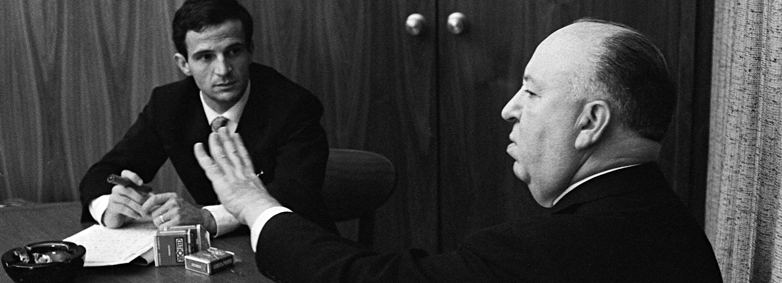
This documentary is a respectful introduction to the work of two hugely influential film makers, Alfred Hitchcock and Francois Truffaut.

In 1962 and accompanied by a translator and a photographer, the young French director spent a week with the British master.

The lengthy interviews were recorded and turned into a book.

Now directors including as Martin Scorsese, Paul Schrader, Wes Anderson and David Fincher discuss how that book is considered a bible of film making.

There’s wonderful footage from Hitchcock classics such as North By North West (1959) and from his pre-Hollywood work.

A disproportionate time is spent discussing the merits of Vertigo (1958). Despite a surprisingly low key Scorsese’s best efforts to convince, I remain immune to its obsessions.

The dynamic between the two men hints at more than the documentarians intended to show.

Though The Birds (1963) was still yet to come, Hitch was at the tail end of his career while the young French dynamo had made a blistering start to film with The Four Hundred Blows (1959) and Jules Et Jim (1962).

Undoubtedly Truffaut was a consummate networker and had built his career on befriending powerful older men and persuading them to mentor him.

Claiming he wanted to record Hitch’s thoughts to establish his reputation as an artist not merely an entertainer, Truffaut comes across as disingenuous, grasping for Hitch’s knowledge to further his own career.

The ageing Hitch was not immune to the Frenchman’s flattery and within a couple of years Truffaut completed the British sci-fi feature Fahrenheit 451 (1966).

Both men had formative experiences of the criminal justice system early in life and there’s discussion how much this informed the frequent occurrences of punishment and guilt in their films.

Enjoyable but far too brief, Hitchcock/Truffaut works best during the moments Hitch interviews are used as a commentary to his own unique vision.

Truth

Director: James Vanderbilt (2016)

Best switch channels than tune into this ham fisted drama about the fall of real life TV journalists.

A self serving and poorly constructed script plus an over wrought tone destroys the solid work of stars Robert Redford and Cate Blanchett.

He plays venerable journalist and avuncular TV anchorman Dan Rather, a surrogate father to his producer Mary Mapes.

Under ratings pressure she breaks a big story about the military service record of the young George W. Bush who is seeking a second Presidential term.

But when the story unravels due to a dodgy dossier, unreliable witnesses and thin evidence, the journalists become the story and must fight to save their careers.

Mary is a driven, intelligent, and contradictory but is an unsympathetic figure who prefers to cry conspiracy than recognise her own weaknesses.

Thinly written supporting characters have barely there interactions before being forgotten about.

The film touches on several styles and genres, wildly snatching at a tone to give meaning to the dull drama playing out.

In the style of a heist movie, a crack team of journalists is assembled but given absolutely nothing to do before quietly slipping out of the movie.

It then becomes a busily plodding procedural movie with moments of courtroom and sporting drama.

Despite protestations of political impartiality, rival TV networks seem to fighting a proxy election campaign with the CBS employees firmly in the Democratic Party anti-Bush camp.

The script makes grandiose claims about the power of journalists to influence elections but with a week being a long time in politics, the decade old story has little contemporary resonance now Bush is long out of high office.

There is none of the relevancy of the recent Best Picture Oscar winning Spotlight (2016). It also lacks that films extraordinarily rigorous storytelling.

In bizarre scenes devoid of irony, ordinary citizens are seen gazing in wonder at Dan read the news. They’re primates reaching out to the monolith in Kubrick’s 2001: A Space Odyssey (1968).

Truth is a hymn to the memory of Rather whose name means little to a UK audience. It also a lament for the good old days when the news wasn’t subject to a political agenda prescribed by wealthy owners. (Ha!)


Bolshoi Babylon

Director: Nick Read, Mark Franchetti (2016)

This intriguing documentary allows us to peek behind the stage curtain of the world renowned Bolshoi, the ballet company described as as a mirror of Russian society.

The Bolshoi is the focal point of Russian high culture and Prime Minister Dimitry Medveved boasts of it as a secret weapon selling Russia to the world.

Overlooked by the Kremlin just down the road, it’s been the place for Russian leaders from Stalin onwards to entertain visiting dignitaries such as Cuba’s Fidel Castro, the USA’s Ronald Reagan and Britain’s Margaret Thatcher.

Her predecessor as Prime Minister Winston Churchill described Russia as ‘a riddle wrapped in a mystery inside an enigma‘ with the key being Russia’s national interest.

It’s the first time anyone has been granted uncensored access to the theatre and directors Nick Read and Mark Franchetti take full advantage.

Peering about the dark nooks and crannies of the grand old building, they uncover the egos and rivalries of performers and executives.

They capture spectacular shows and candid catty comments of dancers waiting in the wings.

The performers delight in demonstrating the great grace, strength and finesse of their olympian bodies.

And we’re close enough to see the sweat and strain beneath the heavy stage make up and beautiful costumes.

The institution is rampant with accusations of corruption and incestuous staff relations.

The Bolshoi was rocked when former lead dancer turned artistic director and establishment baiting Sergei Filin was blinded in an acid attack.

His rival dancer Pavel Dmitrichenko is arrested with unseemly haste and packed off to six years hard labour on a penal colony. I’m guessing Siberia.

The Kremlin take advantage and send in new broom director Vladimir Urin to sweep away Filin’s regime.

His ruthless top down management structure is powerless to prevent patronage from the powerful political elite on whom it is dependent for state funding.

As various interviewees talk at length while trying to give little away, the material is carefully organised to present an uncompromising picture and hint at one even darker.

 Nothing seems to have changed too too much in modern Russia.

Sherpa

Director: Jennifer Peedom (2015)

Money, militancy and mountaineering on Mount Everest cause an avalanche of unrest in this refreshing documentary.

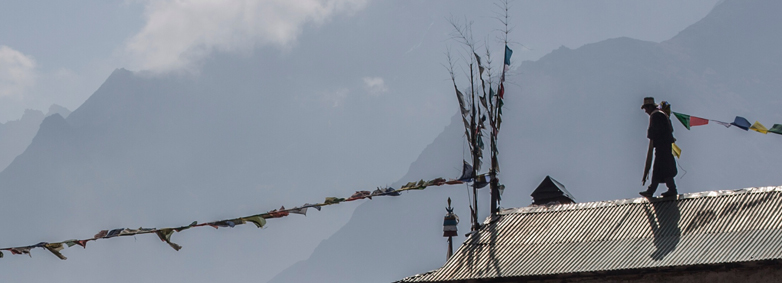
Told with an icy clarity and crystal clear cinematography, it’s a Sherpa’s eye view of an ill fated expedition in 2014.

Sherpas are used by wealthy Western tourists as pack horses to transport the necessary equipment from successive camps up the mountain.

What is a monumental ego trip for wealthy foreigners is an economic imperative for the local population. It’s also a major revenue stream for the Nepalese government.

An exploration of how the mountaineering industry has long marginalising the Sherpa’s achievements in favour of Western climbers provides a foothold for the thrust of the story.

The brief two month season when a summit is achievable sees TV and film crews jostle for space in human traffic jams on the mountainside.

When major fatalities occur, the Sherpas refuse to continue to facilitate the climb, putting the entire lucrative summit season at risk.

Everest is a place of holy significance to the Nepalese and they have no wish to dishonour the dead by climbing over the frozen bodies or further put their lives in danger.

Bullying, lies and misinformation swirl around the camp as a government delegation fly in to pacify the angry workers, frustrated tour operators and petulant climbers.

Sherpa would make an interesting double bill with the excellent You’ve Been Trumped (2011). It’s a fascinating account of how the Scots government allowed the US billionaire Donald Trump to bulldoze areas of outstanding natural beauty to build golf courses.

They share stories of bullish foreign money and a compliant government marginalising its own citizens to exploit precious natural resources.

While holding union meetings on the vertiginous heights, the Sherpas achieve a greater perspective on life than their over-privileged and arrogant employers.


Future Shock! The Story of 2000AD

Stars 4

Told with humorous candour by it’s creators, this thrill-powered documentary blasts through the groundbreaking history of seminal British sci-fi comic, 2000AD.

It was launched as a short term cash grab on 1977’s Star Wars-inspired craze for sci-fi, and no-one expected it to be still be around in the year 2000, never mind in rude health in 2015.

My first exposure occurred in 1978 with an off the cuff remark from my older brother about the death of character, John Probe.

Nothing intrigues a seven year old boy more than death, so I asked to take a look at his comic and my life was changed for ever.

John Probe, codenamed MACH 1, was a blatant mashed-up rip-off of TV’s The Six Million Dollar Man, and Steven Spielberg’s 1978 Close Encounters Of The Third Kind.

Kind of interesting and fun, the super-powered spy strip was quickly forgotten when I discovered the awesome artistic majesty of Mike McMahon’s full colour centre spread.

Featuring flying giant killer mutant rats and human sacrifice, this was my introduction to the insane world of Judge Dredd. I’d just found what I didn’t know had been missing in my life.

A typographic cover of little more than 3 letters in a heavy font would be a startling choice now, but back then it was a typically outrageous and in your face statement.

These were the trademarks of an unruly group of pioneering writers and artists who forged the comic’s anti-establishment attitude in the punk rock heat of 1970’s industrial unrest.

At it’s best 2000AD is full of violent, funny, subversive, anarchic, satirical and allegorical stories.

In strips such as Halo Jones, Strontium Dog, Nemesis the Warlock and Nikolai Dante the protagonists and anti-heroes are bounty hunting mutants, piratical lotharios and all manner of robots and aliens.

Central to the comic’s longevity is the character of Judge Dredd, the fearless, ruthless 21st century lawman; a judge, jury and executioner.

He was visually influenced by films such as 1975’s Death Race 2000, and 1974’s The Cars That Ate Paris, and eventually took to the big screen in his own right.

Hoodlum in chief was the first editor and creator Pat Mills, who through force of personality willed the comic into existence.

The soundtrack’s thrash guitar chords echo the combative spirit of the comic but can’t drown out Mills’ vigorous championing of the work or numb us to the ultra violence of the fabulous art.

Mills is interviewed at length along with many other key creators such as writers John Wagner and Alan Grant, and artists Carlos Ezquerra and Brian Bolland, who provide smart, articulate, passionate and wry commentary.

Artist Dave Gibbons and Kevin O’Neil describe the good long Friday afternoon pub sessions, where a friendly competitive atmosphere was fostered. But Mike McMahon, my favourite member of the holy trinity of Judge Dredd artists is notably and sadly absent.

Treated as workhorses, the creators struggled for recognition, were ripped off by management, saw irreplaceable artwork dumped in skips and threatened with litigation – for copyright infringement of their own work.

In the following years the comic has changed owners, seen many of it’s top talent lured to the American comics market and suffered a variety of editors.

Dave Bishop is as disarmingly honest about the success of his stewardship as Mills is scathing of it.

As the comic has become a convenient shop window for ambitious talent, the 2000AD temperament has also been exported to the States.

Sly Stallone’s 1995 movie version of Judge Dredd, was poorly received and mocked by fans, whereas 2012’s Alex Garland scripted Dredd, is a superb realisation of the character and his world.

Although his script for 2002’s 28 Days Later, borrows heavily from John Wyndham’s Day of the Triffids, Garland says the ferocious tone is pure 2000AD.

Garland went on to write and direct 2015’s brilliant Ex Machina, and he argues the influence of 2000AD has infiltrated long and deep into cinema.

Clear examples of 2000AD’s  influence include 1987’s Robocop, 1990’s Hardware2007’s Timecrimes and 2015’s Robot Overlords.

But few recent sci-fi films don’t include some 2000AD DNA. It’s not possible to view Christopher Nolan’s 2014 Interstellar, without comparing the library sequence with the ending of Gordon Rennie and Frazer Irving’s 2000 series, Necronauts.

In the words of it’s green-skinned alien editor Tharg the Mighty, Futureshock is zarjaz and scrotnig. Watch the film. Then go buy the comic. Here.

Steve McQueen the man and Les Mans

Director: Gabriel Clarke, John McKenna (2015)

There’s a great documentary to made about the making of motor racing film Le Mans (1971), but this isn’t it.

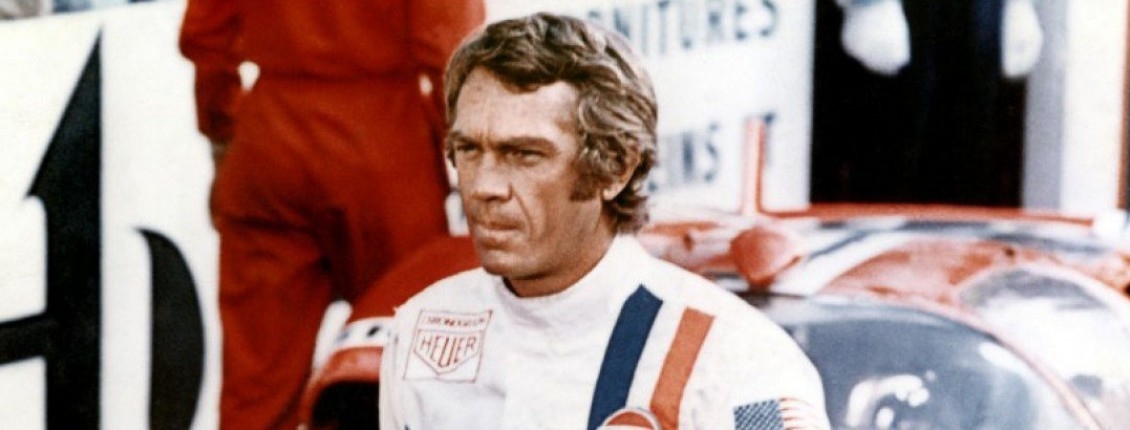
Constructed by Hollywood star Steve McQueen as a float to parade his twin passions of fast cars and movies, the vehicle for his vanity crashed at the box office.

Filming started without a script, the original writer was the first of many fired, the director quit and it went considerably over it’s $6m budget.

John Sturges had helped create McQueen’s career by casting him in The Magnificent Seven (1960) and The Great Escape (1963).

As a veteran maker of crowd pleasing entertainments for the studios, the director walked off the set, frustrated at McQueen’s truculent refusal to adhere to established Hollywood storytelling.

McQueen’s desire was to represent the reality of the racing experience demonstrates a lack of understanding of Hollywood filmmaking, where emotional truths are revealed through the artifice of the medium.

Understandably upset at the aching slow progress, the studio wrested the steering wheel away from the King of Cool’s control.

The resulting film was a malfunctioning hybrid of approaches and was received with indifference by the public.

Too little technical information or financial detail is offered. We learn the cars are very fast and expensive. But not how much they cost or how many were involved.

There is a vague sense of wanting to rehabilitate McQueen’s reputation from taciturn action star to visionary producer.

But the tone lurches into blokeish banter as his on set infidelities were then covered up but are now leeringly discussed by the crew.

His first wife and their son Chad contribute interviews as do his then gopher, the racing team and the production crew.

McQueen is repeatedly described as being at the time the world’s biggest star.

It’s a description his contemporaries Paul Newman, Robert Redford, Sean Connery or Lee Marvin may have quibbled with.

As the helmet of the actor is lifted, behind the famous and startlingly blue eyes is revealed a deep well of ego.

It’s an oddly deflating experience, leaving us stalled on the starting grid.