THE OLD MAN AND THE GUN

Cert 12A 92mins Stars 4

Hollywood legend Robert Redford pulls the curtain down on his long acting career with this wonderfully warm and spirited character-driven comedy drama.

The remarkable tale of a real life career criminal, it’s a deft, funny and surprisingly life affirming caper which is every bit as smart and accomplished as its star.

Redford plays bank robber Forrest Tucker, the dapper leader of a team of geriatric bank robbers who the media nickname, ‘The Over the Hill Gang’, after they go on a courteous spree of low-tech bank heists across five US states.

They’re slowly pursued by Casey Affleck’s hangdog detective cop who is determined to catch the thieves after letting them slip though his fingers.

And a luminous Sissy Spacek shares a marvellous sparkly chemistry with Redford as a horse whispering widow who catches Tucker’s eye.

Director David Lowery previously made the Disney terrific live-action 2016 remake of Pete’s Dragon in which Redford had a minor role.

As camera moves and jazz score offer reminders of Redford’s 1970’s heyday, the tone of nostalgic lament deliberately echoes that of 1969’s Butch Cassidy and the Sundance Kid.

The cowboy classic saw Redford in his most enjoyable and best remembered role as a gunslinging outlaw alongside Paul Newman, and Tucker is clearly intended as a septuagenarian spin on the Sundance Kid. 

Occasionally if understandably indulgent with many other nods and winks to Redford’s prestigious career, this misty-eyed eulogy offers an explanation as to why he first took to acting and then stuck with it.

The tremendous supporting cast includes Danny Glover, Tom Waits, Elisabeth Moss, Keith Carradine, Tika Sumpter and John David Washington – but it’s Redford’s show all the way.

They don’t make films like this or film stars like him anymore, and it’s all credit to Redford that after an astonishing career of nearly sixty years, the Kid leaves us crying out for more.


JULIET, NAKED

Cert 15 Stars 3

This soggy British seaside comedy drama is too content to coast on the considerable charm of its stars instead of pushing out the boat of its ambition.

It’s based on Nick Hornby’s 2009 novel, and film adaptations of his work are a mixed bag. 2000’s High Fidelity is brilliant, 2014’s A Long Way Down is execrable, and this one somewhere in the middle.

Rose Byrne’s art curator lives unhappily with Chris O’Dowd’s pathetic film studies lecturer, who is obsessed with Ethan Hawke’s reclusive rockstar.

Hero worship and human failings collide when the musician turns up in the fictional town of Sandcliffe, in reality picturesque Broadstairs, in Kent.

With some nice observations and a lot of wistful regret, it covers familiar Hornby ground such as men burying themselves in pop culture minutiae as a substitute for emotional engagement.

The scene with the most bite takes place in a hospital cardiac ward, but sadly no-one will die laughing at this.


LOVE OF MY LIFE

Director: Joan Carr-Wiggin (2017) BBFC cert: 15


One shouldn’t make jokes about cancer and this glacially paced farce certainly succeeds in failing to make us laugh.

Devoid of wit, mirth or ambition, it’s a malignant, morbid and mawkish misfire, unrelentingly unfunny, staggeringly awful and too predictable and painful to endure.

It stars three refugees you’ll recognise from classic comedy, Four Weddings And A Funeral, in John HannahJames Fleet and Anna ‘Duckface’ Chancellor. The latter in particular is deserving of so much better material.

She plays middle aged mother and architect, Grace, who believes she has only four days to live before she undergoes an operation to remove a brain tumour.

Her arrogant and smug ex husband turns up declaring undying love and wanting to rekindle their romance. Her current hubby is a dithering drunken idiot, and doesn’t seem too put out.

It’s set and filmed in Canada, presumably for tax relief purposes. It speaks volumes even the British film industry wouldn’t stoop to funding this nonsense.

@ChrisHunneysett

HIDDEN FIGURES

Director: Theodore Melfi (2017) BBFC cert: PG

Equations lead to equality in this astronomically uplifting biopic.

When NASA find themselves behind communist Russia in the space race, three groundbreaking African American female mathematicians prove they have the right stuff.

Their brain power is instrumental in figuring out how to to return an astronaut alive from Earth orbit.

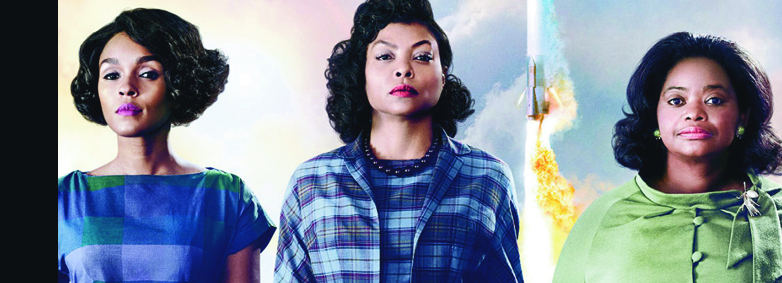
Taraji P. Henson, Janelle Monae and Octavia Spencer bring warmth, integrity and humour to their roles. The latter was up for the best supporting actress Oscar, but all of them are deserving of an award.

The real life characters they play may have been hidden from history, but they’re easily identifiable in the labs occupied by white men.

Rather than preach, the script uses humour to mock the stupidity of racism and sexism. And the science is pitched at a level so dummies like myself can easily understand it.

Stirring, sentimental and sweet, it’s a powerful and entertaining story of heroism in the face of prejudice.

@ChrisHunneysett


20th Century Women

Director: Mike Mills (2017) BBFC cert: 15

My heart sank when I read this drama described as a ‘poignant love letter to the people who raise us’. But it’s even more insuffrable and indulgent than I feared.

Set against the US energy crisis of 1979, this is a mawkishly nostalgic  semi-autobiographical riff on the teenage life of writer/director, Mike Mills.

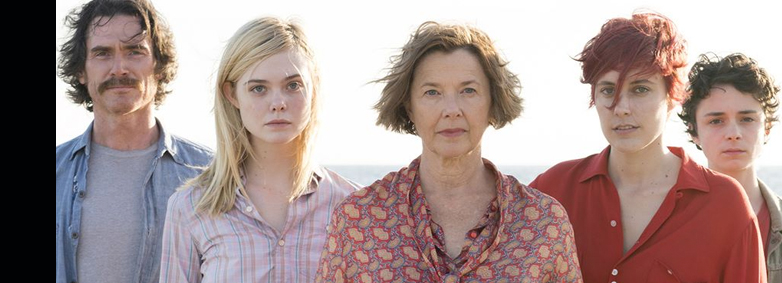
The charm of Annette Bening alone isn’t enough to enertain us. She stars as bohemian single mum, Dorothea, who lives in a dilapidated mansion.It is strewn with the director’s favourite records, books and clothes of the era.

She rents spare rooms to a hippie handyman and a forthright photographer, while inviting complete strangers to her frequent parties. Meanwhile her son Jamie has an unrequited crush on sulky girl next door, Julie.

Greta Gerwig, Elle Fanning, Lucas Jade Zumann and Billy Crudup play the unlikely cohabitees. Indulgent and under plotted, it feels like an actors workshop.

Everyone spends their time over analysing each other’s behaviour and fertility and feminism are much discussed. Little else happens and most of what does occur is dull.

@ChrisHunneysett


Gold

Director: Stephen Gaghan (2017) BBFC cert: 15


Hollywood golden boy Matthew McConaughey was clearly mining for an Oscar when he signed up for this knockabout adventure about a gold prospector.

Dressing down his leading man looks helped him nab a statuette in 2014 for Dallas Buyers Club, but the trick isn’t going to work this time.

As badly dressed Kenny Wells, he sports bad teeth, a balding pate, and a very proud paunch.

Kenny teams up with Michael, an enigmatic geologist, played by the dashing Edgar Ramirez.

Risking bankruptcy, malaria and a serious bromance to look for gold in Borneo, the pair strike it rich but back home they discover no one can be trusted.

Sadly the film can’t decide if it wants to be a jolly heist caper, an indictment of Wall Street greed or a celebration of the American pioneering spirit.

Gold has failed to find an audience in the US, so its prospects for turning a profit are low.

@ChrisHunneysett

Trainspotting 2

Director: Danny Boyle (2017) BBFC cert: 18
There’s a tremendous trepidation in returning to the Edinburgh underworld of Trainspotting twenty one years after the intoxicating original.
How could this long fermenting sequel compete with its predecessor, the defining film of the Britpop era? Trainspotting offered a startlingly stark vision of modern Scotland, a famously ferocious soundtrack and career highs from the actors.
Most sequels offer at best more of the same but bigger, or at worst, cheaper. But I shouldn’t have worried. Danny Boyle has far more ambition. Having allowed the material to seethe and stew, the director cooks up another tremendous prescription of prostitution, pharmaceutical abuse, and violence.

For all the chemistry consumed on screen, the most potent is the one created by the actors. Ewan McGregor, Ewen Bremner, Jonny Lee Miller and Robert Carlyle are older, heavier, sadder but not much wiser, as Renton, Spud, Sick Boy and Begbie.

All the actors bring a maturity to their work, giving their characters a beaten, weary melancholy beneath their desperate bravado. Noticeably missing from the advertising posters is Renton’s old squeeze, Diane. And her appearance in the film played by the gorgeous Kelly Macdonald, is sadly all too brief.
The most notable addition to the cast is Anjela Nedyalkova, playing a Bulgarian prostitute. The last thing this film needs is another extreme character, and the character of Veronika is continually underplayed. She is the calm centre of the dramatic storm.
After a long absence in Amsterdam, Renton returns home to Edinburgh to find his old friends. He has been living off the cash he robbed from his friends at the end of the first movie. Sick Boy has a grand scheme, Spud is still on smack and the psychopathic Begbie is out of prison and out for revenge on Renton.
Boyle uses Irving Welsh’s novel Porno as a starting point. Then filming in his typically high energy, visually dynamic and musically inspired style, Boyle creates an unapologetically abrasive tale of longevity, loyalty and friendship.
Despite topical references to social media and zero hours contracts,Trainspotting 2 understands it won’t capture the youthful zeitgeist the way Trainspotting did.
Instead it drowns in large shots of regret and guilt at their wasted lives. There is a a great deal of nostalgia also, though thankfully not for their twenties, but for their innocent childhoods and unfulfilled promise.
The sharp and funny script mixes bodily fluids with bile filled dialogue. And it chooses to honour the characters by offering sympathy as they disgrace themselves.
This richer and bleaker film speaks as clearly of the desperate disappointment of middle age as loudly as the first film did of youthful hedonism.
Take a deep breath. Choose cinema. Choose first class. Choose Trainspotting 2.

@ChrisHunneysett

The Edge Of Seventeen

Director: Kelly Fremon Craig (2016) BBFC cert: 15

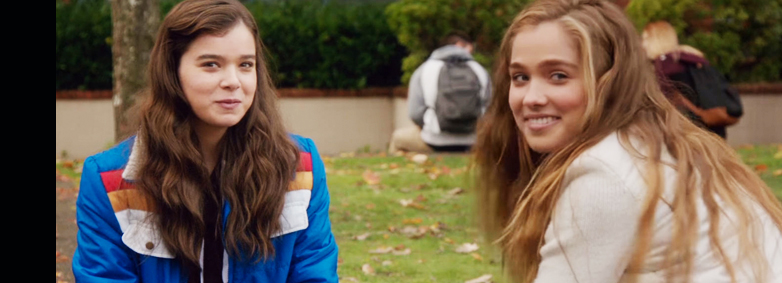
Hailee Steinfeld is best known for her Oscar nominated portrayal of a revenge seeking daughter in the Coen Brothers 2010 remake of True Grit. Now her sparky talent shines as a confused teen in this smart and funny essay on the high school experience.

Given to spirited monologues and threats of suicide, Nadine’s hard yards to adulthood involves anti-depressants, booze, vomit, rejection, inappropriate sexting and stealing a car. Her path to enlightenment involves realising she must first change herself, if she wants to improve her life.

An early death powers her family’s dynamic with everyone dealing with the fallout in their own way. But the tone is light and there’s an absence of malice in a script which has heart enough for everyone. Haley Lu Richardson, Kyra Sedgwick, Blake Jenner and especially Hayden Szeto offer charmingly fractious support.

A deliciously dead pan Woody Harrelson plays her history teacher. He bats her away Nadine’s crisis with patient dry humour. It’s these scenes which provide the films entertaining edge.

@ChrisHunneysett


Bridget Jones’ Baby

Director: Sharon Maguire (2016) BBFC cert: 15

Fans of the UK’s favourite singleton will cheer at this amiably entertaining and almost touching third entry in the romcom franchise.

Renee Zellweger returns as an older, wiser and sadder but still loveable Bridget. The Texan’s talent and charm give the uneven and scattershot script a depth it doesn’t deserve. Her assured underplaying is especially welcome in a restaurant scene of excruciating embarrassment.

Helen Fielding based her original Bridget Jones Diary newspaper column on Jane Austen’s Pride and Prejudice (pub. 1813). Books and films followed with great commercial success.

Having Fielding, Dan Mazar and Emma Thompson contributing conflicting styles of humour to the script causes unresolved tensions between scenes. Plus there is again a grating change of politics between those found in the source material and some of the broader gags.

It’s not one should expect Austen levels of wit from this generally light-hearted romp, but there is a huge departure from the author’s social concerns in order to land a few punchlines. Austen was highly critical of a society where the second class status of women made them financially reliant on men and forced them to seek a ‘good’ marriage. In Bridget’s world finding a rich man is one what does for sport, not necessity.

Fielding astutely includes her comic standbys of a Bridget film. There is a breathy voice over, an obsession with sex and alcohol, a grand resignation, swearing kids and eccentric OAPs. The famous diary has been replaced by a laptop. It’s all as cosy as one of Bridget’s famous Christmas jumpers, which also make an appearance.

Thompson won an Academy Award for Best Adapted Screenplay for her adaption of Austen’s Sense and Sensibility (1995. Novel pub. 1811). Presumably she wrote her scene stealing role as Bridget’s maternity doctor, the only consistently Austen-like female character on show.

The brief moment when the tone threatens to take a dark almost Dickensian turn also suggests Thompson’s fingers in charge of the keyboard. This plays far better than Fielding’s indulgent, ill conceived and seemingly Richard Curtis inspired cameos, Italian stereotypes and pratfalls. Having said that, Thompson isn’t afraid to lift a joke popstar Robbie Williams used on Graham Norton’s chat show, during an edition on which she also appeared.

Thompson’s deftly drawn and waspish character is hugely at odds with the presumably Mazar scripted sequence featuring a distressed and suddenly helpless Bridget. Our heroine relies for rescue on a pair of men for transport, only to find their way blocked by a parade of breast baring radical feminists.

At this point all pretence of Bridget as a modern, independent woman is abandoned for cheap gags and a Cinderella subtext. This moment also sees the flowering of another subtext as Bridget’s vagina is reduced to a conduit for a closeted bromance.

In the film’s defence there is a strong if ham-fisted appeal for inclusivity. There is also a decent Margaret Thatcher joke, though not at the Iron Lady’s expense.

Having been nominated for an Oscar for Best Adapted Screenplay for co-writing Baron Cohen’s Borat: Cultural Learnings of America for Make Benefit Glorious Nation of Kazakhstan (2006), it’s easy to speculate which elements Mazar contributed. More recently he wrote the Zac Efron/Robert DeNiro gross out comedy Dirty Grandpa (2016).

The film opens in a reassuringly familiar fashion and will immediately win old fans over. Although now a successful if accident prone TV news producer, Bridget celebrates her 43rd birthday alone, drinking chardonnay and listening to her signature tune ‘All By Myself’,  by Eric Carmen.

After a couple of one night stands, the occasional wanton sex goddess finds herself pregnant and unsure whom the father is. One possible parent is Jack Qwant, a billionaire mathematician and internet dating guru at a music festival. American TV star Patrick Dempsey is vanilla at best.

The other is her former lover, the now married but still uptight human rights lawyer, Mark Darcy. Bridget and he bump into each other at a memorial service for his erstwhile and wonderfully louche love rival, Daniel Cleaver.

The absence of Hugh Grant’s Cleaver is keenly felt. Colin Firth’s grumpy and lacklustre performance as Darcy suggests he is pining for Grant’s light comic touch to rub up against.

Jim Broadbent and Gemma Jones offer game support as Bridget’s parents alongside franchise favourites Celia Imrie, Shirley Henderson, James Callis and Sally Phillips.

It all ends in champagne as our heroine becomes the sort of person she once purported to despise. A late and predictable plot twist suggests a fourth film is not out of the question.

@ChrisHunneysett


Cafe Society

Director: Woody Allen (2016) BBFC cert: 12A

In his latest comedy drama, writer/director Woody Allen serves up his hallmark witty lines and jazz soundtrack with a sumptuous 1930’s glamour.

Flitting between LA and the Big Apple, the plot turns on a love letter written by legendary Hollywood lover, Rudolph Valentino.

A multitude of deftly sketched characters breeze through a revolving door of family dinners, weekend brunches, pool parties and nightclub cocktails.

Between the name dropping, back stabbing and infidelity, several murders occur and there’s an entertaining encounter with a prostitute.

Kristen Stewart stars as Veronica, a down to earth secretary involved in a love triangle with her boss and his young gopher. Steve Carell plays Phil, a powerful Hollywood agent while Jesse Eisenberg is his neurotic New York nephew, Bobby.

The latter essays the role Allen would once have played himself. Wisely the veteran filmmaker remains behind the camera and engineers a nice turn of mood from breezy romance to poignant longing.

Cafe Society is a pleasant place to while away a quiet afternoon but it’s extreme familiarity may not encourage you to return in a hurry.

@ChrisHunneysett