Jackie

Director: Pablo Larrain (2017) BBFC cert: 15

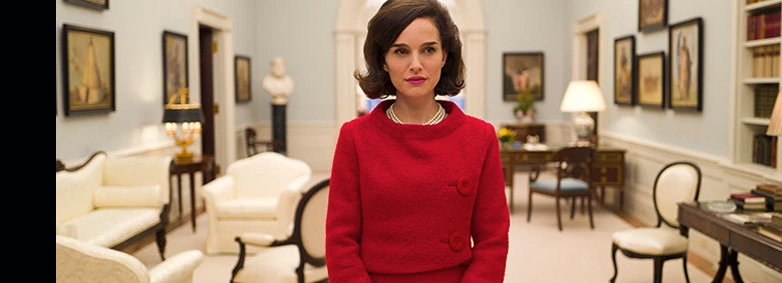
The grave of US president Kennedy is raked over once again in this well observed portrait of his widow, Jackie.

Natalie Portman brilliantly fleshes out the  First Lady’s steely and shrewd ambition, presenting her as a chain smoking, perfectly poised and prickly coquette.

In the fear and chaos in the aftermath of JFK’s assassination in November 1963, everyone around her is jockeying for power.

Having lost her husband, house, status and income, Jackie must act quickly to secure her husbands – and her own – legacy.

She conducts an one to one interview with a journalist, played with an out of his depth curiosity by Billy Crudup.

Jackie claims the meeting is her attempt to put the record straight, but it’s really to ensure her version of the truth is the one which will last.

The script is scathing about the importance of stage craft, celebrity and media control in sustaining public power. The shooting is astutely and sensitively  handled, we feel Jackie’s horror even as she becomes the most famous bystander in history.

A mournful, unsettling study, it’s as cold, calculating, complex and compelling as its subject.

@ChrisHunneysett

Snowden

Director: Oliver Stone (2016) BBFC cert: 15

Oliver Stone’s ham-fisted biopic of a CIA whistleblower is a sprawling and disjointed essay on espionage. The veteran director explores the conflict between individual liberty and state control by dramatising the life of Edward Snowden, portrayed as a patriot who becomes a dissident martyr to the cause of freedom.

Joseph Gordon-Levitt has never been more anodyne than as the CIA employee who became global news when he revealed thousands of classified security documents to the world.

The computer programmer is shocked when he discovers the US spy agency regularly ignores the law and spies on anyone they choose to. It’s difficult to muster sympathy for him. What did he imagine the CIA does all day?

Even so, he’s not totally outraged until his politically liberal girlfriend becomes a target for surveillance by his employer. Shailene Woodley is wasted as Lindsay, and seems chosen as much for her ability to pole dance as for her acting talent. She’s represented as a radicalising influence on Snowden, unfairly shifting the blame for his act of treason from him to her.

Tom Wilkinson, Rhys Ifans and Nicolas Cage offer flamboyant energy, trying to out do each other and making up for the lead’s lacklustre presence. Meanwhile the script is thinly stretched over 10 years and a lot of ground, taking in Japan, Hawaii, Hong Kong, Switzerland and Russia.

Although visually restrained by his own standards, Stone enthusiastically employs a confusion of camera angles, colour filters and a fractured narrative. None of these tricks succeed in making a series of hotel room conversations interesting. There is a lot of staring at computer screens.

Stone is full of righteous angry at the treatment Snowden receives, but he fails to justify the actions of a very flaky individual.

@ChrisHunneysett

Sully

Director: (2016) BBFC cert: 12A

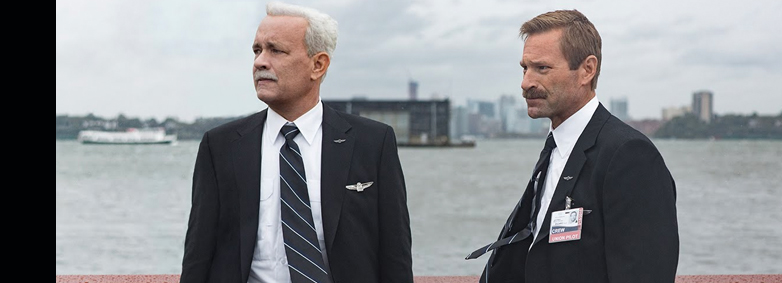
Tom Hanks plays a pilot in a courtroom tailspin in this arresting real life drama. The two time oscar winner is cannily cast as Captain ‘Sully’ Sullenberger who astonishingly landed his passenger jet on New York’s Hudson river.

On January 15th 2009, Sully’s inspired flying saved all 155 souls on board. It’s immediately dubbed the Miracle on the Hudson by a media who can’t get enough of the self effacing former US Navy pilot.

Hank’s innate likability and dependable screen presence acts as a shorthand for everyday decency, honesty and courage. There’s an enjoyable chemistry between Sully and his co-pilot Jeff Skiles. Aaron Eckhart competes in the cockpit to sport the most luxurious moustache.

Following their tremendous piece of aviation skill, the pair are forced to appear on chat shows and are uncomfortable at becoming instant celebrities.

Under Clint Eastwood’s iron directorial grip, the story of heroism is spun into a battle between the individual and a conspiracy of big business and government. The veteran director clearly sides with fly by the seat of your pants intuition against stifling procedure and rules.

The airline’s insurers are unhappy and encourage know-nothing bureaucrats to find a scapegoat. During the investigation into the incident, computer simulations suggest Sully could have flown to a nearby airport to land safely. Facing the loss of their careers, pensions and reputations, the pilots must fight to save themselves.

Airplanes crashing in New York have a recent historical resonance. Rather than shy away from the horror of 9/11, the film embraces it and uses the terrifying imagery of a single crashing plane to express the collective paranoid nightmares of the US.

This is tremendous filmmaking and it’s worth pausing to consider how mass urban destruction was used unthinkingly in Zack Snyder’s Man Of Steel (2013). That film is nearly twice as long but has less than half the brains. Its extended scenes of CGI carnage failed to entertain, never mind pass comment of the nation’s psyche.

It’s at this point Sully resonates with Eastwood’s previous film, American Sniper (2015). The pair are are very much a companion piece for each other. This is a another celebration of the pioneer spirit and can-do blue collar heroism, a tribute to the emergency services, of ordinary Americans guys such as ferrymen and cops doing their jobs with selfless bravery.

Considering we know the outcome of the forced water landing – not a crash – the action is surprisingly tense and is shown from the viewpoints of individuals on board and on shore. The accomplished CGI blends seamlessly with the New York skyline, the plane is a  fragile tin can bobbing on the majestic sweep of the vast Hudson river.

The film flies past in a quick 90 minutes with Eastwood directing with his typical no frills style. But far from flying economy, this is first class storytelling all the way.

@ChrisHunneysett


A United Kingdom

Director: Amma Asante (2016) BBFC cert: 12A

The sincerity of this solid historical drama is undermined by the overly flattering portrayal of its subjects, the real life mixed race rulers of Beuchanaland, Seretse and Ruth Khama.

As played by Brit actors David Oyelowo and Rosamund Pike, they are paragons of quiet dignity and determination. Oyelowo is impressively impassioned as the law student turned politician who believes in equality, inclusion and unity. However, with Pike’s accent as well cut as her cheekbones, the supposedly middle class Ruth frequently comes across as far more regal than her royal husband.

As they fight to bring independence to what is today Botswana, the devoted couple face the considerable forces of colonialism, exploitation, prejudice, propaganda and ridiculous ceremonial pomp. Together they battle the Empire, their own citizens, his disapproving family and piratical American mining corporations.

Racially segregated in practice but not in law, the then British protectorate of Bechuanaland was one of the one of worlds poorest countries. It suffered malaria, malnutrition, drought and poverty.

The Khama’s marriage is considered by the Empire to be inflammatory at a time when neighbouring South Africa is instigating apartheid. And stability is South Africa is paramount to the Empire, the UK’s gold supplies are dependent on it.

Styled the black king and white queen by the British press, the Khamas are not prepared to be pawns in the Empire’s game of global politics. Representing the Empire is Jack Davenport‘s wonderfully oily Sir Alistair Canning. Jack Lowden appears as Tony Benn MP. True to form, the self-styled conscience of the parliamentary Labour party spends his time battling his own side.

A companion piece to her period piece Belle (2014), Asante fashions her material with deft confidence and produces an engaging and handsome work. The opening scene is a joy of character and thematic economy. We witness Seretse taking part in a university boxing match. He is shown to be a courageous but naive fighter who is defeated at the hands of treacherous former public school boys.

London is believably stuffy and smog-filled, contrasting well with the bright open and faint optimism of Bechuanaland. There is a smooth dexterity in the handling of scenes which alternate between the intimate and the epic.

However the story struggles against the inertia of reality. The script is stretched having to cover a distance of thousands of miles and a time scale measured in years. Nor does it help having the central duo spend long periods on different continents.

The scant awareness of this story in the west lends the film a fresh appeal. It’s handsomely crafted and well played. It’s an overwhelmingly positive portrayal of an African nation and a celebration of democracy. All of which is welcome. But as a drama I wished it had more grit.

@ChrisHunneysett

Kate Plays Christine

Director: Ana Ularu (2016) BBFC cert: 15

Christine Chubbuck was a news reporter who gained infamy in 1974 when she shot herself on national television.

This indulgent and uninformative documentary follows actress Kate Lyn Sheil preparing to play the role of Christine in a forthcoming movie, a production we learn little about.

Feeling more of a showreel for future work than a fully fleshed out film, we see a great deal of Kate, particularly on her trips to the salon and the pool.

A product of the famous Lee Strasburg acting school, she embraces the method in preparation for her role. She accumulating wigs, hats, clothes and a tan, as well as interviewing Christine’s former colleagues, local journalists and an historian.

Sadly Christine remains an elusive figure. Her ghost is said to haunt the old TV studio and her name is a ghoulish byword for unexplained technical malfunctions.

Network, the 1976 classic movie was based on Christine’s suicide and a dramatisation of her death hits cinemas soon. Starring the brilliant Brit actress Rebecca Hall, I can only hope it’s more substantial than this.

@ChrisHunneysett


The Beatles: 8 Days A Week

Director: Ron Howard (2016) BBFC cert: 12A

This rock and roll documentary examines how the touring years of the Fab Four affected their musical output and consequently the cultural landscape of the world.

It’s a triumph of research and editing. Though hugely enjoyable even for a casual fan such as myself, there isn’t much new and the genius you can hear has been around for over fifty years.

Clearly a passion project for director Ron Howard, he mines exhaustively from a wealth of archive material. This allows the band to speak for themselves with their trademark goofy charm and sharp wit.

Journalists from the time contribute their memories and various famous people pop up to declare how much the band meant to their youth, such as an entertaining Sigourney Weaver.

We follow their meteoric rise from the cramped belly of Liverpool’s Cavern Club to become the first ever band to conduct a stadium tour of the US.

Despite unparalleled period of chart success, an exploitative recording contract encourages the ambitious band to hit the road to make some real money.

Due to the boys unprecedented popularity, US authorities were worried about fans’ safety and insisted the group play giant stadiums, leading to their selling out the 56,000 seater Shea Stadium in Chicago.

The bands innate decency and fearless naivety results in their successfully challenging the segregation of audiences in the US south. They also deal with bomb threats, riots and hordes of screaming teenage fans wherever they go.

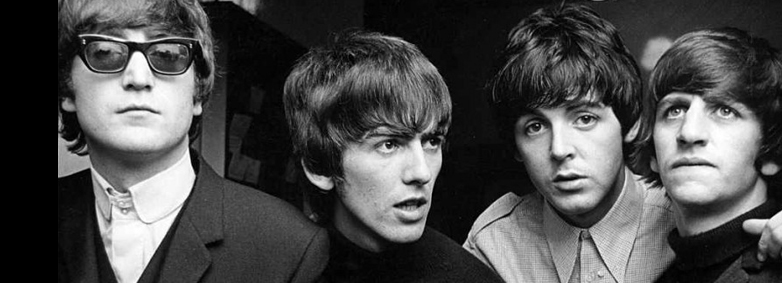
Decisions are made democratically, albeit it’s a democracy where John Lennon is the first among equals. Though we’re spared the creative differences which were to tear the group apart, the on-stage placing of George Harrison between Lennon and Paul McCartney suggests a temporary buffer to the schism to come. The much maligned Ringo demonstrates his almost violent musical contribution to their success.

We see how crucifying schedule of recording and performing contributes to their collective decision to quit touring in August 1966 to focus on recording. A superb montage to A Day In The Life shows how they develop physically, emotionally and artistically.

After a three year hiatus their last ever gig was performed unannounced from the roof of their Savile Row Apple office. This places it firmly in context and it becomes an act of spiritual and creative catharsis.

@ChrisHunneysett

Ben-Hur (2016)

Director: Timur Bekmambetov (2016) BBFC cert: 12A

A biblical bromance goes bad in this fourth big screen version of the epic tale set in Jesus-era Jerusalem.

Jack Huston and Toby Kebbell give career worst performances as the lifelong friends Ben and Messala, a Jewish prince and Roman officer.

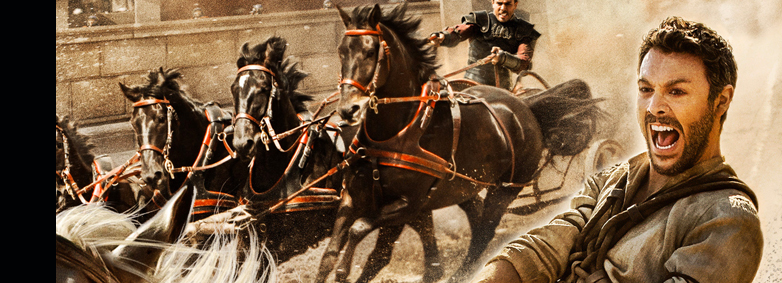
When Ben is falsely accused of treachery, Messala arrests his family and sends his buddy into slavery. Ben’s quest for revenge involves a sea battle, a chariot race and a chance meeting with a luxuriously dreadlocked Morgan Freeman.

As the owner of a racing team, his character performs the same function as Oliver Reed did in Ridley Scott’s Gladiator (2000). Occasionally we hear echoes of Hans Zimmer’s epic score from that film as well.

Filmed in unrelenting unsteadycam, this feels like a TV mini series chopped down to cinema length when a buyer couldn’t be found, and a quick theatrical release considered an appropriate method of recouping the investment.

Contempt for the audience is a regular motif. The heavy fist of Roman oppression would seem a doddle compared to suffering the base level direction, writing and CGI on show here.

Assuming the grace of a one wheeled chariot, the film rattles through episodes of leprosy, arranged marriage, a stoning and crucifixion. Much needed momentum is lost whenever anyone stops to speak or think.

The 1959 version starring Charlton Heston became the first and only the third film to win eleven Oscars. At half the length, this film can only point to brevity as the only possible are of improvement.

Hunky carpenter Jesus keeps popping up to offer his message of forgiveness. But it’s hard to believe anyone involved in this shoddy level of craftsmanship is deserving of any.

@ChrisHunneysett

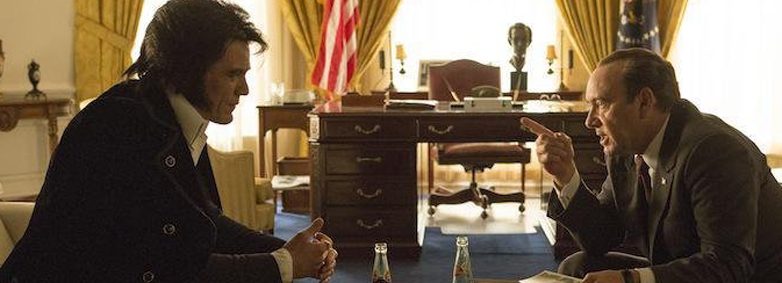
Elvis & Nixon

Director: Liza Johnson (2016)

Elvis Presley enters the building in this rocking good dramatisation of the day he dropped by the White House to visit president Nixon.

They are played with competitive brilliance by Michael Shannon and Kevin Spacey.

These global heads of music and politics met on December 21 1970. This is in the wake of the optimism of the luna landing and before the crucifixion of the American psyche caused by fall of Saigon.

Brooding in his Graceland mansion and disgusted by the state of the world, Elvis flies to Washington DC. Guards are bemused when he rocks up to the White House and asks to see the President.

Nixon is persuaded a joint photo will help him capture the youth vote. Elvis wants to become a Federal Agent At Large, in order to infiltrate the underworld and fight crime.

A smart script milks the meeting for humour and a comparison of their homes flags up the similarities between the isolated, paranoid and self made pair.

They bond over a love for their daughters and share fears for America’s future in the face of a youth culture neither understand.

Their defining relationships are with flunkies who sacrifice their own lives to serve. Alex Pettyfer and Colin Hanks provide very effective support as Elvis acolyte Jerry Schilling and White House aide Egil Krogh.

The emotional core of the film lies in the gap between the differing attitudes of these characters to their bosses.

With hunched shoulders and wrists flashing like a snakes tongue, Kevin Spacey captures the voice and mannerisms of Tricky Dicky. A broad performance rather than deep but we enjoy it almost as much as the actor does.

Nixon has been essayed several times on screen. In Frost/Nixon (2008) in a best supporting Oscar winning turn by  Frank Langella. Anthony Hopkins played him in Oliver Stone’s Nixon (1995) and Dan Hedaya was a Nixon surrogate in Dick (1999). My personal favourite Nixon is James Le Gros in surf and bank robbing thriller Point Break (1991).

In a film career of increasingly questionable quality Elvis starred in 31 movies. Viva Las Vegas (1964) was his last excellent film and it’s notable it was released the same year as The Beatles A Hard Day’s Night (1964), the band who pushed Elvis aside as they imported a new brand of music to the US.

Kurt Russell was enjoyable in TV movie Elvis (1979) and Val Kilmer was a charismatic gold lame-clad spiritual guide in the Tarantino scripted True Romance (1993).

The brave decision not to feature any Elvis songs in Elvis & Nixon prevents us from being distracted by miming or less than perfect singing.

Shannon looks even less like Elvis than I do, but his astute and captivating performance sidesteps caricature to give us the man and the myth.

Still capable of causing hysteria in secretaries and receptionists wherever he goes, Elvis is thoughtful and proudly polite, employing his charm and celebrity status to open doors.

Deadly serious in his intentions and brilliant at relating to people, he also seems a couple of places removed from our everyday reality.

This is an existential Elvis struggling with the weight of his own legacy, gold medallions and sunglasses. One who recognises the gap between the lonesome rockabilly and the global superstar and is calculating enough to use the latter to achieve the objectives of the former.

The meeting in the Oval Office is all too brief and being a consummate performer, the king keeps us wanting more.

@ChrisHunneysett

I Saw The Light

Director: Marc Abraham (2016)

This befuddled biopic sheds little light on the life of country music maestro Hank Williams.

It begins with a spine tingling rendition of his classic ‘Cold Cold Heart’, but it’s sadly all down hill from there.

Though the star of TV’s The Night Manager Tom Hiddleston sings his heart out, he chooses to hide his looks and charm under a cowboy hat. He does a decent of copy of Williams’ agitated crab stage gait.

By the time Williams died in 1953 at the tragically young age of 29, he had became one of the most influential singer songwriters of his time.

But you wouldn’t know that from the episodic and jumbled narrative given to us here.

We first meet Hank when he’s already enjoying a degree of success with his band and a regular slot on local radio. He has ambitions to appear on The Grand Ole Opry, the number one TV destination for country singers.

An impetuous, tempestuous, immoral, feckless,unreliable husband father and artist, the narrative is a familiar rock biography checklist of an alcohol fuelled career slide as he loses gigs, wives and friends.

But it’s presented full of leaps, detours and evasions, offering random snapshots of his life instead of a coherent story.

We’re spoon fed a brief resume of his success at the end, but it’s provided without context and leaves us with no greater understanding of his importance to country music or wider cultural impact or degree of success.

The classic songs Williams wrote such as ‘Your Cheatin’ Heart’ are short changed.

And so are the women. They’re presented as grasping and fertile while Hank takes no responsibility for his own behaviour.

Elizabeth Olsen is a determined presence as his wife Audrey, but is portrayed as a humourless self serving money grabber.

Except for Hiddleston the performers don’t seem to be enjoying themselves, and I didn’t either.