The Hobbit: The Desolation of Smaug

Director: Peter jackson (2013)

This second part of The Hobbit trilogy is a brilliant combination of solid gold action and spellbinding fun.

It looks glorious – from the magnificent and enormous mountain kingdom to the tiniest gold coin. The furnaces and forges are massive, built on a Herculean scale worthy of my native Teesside. The music is thunderously epic, scenery stunning and the action fantastic.

On top of all this there are dark and scary elements. Paranoia, corruption and madness are never far from the surface in the script.

There are big changes to Tolkien’s book in the confrontation between Bilbo and Smaug, plus there is an entirely new character called Tauriel (Evangeline Lilly).

She’s a kick-ass elven warrior who supplies some welcome female warmth among the bushy-browed band of brothers though her story arc may be an invention too far Jackson.

Underpinning this amazing adventure are the captivating characters of Gandalf the wizard, Bilbo the hobbit and dwarf chief Thorin, portrayed with charm and talent by Ian McKellen, Martin Freeman and Richard Armitage.

The horde of squabbling dwarves are played by the same actors as in the previous film and Orlando Bloom returns as the elvish prince Legolas.

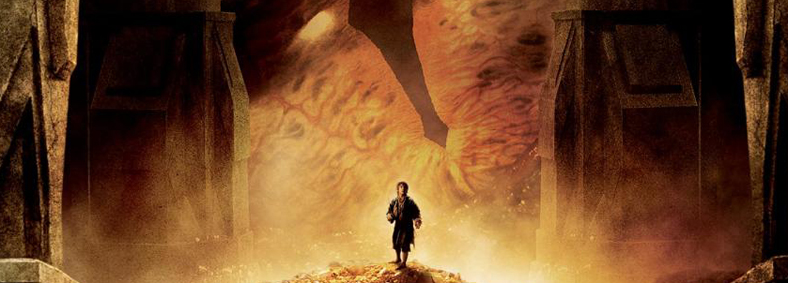
Gandalf goes off to investigate the mysterious Necromancer, meanwhile Thorin continues to lead his dwarves on their quest to rightfully reclaim their Lonely Mountain kingdom from Smaug the dragon.

The superbly animated fire-breathing monster, who rests on a hill of gold, is voiced with chilling reptilian menace by Freeman’s Sherlock co-star Benedict Cumberbatch.

In one of 2013’s best action sequences the heroes shoot down a river in barrels while being chased by both elves and orcs.

Bilbo and the dozen dwarves are attacked by giant spiders, imprisoned by elves and captured by men yet the ferociously paced Hobbit is still packed with humour.

They use swords, arrows, knives and axes to fend off orcs, wolves and giant bears while lurking at the end of their quest, a ferocious fire-breathing dragon.

With much enthusiastic slaying, smiting and beheading, our heroes, ride, run and fight their way through streets, forest and caverns, from the diseased and dangerous Mirkwood forest to the ramshackle Laketown and into The Lonely Mountain itself where it ends in a flash – of gold and fire.

R.I.P.D.

Director: Robert Schwentke (2013)

This misfiring celestial cop caper should be locked up for a long time – for crimes against cinema.

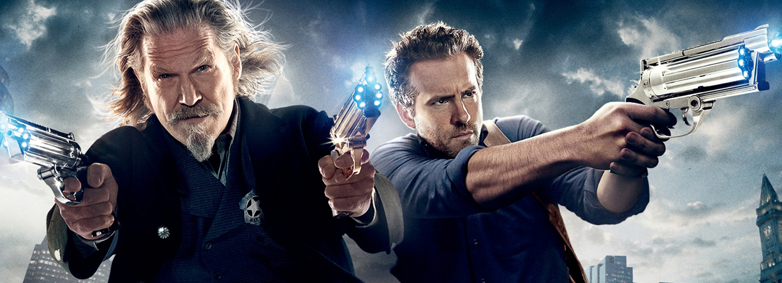
Corrupt cop Nick Walker (Ryan Reynolds) is shot dead by a colleague over some ill-gotten gold.

Halfway to the afterlife he is offered redemption if he joins the RIPD (Rest In Peace Department) – a supernatural police force tasked with ridding Earth of “deados” – spirits hiding there hoping to evade judgment.

Walker is coerced into a partnership with Wild West sheriff Roy Pulsipher (Jeff Bridges), forming a demonically dull duo who share no tangible chemistry.

In many ways Reynolds is perfectly cast as a spook as it’s difficult to register his presence – while Bridges indulges himself and provides a pantomime performance.

Being dead and therefore indestructible adds lack of tension to the film’s extensive charge sheet – which includes ropey special effects, excessive use of formulaic scriptwriting and failing to provide wit, logic or excitement.

Action scenes are directed in a video-game style and the voice-over and flashbacks at the beginning smack of desperate editing to add some energy to the lacklustre and limp proceedings.

To disguise themselves from living loved ones (such as Walker’s wife) the pair appear to everyone as an elderly Chinese man and a glamorous blonde woman.

The script fails to do anything interesting with this idea and then forgets about it whenever it’s inconvenient.

Despite ascension imagery and allusions to paradise and the referencing of the staff of Jacob: God, the devil, heaven and hell are conspicuously not mentioned – presumably to avoid offending any religious types who may be watching. But there’s more chance of your sense of humour being offended by the paucity of fun on offer.

The pair pursue Walker’s killer and former partner Bobby Hayes (Kevin Bacon) and uncover a deado plot to take over the world.

Bacon seems to being enjoying himself and Mary-Louise Parker is nicely spikey presence. There’s occasionally some interesting imagery but even that looks purloined from A Life Less Ordinary or The Last Action Hero.

The detectives are suspended from the case after a deado escapes due to their incompetence.

With only 24 hours before hell literally breaks loose, the pair predictably go rogue and set about saving the world.

But they can’t also save this action comedy which is dead behind the eyes.

☆☆☆☆

After Earth

Director: M. Night Shyamalan (2013)

Young Jaden Smith takes top billing over his megastar dad Will in this handsome and old school sci-fi adventure.

The pair are travelling on a space ship across the cosmos 1,000 years after Earth has been abandoned because of pollution.

Will and Jaden play father and son Prime Commander Cypher Raige and Kitai Raige – who are the only survivors after they crash on a quarantined world.

Warrior Cypher is injured and Kitai must travel alone to recover the signalling device from the other half of the wrecked craft, which lies nearly 100 miles away.

Kitai sets off with limited oxygen supplies, his dad’s nifty electric sword and his own smart survival suit, which changes colour to indicate danger.

Because Cypher has a broken leg, Will spends most of the film confined to a chair barking radio orders to his son. Kitai is headstrong but brave as he encounters baboons, snakes, leeches, giant eagles, tigers and a large, angry, alien beastie.

For the most part the film is an exciting adventure story of a young man striving to grow up and be the measure of his father.

Some of the CGI creatures are not as convincing or as impressive as the beautifully presented cities and spacecraft.

It is an interesting experiment to cast the two Smiths and then ask both of them not to make jokes or attempt to be funny.

Jaden strains every sinew of his acting ability to carry the film while Will keeps his charm and sense of humour mostly buried beneath a stern exterior.

☆☆

Love Is All You Need

Director: Susanne Bier (2013)

Old-school charmer and former James Bond Pierce Brosnan has never been better than in this sweet and very funny romcom.

Embracing his age rather than denying it – the star will be 60 next month – he is matched for talent by Danish beauty Trine Dyrholm, a gorgeous 40-year-old.

Brosnan plays Philip, an emotionally closed businessman who hasn’t recovered from the death of his wife and spends his time burying himself in his work. Dyrholm is Ida, a hairdresser in cancer remission who has found out her husband Leif (Kim Bodnia) cheating on her.

Philip and Ida meet for the first time en route to a wedding in Italy. The bride is her daughter and the groom is Philip’s son, the soon-to-be -newly weds  indulging in an absurd conclusion to a whirlwind holiday romance.

As the film skips through the orange groves of Italy’s Amalfi coast, there is an abundance of hospitality with the alcohol consumption rising as the big day nears.

This is a comedy where the humour springs from character and there is plenty of character here. With both families being a mixed bag of nuts. As dalliances abound in the sun-kissed villa, the potential for a happy ending to the impending nuptials seem to move further and further put of reach.

The supporting cast have a wild time leaving us gaping at their exploits – but never going so far as to become caricatures.

The plot may not be original but the performances are wonderful and the writing excellent. With his usual charm and intelligence, Brosnan brings to Philip a deep sense of a wounded spirit in need of healing.

A skilful performance by Dyrholm, who’s also an accomplished singer-songwriter as well as respected actress, brings out Ida’s grace, stoicism and honesty.

Comic, confident and touching, this lovely film has you desperately wishing for a happy ending.

Rush

Director: Ron Howard (2013)

Roaring into the cinema is this amazing racing tale fuelled by testosterone, booze and occasionally petrol.

It charts James Hunt and Nikki Lauda’s rivalry as they race from Formula 3 to challenging for the F1 world title in 1976.

Both men have similar backgrounds of wealth and privilege – Hunt (Chris Hemsworth) is a champagne-quaffing show-off who sees racing as an extension of his social life. While Lauda (Daniel Brühl) is a yoghurt-eating Austrian who is arrogant, risk-averse and highly focused. He races because it offers huge financial rewards.

Each describes the other as assholes but only Lauda seems sufficiently self-aware to realise the term applies to both men equally.

The film creates great tension by focusing on the friction between the two men which is then released by the starter’s flag. The thrilling races are expertly staged, especially as they show how close stewards and spectators were to these ‘bombs on wheels’.

Among the parties, insults and weddings, Lauda suffers a near fatal crash that leaves him scarred yet defiantly he continues to race to the film’s gripping climax.

In this macho mechanical world the ladies fare badly; being married is seen as being incompatible with success and single women are disposable sex toys.

Sadly Hemsworth’s acting is hamstrung by the demands of maintaining an English accent and is at his best behind the wheel. Brühl is more convincing and the supporting cast are all excellent.

The film offers an great insight into the world of 1970s Formula 1. Smoking is allowed in the pit-lanes, rain is a common enemy and the drivers have to battle mechanical failure, financial disaster, personal demons, media interference and the politics of the racing authorities.

It’s a well-crafted story of competitive courage that’s told with humour and energy.

About Time

Director: Richard Curtis (2013)

Having torpedoed his own ­reputation with his previous film, The Boat That Rocked, Richard Curtis does nothing to rescue his career with this twee time-­travelling comedy drama.

About Time is the writer and director’s indulgent tribute to fatherhood. Curtis is a long-time shameless magpie with other ­people’s ideas and here he’s content to ­complacently plunder his own ­material – recreating the wedding dress scene from Four Weddings And A Funeral.

Along with a wedding and a funeral, About Time has much familiar, unfunny, ‘comic’ ­profanity. Poor Domhnall Gleeson is apparently under instructions to ape Hugh Grant while a sickly-sweet voice-over is reheated from Love Actually and/or Notting Hill.

On top of all this, the actors have to wade through their scenes while gallons of syrupy music is poured over them.

In About Time, when Tim (Gleeson) turns 21 he is told by his father (Bill Nighy) that the men in the family have a secret ability to travel through time.

By standing in a dark room and clenching his fists Tim can appear anywhere in his own past.

With incredible opportunities now available to him, Tim decides to settle down to a dull life of work, babies and playing ping-pong with his Pa.

Tim is useless with women and exploiting time travel to seduce the American Mary (Rachel McAdams) is the only ­exciting thing he does with his gift. Curtis is typically so ­uninterested in her character that his ­habitual Yank-bashing is limited to giving her dodgy hair and dowdy clothes.

Tim’s friends and family are bumbling idiots or foul-mouthed miseries that irritate as much as the wobbly camera work.

One scene takes place entirely in a blacked-out restaurant which means we’re watching a blank screen and listening to a poorly scripted radio play – filming it in silence may have improved it.

The dominant image of this film is of a sex-starved man sitting alone in a dark cupboard and gripping his sweaty palms.

Curtis has threatened to stop ­directing after this latest offering and that would indeed be about time.

★☆☆☆☆