Criminal

Director: Ariel Vromen (2016)

What isn’t extraordinarily stupid in this brain dead thriller is astonishingly misjudged or alarming dull.

It’s a grey spongey mess of ageing stars, woeful dialogue, cheap looking stunts and preposterous plotting.

Gary Oldman and Tommy Lee Jones play CIA bosses who need to recover the memory of  of a murdered agent to locate a computer hacker who is selling nuclear codes to the Russians.

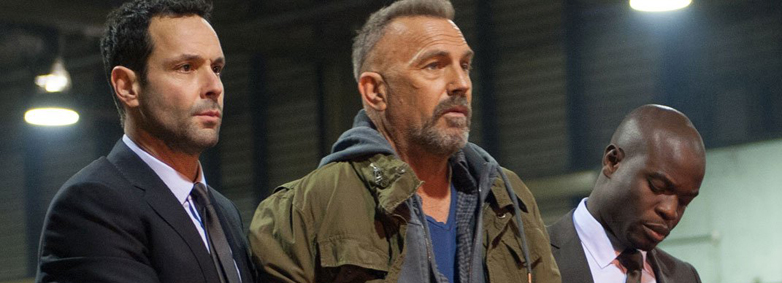
So using untested technology, they implant the dead agents memories into the mind of an emotionless killer, played by  grunting Kevin Costner.

Developing a conscience and language skills as a result of the operation, he goes off mission and pursues a creepy Patrick Swayze ‘Ghost’ style romance, giving a new meaning to the word spook.

Meanwhile Spanish anarchists try to muscle in on the nuclear action. There is expensive London location work and the screen is busy with military hardware.

It all goes Alan Partridge Alpha Papa (2013) as Costner evades a squad of police cars in an ambulance.

Various Brits bystanders are beaten up for comic effect. Plus there is a cut price reprise of Schwarzenegger in Terminator 2: Judgement Day (1991) when Costner steals a sandwich, a beanie hat and a van.

Fresh from playing Wonder Woman in Batman Vs Superman: Dawn of Justice (2016), Gal Gadot chats about her lingerie, parades on the beach and is tied to her bed.

Flush with success from his mega smash Deadpool (2016), Ryan Reynolds appears briefly at the beginning but is curiously underplayed on the advertising.

Antje Traue is an incompetent leather clad assassin called Elsa and while it’s great to see Alice Eve on screen, she needs to have serious words with her agent about this non-role.

The uncertain tone, scattergun editing and woeful storytelling hint at heavy handed interference in production. Costner’s performance seems out of control. There a host of executive producers credited.

Just when you start considering the value of your own lobotomy, TV host Piers Morgan appears as himself to convince you there’s always a more suitable candidate.


Deadpool

This unpleasant spandex spin-off is a desperate lunge to sex-up superheroes.

It energetically thrusts a minor member of the X-Men franchise centre stage, but can only muster some limp entertainment.

A weak and formulaic origin movie, the non-linear narrative and meta-commentary on the genre can’t disguise myriad failings, not least the unappealing lead.

Ryan Reynolds is perfectly cast as Wade Wilson, a proudly irritating special forces agent turned mercenary.

The script has to fall back on inflicting terminal cancer to create sympathy for him.

A sadistic scientist called Ajax deliberately disfigured Wade while attempting to turn him into a super-powered slave.

Last seen replacing Jason Statham in dull reboot The Transporter Refuelled (2015) reboot, rapper turned actor Ed Skrein over acts as the dull villain.

Believed to be dead, Wade adopts the identity of the gun toting masked man called Deadpool.

Despite two members of the X-men team attempting to recruit him, Deadpool insists he is not a hero.

His signature move is to pirouette into action, a deliberately camp affectation in keeping with the supposedly transgressive character.

Convinced of it’s own outrageous hilarity, Deadpool replaces the intense boredom of the recent Superman film with a juvenile tone, flippant sexism and some light bondage.

Then it adds child abuse jokes and frequent threats of rape.

Slow motion action scenes are mostly powered by mediocre CGI, blood splatting violence and explosions.

Deadpool is hunting Ajax for revenge, and to discover the secret to having his leading man looks restored.

Without them he feels unworthy of his fiancee, the beautiful hooker Vanessa, played by Morena Baccarin.

This presupposes Wade recognises he possesses no other feature such as charm, wit or intelligence to which Vanessa might be attracted. Perhaps the character is written with more self awareness than Reynolds allows him.

Baccarin and Reynolds make an attractive pair and the few moments of quality are in their initial sparky banter.

Described as the first pansexual superhero, Deadpool is actually monogamously heterosexual.

Sadly all that’s required of the talented Baccarin in the role is to look fabulous in fishnets, talk dirty and be kidnapped.

This is in keeping with the pervasive sexism. All female characters are either ugly and therefore suitable subjects for mockery, or they’re gorgeous strippers and prostitutes.

Deadpool rooms with a blind old black woman whose sexual unattractiveness is a butt of much humour, none of which is funny.

Grossly pandering to the worst impulses of it’s target audience demographic of twelve year boys, the BBFC should be congratulated for putting Deadpool out of their reach.

Kingsman: The Secret Service (2015) which off a £56 million budget globally grossed £282 million. The lesson learned is there is a lot of money to be made in arse jokes.

Among the slight attempts at deconstructing the gene, there is a weak joke regarding The Matrix (1999) and at one point Reynolds’ riffs on Ferris Bueller’s Day Off (1986).

Marvel comics supremo Stan Lee cameos as a DJ in a strip club.

Most of the film consists of two fights, one on a freeway flyover and the other on a crashed Helicarrier from an Avengers movie.

There are some laughs along the way to the lacklustre climax, a word guaranteed to have Deadpool sniggering.

Mississippi Grind

Director: Anna Boden, Ryan Fleck (2015)

A pair of gamblers chase a pot of gold at the end of a rainbow in this engaging bitter-sweet fable.

It’s flush with award worthy performances, an intelligent script and a tremendous soundtrack.

Ben Mendelsohn plays a real estate agent in hock to debt collectors. He spends his nights at spit and sawdust casinos.

Gerry’s luck changes for the better when he meets the charming Curtis at the tables.

Ryan Reynolds gives a career best performance as the charismatic storyteller with dreams of travelling to Machu Picchu in Peru.

Gerry is as untrustworthy and entertaining as a leprechaun. The first image we see is of an enormous rainbow which stretches across the screen.

Believing Curtis to be his lucky charm, Gerry throws the dice on a trip to New Orleans.

Together they plan to win enough money en route playing poker to buy their way into a high stakes game.

The Mississippi River leads the jokers into dangerous waters as they encounter whiskey, cardsharps and working girls.

Sienna Miller and Analeigh Tipton provide the possibility of redemption and soften what could be but never is a very macho experience.

Directors Anna Boden, Ryan Fleck co-wrote the script and Boden also edited. Cinematography is by Andrij Parekh and the film was well received and picked by at Sundance this year. (2015).

In a satisfying final hand we fear for the self-deceiving duo as reality threatens to deal the cards.

Woman In Gold

Director: Simon Curtis (2015)

A young lawyer and elderly woman team up to haggle over the ownership of a valuable piece of art in this dull plod of a true story.

Half courtroom drama, half Second World War thriller and all unremarkable, an uninformative script fails to inspire two mismatched leads.

Widowed US citizen Maria (Helen Mirren) is Austrian by birth and bossy, rude and talkative by nature. She spends a lot of screen-time staring into space and listening to music. She has come into documents suggesting a valuable painting of her aunt Adele may in fact belong to her.

Painted by famous artist Gustav Klimt and known as the ‘Woman In Gold’, it’s of such great importance it’s colloquially referred to Austria’s Mona Lisa, though it’s real name is ‘Portrait of Adele Bloch-Bauer I‘. As her aunt’s will specified it’s hanging on public display in the famous Viennese Belvedere Gallery.

Maria hires the inexperienced lawyer Randol Schoenberg (Ryan Reynolds). The grandson of a famous Viennese composer, Randol takes the case to further his career but after visiting the Holocaust Memorial it becomes a personal mission to secure for Maria the painting.

Together they scuttle off to Vienna to demand the paintings return from the gallery. She tries to shame the authorities into gifting her a painting worth over a hundred million dollars. Even to my inexpert legal mind it’s not a strategy likely to succeed.

Eventually Randol discovers a legal loophole and takes Maria’s claim to the US Supreme Court for permission to sue the Austrian State for the painting’s return.

In one scene a Ferris wheel is featured prominently in the Viennese background, prompting the mind to drift to this famous moment from cinema.

Randol’s argument rests on the exploitation of a technicality not sympathetic to the intention or spirit of her aunt’s original will. Although Maria has an emotional claim to the painting of her aunt, the legal ends seem to have been resolved correctly if not by the right means.

Sepia-toned flashbacks to Maria’s privileged childhood in Vienna shows us a little of a somewhat cold relationship with her aunt Adele (Antje Traue). This undermines her argument her legal case is underpinned by her love for her family.

We see far more coverage of her life as a young married woman under Nazi house arrest for being a Jew, allowing for leather-slapping SS guards to inject some menace into the film. They steal the family silver as well as the Holbein from the wall, her father’s Stradivarius cello and of course, the painting at the heart of the story.

Young Maria abandons her parents to the war and as she flees to the airport, is chased on foot and fights off armed Nazis. What a gal. I didn’t believe for a moment this is how she left Austria.

There’s too much disconnect between eras and the desperate tone of the war years clash with the gentle banter between Mirren and Reynolds.

Scenes in the Supreme Court which are played for laughs. Legal arguments are easily defeated in an uninteresting way and long lapses of time of 9, 6 and 4 months interrupt what little dramatic tension there is in court.

Whenever anyone is offered opportunity to display generosity of spirit, self-interested petulance is chosen instead.

Both leads are miscast and lack chemistry. Reynolds is static wooden pole Mirren gamely gambols about him, flirting with a mannered Austrian accent.

it’s always pleasant to see Katie Holmes on the big screen but in an inconsistently written role she’s relegated to being Randol’s stay-at-home wife. Tatiana Maslany as young Maria makes a convincing young Helen Mirren.

Poor Daniel Bruhl plays journalist Bertus Czernin. He pops up to handily explain Austrian bureaucracy and their funny ways. Peculiarly for a journalist he takes no notes, writes no stories and takes no payment, Astonishingly he’s the one buying the drinks. Mostly he serves the function of providing Reynolds someone to talk to.

We lean nothing of Klimt, his life, art or why his art is so vital to Austrian culture, relegating him to the second most famous Austrian artist in this story.

The Voices

Director: Marjane Satrapi (2015)

It’s claws versus paws in this macabre black comedy as the eternal conflict between good and evil is fought between cat and dog.

But as well as committing the cardinal sin of not being funny, there are clunking changes of tone, weak direction and too many scenes lack energy.

All of which is a shame as there are two great actresses, a decent idea and a laudable attempt to bring something different to the cinematic marketplace.

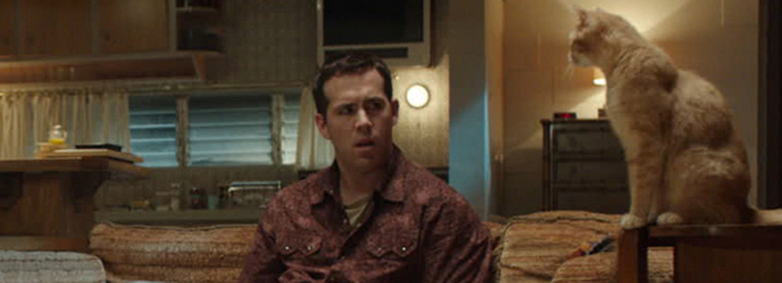
Pizza-loving Jerry (Ryan Reynolds) lives quietly with Bosco and Mr. Whiskers, his pet dog and cat. He works in a toilet factory, is in therapy and taking medication.

Based in the town of Milton, he is obsessed with angels and devils and happily points out Lucifer was both.

At home the foul-mouthed Mr Whiskers urges him to be bad, Bosco tells him to be good. Reynolds provides the animal voices, including a poorly advised Scottish accent for Mr Whiskers.

Discussions with his pets as to whether Jerry is a good person occupy far too much screen-time and deliver no laughs.

Jerry hangs out with the girls from accounts. He has a crush on Fiona (Gemma Arterton) and ignores the attentions of the clearly interested Lisa (Anna Kendrick). On a night out he kills a co-worker which leads to a spree.

The always engaging Arterton and Kendrick give proceedings an undeserving vitality, bringing glamour, charm and fine singing voices.

But Reynolds is such an unprepossessing leading man he barely registers. He plays sweet when dry would have been more effective. Anything would have been more effective. Maybe Adam Sandler and Paul Rudd were too expensive. Or busy.

The script can’t decide whether Gerry’s bad, mad or a victim. It absolves him of guilt by showing us his traumatic childhood.

There’s some nice production design by Udo Kramer, but the director loses control of her camera and the imagery becomes repetitive. The charitably minded will assume the choreographer was aiming for comic effect.

The film isn’t sufficiently trippy to be interesting, nor is it clever, fast or sharp enough to be funny. It’s a sad day when a Chinese Elvis impersonator can’t make me smile – but he’s just another glaring example of how The Voices mistakes wacky for funny.

R.I.P.D.

Director: Robert Schwentke (2013)

This misfiring celestial cop caper should be locked up for a long time – for crimes against cinema.

Corrupt cop Nick Walker (Ryan Reynolds) is shot dead by a colleague over some ill-gotten gold.

Halfway to the afterlife he is offered redemption if he joins the RIPD (Rest In Peace Department) – a supernatural police force tasked with ridding Earth of “deados” – spirits hiding there hoping to evade judgment.

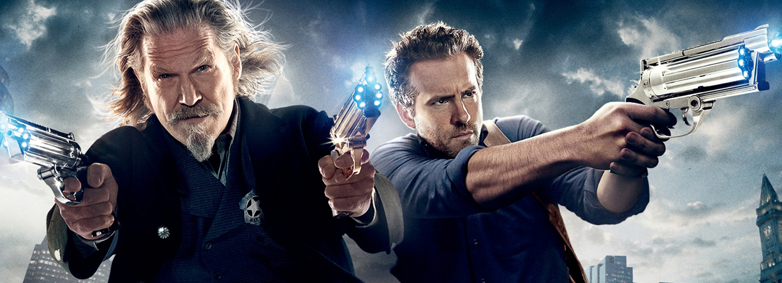
Walker is coerced into a partnership with Wild West sheriff Roy Pulsipher (Jeff Bridges), forming a demonically dull duo who share no tangible chemistry.

In many ways Reynolds is perfectly cast as a spook as it’s difficult to register his presence – while Bridges indulges himself and provides a pantomime performance.

Being dead and therefore indestructible adds lack of tension to the film’s extensive charge sheet – which includes ropey special effects, excessive use of formulaic scriptwriting and failing to provide wit, logic or excitement.

Action scenes are directed in a video-game style and the voice-over and flashbacks at the beginning smack of desperate editing to add some energy to the lacklustre and limp proceedings.

To disguise themselves from living loved ones (such as Walker’s wife) the pair appear to everyone as an elderly Chinese man and a glamorous blonde woman.

The script fails to do anything interesting with this idea and then forgets about it whenever it’s inconvenient.

Despite ascension imagery and allusions to paradise and the referencing of the staff of Jacob: God, the devil, heaven and hell are conspicuously not mentioned – presumably to avoid offending any religious types who may be watching. But there’s more chance of your sense of humour being offended by the paucity of fun on offer.

The pair pursue Walker’s killer and former partner Bobby Hayes (Kevin Bacon) and uncover a deado plot to take over the world.

Bacon seems to being enjoying himself and Mary-Louise Parker is nicely spikey presence. There’s occasionally some interesting imagery but even that looks purloined from A Life Less Ordinary or The Last Action Hero.

The detectives are suspended from the case after a deado escapes due to their incompetence.

With only 24 hours before hell literally breaks loose, the pair predictably go rogue and set about saving the world.

But they can’t also save this action comedy which is dead behind the eyes.

☆☆☆☆