Lucy

Director: Luc Besson (2014)

Chemically enhanced Scarlett Johansson goes into overdrive in this bonkers but brilliant bloody thriller.

The time-travelling, superhuman heroine tackles Chinese Triad gangs, French cops and dinosaurs in this knowingly daft sci-fi film.

Lucy (Johansson) is studying in Taiwan when she’s kidnapped by gangster Mr Jang (Min-sik Choi). He surgically inserts a bag of a wonder drug, CPH4, into her stomach so he can illicitly transport it to Europe.

But a henchman beats her up, the bag rips and Lucy absorbs a potentially fatal dose. Instead of killing her, the CPH4 unleashes her full brain power. Normally humans use only 10% but hers is rocketing.

Luckily Morgan Freeman (Professor Norman) is on hand to do what Freeman always does in such situations: spout sciency-sounding stuff to explain what’s going on.

Accelerated evolution gives Lucy access to secrets of the universe but also threatens to destroy her. As she develops super-agility, mind control and telekinesis, she’s becomes a deadly shot and goes on the rampage.

Director Luc Besson can’t see a corridor without having an actor sashay along it waving firearms – and he needs no excuse to follow Johansson’s famous curves.

With her cool detachment and deadpan delivery, the more powerful Lucy becomes the sexier she is. She joins forces with police to trace the other drugs mules.

When Jang’s heavily armed mob arrive in Paris for shoot-outs and a great car chase, Lucy begins to travel in time and space and it’s not just her mind that’s blown.

★★★★☆
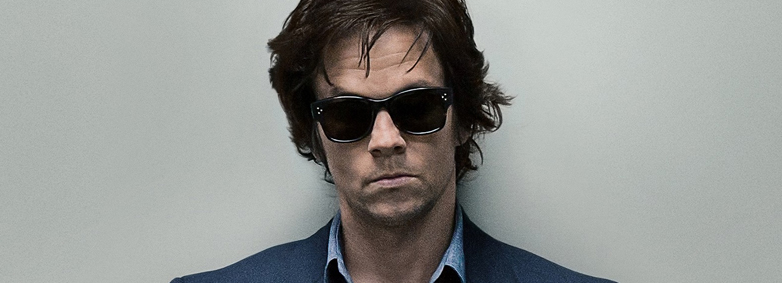
The Gambler

Director: Rupert Wyatt (2015)

Call the bluff on this glossy gambling movie that will leave you out of pocket and feeling cheated for watching.

Based on the superior 1974 film of the same name, the always watchable Mark Wahlberg plays to the manor born Jim Bennett, a masochistic, nihilistic and wildly unsympathetic university professor.

It’s a brave piece of casting which treats us to the novelty of former Funky Bunch frontman Wahlberg lecturing to University students on the merits of Shakespeare.

He’s a spoilt, whiny, attention-seeking brat with self-destructive tendencies who self-medicates his existential crisis by playing cards, and is not above developing a relationship Brie Larson’s genius young student.

Jim spends his nights gambling in illicit dens and his days teaching, leaving him too busy to put on a tie or brush his hair.

When not betting money he doesn’t have or antagonising gangsters for the empty thrill of it, Jim’s isolating himself from family and colleagues and generally feeling sorry for himself.

After a great deal of behaviour I wouldn’t allow from my four year old, Jim owes a quarter of a million dollars to various bad people and has seven days to pay it back. Or else.

Reduced to trying to hock his watch to stake another game, violence is repeatedly threatened for non-payment, and Jim wants to be hurt so badly its hard to feel sorry for him when he’s badly is.

Jessica Lange plays his tennis playing mother, and the elegant actress is particularly hard done by, but Jim probably thinks that’s her fault for enabling his addiction.

And in four brief appearances, the shaven-headed John Goodman raises the acting ante as a philosophising and kindly intentioned loan shark.

★★☆☆☆

A Most Violent Year

Director: J.C. Chandor (2015)

Visually and morally murky, this brooding New York crime thriller throws insubstantial punches from behind interesting shadows.

Shy on story this is a sombre exploration of the compromises necessary in perpetuating the myth of the American Dream.

In 1981 Oscar Isaac‘s immigrant self-made businessman, Abel, has put down a huge cash deposit to buy a derelict dockside property to expand his oil interests.

When David Oyelowo‘s District Attorney charges Abel for fraud and tax evasion, the bank refuse to loan Abel the money to complete his deal.

With seven days to raise the cash or lose everything he’s worked, Abel runs around the decaying, filthy and graffitied streets for meetings in back-rooms and barbershops.

Meanwhile his truckers and salespeople are being beaten up by rivals and his family are being threatened in their new home.

Jessica Chastain captivates as Abel’s beautiful and mob-connected wife, Anna, but she’s mostly there to spur him on and cook the books on his behalf.

Abel is naively unaware of his own inconsistencies with corruption and violence taking him by surprise, despite being mobbed up to the eyeballs and knowingly guilty as charged.

Everything is captured in a low key register: the lighting, the performances, the mood. It’s carefully calculated but struggles under its weighty self importance.

Brian De Palma’s gaudy masterpiece Scarface is deliberately referenced in Chastain’s icy style and the synthesised score, but this has none of the energy, bling, coke, violence or fun.

Only occasionally violent and taking place over a mere thirty three days, A Most Violent Year is a mis-named disappointment.

★★☆☆☆

Ex Machina

Director. Alex Garland (2015)

Sexy, sharp and stylish, this brilliant British sci-fi thriller explores man’s relationship to machines with verve, wit and polish.

Precision-tooled to perfection with sumptuously seductive design, it combines the brains of Blade Runner, the gloss of James Bond, and the sly satire of cult comic 2000AD.

This makes it an astonishingly assured directorial debut by Alex Garland, the novelist turned scriptwriter of Dredd, and 28 Days Later.

Domhnall Gleeson’s expert computer programmer, Caleb, wins an in-house company competition to spend a week with his boss, Oscar Isaac’s reclusive genius.

Nathan lives in an isolated underground home and research facility reached only by helicopter, where the only other occupant is Sonoya Mizuno’s beautiful but mute Japanese servant, Kyoko.

The engagingly geeky Gleeson is cunningly cast while the bearded Isaac is solicitous, funny and quietly menacing as the heavy-drinking megalomaniac Nathan.

Caleb is introduced to Alicia Vikander’s AVA, a semi-transparent chrome and plastic robot with the face and figure of a beautiful woman, designed for the movie by awesome concept artist Jock.

Under surveillance Caleb has to test Ava to establish whether she has achieved a state of artificial intelligence and therefore not a machine.

This would represent a scientific breakthrough of huge significance to Nathan and of great consequence to the world.

Though interrupted by mysterious power cuts, a rapport develops and Ava warns Caleb that Nathan can’t be trusted leading to tension between the men.

Garland provides cracking dialogue but crucially understands when to shut his characters up and let the images tell the story.

Unerringly paced and with an inventive soundscape and bold use of colour it’s very much in the mould of mentor Danny Boyle, at his best.

If Garland is the future of sci-fi then it’s in very safe hands. Unlike Caleb.

Love classic sci-fi? Check out my website HERE

Read my review of Disney’s fabulous 1954 20,000 Leagues Under the Sea, HERE