Godzilla

Director: Gareth Edwards (2013)

This handsome reboot of the Japanese sci-fi classic is monstrously poor, resurrecting the giant lizard with dazzling computer graphics but failing to create any excitement, tension or fun.

Characters are thin and lack humour, the dialogue is banal and the story needs focus. It lumbers from Japan to California creating plot-holes so deep they could hide a massive mutant reptile.

Nuclear physicist Joe Brody (Bryan Cranston) loses his wife in a mysterious explosion at a Japanese power plant. Fourteen years later and he has become a conspiracy theorist trying to establish what really happened.

When his estranged son, naval Lieutenant Ford (Aaron Taylor-Johnson), visits they are arrested investigating the quarantine zone where his wife died. Taylor-Johnson can be excellent but here he is a dead-eyed, muscle-bound charisma bypass.

They are taken to a secret base where scientists are keeping a huge radiation-eating insectoid called a Massive Unidentified Terrestrial Organism. It promptly buzzes off to the US to mate with another escaped Muto.

Scientist Dr Vivienne Graham (Sally Hawkins) has nothing to contribute except listen attentively to Dr Ichiro Serizawa (Ken Watanabe) bang on about the balance of nature. He displays a surprising amount of Godzilla background knowledge considering it’s the first time he or anyone else has ever encountered the beast.

Elizabeth Olsen plays Ford’s wife Elle who has very little to do. Director Edwards must shoulder the blame for his poorly written characters being absent-mindedly picked up, toyed with and forgotten about.

With no-one to empathise with we fail to care what’s happening on screen, regardless of the marvellous work of cinematographer Seamus McGarvey.

Meanwhile Godzilla appears and swims across the Pacific to fight the Mutos. The US navy manage to lose sight of him despite his size.

A dog is put in danger in a shameless attempt to generate tension. Then children are put in jeopardy in a school-bus on a bridge. I haven’t seen that happen since ooh, The Dark Knight Rises.

Military Intelligence decides to attack the radiation-eating monsters with a nuclear weapon. This is clearly stupid so Lieutenant Ford must parachute in to defuse the bomb, ending the film with a whimper not a bang.

The name Godzilla comes from the  Japanese word Gojira and is made of two words; Gorira, meaning gorilla and kujira meaning whale. So not so much a giant lizard. But it would probably have made for a more fun movie.

☆☆☆☆

Robot Overlords

Director: Jon Wright (2015)

In this determinedly old school sci-fi adventure, a British teenager rallies the resistance against giant alien robots.

It has an energetic and engaging cast and some nifty design but with a story which might just squeeze as a last minute filler into the pages of 2000AD – still the galaxy’s greatest comic – it feels and looks too much like an extended episode of Dr Who.

For three years alien invaders have locked up the Earth’s population in their own homes. They claim they will leave when they have finished studying the human race.

Incineration is the penalty for breaking the nightly curfew, it’s enforced by heavily-armoured robots who patrol the streets and the skies.

Electronic implants are used to identify the population and track their whereabouts.

When an accident leads to the discovery of how to disconnect his tagging device, teenager Sean (Callan McAuliffe) goes looking for his Dad who went missing in action fighting the initial invasion.

He’s accompanied more or less willingly by friends Nathan and Alexandra (James Tarpey and Ella Hunt).

Meanwhile his mother Kate (Gillian Anderson) is left to fight off the attentions of collaborator Robin Smythe (Ben Kingsley).

The robots are nicely designed in a Robocop Ed-209 kind of way which is definitely this year’s most popular model.

Nor can there be enough sci-fi films using WWII Spitfires in an airborne attack.

Anderson and Kingsley add a touch of acting gloss and there’s an undoubted effort to entertain – but charm and enthusiasm can only engage or interest for so long.

A couple of characters are pointedly seen reading an old copy of 2000AD.

Shotgun toting, bullet-headed cockney hard-man Wayne (Tamer Hassan) seems based on Invasion!’s Bill Savage. He even looks a little like Stanley Baker on whom the character was originally modelled.

I’ve read 2000AD since Prog 64 and would love to see more films adaptions of its characters but It’s possible the complexity and scale of the writing defeats Hollywood’s finest.

2012’s excellent Dredd was a vast improvement on Sylvester Stallone’s maligned 1995 effort.

Paul Verhoeven’s 1987 Robocop which comes closest to capturing the comic’s manic satirical spirit and this year’s Ex Machina shows how intelligent and entertaining sci-fi can be done.

Robot Overlords is as straightforward as it’s title, I just wished I enjoyed it more than I did.

Man Of Steel

Director: Zack Snyder (2013)

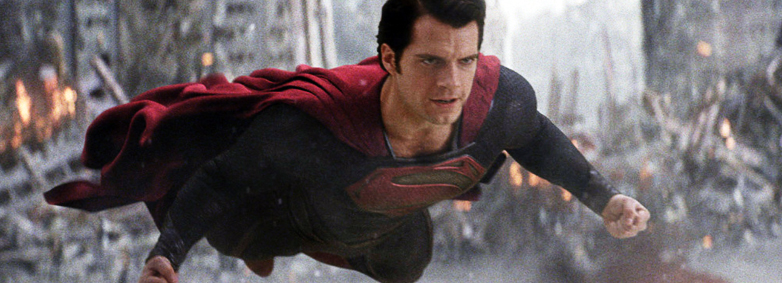
Brit actor Henry Cavill carries the weight of the world on his shoulders in this monumental rebooting of Superman.

The planet Krypton is in deadly peril so the baby Kal-El is jettisoned off to Earth for safety by his father Jor-El – Russell Crowe on top form.

An attempted coup by Krypton’s compellingly evil General Zod is defeated and he is banished to the Phantom Zone.

Zod, an elemental Michael Shannon, swears revenge on the son of Jor-El and when Krypton is destroyed he escapes into open space with his followers.

Kal-El is 33 and has developed super powers when Zod’s spaceship arrives to demand the US military hand him over – but only Lois Lane knows where he is.

The battles that follow are conducted in state-of-the-art CGI and there are some nifty flying sequences. All the costumes and space hardware are fabulously well designed, as is Krypton.

For all her no-nonsense journalist-on-a-mission attitude, Lois (Amy Adams) exists only to be rescued. The plot makes great leaps over logic to keep her involved.

Cavill is so ridiculously handsome and buff he could well be from another planet. But his Man of Steel character is somewhat flat here because of the absence of the traditional Clarke Kent alter ego.

It is not until the absolute end that the actor is allowed to demonstrate any humour, charm, or light-heartedness, which is a waste of his talent – and a lot of our time.

Superman saves more soldiers’ lives than civilian ones despite the military being stupidly belligerent and not trusting of him. Mind you, the civilian body count must be astronomical.

With the Man of Steel no longer wearing underpants outside his tights, everything is played with utter seriousness.

The tone stays in the narrow realm of the ominous and desperately solemn. Doom-laden declarations litter the dialogue, which is workaday, dull and occasionally silly with Adams’s Lois Lane having the worst of it.

A well acted and solid spectacle is bookended by two titanic battles. But taken as a whole, Man of Steel never escapes the heavy gravitational force of its own furrowed brow.

The Divergent Series: Insurgent

Director: Robert Schwentke (2015)

Welcome back to the future for the glossy second instalment of the dystopian action adventure quadrilogy.

Renegade heroine Tris returns to face a series of tests – but the biggest threat to success is herself.

Containing all the strengths and weaknesses of the first film, it balances handsome design and two great female performances with indifferent dialogue, silly stunts and a tiresome abundance of teenage posturing.

The decaying walled city is beautifully realised and accompanying uniforms, guns, trucks and technology are all heavily convincing.

Beginning where the last film ended, we’re quickly brought up to speed on the story before being thrust into the action.

Society is divided into five factions, each with it’s own role. Tris (Shailene Woodley) qualifies for more than one faction and therefore as a Divergent she is considered a threat to society.

Tris and her brother Caleb (Shailene Woodley and Ansel Elgort) are now outlaws. They’re hiding in the peaceful pastoral faction of Amity along with her boyfriend Tobias and friend Peter (Theo James and Miles Teller). It’s a creepy commune of niceness.

Guilt-ridden over her parent’s death, Tris suffers nightmares and scalps her hair in a self-harming act of penance. Her self-prescribed therapy for her anger is to take plenty of physical punishment through the film.

Back in the city, evil Erudite leader Jeanine (Kate Winslet) has obtained a box containing secrets that belonged to Tris’s mother.

In order to unlock it’s secrets, victims have black suspension cables plugged into them and are put into a dream-state. In this condition they have to pass five tests – one for each Faction.

We see their subconscious go maximum Inception with exploding digital buildings galore – and death in their dream means they die for real.

Realising only a Divergent will possess the qualities to open it, Jeanine sends sneering Dauntless commander Eric Coulter (Jai Courtney) to hunt down the renegades. She is convinced Tris is the best candidate and is determined to capture her.

His crack troops no know fear, no danger and no tactics – they can’t see a wall without abseiling down it and striking ferocious moonlit action poses. There’s lots of train-hopping action but despite a lot of fighting, there’s a general absence of blood or bruises.

Chased by Dauntless, the four split up. Peter turns traitor, Caleb goes home and Tris and Tobias plan to kill Jeanine.

En route they are captured by the Factionless – now a heavily armed rebel force lead by Tobias’s mother Evelyn (Naomi Watts). She asks them to join up. But when Jeanine implants her friends with remote controlled suicide devices, Tris has a difficult choice to make

Winslet wears a killer electric blue dress and Woodley aside has so much more presence than her co-stars. It’s a wonder she can’t crush the rebellion with a single exasperated sigh.

Woodley carries the film with a combination of physical strength and emotional vulnerability. It’s great to see two actresses in roles defined by their actions and not their gender – it’s a shame the film’s not deserving enough of them.

It’s a good job Theo James is so buff and handsome as he’s more than a little dull. He and Woodley share strikingly little chemistry – there’s far more spark between Woodley and Teller and even between Teller and Winslet. Teller’s strutting wind-up-merchant is the only engaging male performance.

No matter how hard the film works to surprise us – and it does work very hard – nothing ever throws us off balance as it prettily plods to the third instalment.

Blade Runner: The Final Cut

Cert 15 117mins Stars 5

Blade Runner: The Final Cut (1982, 2007) 

Ridley Scott

Blade Runner: The Final Cut is the definitive version of director Ridley Scott‘s 1982’s sci-fi noir masterpiece.

Uniquely it stands on a pedestal with 1927’s Metropolis, and 1968’s 2001: A Space Odyssey, in the sci-fi canon, and alongside 1944’s Double Indemnity as a doom laden noir.

AndroidsDream

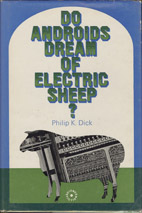
Based on the 1968 novel Do Androids Dream of Electric Sheep? by Philip K. Dick, Blade Runner is a combination of extraordinary visuals, superlative sound, Blade Runner’s superb cast includes Harrison Ford, Rutger Hauer, Sean Young, Edward James Olmos, M. Emmet Walsh and Daryl Hannah.

With various cuts of the film existing and offering very different endings, Scott trims The Final Cut to its noir roots and in doing so unequivocally resolves a long running debate concerning the nature of the central character, the ‘Blade Runner’, Rick Deckard.

Digitally remastered in 2007 for the 25th anniversary of the original 1982 release, Scott removed Deckard’s voice-over and a happy ending which the studio imposed on the original theatrical release, as well as reinserting a unicorn dream sequence.

Blade Runner scroll

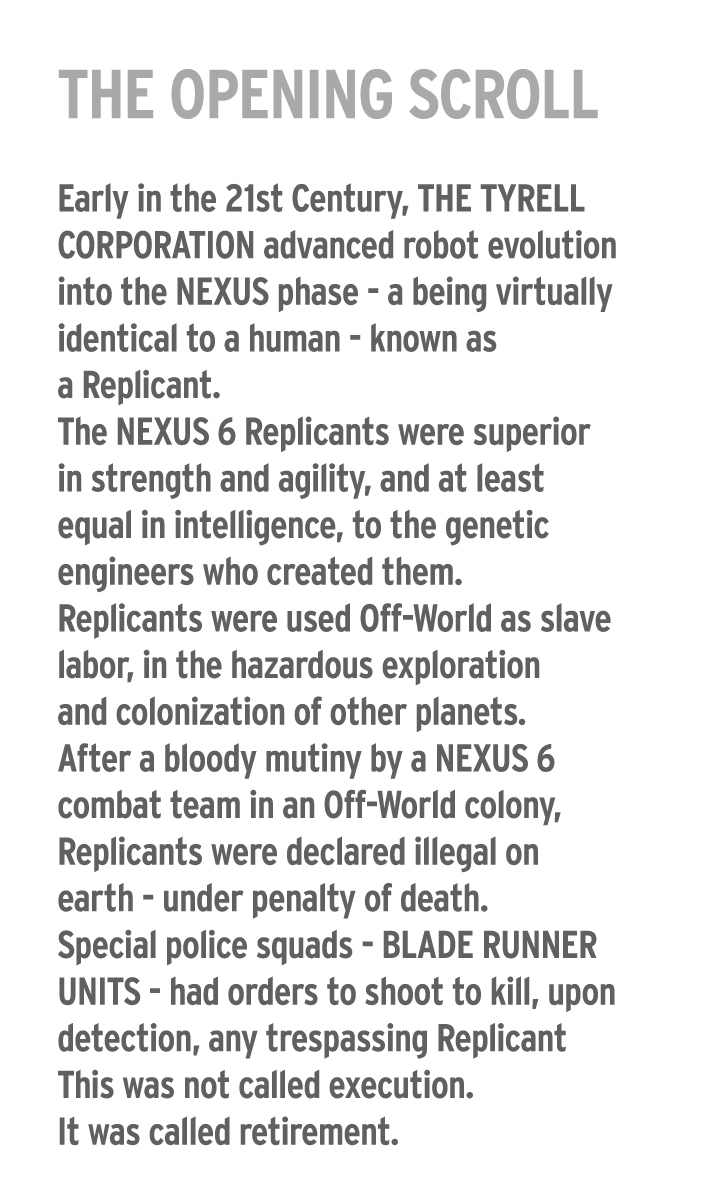
The film takes place in Los Angeles of the year 2019. Six genetically engineered humans called replicants have escaped from an off-world colony and made their way to Earth, where their presence is outlawed.

BR ford

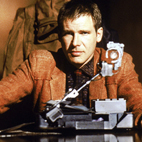
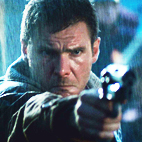
In Los Angeles two replicants are killed after trying to break into the headquarters of the Tyrell Corporation. This prompts M. Emmet Walsh‘s seedy police captain to strong-arm Harrison Ford‘s reluctant former detective, Rick Deckard, back into harness.

Though insisting he is twice as quit as when he walked in, Deckard accepts the order to find the remaining four replicants and destroy them, and an origami-modelling cop called Gaff is assigned to monitor Deckard’s progress.

While on the case Deckard first interviews then starts an affair with Sean Young‘s Rachael. She’s the glamorous niece of the head of the Tyrell Corporation, Dr. Eldon Tyrell, the chess-playing creator of the replicants.

Deckard

The euphemistic use of the word ‘retire’, reminds us Dick’s paranoid fear of the inevitable decay of our mortal bodies, reinforced by Scott scattering his sets with mannequin parts.

The screenplay by Hampton Fancher and David Peoples is a loose adaption of the source novel but is faithful to Dick’s obsessions of decay, transformation, paranoia and identity, and in The Final Cut at least, is respectful of noir’s hard-boiled cynicism.

It can also be read as a twisted riff on John Milton’s epic poem, Paradise Lost, with the replicants representing fallen angels rejecting their godlike creator.

Incorporating tolling bells, the magnificent score by Greek composer Vangelis, announces key themes as the film opens and veers between the apocalyptic and the heavenly.

The Tyrell Corporation’s HQ is a pyramidal mausoleum, a suitable resting place for a god before an ascension to a higher level of existence. The replicants can be interpreted as angels or demons who have descended to Earth from the chaotic off-world to challenge the Earth’s divine order, and possibly raise humanity to a higher plane of existence.

Br sebastian

The subjugated and animal nature of Earthbound humanity is explored through the use of rats, those harbingers of disease, decay and death. Tyrell talks of deserting rats when discussing the altering of the replicant’s DNA. There are pet rats among J.F. Sebastian’s engineered toys. Deckard is herded like a lab rat through the decaying prison of a mansion block.

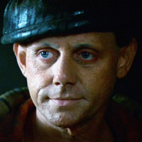
Filmed in the ironwork interior of LA’s Bradbury building, the dreamlike apartment of genetic engineer J.F. Sebastian is a repository of childhood toys which Deckard must escape before he can be enlightened as to his real identity.

Br Batty

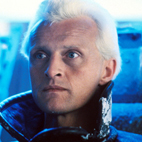
The relationship between the replicants provides the emotional core of the film. Daryl Hannah wraps herself affectionately around Rutger Hauer, who plays her partner and the replicant’s leader, Roy Batty.

And though the a homicidal Batty is set up as the villain, Hauer’s poetic and physical performance aches with life, love and loss. His powerful closing monologue which always bring s me to tears is all the more astonishing for being self-penned.

BRrachael

For those who think Scott is a stylist indifferent to his actors labours, they should consider the performance he elicits from Sean Young, who is perfectly in tune with the demands of the role.

In a brilliantly tense conclusion we see Rachael asleep in her apartment and Deckard approaching her, gun in hand. We don’t know whether he will kill her or kiss her.

There’s a declaration of love and a big sigh of relief from the audience. But as Deckard and Rachael leave his apartment, they find an origami unicorn left by Gaff. This changes the entire thrust of the story and our understanding of it.

Unicorn

Gaff’s origami is evidence he knows Deckard’s dreams are memory implants, causing Deckard and the audience to belatedly realise he is also a replicant. His entire life is a lie and he has unwittingly killed his own replicant family members at the behest of the police, his enemies, who he realises he now has to escape from.

This bleak revelation is perfect film noir.

But the power of Blade Runner has been diluted by the studio edit prompting a discussion over Deckard’s replicant status. This drags our focus from a brilliant noir ending to a non-debate over the nature of Deckard’s humanity.

Instead of the audience being overwhelmed by the force of this drama, for nearly forty years everyone has chuntered over the ‘is he a replicant’ debate, a controversy this definitive version retires.

Harrison Ford was strategically picked to play Deckard in a casting masterstroke of cinematic deception. The audience is fooled by their own presumption the star is playing a hero.

A huge star from his swashbuckling roles in 1977’s Star Wars, and 1981’s Raiders of the Lost Ark, as Han Solo, and Indiana Jones, the audience expected more of the same. Ford’s status as heroic Hollywood leading man leads us to believe Deckard is the hero until we and Deckard realise he isn’t. We don’t expect a character played by Ford to be the fall guy.

The Big Sleep

As a hard drinking detective with a laconic delivery and ready attitude in the face of authority, Ford is presented as a futuristic Humphrey Bogart, rebooted, updated and teleported in from Hollywood’s Golden Age of noir.

Ford is happy to riff on Bogart’s goofy undercover book lover in  1946’s The Big Sleep to emphasise the connection. There’s even a reference to Sydney Greenstreet in Bogart’s classic wartime melodrama, Casablanca as Deckard interrogates a fez-wearing gangster, The Egyptian.

Plus the story is told through Deckard’s eyes. So Deckard’s the hero, right? He’s an updated and rebooted sci-fi Philip Marlowe, right? Wrong.

To watch The Final Cut is to realise, and this is despite what Bryant tells him, Deckard is not especially good at his job.

He’s beaten up in turn by each of the four replicants. While failing to dispatch either of the males, he shoots the unarmed females, and he only manages to kill one of them by shooting her in the back as she’s running away. And as Batty mockingly points out, Deckard is not very sporting. Ordered to retire Rachael, Deckard has sex with her instead.

indemnity

Far from being Bogart 2.0, Deckard is far more of an upgrade of Fred MacMurray’s hapless insurance salesman Walter Neff from 1944 noir masterpiece. Double Indemnity. In classic noir fashion, Deckard is too dim to realise he’s always behind the game. it’s not until the end he understands how little he knows. He’s a prize chump.

Blade Runner is rightly celebrated for its superlative sci-fi styling, but I love The Final Cut for revelling in the noir at the heart of this rain-soaked LA story.

@ChrisHunneysett

Nemo’s Fury is an exciting digital reinvention of Jules Verne’s classic steampunk adventure novel, 20,000 Leagues Under the Sea. 

Download for free to your smartphone or tablet, search your app store for ‘Nemo’s Fury’.

A mobile interactive fiction game employing a bespoke combat system and hundreds of original illustrations, Nemo’s Fury is inspired by the 1980’s role-playing gamebooks such as ‘The Warlock of Firetop Mountain’, of the Fighting Fantasy series which celebrated its fortieth anniversary last year.

Each player joins the legendary Captain Nemo on board his fabulous submarine, the Nautilus, on a wild voyage of adventure, intrigue, loyalty, and betrayal.

There’s mayhem, monsters, maelstroms and murder as Nemo takes you from the South Pacific to the Northern Atlantic via Antartica and the Red Sea. And if they survive long enough, the player will of course fight a giant squid.

Available on your smartphone or tablet, (but not yet your desktop), click on your app store below

Or go to Nemo’s Fury for more info

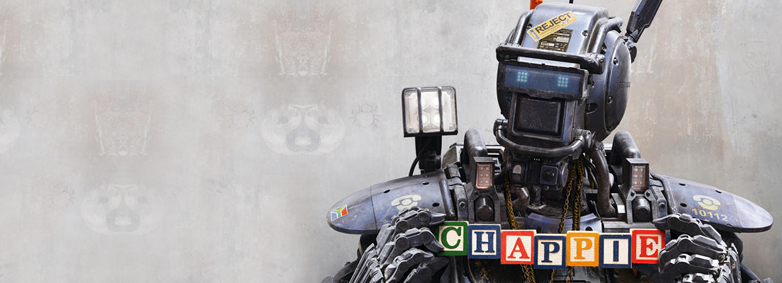
Chappie

Director: Neill Blomkamp (2015)

This socially aware sci-fi flick about a rogue robot suffers clunky construction, short-circuiting serious ideas with silliness.

A muddled exploration of what it means to be human, it lacks soul. Chappie the robot is annoying while human characters are unlikeable and thinly written.

It’s also determinedly derivative, poorly plotted, unintentionally funny and ends unconvincingly.

However there’s some great design, good action and an entertaining bad guy.

The crisp light of South Africa allows for fresh cinematography by Trent Opaloch and it’s edited with haste to keep the pace upbeat.

In his previous films District 9 and Elysium, director Blomkamp tackled racism and inequality. Here it’s the criminalisation of children, with echoes of Pinocchio and Oliver Twist.

In the near future, crime in Johannesburg has fallen dramatically due to the successful deployment of Scouts; heavily armed android police officers.

They’re designed by Deon Wilson (Dev Patel) who works at the Tetravaal corporation.

Rival designer Vincent Moore (Hugh Jackman) believes his beast of a machine – called the Moose – to be superior to the Scouts and is frustrated CEO Michelle Bradley (Sigourney Weaver) won’t provide the development funds he needs.

The contrast between the two different designs is remarkably similar to the two robots in Paul Verhoeven’s far superior 1987 classic Robocop.

It’s great fun to have Jackman as a bullying bad guy and there’s a little hint of Blade Runner’s JF Sebastian in Patel’s lonely Deon who builds toy robots for company at home.

Weaver is powerless to deliver anything interesting. Her ability, charisma and sci-fi cultural capital from playing Ripley in the Alien franchise is squandered.

While on a drugs raid, robot officer 22 is damaged and ear-marked for scrap. His battery is irreparable and only has five days of power remaining.

Deon rescues the robot to test his unapproved artificial intelligence program.

Meanwhile tattooed criminals Ninja and Yolandi (real-life rap duo Ninja and Yo-Landi Visser) and their accomplice Amerika (Jose Pablo Cantillo) are in a tight spot.

They have to pay gangland boss Hippo (Brandon Auret) 20 million Rand within seven days or face his violent wrath.

The’re so edgy they live in an abandoned warehouse decorated in day-glo graffiti and drape themselves in the Stars and Stripes.

Their plan is to force Deon to switch off the city’s police robots to facilitate their robbing an armoured bank truck.

When they discover 22 in Deon’s van, it’s decided he would add muscle to their scheme.

22 is reactivated with his newly programmed artificial consciousness and renamed Chappie – but he is naive and emotionally under-developed.

Sharlto Copley provides his voice and mannerisms through a motion capture performance.

Deon and Ninja are equally unsuitable father figures fighting for influence over their ‘child’. One teaches art and literature, the other swear-words and violence.

We pity Chappie as he’s exploited and abused – but he quickly becomes a petulant teen with an irritating gangster persona and styling.

Playing the gangsta attitude for laughs undermines the script’s earnest warning of learnt criminality.

There are heroic security failures, eruptions of comic-book violence and a mysteriously disappearing riot. A plastic chicken features frequently.

A jerry-built not custom made script fails to offer memorable scenes or dialogue. Except for the South African setting it’s all extraordinarily familiar and disappointingly tame.

★☆☆☆

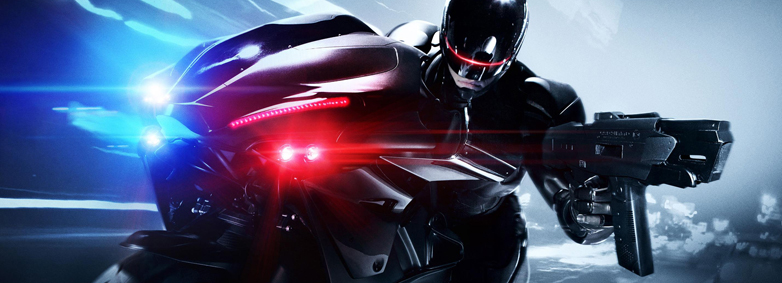
Robocop

Director: José Padilha (2014)

This grim-faced mechanical reboot of the 1987 sci-fi classic stomps through the motions with all human interest surgically removed.

The action sequences are incoherent, dull and lacking in tension. And the gleefully satirical edge of the original is sadly absent.

Set in Detroit in 2028, the remake offers no sense of a wider society or vision of the future – it’s just like today but with robots and amazingly little internet use.

Joel Kinnaman is trigger-happy, straight backed and taciturn. And that’s before his character Alex Murphy is transformed into the relentless crime-fighting cyborg.

When Murphy’s life is saved by the technician’s of OmniCorp, he’s turned into a crime-fighting war machine and put back on the streets as the ultimate deterrent.

When investigating his own attempted assassination he uncovers a trail of corruption and once again becomes a target.

There is some lovely design work in the new streamlined suit. And when we first see the extent of Murphy’s injuries there is a promisingly nightmarish feel. But it’s quickly lost thanks to the plodding direction.

Computer-generated images mix unconvincingly with live action and although Robocop looks very cool when riding his neon and black motorbike, we see him doing it far more often than is necessary.

There is wit in the casting of actors associated with that other faceless crime-fighter Batman – but even the considerable talents of Michael Keaton and Gary Oldman can’t tease any humour from a dour script.

Keaton plays the duplicitous CEO of the powerful OmniCorp and Oldman co-stars as a technical genius with compromised principles.

And Samuel L. Jackson has fun as a TV commentator – but his scenes seem disconnected from events happening elsewhere.

Key catchphrases are lifted from the original to be chucked around. But the new dialogue is as leaden as Robocop’s thudding footsteps as Murphy hunts down the men who had tried to kill him – and unleashes powerful forces that are hellbent on finishing the job.

☆☆

The Hunger Games: Mockingjay – Part 1

Director: Francis Lawrence (2014)

She’s scared and angry but Jennifer Lawrence fights on as reluctant warrior Katniss in this third, darker episode of the spectacular sci-fi series.

Mockingjay resumes the story with rebels led by President Coin (Julianne Moore) regrouped in a huge hidden bunker in the desolate District 13.

The Hunger Games arena, where children fought to the death, has been destroyed and a popular uprising was crushed by soldiers from the Capitol.

Coin, whose silver hair and two-faced nature mirror despotic leader President Snow (Donald Sutherland) wants Katniss to be the Mockingjay, a symbol of rebellion to inspire the repressed districts to rise against the Capitol.

Despite her fears, Katniss agrees. But only if her traitorous best friend Peeta (Josh Hutcherson) is rescued and given a pardon.

As bombs and bodies start to fall, she and self-pitying soldier Gale (Liam Hemsworth) get closer and he volunteers to lead a daring mission.

Katniss is an expert archer and inspirational Games survivor yet, disappointingly, she barely fights because people are so protective. In the movie’s best sequence she is attacked when visiting a hospital.

There are speeches at the expense of action, the pace is thoughtful not thrilling and the story suffers as it is a bridge to the fourth and final film.

But the rebel base and splendid Capitol look excellent and Lawrence is so good that she makes ordinary actors like Hemsworth seem poor – and fabulous actors such as Sutherland and Moore look ordinary.

☆☆

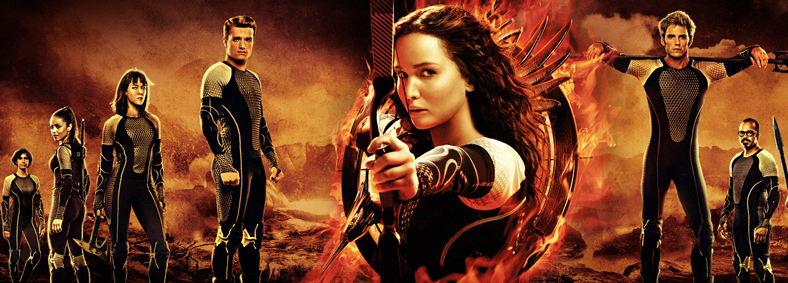
The Hunger Games: Catching Fire

Director: Francis Lawrence (2013)

Jennifer Lawrence once again suffers the slings, swords and arrows of outrageous fortune in this excellent sequel to 2011’s sci-fi blockbuster.

This is a handsome, exciting and intelligent adventure that throws in plenty of humour among the thrilling combat scenes.

Lawrence is as brilliant as ever as the heroine Katniss Everdeen and carries this huge movie on her slender frame. She’s skilled, brave and loyal yet also unsure and vulnerable. It’s another terrific performance from an actress who’s yet to deliver a poor one.

Having survived gladitorial combat in the first movie, expert archer Katniss (Lawrence) is back living in borderline poverty with her sister Prim (Willow Shields).

She’s enjoying the company of the handsome Gale (Liam Hemsworth) while lovestruck fellow survivor Peeta (Josh Hutcherson) sulks.

As masked soldiers are cracking down on the skulls of the starving population, ruthless  President Snow (Donald Sutherland) and Plutarch Heavensbee (Philip Seymour Hoffman) are having great fun plotting the demise of a growing rebellion.

Stanley Tucci as Caesar Flickerman and Elizabeth Banks as Effie Trinket dress with camp flamboyance as vain and vacuous media darlings who provide much needed background info and no little levity.

Even though Katniss and Peeta are forced into a media friendly sham marriage to protect their families, they still find themselves back in the combat arena.

The set design is epic, the soundtrack is haunting and the story rattles along like the express train that shuttles Katniss to the Capitol to do battle.

This time they’re fighting former champions – each one a fully trained killer – and doing it  on a tropical island filled with angry baboons, poison fog and rains of blood.

Although it ends strongly it is also anti-climactic being the middle film of a trilogy, sorry, tetralogy.

Plus it takes its time getting to the Games themselves and Peeta is such a dull person you wonder why such efforts are made to protect him. But what he lacks in charisma, Lawrence is always there to more than compensate.

After Earth

Director: M. Night Shyamalan (2013)

Young Jaden Smith takes top billing over his megastar dad Will in this handsome and old school sci-fi adventure.

The pair are travelling on a space ship across the cosmos 1,000 years after Earth has been abandoned because of pollution.

Will and Jaden play father and son Prime Commander Cypher Raige and Kitai Raige – who are the only survivors after they crash on a quarantined world.

Warrior Cypher is injured and Kitai must travel alone to recover the signalling device from the other half of the wrecked craft, which lies nearly 100 miles away.

Kitai sets off with limited oxygen supplies, his dad’s nifty electric sword and his own smart survival suit, which changes colour to indicate danger.

Because Cypher has a broken leg, Will spends most of the film confined to a chair barking radio orders to his son. Kitai is headstrong but brave as he encounters baboons, snakes, leeches, giant eagles, tigers and a large, angry, alien beastie.

For the most part the film is an exciting adventure story of a young man striving to grow up and be the measure of his father.

Some of the CGI creatures are not as convincing or as impressive as the beautifully presented cities and spacecraft.

It is an interesting experiment to cast the two Smiths and then ask both of them not to make jokes or attempt to be funny.

Jaden strains every sinew of his acting ability to carry the film while Will keeps his charm and sense of humour mostly buried beneath a stern exterior.

☆☆