Truth

Director: James Vanderbilt (2016)

Best switch channels than tune into this ham fisted drama about the fall of real life TV journalists.

A self serving and poorly constructed script plus an over wrought tone destroys the solid work of stars Robert Redford and Cate Blanchett.

He plays venerable journalist and avuncular TV anchorman Dan Rather, a surrogate father to his producer Mary Mapes.

Under ratings pressure she breaks a big story about the military service record of the young George W. Bush who is seeking a second Presidential term.

But when the story unravels due to a dodgy dossier, unreliable witnesses and thin evidence, the journalists become the story and must fight to save their careers.

Mary is a driven, intelligent, and contradictory but is an unsympathetic figure who prefers to cry conspiracy than recognise her own weaknesses.

Thinly written supporting characters have barely there interactions before being forgotten about.

The film touches on several styles and genres, wildly snatching at a tone to give meaning to the dull drama playing out.

In the style of a heist movie, a crack team of journalists is assembled but given absolutely nothing to do before quietly slipping out of the movie.

It then becomes a busily plodding procedural movie with moments of courtroom and sporting drama.

Despite protestations of political impartiality, rival TV networks seem to fighting a proxy election campaign with the CBS employees firmly in the Democratic Party anti-Bush camp.

The script makes grandiose claims about the power of journalists to influence elections but with a week being a long time in politics, the decade old story has little contemporary resonance now Bush is long out of high office.

There is none of the relevancy of the recent Best Picture Oscar winning Spotlight (2016). It also lacks that films extraordinarily rigorous storytelling.

In bizarre scenes devoid of irony, ordinary citizens are seen gazing in wonder at Dan read the news. They’re primates reaching out to the monolith in Kubrick’s 2001: A Space Odyssey (1968).

Truth is a hymn to the memory of Rather whose name means little to a UK audience. It also a lament for the good old days when the news wasn’t subject to a political agenda prescribed by wealthy owners. (Ha!)



King Jack

Director: Felix Thompson (2016)

There’s a royal heart powering this coming of age adventure which captures the agonies of teen life with a clear and unsentimental eye.

In a small down market US town, Jack is engaged in a running feud with the older local bully.

Charlie Plummer stands out in a tremendous young cast whose captivating performances are full of nuance and honesty.

Resentful when his single parent mother lumbers him with his 12 year old cousin. A day of selfies, cigarettes and switchblades leads to a momentous party.

Assured and engaging, King Jack’s harsh charm disguises it’s thoroughbred cinematic breeding.


Triple 9

Director: John Hillcoat (2016)

This confused crime drama is a loose tissue of tattoos, muscles and machismo.

Despite the violence, very strong language, drug use and nudity, the lack of focus and ambivalent moral stance makes for an un-involving experience.

Too many minor characters slow the pace and the moody lighting fails to illuminate the blunt action scenes.

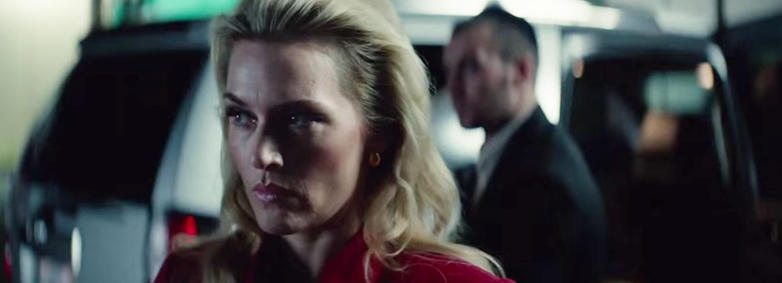
Kate Winslet gives tremendous vamp as a glossy Russian-Israeli mafia mol who blackmails a crew of corrupt cops into one last heist.

The gang leader is Michael who’s played  by Chiwetel Ejiofor, an actor rarely given to compromising his character’s intensity in return for popularity.

Breaking Bad’s Aaron Paul appears as a loose cannon with a drug problem. Again.

Full of epic ambition and clearly influenced by Michael Mann’s far superior Heat (1995), director Hillcoat had a much firmer grip of his material with the taut Australian western The Proposition (2005).


Chronic

Director Michel Franco (2016)

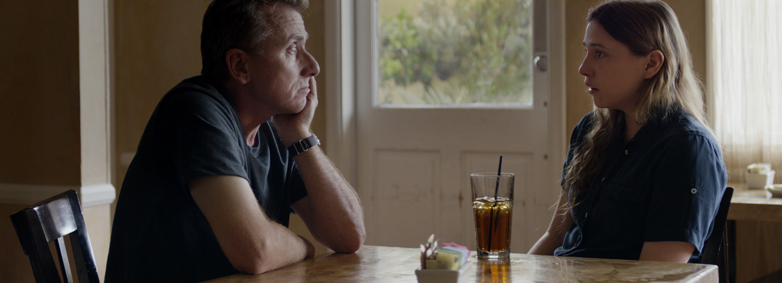
In this deeply humane yet bleak drama, Tim Roth plays a home care nurse for the terminally ill.

David is trying to rebuild his life and tentatively reaching out to his adult daughter after some time away.

He becomes too close to his patients but isn’t guilty of the crime of which he’s accused.

The film suggests possessing too much empathy is a trait which is not only undervalued by society, but one destined to be punished.

Filmed with an unflinchingly clear eye, a sober sensitivity and a largely static camera, it’s an intelligent and sensitive call for compassion and support for the lonely and infirm.


A Bigger Splash

Director: Luca Guadagnino (2016)

Dive into the shallow end of the celebrity gene pool in this sun kissed erotic thriller.

Intelligently written and beautifully photographed, it features the normally ultra serious Ralph Fiennes on liberated form as a hyper active hedonist music producer called Harry.

He arrives unexpectedly at the Italian villa of his ex love Marianne, a recuperating rock star.

Tilda Swinton gives a rasping performance as the singer protecting her voice, a symbol of the film’s grand themes of the inability to communicate with honesty and freedom.

Matthias Schoenaerts is in typically morose mode as her new partner Paul, their shared idyll threatened by Harry and his lithe daughter Penelope, played by Fifty Shades star Dakota Johnson.

It’s almost an anthropological examination of human behaviour, a shame the subjects aren’t more deserving of our study.

At first entertaining, the preening narcissism of the characters is wearying during the slow build up to an act of violence. It couldn’t have happened to a more deserving person.


Trumbo

Director: Jay Roach (2016)

Romping through the career of a Hollywood screenwriter, this entertaining biopic suffers from a self-gratifying script filled with too much lightweight sentiment.

Enjoying a privileged lifestyle as one of Hollywood’s elite in 1947, Dalton Trumbo was one of many writers and actors illegally blacklisted for refusing to testify against communists to the US government.

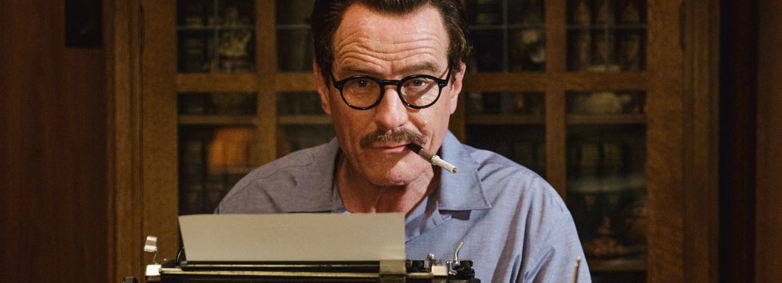
Breaking Bad star Bryan Cranston stars as the irascible scribe who types in the bathtub with a cigarette holder and glass of whiskey in hand.

Trumbo’s a less than loveable eccentric who patronises the masses who watch his movies and fund his comfortable lifestyle.

A honey throated spinner of yarns who invokes the constitution to serve his own ends, Trumbo reminds us of another historic US public figure given a recent cinematic makeover.

There’s a clear parallel between Cranston’s performance and Daniel Day Lewis’ Oscar winning turn as the ill-fated US President in Steven Spielberg’s Lincoln (2013).

The script even includes a similar moment wherein a colleague refuses to listen to any more of Trumbo’s stories, lest he be converted to his cause.

We fail to sympathise for the champagne communist when he suffers the indignity of downsizing from his country manor to a large house with a pool.

Being aggressively covered in fizzy pop isn’t nice and holidays are interrupted. But a brief and uneventful stint in prison aside, nothing too worrying happens to him.

As an illustration of the rarefied social circles Trumbo moves in, a friend can afford to sell the drawing room Van Gogh to pay for their lawyer’s fees.

Meanwhile Trumbo’s career goes from strength to Oscar-winning strength. Under various pseudonyms he works with Hollywood directors and stars of huge stature.

The timeline covers some forty years giving the handsome film a breathless feel despite it’s stately pace.

Part of the problem is a desire to cram in many era-famous faces. As the story lacks drama, this is possibly to compensate for a suspected deficiency of audience interest.

Michael Stuhlbarg as Edward G. Robinson is one of several examples of casting capable peformers as famous cinema actors. They’re not as charismatic or talented and physically aren’t great matches.

David James Elliot essays John Wayne as an unconvincingly magnanimous presence.

At least Dean O’Gorman as Kirk Douglas is given a gift of a line which is guaranteed to bring the house down with laughter.

Helen Mirren is terrific as the waspish society columnist Hedda Hopper. But by making her the villain of the piece, the male dominated hierarchies of cinema and politics are let off the hook for their behaviour.

Hopper suffers a poorly articulated rationale for for the intensity of her attacks on communism and there’s no hint her anti-union publisher is any way pulling her editorial strings for their own ends.

Diane Lane plays Trumbo’s wife Cleo with nothing to do except add glamorous scolding and sympathy.

Elle Fanning as their daughter Nikola fairs little better, being ushered down a civil rights movement cul-de-sac.

John Goodman plays to his strengths as a down market producer offering a broad comic performance which recalls his turn in ben Affleck’s Argo (2012).

Never convicted of any criminal charge, Trumbo presents himself as a fearless defender of the first amendment and the script bequeaths him a suspiciously retro-fitted sermon on the importance of the constitution.

There are great lines in the film but one suspects they’re lifted from the scripts or diaries belonging to one of the many scriptwriters portrayed on screen.

Spotlight

Director: Tom McCarthy (2016)

Stop the press for this Oscar nominated drama of award winning journalism.

Based on real events, a US newspaper team fight to reveal the industrial scale cover up of child abuse perpetrated by the Catholic Church in Boston.

It’s gripping tale which allows for the redemption of an individual, the validation of journalism and the recovery of civic pride.

So exactly the sort of worthy subject matter which allows Hollywood to feel good about itself and self-righteously pat itself on the back for making.

Consequently it’s garnered 6 Oscar nominations including best picture and director ,as well as for individual nods for performers Ruffalo and Rachel McAdams in the supporting acting categories.

It’s set in the early 2000’s in the basement office of the close knit Spotlight newspaper investigations team of The Boston Globe. The real Spotlight Team earned the 2003 Pulitzer Prize for Public Service.

Michael Keaton is weathered and wary as ‘Robby’ Robinson, veteran leader of the four strong department.

Sporting a supportive if volatile chemistry, they’re played by Mark Ruffalo, Rachel McAdams and Brian d’Arcy James.

They face the double threat of the burgeoning new media world and a new editor, played with softly spoken steel by Liev Schreiber.

Marty requests the team investigate complaints made against the church.

Being from out of town Marty is immediately considered someone not to be trusted. A situation compounded by being Jewish in a Catholic dominated city.

It is strongly in part to this insular attitude which allows members of the Catholic clergy to spend years abusing their flock, and for the hierarchy to systematically cover it up.

The powerful and wealthy institution has long put the fear of god into legal profession, justice system, police and even parts of the press.

We follow the team undertaking journalistic procedure of voluminous research, copious coffee consumption, door knocking, meetings with lawyers, prodigious note taking and telephone calls.

As files of evidence go missing from the courthouse, the team realise they can’t trust their colleagues, the police or the courts.

This is all familiar procedural stuff and it’s the high stakes and charisma of the actors which brings it alive.

We are drawn in by the performances, intrigued by their work and disgusted by the subject matter.

Covering a difficult subject in a dignified and sensitive manner, a strong narrative framework provides essential information in a clear manner.

But the film struggles to open out from a series of meetings into something more grand and cinematic.

More than one scene has the team gather around a telephone speaker to receive vital information from a Deep Throat type whistleblower.

As efficient as Spotlight is, it‘s the grim truth which keeps us watching, not the drama.


The Big Short

Director: Adam McKay (2016)

Take cover from an atomic bomb of fraud and stupidity in this knockabout drama based on the catastrophic financial crash of 2008.

Based on Michael Lewis’s account published as The Big Short: Inside the Doomsday Machine (pub. 2010) it’s been nominated for five Oscars including best film, best director and best actor for Christian Bale.

Ryan Gosling plays narrator Jared Vennett, an unrepentant bond salesman at Deutsche Bank.

Vennett meets the one-eyed Aspergers sufferer Michael Burry. Played by Bale in a bad haircut,  he’s a maverick hedge fund manager.

Burry’s discovered Wall Street has been selling mortgages to people with no jobs or income.

So he’s ‘shorting’ the housing market, i.e. betting it will crash and anticipates making billions of dollars by betting millions.

Vennett teams up with Steve Carell‘s permanently angry banker Mark Baum to get rich quick.

Yet no-one seems to have fun with the money they’re making or have any idea what to do with it, or even why they’re doing it.

The script wants us to like these guys, showing us their life traumas to garner sympathy.

They’re fictitious versions of real people and we’re encouraged to see them as heroic outsiders, uncovering the impending crisis.

But they willingly keep schtum and treat it as another investment opportunity.

Then the film’s millionaire movie producer Brad Pitt turns up looking like a retired geography teacher and flexing his social conscience, much like he did in his self-produced project 12 Years A Slave (2014).

Pitt plays another banker who makes a min out of the misery of millions..

Financial flicks Martin Scorsese’s The Wolf Of Wall Street (2014) and J.C. Chandor’s Margin Call (2013) have already covered much the same ground as The Big Short.

This hasn’t the blistering riotousness and moral vigour of the former in which Margot Robbie also appeared, and lacks the sober cynicism of the latter.

It’s all very Scorsese light with an up tempo pace and jokey tone created by pop tunes, freeze frames, frantic editing and characters regularly speaking directly to camera.

Plus it’s full of great performances, very energetic and niftily employs a game of jenga to explain what causes the banking meltdown.

But it’s misjudged in its sympathies and patronisingly employs Margot Robbie and Selena Gomez as themselves to explain the maths.

But The Big Short fails to condemn these hypocritical parasites – the bankers not the actresses – and instead dresses them as heroes.

They should be strung up from lamp posts with the rest of the bankers responsible.


Creed

Director: Ryan Coogler (2016)

The long running boxing saga of Rocky Balboa is given fresh legs and a face lift in this knockout sixth sequel to Sylvester Stallone’s Rocky (1976).

It bursts out of its corner to challenge the box office clout of Star Wars: The Force Awakens (2015), itself the sixth sequel to Star Wars (1977).

Both new films utilise fresh talent while returning the familiar fan base-pleasing elements, enabling the franchises to maintain their core audience while attracting a younger demographic.

Of Star Wars: The Force Awakens (2015) and Creed (2016) it’s the latter which rejects the opportunity to wallow in nostalgia and sets out to make a name for itself, much like its titular character.

Coming to terms with one’s legacy is the dominant theme of Creed.

Although many plot points will seem very familiar to fans of the original Rocky, director Coogler is determined to give the franchise a new perspective while always respecting the spirit of the series.

Plus his talent, energy and superb eye allows him to carry off some moves of breathtaking technical accomplishment, especially considering it’s only his second feature after Fruitvale Station (2013) and he’s not even 30 years old.

Coogler has been astutely teamed up with the veteran cinematographer Maryse Alberti. Her CV boasts of working alongside Martin Scorsese, Todd Haynes, Michael Apted, Alex Gibney and recently M. Night Shyamalan for The Visit (2015).

Following the work of directors John G. Avildsen and Sylvester Stallone, Coogler references old characters, re-uses locations and gives new impetus and meaning to memorable scenes.

For long standing supporters of the franchise, the first whisper of Bill Conti’s outstanding theme tune will have your neck hair on end.

Composer Ludwig Goransson uses it intelligently and sparingly and incorporates it alongside more contemporary tracks.

They  share a similar approach to the casting, replacing the old white characters on centre stage with a young black talent, with the emphasis on talent.

The excellent John Boyega was pushed to the fore in Star Wars: The Force Awakens, in Creed it is the charismatic Michael B. Jordan as Adonis Johnson.

Black characters were supporting roles in the early films and unequivocally the bad guys. First Carl Weathers’ Apollo Creed, then Mr T’s James ‘Clubber’ Lang existed to be beaten down and metaphorically emasculated.

In Creed not only is Adonis the central character but he is absolutely the sympathetic and rampant beating heart of the story.

Stallone offers a poignant gravitas as Rocky, the former champ who’s still taking life on the chin.

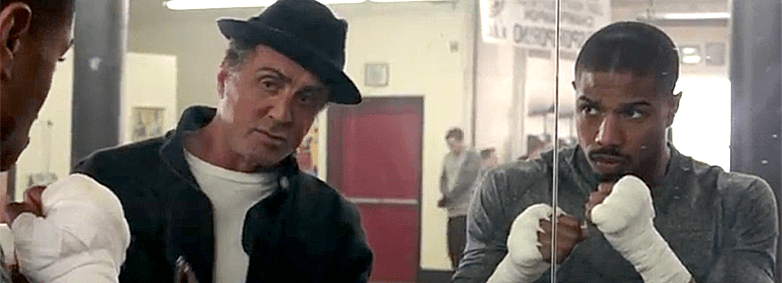
Never more comfortable than in the Italian Stallion’s pork pie hat, the actor wisely refrains from donning his old gloves.

Rocky’s persuaded to train Adonis, the illegitimate son of one time adversary turned friend now deceased, Apollo Creed.

Creed’s death in the boxing ring weighs heavily in different ways on both characters.

Boxing offers Adonis the opportunity to come to terms with his father’s absence during his life, to honour his legacy while breaking free of his shadow.

Rocky has no desire to see another colleague and friend die from boxing injuries.

Living downstairs in Adonis’ Philadelphia apartment block is Tessa Thompson’s aspiring musician Bianca.

The fluid chemistry between the young actors serve as much as any aspect of the film to invigorate it.

Putting the focus on the pair allows for an introduction to a new generation of movie goers for whom the Rocky franchise may possess scant cultural cachet.

Events allow Adonis a title bout against the world champion Ricky Conlan.

Presumably real life boxer turned actor Tony Bellew was given his shot at the big time to add verity to the boxing scenes.

However he’s a less cinematic pugilist than Jordan and lacks the on-screen menace of the opponents in previous films.

Conlan is well short of Dolph Lundgren’s Ivan Drago from Rocky IV (1985) to name but one.

With artifice working more effectively for cinema than reality, this suggests it’s better to employ actors who can pretend to box than have boxers who aspire to act.

Despite this, the urgent and bloody bouts are pure Hollywood fiction in the best Rocky tradition and the story lands some brisk emotional punches.

The big fight takes place at Goodison Park, home of Everton FC. It’s the best drama seen there all season.

Room

Director: Lenny Abrahamson (2016)

Disturbingly dark and horribly tense, this modern day fable is all the more gripping for the love at the heart of its story.

It’s told through the eyes of five year old Jack via Jacob Tremblay’s astonishing emotionally truthful performance.

He’s grown up in a decaying and cramped single room, entertained with tales of imaginary worlds told by his only companion, his mother Joy.

She’s played by the staggering excellent Brie Larson and the pair share a wonderfully warm chemistry.

Larson has been deservedly BAFTA nominated for leading actress and named as one of their Rising Stars of 2016. An Oscar nom should also be forthcoming.

At night Jack must hide in the cupboard to sleep because a bogeyman called thrusts himself into their world.

We hear of him and hear his voice long before we see him and Sean Bridgers is brilliantly and pathetically creepy as the predatory Old Nick.

Joan Allen and William H. Macy provide strong support as Joy’s parents Nancy and Robert.

As adults we can guess at the truths hidden from Jack and our fears for him and Joy make for a thoroughly unsettling watch.

A great deal of this could have oozed from the mind of Terry Gilliam in his disturbing Tideland (2006) phase.

After confronting Old Nick it is Jack’s turn to keep Joy from the grasp of the room’s demons.

Their mutual love is the thin thread of hope to which they cling to survive

The extraordinary central performances are supported by smart direction, scriptwriting and cinematography.

Emma Donaghue’s screenplay from her novel (pub. 2010) has been nominated by BAFTA for best adapted screenplay. Apart from this category and Larson’s acting nod, the film has sadly been overlooked for British honours.

Room was lensed by Danny Cohen, one of Britain’s most illustrious and hard working cinematographers.

Along with Roger Deakins, Cohen seems destined never to win an Academy Award for his work.

He was nominated for Tom Hooper’s The King’s Speech (2010) and worked again with the director Tom Hooper on the The Danish Girl (2016). Other recent work includes X+Y (2015) and London Road (2015).

Cohen has frequently collaborated with Shane Meadows on the This Is England TV series and his ability to capture grimy realities is fully exploited in Room.

There’s always room at the top for films this good.