Hail, Caesar!

Director: Joel & Ethan Coen (2016)

The knives are out for golden age Hollywood in this sly satire from the mercurial talent of the Coen brothers.

In typical fashion they combine the writer/director/producer roles. After the run of more serious fare of Inside Llewyn Davis (2013) True Grit (2010) and A Serious Man (2009) they’re back in the enjoyably goofy form of their early career.

The off screen sensibilities of tinseltown are merrily mocked as singing cowboys, dancing sailors and whip happy Romans collide in a series of films within a film ranging from film noir and musicals to costume drama.

In his fourth film for the Coens, George Clooney plays kidnapped star Baird Whitlock.

Capitol Pictures sends a ‘fixer’ Eddie Mannix to find the dim actor so their prestige big budget biblical epic can be completed.

For Brolin it’s his third Coens’ feature after the two westerns No Country For Old Men (2007) and True Grit (2010).

Perfectly cast in the role of Mannix, Josh Brolin carries the film on his broad, pin striped suited shoulders, stomping about town and wrestling with his conscience over a career decision he’s being pressured to make.

Mannix has no specific job title but does possess a large office, an attentive PA and a direct line to Mr. Skank, the never seen mogul of Capitol Pictures. Directors and actors queue in Mannix’s office to petition for his services.

Mannix is that most pejorative Hollywood term, a suit.

They are the most maligned creatures in Hollywood, commonly regarded as mammon obsessed philistines and monstrous butchers of creative endeavour.

It’s an extraordinarily daring in joke to present Mannix as a squared jawed and gimlet eyed hero in the style of Raymond Chandler’s fictional private detective Phillip Marlowe, and it’s played always with a straight face.

For the devout and humble family man Mannix, film making is a religious vocation, a secret cigarette is his only vice.

Brolin has played a spin on the character before in the overblown and undercooked Gangster Squad (2013). The Coens have riffed on Marlowe before in the joyous The Big Lebowski (1998).

There’s an attache case of cash, mistaken identities, romance, religious discussion and foul mouthed bathing beauties. The fishy tale even features a fabulous water sequence in the style of Esther Williams featuring Scarlett Johansson as a mermaid.

With a gang of disaffected revolutionary screenwriters powering the plot, it’s a mashed up antidote to the po faced sanctimony of Trumbo (2016).

Clooney is entertaining when aping the heavy acting style of classic Hollywood hero such as Charlton Heston, but lacks the light comic touch of his co-stars.

Michael Gambon raises a droll smile as the narrator, Jonah Hill makes a fleeting appearance and Channing Tatum performs a tremendous song and dance routine.

However everyone is outdone by Ralph Fiennes who in a late screwball career move is fast becoming the funniest man in film.

The many films within a film are rendered through brilliant technical skill, captured in customary consummate grace by perennial Oscar bridesmaid, Brit Roger Deakins.

Shot with loving panache, Deakins’ 12th collaboration with the Coens is suitably visually pristine and rich. His lens steps smoothly from genre to genre with immaculate grace and accuracy.

In this arch and sometimes affectionate comedy, the sharp stabs of humour are all the more effective for  being delivered at close range from under a cloak of friendship.

Et tu Brute indeed.

Miss You Already

Director: Catherine Hardwicke (2015)

If Richard Curtis, the writer of About Time (2013) ever made a film about cancer, it would look and sound a lot like this.

It’s cringingly sincere, sentimental, smug and worthy.

Kids and adults swear for comic effect and there’s a romcom style madcap dash to a maternity unit.

Occasional flashes of quality allow for some almost bearable moments.

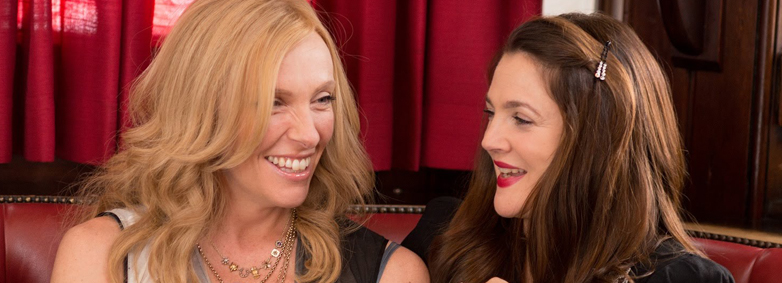
Toni Collette plays irritating London fashionista Milly whose idyllic life is quite spoiled when she contracts breast cancer.

Refreshingly the disease brings out the worst not the best in her. But sadly it doesn’t make her any more likeable.

Her two children are brattishly annoying.

Meanwhile best friend Drew Barrymore is a houseboat-dwelling hippie with fertility issues.

Spouses Dominic Cooper and Paddy Considine are sidelined. One is emotionally adrift, the other all at sea on an oil rig.

Neither couple convince but the friendships among genders are believable.

Jacqueline Bisset and Frances de la Tour raise the acting bar in their brief moments. The former full of regret as Millie’s glamorous mother, the latter dispenses wigs, advice and a little tough love.

Among the doctor’s appointments, liquid lunches and surprise parties, there’s a shouting match on the glorious North Yorkshire moors.

The script is very keen to point out she missed a potentially life-saving check up and it’s commendably honest about the physical realities of treatment.

Curious camera angles and clunky changes in pace and tone fail to offer insight or add dramatic interest. The actors’ seem perpetually in danger of the camera smashing them on the forehead.

Once again a film fails to eke out any humour from a birthing scene. One day filmmakers may realise there is nothing humorous in childbirth.

A Walk in the Woods

Director: Ken Kwapis (2015)

In no danger of ever straining an acting muscle, Robert Redford ambles through this genial adaption of Bill Bryson’s best-selling account of his trek along the Appalachian mountain trail.

After one funeral too many and perturbed by his well-heeled life of ease, successful author Bill decides to take himself out of his comfort zone by hiking over two thousand miles.

Emma Thompson pops up as his wife to warn Bill of the potential hazards and begs him not to go.

Only his raddled, rasping and rambling old friend Nick Nolte is mad enough to go with him. He’s as short of money as he is of breath.

It’s an odd couple comedy, less concerned with the journey travelled but the welcome home. It’s as charming and handsome as it’s lead and equally as empty of interest as his performance.

There’s slapstick buffoonery, unconvincing peril and light grumbling as the decrepit duo are tempted by soft beds, pretty ladies and motorised transport.

The script contains very little of Bill’s scientific curiosity, wonder at the natural world or understated warm wit which made the book such a joy. The lack of it tests our patience.

At 79 years old Redford is still a strikingly good looking man, even if he has borrowed Paul MCartney’s hair colouring.

He is of course still a magnet for the ladies. In true Hollywood style his screen wife is 23 years younger than himself.

It’s inferior to Reese Witherspoon’s one woman trek Wild (2014) which is inferior itself to Mia Wasikowska’s outback odyssey Tracks (2013).

If the bearded and portly former Fleet Street stroller Bryson can score for The Sundance Kid playing him on the big screen, then I’m not settling for anyone less than Keanu Reeves in my future biopic.

Ricki and the Flash

Director: Jonathan Demme (2015)

Strip out Meryl Streep’s charisma and we’re left with slim pickings in this redemptive rock ‘n’ roll drama.

She plays plucky Ricki, a divorced middle-aged check-out operator who rocks out with her own band in the local spit and sawdust joint at night.

News of her daughter’s divorce and depression sends Ricki flying to her bedside, only to discover her presence is barely tolerated never mind welcomed.

There’s squabbles aplenty as retail therapy replaces psychotherapy, but not much else happens.

There’s talk of attempted suicide and bankruptcy but the most eventful scene involves spilt ice cream and teenage-like strops.

Full of life’s regrets and the guilt of poor parenting, Ricki faces the hardest gig of her life as she struggles to gain the love and respect of her estranged family.

Streep’s acting is as relentless as her singing as she dominates every scene with scant regard to her fellow performers. She delights in being lewd and revels in her pot smoking, hard drinking rock persona.

Mamie Gummer as Ricki’s daughter Julie isn’t over-awed by sharing the screen with her real life-life mother.

Kevin Kline is far form the master of his own house as ex husband Pete and Rick Springfield is whiny as lead guitarist Greg of her racially representative backing band, The Flash.

Fans of the triple Oscar winner and weak cover U2 versions will probably find more to enjoy here than I did.

★★☆☆☆

Me And Earl And The Dying Girl

Director: Alfonso Gomez-Rejon (2015)

This tiresome coming-of-age cancer flick should have been titled Me, Myself and I.

Thomas Mann plays gangly geek Greg Gaines. He spends his high school life avoiding everyone but his friend Earl.

As they remake their favourite movies, a large volume of film references are dropped heavily on the viewers’ head.

Greg’s mother packs him off on a mercy visit to Rachel, a fellow student who’s dying of cancer.

Olivia Cooke is a picture of perky good health until suddenly sporting an array of fetching hats and wigs.

The script has no interest in her or the disease. She’s made to suffer only so Greg can develop as a character.

Played by Ronald Cyler II, all we learn of Earl is he hails from the wrong side of the tracks and has a hankering for titties. His word, not mine.

Poor Katherine C. Hughes is cast as the high school hot girl whose breasts the camera invites us to admire.

There’s inappropriate adult behaviour, accidental drug taking and fisticuffs in the cafeteria.

Quirky camera angles and cute animations are as provocatively passive aggressive in their behaviour as Greg is.

Ideas such as receiving advice from movie stars via their image on bedroom posters are never developed.

The young cast have charm and there are fleeting funny moments but the tone is teeth grindingly twee.

Kiwi screenwriter of Brit comedies Richard Curtis would be impressed by the random quirks masquerading as characters who populate Greg’s world.

I empathised mostly with a coma victim.

★★☆☆☆

Magic Mike XXL

Director: Gregory Jacobs (2015)

The lord of the lap-dance returns in this sequel about sweet-natured strippers on the slide.

Buff, dim and sensitive, ‘Magic’ Mike (Channing Tatum) leaves his day job behind to re-join his dream boys: Ken, Big Dick Richie, Tarzan and Tito. (Matt Bomer, Joe Manganiello, Kevin Nash, Adam Rodriguez).

Matthew McConaughey starred in Magic Mike (2012) but presumably now is too expensive or serious with his post-Oscar win credibility to appear, though his character of Dallas is often referred to.

With abs, pecs, biceps, baby oil and gold lame hot pants, the ageing entertainers fulfil the fantasies of their female fans – while yearning for emotional commitment in their private lives.

Recognising they’re getting too old for the bump and grind game, the boys take a road trip to one last performance to bow out in style.

En route to a stripping convention they lose costumes, a truck and a member, leaving them little time to put a new routine together.

Tatum is engaging and charming, a fine actor and a great dancer and holds the film together. The scene where he rediscovers his love for dance is a joy. The team are likeable and engaging and share a warm chemistry.

But the script isn’t as progressive as it strangely imagines itself to be, reducing the women to dollar-throwing sexual harpies who exist to show how kind, caring and sexy our heroes are.

Though there’s a lot of discussion about how women should be appreciated, celebrated and treated as be queens, one dancer describes his perfect woman as a glass slipper, which in context sounds extremely uncomfortable.

The notable female characters are played with conviction by Jada Pinkett Smith, Amber Heard and Andie MacDowell.

Pinkett Smith in particular gives a barnstorming performance – but in a role which is unnecessary and slows down the film. Written as man, her plot points could easily have been folded into the Andre character (Donald Glover).

With a loose-limbed improvisational feel Magic Mike starts strongly but there’s too long a tease for a disappointingly limp finale. Without a competitive element to the convention there is no conflict and no tension.

Plus the dance routines are underwhelming. Although the final dance is concerned with what the performance means to Mike, the success of the scene for we the audience depends on us believing Tatum is busting his own moves.

Now I don’t believe a dance double is employed, especially as the earlier scenes go to great pains to show us what a prime mover he is.

But not only is Tatum forced into a face-obscuring mask and hat, the awkward framing and rapid editing conspire to sow doubt in our mind as to who is really dancing.

This undermines the dramatic thrust of the scene and the resolution of the story.

Both editing and cinematography are by film-maker Steven Soderbergh, who really ought to know better.

His fingerprints are all over this film: such as the casting of McDowell who played a significant role in his breakout hit Sex, Lies And Videotape (1989). The shot of Mike watching fireworks weakly echoes the ending of Ocean’s Eleven (2001).

As director Jacobs is better known as producer than a director, it’s tempting to think Soderbergh had far more influence over the directorial vision of this film than we’re being told.

Tatum above anyone comes out in credit and manages to hold onto his dignity while wearing nothing but a silver G string which – take my word for it – is far more difficult than it sounds.

Danny Collins

Director: Dan Fogelman (2015)

Al Pacino goes full showbiz as a jaded rock star seeking redemption in this entertaining comedy drama.

It’s vaguely based on the true story of folk singer Steve Tilston who belatedly received a letter from John Lennon long after the Beatle’s death.

Although unforgivably sentimental fluff, it’s saved by the talent and charm of its cast.

Plus the soundtrack of John Lennon’s greatest hits doesn’t hurt.

Danny Collins (Pacino) lives in a world of private jets, fast cars, mansions and age-inappropriate women.

In a girdle, fake tan and stack heels he looks alarmingly like TV’s David Dickinson on dress down Friday.

But Danny is weary from playing his greatest hits to his ageing fan-base.

His insufferably catchy pop anthem ‘Hey Baby Doll’ (written by Ciaran Gribbin and Greg Agar) sounds like something Neil Diamond would have discarded as too populist.

On Danny’s birthday his manager Frank (Christopher Plummer) gifts him a framed letter bought from a memorabilia collector.

It was written by John Lennon – but never delivered – 40 years earlier.

It inspires Danny to abandon his tour, give up drugs and drink (sort of) and check into a cheap hotel to start writing songs.

He also wants to correct his life’s mistakes and reaches out to his estranged son Tom (Bobby Cannavale).

Jennifer Garner plays Tom’s knowingly sweet wife Smantha.

Through sparky banter with hotel manager Mary (Annette Bening) Danny rediscovers his muse and his mojo.

The engaging actors plough their years of craft and experience into making their performances seem natural and effortless.

It’s an enjoyably loose performance from Pacino who refrains from his usual hoohah histrionics and is all the more engaging for it.

One wonders how much autobiography drew Pacino – himself a titan of 1970’s cinema and hasn’t had the most successful run in the last twenty years – to the role of a man who was huge in the 70’s and has been coasting on former glories ever since.

Pacino is very generous towards his co-stars, allowing them to dominate scenes and has his thunder stolen repeatedly by a motor-mouthed moppet; Tom’s precociously cute daughter, Sophie (Giselle Eisenberg).

Pacino’s not a terrible singer but he’s forced to growl his way through a dirge called ‘Don’t Look Down’ like a latter-day Johnny Cash.

The script holds up John Lennon as a paragon of artistic integrity – which is interesting as his musical estate is the biggest sell-out in the movie.

It also lacks confidence in being able to sell it’s tale of redemption to the audience, so it throws in ADHD (Attention Deficit Hyperactivity Disorder) and cancer to keep our sympathies on board.

This isn’t hugely successful as Danny’s solution to any problem is to throw money at it or write a song – not options many people can identify with.

As a result the film runs out of steam and ends abruptly – with the happy benefit of not out-staying its welcome.

A Royal Night Out

Director: Julian Jarrold (2015)

A pair of incognito princesses roll out the barrel and celebrate VE Day among their unsuspecting subjects in this entertainingly light-hearted fictional romp.

It’s the evening of 8th May 1945 and the UK is having a right royal knees up. Heir to the throne Princess Elizabeth (Sarah Gadon) and younger sister Margaret (Bel Powley) are determined to join in the fun they can see from their palace window.

Their plan is drop in on the festivities in Trafalgar Square and head on to The Curzon Club before an crashing all night party at Chelsea barracks.

Margaret is the more wayward, wilful and ditzy of the two and happy to lead Elizabeth astray. In a switch from real-life, Margaret is presented as the more dowdy when compared to the raging beauty of Elizabeth.

It’s a lovely and lively comic performance by Powley who gives it plenty of royal welly. Gadon is ravishingly bewildered as her big sister.

There’s more than a hint of Cinderella and The Prince and the Pauper and it’s played with the infectious feel-good energy and saucy innocence of the original St Trinians movies.

Among much enthusiastic flag waving, fisticuffs and spiked drinks, there’s a pair of engaging central performances, some choice period dialogue, all manner of alarming accents and Glen Miller on the soundtrack.

Julian Jarrold has form with quality period drama having previously directed Great Expectations (1999) Becoming Jane (2007) Brideshead Revisited (2008). With energy and an eye for detail he convincingly recreates the foggy demob-happy delirium of the sepia-tinged era.

Sipping champagne and slipping their chaperones, the girls head to the teeming Trafalgar Square and adopt the names ‘Lizzie’ and ‘Mags’  – perhaps not travelling as incognito as they imagine.

Soon separated by the throng of celebrants, Lizzie must locate Mags and return her to the palace before midnight and the king realises they are missing.

The stammering King George VI is played by Rupert Everett haunted at every turn by Colin Firth‘s Oscar-winning role as the same character in The King’s Speech (2010). Everett also appeared in the successful if lacklustre St Trinians remakes.

His screen wife Queen Elizabeth the Queen mother is played by Emily Watson.

Unsure of her way around and naturally not carrying any cash, Lizzie falls in with a hunky working class airman called Jack (Jack Reynor).

She coyly persuades him to help her in her mission and he reluctantly agrees – even though her cloistered worldview keeps landing her republican-leaning would-be saviour in trouble.

Among the characters they encounter in the gambling dens and knocking shops of Soho are royalist gangsters, Scottish henchmen and warm-hearted whores. The British officers are weak-chinned, drunk, philandering incompetents – which seems fair enough.

If I ever thought the royals were this much fun in real life I’d almost consider voting for them.

A Pigeon Sat on a Branch Reflecting on Existence

Director: Roy Andersson (2015)

As befits a black comedy filmed in beige, there’s an absolute lack of glamour in this weird Swedish whimsy.

Like the slowest of comedy sketch shows, it consists of a series of scenes loosely connected by recurring actors, locations and characters.

In museums, bars, cafes and street corners we encounter dance students, singing barmaids, a newborn baby, a ferry captain and a King.

Jonathan and Sam (Holger Andersson and Nils Westblom) are morose grey-suited salesman selling novelty items because they want to make people laugh.

In a sly comic riff on hit-men in pulp thrillers, they also attempt to collect their arrears from shopkeepers.

Their journey takes them through the pain of existence, encountering war, love, depression and death. There is dance, song and music.

People rue their bad luck in life and search for excuses for their unhappiness. Their loneliness is exacerbated by the laughter of strangers.

Philosophy  and forgiveness are all brought to a premature end because people have to be up early in the morning for work.

The rigid adherence to a life centred on work stifles creativity, torture is ignored and several deaths cause bafflement; to paraphrase Douglas Adams, no one seems to know what to do about the bodies.

The art direction is as measured and controlled as the static camerawork (Istvan Borbas and Gergley Palos). It is equalled by the precise timing of the actors.

With a colour palatte taking in every shade of beige, the worn locations are lent a dreamlike timelessness.

The pigeon appears in a poem, as an exhibit in a museum and off-camera in song. Quite what he makes of it is anyone’s guess – but he probably thinks humans are all cuckoo.

While We’re Young

Director: Noah Baumbach (2015)

A couple are re-energised when they hang with trendy new friends in this New York comedy drama.

Filled with topical commentary about social media, it’s well-paced with an engaging cast delivering strong performances.

But though it’s inspired by the New York films of Woody Allen it lacks his sharp one-liners. Plus there’s too much tired baby-orientated observational humour on the difficulties and disappointments of parenting and there’s some even weaker stuff about fading eyesight and creaky backs.

The relationship of forty-something childless couple Josh and Cornella (Ben Stiller and Naomi Watts) is thrown into relief by the newborn baby of contemporaries Marina and Fletcher (Maria Dizzia and Adam Horovitz).

Horovitz is better known as a former member of the once controversial hip hop group The Beastie Boys. It’s an achingly-knowing in-joke which threatens to stifle this world of middle-class comfort in a cloud of an intolerable smugness.

As an antidote to ageing, unfulfilled and angst-ridden Josh starts to hang out with twenty-something hipsters Jamie and Darby (Adam Driver and Amanda Seyfried) whose generosity of spirit gives a fillip to Josh’s career and home-life.

Josh is a documentary film-maker whose latest film is an attempt to explain America in all it’s complex economic, political and intellectual glory. Production has stalled, eight years into production.

Clearly Josh is a surrogate for writer-director Baumbach who is attempting to explore contemporary America but through the medium of comedy-drama instead. Maybe he’s not an interpretative dance sort of guy.

While We’re Young is an enquiry as to how the development of technology has changed society’s relationship itself.

This runs parallel with a critique of nepotistic Hollywood’s obsession with youth and it’s struggle to adapt or even understand the way young people interpret their online experience as part of their everyday life.

Then Baumbach throws in another baby joke to lighten the mood.

While Josh’s baby boomer father-in-law Leslie (Charles Grodin) once made documentaries with integrity, Josh is consumed by the process not the end product. Millennials such as Jamie and Darby are obsessed with the success of the end product – not the product itself. They’re happy to twist any truth to create an online buzz to achieve the success they crave.

Josh and Jamie begin a documentary project and as it proceeds Josh descends into paranoia and jealousy. There’s betrayal, infidelity, drugs, an all night gay bar, hallucinogenics and vomiting.

Cinematographer Sam Levy producers some great camerawork, tracing characters through the streets as they have conversations on the move. One lovely reverse tracking shot follows two characters cycling – the shot itself raises a smile even if the laboured humour doesn’t.

Writer Baumbach cleverly exploits the audience’s awareness of Hollywood script structure to deliver a couple of twists on a traditional finale. Plus he creates several frequently annoying but believable characters.

The exception is Jamie’s sexy flatmate Tipper (Dree Hemingway) who is woefully under-written. Played by the daughter of one-time Woody Allen muse Mariel, she’s reduced to a couple of ironically logo’d T shirts and demonstrates Baumbach hasn’t yet mastered Allen’s art of creating characters with a couple of deft brush-strokes.

It ends with another wry baby joke. As far as baby jokes go it’s not awful and is in tune with Baumbach’s themes but it’s predictable and not funny.

There’s no shortage of ambition or craft to admire in While We’re young, I just didn’t find the self-obsessed characters as interesting or amusing as the film itself does.

Blade Runner watch – the soundtrack is used during a purging ceremony.