My Scientology Movie

Director: John Dower (2016) BBFC cert: 15

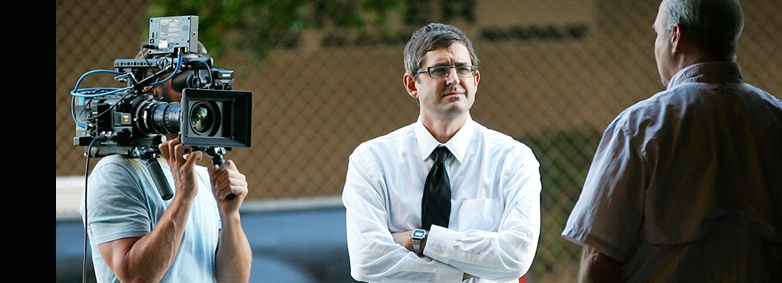
In this vaguely entertaining but aimless documentary, Louis Theroux adds nothing to our understanding of the Church of Scientology. With his tall frame, peculiar air of detachment and his ‘take me to your leader’ approach, he is a strange, almost alien-like creature, and not necessarily out of place in Los Angeles.

In the absence of anyone from the organisation for Theroux to interview, he flies in former scientology Inspector General Mark Rathbun. They enlist actors to recreate the techniques for intimidation and brainwashing Rathbun claims to have employed on new recruits on behalf of the Church.

The organisation is notoriously super secretive, highly sensitive and quickly aggressive when it feels threatened. Soon the filmmaker is under siege from other camera crews claiming to be making a documentary about him. As multiple cameras and smartphones are brandished, these sidewalk stand-offs offer fleeting moments of humour.

With no-one else to question, Theroux desperately and disgracefully attempts to turn the screw on his ally, Mark.

@ChrisHunneysett


War On Everyone

Director: John Michael McDonagh (2016) BBFC cert: 15

This sleazy, cynical and violent black comedy gets down and dirty in the war on good taste.

Drugs, double crosses, beheadings, strip joints and porn films feature in the story which goes isn’t afraid to visit very dark places. How much you enjoy it will depend hanging out with Michael Pena and Alexander Skarsgard as the pair of corrupt police detectives.

They star as sharp suited cops chasing a million dollars in cash which has gone missing from a crime scene. And they have no intention of turning the loot in when they get their hands on it.

These likely lads are called Bob and Terry, the former is a committed family man, the latter a hard drinker with a glad eye. This reference to the 1970s TV show is just one of many, very knowing pop culture in-jokes scattered through the script.

Another is having Brit actor Theo James sending up Hollywood typecasting as an English master criminal. An exasperated Paul Reiser plays their angry Lieutenant back at the station while Tessa Thompson and Stephanie Sigman add heart, charm and glamour.

Though the action takes place in Albuquerque, New Mexico, the cine-literate story should really be set in LA. It’s dizzyingly stitched together with references to musicals, sci-fi, westerns and cop thrillers, all mixed up and strung together to make a surprisingly satisfying whole.

Though it takes time for us to adjust to the films unique groove, and at times the tone veers about like the boys’ flash car in hot pursuit, the pace never flags.

Profane discussions about movies, art and philosophy litter the dialogue while jokes about police brutality and racism are no less funny for being topical. The opening gag involving a mime artist is inspired. As a bonus the brilliant songs of Glenn Campbell are used throughout.

John Michael McDonagh is the fiercely independent minded writer and director of Cavalry (2014) and The Guard (2011) and once again he takes no prisoners with the audiences sensibilities. War On Everyone is ambitious and sharp but its shock and awe approach may not to everyones taste.

@ChrisHunneysett

The Girl On The Train

Director: Tate Taylor (2016) BBFC cert: 15

Calling at all stations to murder via stalking, infidelity and kidnap, this chilly mystery drama still manages to be a very dull journey.

Not afraid to upset the hardcore fans of the best selling book on which it’s based, the setting has been changed from the UK to the US. Yet Brit born and naturalised US citizen Emily Blunt doesn’t mind the Atlantic gap, being suitably downbeat and occasionally manic as Rachel, the girl on the train.

While on her daily commute to New York, Rachel sees what she thinks is evidence linked to the disappearance of a local girl. Megan was a nanny to the daughter of Anna, now happily married to Rachel’s ex husband. Haley Bennett and Rebecca Ferguson form a formidable acting trio alongside Blunt.

Best known as Phoebe from TV’s Friends, Lisa Kudrow’s brief appearance makes you wish you were watching that show instead, it doesn’t help she’s playing a character called Monica opposite one called Rachel. Although always a welcome screen presence, employing an actress whose career has been defined by light comedy jars with the resolutely grim mood.

As a police detective, Allison Janney explains to Rachel and to us, exactly how increasingly preposterous her story and behaviour are. It’s great to have a film with this many dominant female roles.

I imagine the cop character is supposed to represent the perception of the tendency of state authorities’ to victim blame in domestic abuse cases. But such is the far fetched nature of the story, you can’t help but nod along with her unsympathetic incredulity.

These ridiculous plot twists means we can’t take any of it seriously. It fails in every way to be a hard hitting examination of domestic abuse. And taken as a rabid potboiler, it lacks the trashy sense of fun and gleeful malice which made David Fincher’s Gone Girl (2014) such an entertaining watch.

Lies, memories and fantasies combine as the silliness unfolds from the differing point of view of the three connected women. We see how they perceive one another is far different to the truth of their circumstances.

The extreme dullness of the villain may well be a comment of the banal nature of everyday evil, but I greeted the unmasking with a shrug of indifference. Plus the silly finale caused giggles at the world premiere, which I can’t imagine is the response the film-makers were aiming for.

The story pootles along through a flat landscape of scenes devoid of big screen spectacle and it feels like a lacklustre Sunday evening TV mini-series whodunnit.

But not one worth missing Poldark for.

@ChrisHunneysett


The First Monday In May

Director: Andrew Rossi (2016) BBFC cert: 12A

Ever since Vogue editor-in-chief Anna Wintour was satirised by Glenn Close in The Devil Wears Prada (2006) she has been aggressively addressing her public image.

Following in the well heeled footsteps of Vogue documentary The September Issue (2009) and her cameo in Zoolander 2 (2016), comes this immaculately attired documentary about her charity fund raising.

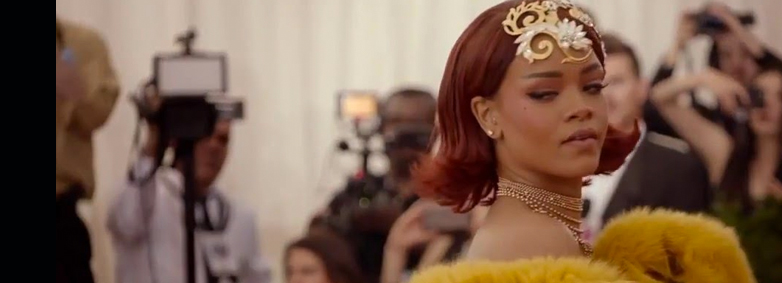
It’s an inside look at the build up to New York’s Metropolitan Museum of Art annual Met Gala, is held on first Monday in May. The star-studded event is a multi-million dollar fundraiser for the museums fashion wing, the Costume Institute.

The glitzy evening is also the opening night of the Institute’s Spring exhibition. Titled China: Through the Looking Glass, it focuses on the influence of the orient on western fashion.

Our backstage British guide is the engaging chief curator Andrew Bolton. A charming Lancashire lad who wears his trousers ever slightly too short.

Bolton and Wintour demonstrate great knowledge, passion and enthusiasm as they trip arm in arm through delicate negotiations with the Chinese, financial issues, creative conflicts, building delays and a monumental seating plan.

Interviews with designers such as Jean Paul Gaultier, Karl Lagerfeld and John Galliano provide support to their occasionally fluffy endeavours.

Fashionistas will simply adore the many fabulous outfits and the film successfully argues that haute couture deserves to join high art in the most prestigious galleries.

But despite her best efforts, Wintour’s carefully crafted public persona fails to disguise her disdain for the general public.

@ChrisHunneysett


Free State Of Jones

Director: Gary Ross (2016) BBFC cert: 15

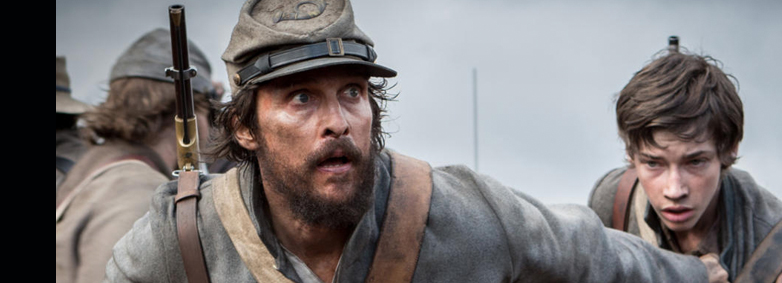
Matthew McConaughey is the Hollywood romcom star who so successfully reinvented his career he won an Oscar. In only his third leading role since his 2014 success in Dallas Buyers Club, he gives a brooding and impassioned performance in this high minded American civil war drama.

What begins as an exciting action movie develops into a sincere and somber look at how the wealthy white elite kept their grip on the lives of freed slaves when the fighting stopped.

Newton Knight is a confederate deserter who leads of an insurrection during the American civil war. McConaughey hides his leading man looks behind long hair and a ragged beard, mostly saving his charm for Rachel. The underused British actress Gugu Mbatha-Raw does well to bring depth to her role as a slave who joins his band of outlaws as they hide out in the local swamp.

The two leads ensure it’s always watchable and there’s no shortage of battles, burnings, hangings and evil deeds by the Ku Klux Klan. But brief flash forwards to a court room drama involving Knight’s great great grandson muddy the narrative flow, and the story becomes mired in the Mississippi swamp.

Although the film is keen to flag up its the accuracy of its historical accuracy via contemporary photographs and on screen captions, Knight is presented as an unrealistic combination of Robin Hood, Che Guevara and Jesus Christ.

As a revolutionary socialist who preaches from from a bible, Knight inspires slaves, farmers and women to take arms against the powerful and the rich. They declare themselves the free State of Jones.

However as Knight moves from pacifist medical orderly to merciless killer and then political activist, he suffers from an alarming lack of self reflection and none of his horrific experiences seem to affect him. And if he isn’t moved by what he sees, there’s no reason why we should be.

@ChrisHunneysett

The Lovers And The Despot

Director: Ross Adam, Robert Cannan (2016) BBFC cert: PG

With international espionage, kidnap, brainwashing and torture there’s a cracking story at the heart of this well researched documentary, but aping the brooding tone of a Cold War thriller takes a great deal of fun out of it.

In 1976 the glamorous power couple of South Korean cinema disappeared from Hong Kong, leaving children, debts and failing careers behind them.

Shin Sang-ok was a stylish director and Choi Eun-hee his beautiful muse and leading lady. They emerged in North Korea at the side of dictator Kim Jong-Il, for whom they made a series of films.

After defecting to the US in 1986 they claimed to have been kidnapped, but suspicion remained they staged their abductions and had been merrily collaborating.

This collection of interviews, propaganda films, press conferences and secretly recorded conversations encourages the audience to draw its own conclusions.

@ChrisHunneysett

Little Men

Director: Ira Sachs (2016) BBFC cert: PG

Greg Kinnear stars in this sincere and stagey snapshot of awkward adolescence. Brian is a struggling actor who inherits his father’s apartment and takes his family in a socially downward move from Manhattan to Brooklyn.

Brian is the smallest man in the film, buffeted by a domineering sister, emotionally blackmailed by his conniving tenant and frozen out by his distant wife. Talia Balsam, Paulina Garcia and Jennifer Ehle skilfully sketch the three very different women.

The focus of the story falls on the growing relationship between his son Jake and Tony, the son of the downstairs tenant. Theo Taplitz and especially Michael Barbieri are remarkably assured as the odd couple thirteen year olds, one artistic and shy, the other outgoing and sporty.

The hint of unrequited feeling from one of the boys is one of a number of plot strands the film fails to commit to. More than one character may be having an affair and past relations are hinted at. Half formed characters mingle with jokes about the plays of Chekhov.

It’s nicely observed and consistent of tone. But just like Brian, the film would rather bury itself in art than risk creating any emotional scenes.

@ChrisHunneysett


The Girl with All the Gifts

Director: Colm McCarthy (2016) BBFC cert: 15

Unwrap this British action thriller which flowers into a fresh take on the zombie apocalypse.

Young Sennia Nanua gives an endearingly open performance as a teenager of prodigious mental ability. She and her classmates are prisoners in a military research station. Outside of lessons they’re kept in solitary confinement and under armed guard.

Gemma Arterton plays Helen, a gold hearted gun toting teacher who has a maternal bond with Melanie. Along with Glenn Close’s dedicated scientist, Paddy Considine’s gruff army sergeant and Fisayo Akinade’s dim squaddie, the five develop a dysfunctional family dynamic.

Outside the base the majority of the population are suffering from a fungal infection to the brain. This has turned them into fast moving mindless monsters, reminiscent of the manic ‘infected’ from Danny Boyle’s 28 Days Later (2002). They are nicknamed ‘the Hungries’ and can be killed by the traditional bullet to the head.

The Girl With All The Gifts is based on the book of the same name by Mike Carey, and it was no surprise to learn the author is a former writer for the cult British comic, 2000AD. Still going strong it is soon to publish its 2000th issue and was recently the subject of a highly entertaining documentary, Future Shock! The Story of 2000AD (2014).

Like all British sci-fi of the last thirty years, this story’s roots are deep in the fertile soil of the self-styled ‘Galaxy’s Greatest comic’. The hallmarks of its best stories are all present here; extreme violence, sardonic humour, strong characters and a twist at the end.

Also the script mines Greek myths for inspiration and throws in baby-eating rats and mother-eating babies into the gory mix. Plus it draws on elements of John Wyndham’s evergreen novel Day Of The Triffids (pub. 1951) as well as William Golding’s The Lord Of The Flies (pub.1954).

The set designers have had great fun turning the West Midlands into an overgrown urban tundra. The make-up artists have a field day and the sound engineers go all out to scare us with an impressive variety of blood curdling noise.

Always keen to keep shovelling on the action, The Girl With All The Gifts offers sufficient rewards for those who dig zombie films.

@ChrisHunneysett

The Magnificent Seven (2016)

Director: Antoine Fuqua (2016) BBFC cert: 12A

Compared to the truly magnificent 1960 original, this unlooked for western remake is unsurprisingly inferior. But after a summer of poor blockbuster fare, it’s passable entertainment in its own way.

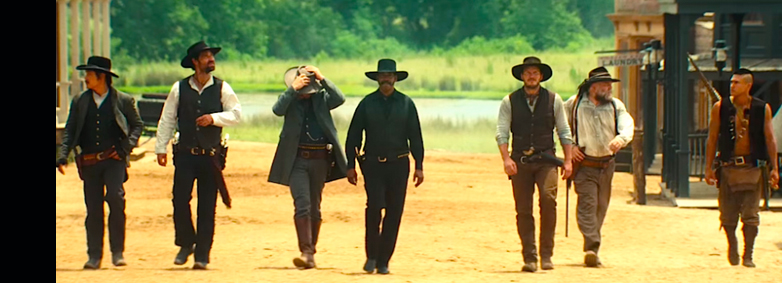
Unburdened by any more ambition than a broad desire to be please, the film trots through the familiar story of a small posse of cowboys facing overwhelming odds.

There’s a liberal lifting of scenes and dialogue from the John Sturges version and a cheeky play of Elmer Bernstein’s majestic original score over the end credits. The new main score by the late James Horner is monumentally forgettable.

Reasons for watching include handsome photography, great period design and the no shortage of old school action. There are real sets, stuntmen and horses instead of CGI fakery. The $100M budget is all on screen.

Traditional western themes of comradeship, courage and loyalty are wrapped up in a glossy tale of redemption. This is an optimistic vision of how the US could still be won, with a rainbow society trying to overcome corporate greed and restore the church to the centre of civic life. This last point will resonate with US conservative Christians, a larger and more influential congregation across the pond than here in the UK.

Headliners Denzel Washington, Chris Pratt and Ethan Hawke are clearly enjoying themselves and their combined charisma is the film’s biggest strength. Vincent D’Onofrio adds more humour as a tracker, a fool who speaks truth to power.

The casting attempts to accurately reflect the ethnic mix of contemporary US, and presumably hopes to attract the audience which makes the multi-ethnic Fast Furious franchise such a global success. So the remaining gunslingers are respectively Chinese, Mexican and Native American. Sadly they’re so poorly scripted, their race is pretty much the extent of their characterisation. One is described as an assassin but they may as well have gone the whole hog and called him a ninja.

Washington stars as bounty hunter Sam Chisolm, hired by a young widow who needs protection from a corrupt industrialist. Haley Bennett offers true grit as Emma, the only female speaking role of note.

It’s a shame there aren’t a few more women in the movie, or even – gasp – in the seven. Tarantino’s The Hateful Eight and Natalie Portman’s Jane’s Got A Gun featured strong willed gun-toting women. We could have done with more similarly natured women here.

Although Emma plays a small but crucial role, she definitely is not part of the all-male gang. As it is, she barely qualifies as the female Smurf. Amid all the back slapping diversity, fifty percent of the population are woefully under-represented. Except for whores, who are everywhere.

Chisolm has a personal reason for taking the job and recruits collection of desperadoes and misfits to defend the gold mining town. They include Pratt’s gambler and Hawke’s PSTD suffering civil war veteran.

Through a suitably sweeping landscape we move briskly from one action scene to another. The action is staged with occasional invention but at times the geography is unclear. This is especially true in the finale where our heroes face almost insurmountable odds and a seemingly infinite supply of ammunition. Until the smoke cleared I wasn’t sure exactly who had survived.

Peter Sarsgaard sketches without light or shade his consumptive black hearted villain, Bartholomew Bogue. He mostly acts apart from the Seven and with the protagonist isolated there’s a sense the film isn’t terribly interested in him. Consequently nor are we very much.

For long periods it’s agreeable crowd pleasing stuff. We’re reasonably entertained but never roused or excited. This not a disaster such as the recent Ben-Hur remake is, but it is quite far from magnificent.

@ChrisHunneysett


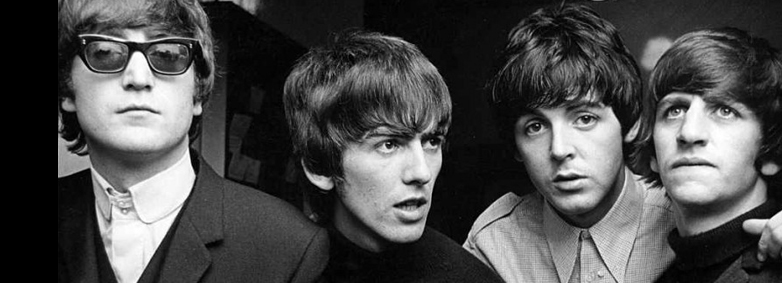
The Beatles: 8 Days A Week

Director: Ron Howard (2016) BBFC cert: 12A

This rock and roll documentary examines how the touring years of the Fab Four affected their musical output and consequently the cultural landscape of the world.

It’s a triumph of research and editing. Though hugely enjoyable even for a casual fan such as myself, there isn’t much new and the genius you can hear has been around for over fifty years.

Clearly a passion project for director Ron Howard, he mines exhaustively from a wealth of archive material. This allows the band to speak for themselves with their trademark goofy charm and sharp wit.

Journalists from the time contribute their memories and various famous people pop up to declare how much the band meant to their youth, such as an entertaining Sigourney Weaver.

We follow their meteoric rise from the cramped belly of Liverpool’s Cavern Club to become the first ever band to conduct a stadium tour of the US.

Despite unparalleled period of chart success, an exploitative recording contract encourages the ambitious band to hit the road to make some real money.

Due to the boys unprecedented popularity, US authorities were worried about fans’ safety and insisted the group play giant stadiums, leading to their selling out the 56,000 seater Shea Stadium in Chicago.

The bands innate decency and fearless naivety results in their successfully challenging the segregation of audiences in the US south. They also deal with bomb threats, riots and hordes of screaming teenage fans wherever they go.

Decisions are made democratically, albeit it’s a democracy where John Lennon is the first among equals. Though we’re spared the creative differences which were to tear the group apart, the on-stage placing of George Harrison between Lennon and Paul McCartney suggests a temporary buffer to the schism to come. The much maligned Ringo demonstrates his almost violent musical contribution to their success.

We see how crucifying schedule of recording and performing contributes to their collective decision to quit touring in August 1966 to focus on recording. A superb montage to A Day In The Life shows how they develop physically, emotionally and artistically.

After a three year hiatus their last ever gig was performed unannounced from the roof of their Savile Row Apple office. This places it firmly in context and it becomes an act of spiritual and creative catharsis.

@ChrisHunneysett