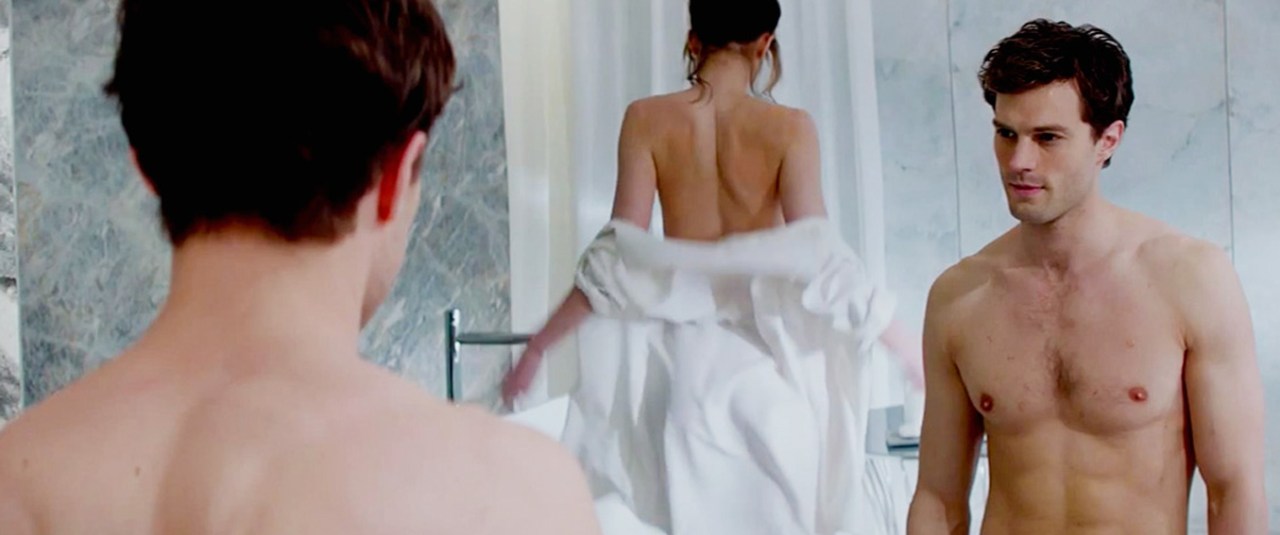
Fifty Shades of Grey

Director: Sam Taylor-Johnson (2015)

There’s lashings of domination but no romance in this steamy and silly fantasy as a billionaire grooms an eager student for his power-trip sex games.

A kinky combination of Pretty Woman and American Psycho lacking the charm of the former and the satire of the latter.

It’s based on the best selling novel by E. L. James and the writer keeps director Sam Taylor-Johnson on a short leash.

This is a shame as her great visual sense and sly wit are hamstrung by being bound tightly to the source material’s ropey plot and dialogue.

Anastasia ‘Ana’ Steele (Dakota Johnson) is a breathy, blushing brunette in a bad cardigan. She receives the opportunity to interview Christian Grey (Jamie Dornan) for the university magazine. He’s a hunky, mega-wealthy, smart-suited super-creep.

Christian recognises the virginal Ana as a  suitable victim to be tutored to serve his own specific needs and begins to ply her with gifts.

He turns up at the hardware store where she works to buy some hobby materials; electrical cabling, grips and so on.

Soon she’s introduced to his private and exquisitely stocked dungeon, ‘the red room’.

In an entertainingly boardroom scene Christian asks Ana to sign a legally binding contract. In eye-watering detail it lists everything permissible in their future activities.

She must agree to be the submissive participant in his bondage sessions which are to include blindfolds, handcuffs and whips.

Both actors have impressive modelling CV’s and demonstrate excellent skills at looking great naked.

The most convincing fetish here is for a designer lifestyle of clothes, suits, accessories and furnishings: it’s a glossy centrefold advert of a production so edgy it features music by pop muppet Ellie Goulding.

There’s a trip in a glider because that what’s rich people do to emphasise how free-spirited they are.

As Ana is overwhelmed by passion for her new found pursuits, she grows more assertive which threatens the strict dynamic of their relationship.

If you liked the book you’ll probably enjoy this film but don’t tie yourself up in knots if you miss it.

☆☆☆

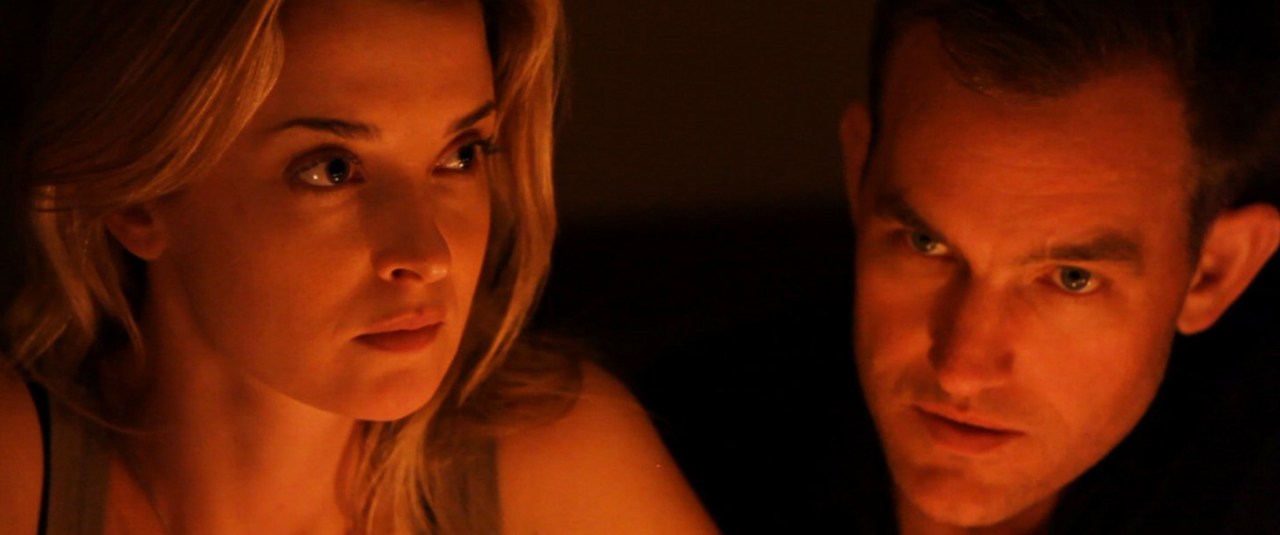
Coherence

Director: James Ward Byrkit (2015)

When a passing comet causes a space-time anomaly, it turns a dinner party into disaster in this dull and derivative sci-fi thriller.

Glossy, arty, unlikeable and poorly established characters bicker their way through a catastrophic storm of hyperactive camerawork and weak writing.

When phone signals, the internet and external power fail, Hugh (Hugo Armstrong) and Amir (Alex Manugian) head off to the only other neighbourhood house with lights on.

They intend to call Hugh’s physicist brother who warned about possible ill effects of the comet, it’s a wonder the brother isn’t called Bill Mason.

With no obvious leaders, the guests start squabbling like contestants on The Apprentice. Glamorous Emily (Emily Baldoni) starts to give partner Kevin (Maury Sterling) a hard time over a perceived slight at the table. Others make passes at each other’s partners. Their sense of priorities are more puzzling than their situation.

Someone turns to the bottle which seems a reasonable response to being cooped up with these idiots.

With close ups, shallow focus, jump cuts and restless shaky cam we’re treated to a full range of found-footage effects without this being a found-footage film – which is annoying when we realise there’s no character behind the camera to interact with the ones we can see.

Presumably the intention is to create intimacy and suggest forthcoming danger while visually preparing the ground for when these effects will be usefully employed.

But this distracting approach heightens the script’s failure to sufficiently identify the characters for the audience; we fail to engage with them or care what is happening. At times it would have been useful if they’d worn names on the backs of their clothes.

Having being lost in the dark space between houses, Hugh and Amir return injured and with a metal box. They’d encountered the inhabitants of the other house who were unfriendly and disturbingly looked exactly like themselves.

The box contains photos of themselves taken that very evening. Notes are stuck to their front door written in their own handwriting and personal items unexpectedly appear.

A book containing Hugh’s brother’s lecture notes is discovered in the back of a car. They offer a mercifully brief explanation using the coherence variation of quantum mechanics. Gwyneth Paltrow is mentioned alongside Schrodinger’s cat – which must be a first.

There’s more bickering and another splinter group wander off outside. A second Hugh arrives claiming to be the first Hugh and it dawns on the inmates there are more than two houses with identical occupants, increasingly mixed up between identical houses.

But when the comet passes the quantum anomaly will collapse and everyone must find their correct house – or be trapped in the wrong dinner party forever. Paranoia, suspicion and violence follow.

☆☆☆

Two Night Stand

Director: Max Nichols (2015)

This sweet twenty-something rom-com is happier cuddling on the sofa than swinging from the chandeliers.

A pair of perky performers employ their personalities to massage some heat into the weak script. It’s observations on dating or life are not fresh, clever or funny enough.

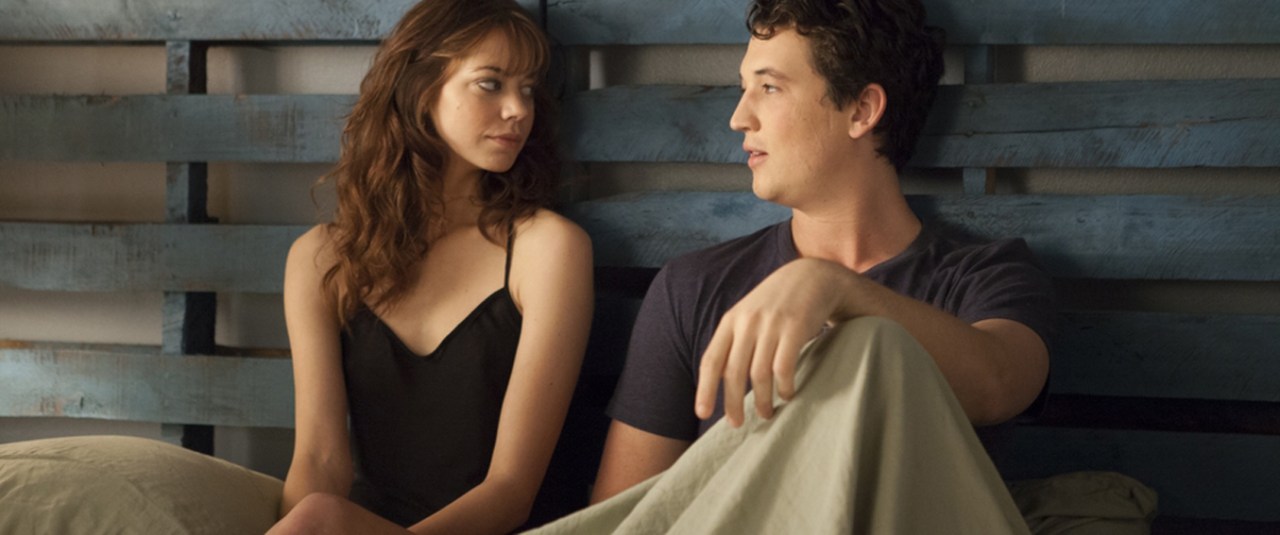
Megan (Analeigh Tipton) is an unemployed med-school dropout. One evening she’s to be sex-iled for the evening by fun-loving Faiza (Jessica Szohr) and her hot boyfriend Cedric (Scott Mescudi).

Their rampant relationship exists to highlight what a sad loser Megan is for being single.

To get her out of the apartment they kindly suggest Megan goes online to search for a hookup; guilt-free casual sex with a stranger.

Signing up for the first time to a website, she quickly establishes a rapport with Alec (Miles Teller) and trots off to his place on the other side of New York.

He’s cocky, she’s ditzy and both are charming. Although it’s pleasant hanging out with the pair, our smiles never give way to laughter.

While trying to sneak out the morning after a night of passion, Megan accidentally wakes Alec up. Before Megan can say Meg Ryan they’re arguing – but an unexpected and heavy over night snowfall means she can’t leave the apartment.

Having fallen out but now forced to spend time together, they agree to pretend they didn’t have sex. They play ping pong, get high and build a den with fairy lights.

When Megan blocks the toilet and they break into next door to use the facilities, it’s a sign the script is straining; to keep us engaged and the couple at each other’s throats, not at each other’s pants.

But there’s only so much to occupy them before they are dragged by the gravity of romantic comedy back to the bedroom.

As the conversation returns to sex, they agree to critique last nights performances; discussing along the way topics such as whether girls should fake orgasms.

Generally the advice they share is not earth-moving but this is the standout scene. Otherwise neither have much to say.

Possibly through boredom, desperation or a desire to shut Alec up, Megan impulsively decides to road-test their advice.

Alec enthusiastically agrees. Forewarned is forearmed and their earlier critique leads to improved foreplay, as well as success in other departments.

As the medium to longterm outlook for the relationship seems full of promise, it’s discovered one of them has lied about their single status. There’s a fight, the snow storm abates and Megan heads home.

Once the snow is clear the script has little idea what to do and resorts to a New year’s Eve party and a night in the police cells. It jumps through hoops chasing a happy ending.

Two Night Stand takes a staggeringly optimistic view of online dating and raises unrealistic expectations of what one’s first online date will be like.

Rather than embracing its open approach to the singles sex scene it retreats to reinforce the persistently perpetuated myth of the perfect one existing somewhere for everybody.

For all it’s emphasis on honest talk, it never explains why Alec wakes up the morning after the night before wearing a T-shirt and boxer shorts.

☆☆☆

Still Life

Director: Uberto Pasolini (2015)

With plenty to say about the current state of Britain this contemplative drama is a graceful reflection on the importance of honouring the dead.

John May (Eddie Marsan) is a middle-aged, mac-wearing local civil servant.

He’s responsible for contacting relatives of the recently deceased, if none can be found he must organise the disposal of the bodies.

Dedicated, meticulous and compelled to give his clients as much dignity as possible, he draws on their belongings to write eulogies, choose appropriate music and opts for expensive church services rather than cheaper cremations.

Working from a prodigiously neat basement office and living in an equally grey and organised flat, John has a quiet and unassuming life with no friends, family or social life.

Though never complaining being over-involved in his job is a clearly a coping mechanism for his loneliness.

When John recieves his notice at the council from the unctuous Mr Pratchett (Andrew Buchan) he is determined to successfully close his last case but has only three days in which to do so.

Unknown to each other Billy Stoke lived on John’s anonymous housing estate in the flat opposite, suffereing a sad, lonely and alcoholic demise.

Well-honed detective techniques sees John travel the country by road and rail, meeting family and former colleagues, trying to find Stoke’s daughter Kelly (Joanne Froggatt).

The Italian writer-director turns a coldly critical eye on contemporary Britain, seeing a land of abandoned ex-servicemen and uncaring institutions.

Among the alienation, homelessness and terrible food, we love our dogs, hate our families and neglect the elderly.

Cinematographer Stefano Falivene makes a virtue of stillness, capturing an urban landscape with a harsh, eerie beauty and adding to John’s keenly observed sense of isolation.

There are subtle suggestions John could be a modern day version of Raymond Chandler’s Philip Marlowe, a good man keeping true to his personal code of honour.

Or possibly he’s a non-denominational celestial do-gooder trying to save the world one funeral at a time.

Marsan carries the film with maximum economy, conveying a variety of moods with tiny changes of expression while Downton star and Golden Globe winner Froggatt is as engaging and excellent as ever – but it would be nice to see her having on-screen fun in a glamorous role for a change.

For a moment the script seems to lurch towards a conventional conclusion instead it supplies a sweetly haunting and gently optimistic ending.

☆☆

Foxcatcher

Director: Bennett Miller (2015)

In this chilly, complex and exceptionally crafted thriller based on a true story, actors more famous for action and comedy give great dramatic performances.

In mood, tone, subject matter and careful execution it is similar to Miller’s Capote (2005) for which the late Philip Seymour Hoffman won the best actor Oscar.

US gold medal wrestling champ Mark Schultz (Channing Tatum) is being coached for for the Seoul Olympics by older brother Dave (Mark Ruffalo).

Aggressive in the ring, the emotionally stunted Mark lacks social confidence and struggles financially. Dave has acted as father as well as brother but now prioritises his wife Nancy (Sienna Miller) and children.

As in American Sniper, Miller demonstrates she’s capable of excellence given the opportunity, it’s a shame that in both films she isn’t given more to do.

At no point does Dave consider himself to be a contributor to Mark’s issues.

Mark is overwhelmed when patriotic multimillionaire wrestling enthusiast John du Pont (Steve Carell) demands to help the US Olympic cause, flying Mark out to his secluded Foxcatcher estate where he has built a state of the art training facility.

From behind prosthetic nose, paunch and grey hair, Carell offers a mesmerising performance, hinting at a complex internal conflcits, not least his feelings towards his emotionally cold mother Jean (Vanessa Redgrave).

Flexing his financial muscle, du Pont brings on board the entire US wrestling team, names them Foxcatcher after his estate and hires Dave to train them for Olympic glory.

The wrestling scenes are convincing and comprehensible while the muted tone, autumnal colours and nuanced performances create a creeping foreboding.

Desperate for affirmation by his wealthy associates, du Pont parades his pet project around town while tension develops between du Pont and Dave as they compete to exercise an unhealthy degree of control over Mark.

With a shocking violence, the cold blooded and tragic end offers further punishment but no redemption.

★★★★★

Kingsman: The Secret Service

Director: Matthew Vaughn (2015)

This glossy smug spy spoof lacks much spark or charm, it’s as flat and laboured as the later Roger Moore Bond movies it offers homage to.

The Kingsmen are an aristocratic, super-rich secret spy agency who operate without any pesky political oversight or accountability.

They’re an exclusive and aspirational club for the Bullingdon boys only with nattier outfits. Putting great stock by personal grooming, they’re based in a Tailor’s shop in Savile Row.

Head of the outfitters is Michael Caine who played spy Harry Palmer. All the agents sport Palmer’s famous wide brimmed specs because the film can’t resist its little jokes. It also references The Man From UNCLE and The Men In Black.

Brolly carrying agent Harry Hart (Colin Firth) sees the opportunity to atone for the death of a colleague by putting forward his son Eggsy (Taron Egerton) for recruitment.

Only he’s turned out to be a bit of baseball cap wearing chav and so must be properly attired, trained in espionage and taught to use violence to subjugate the working classes.

Although the script plays lip-service to meritocracy, Eggsy is chosen due to being of good stock and all the other potential recruits are public school types. The only female recruit of note is Roxy (Sophie Cookson) and she of course is a gorgeous lesbian.

Meanwhile billionaire Richmond Valentino (a lisping Samuel L. Jackson) is plotting to create a new world order involving the murder of millions using micro-chips.

Politicians can’t be trusted to hang on to their integrity in the face of Valentino’s money, though a supple-buttocked Scandinavian Princess holds firm. Because she’s royal you see.

Valentino is assisted by a decorative blade-footed assassin called Gazelle (Sofia Boutella). Having demonstrated her ability early doors, she’s mostly there to look pretty.

Poison pens, explosive cigarette lighters, jet packs and underground bases add to the retro atmosphere of the 1970’s sexual politics.

In the absence of decent jokes, obscenities are used as punchlines to scenes, the action set pieces are all too familiar and aside from a colourful moment of pomp and circumstance, there’s little that will raise an eyebrow.

Based on comic book by Mark Millar who also wrote the Vaughn directed Kick Ass, it’s the fifth script collaboration between Vaughn and Jane Goldman (Stardust, Kick Ass, X-Men: First Class, The Debt).

It’s most similar in tone but lacks the fresh energy and originality of the uproariously violent and funny Kick Ass.

Roger Moore single-handedly mocked his own image with far more grace, talent, charm and wit than is mustered here. Check out North Sea Hijack for a rather better service.

★★☆☆☆

American Sniper

Director: Clint Eastwood (2015)

Astonishingly nominated for six Oscars and almost comical in feverish flag-waving patriotism, this celebration of a real-life cold-blooded killer is way off target.

Set during the Iraq war, it’s action scenes are directed by Eastwood at his most gun-lovingly, gung ho.

Rodeo-rider Kyle is a dim and unquestioning believer in the need to protect god, country and family.

In the backwoods as a boy his father taught him to shoot deer and be independent; to be a sheepdog not a wolf or a sheep.

As Kyle, the most successful sniper in US history, Bradley Cooper hides his charisma under a bushy beard and a beefed up physique. These are dog-whistles for nominations at the Academy during the awards season.

After the atrocity of 9/11 Kyle signs up for the navy SEALs. After a brief romance and some basic training (or possibly some basic romance and brief training) he’s off to Iraq where he kills women, children and other anonymous Iraqis while equally anonymous comrades fall.

Four lethal tours rush past in a cloud of dust and bullets. Kyle becomes a celebrity and is nick-named the ‘Legend’, though humbly, mumbly dismisses any uncomfortable hoopla.

Sienna Miller as home-alone wife Taya does her best in a role than demands she only be sexy, nagging or pregnant. Their long-distance phone calls are unpardonably ill-timed and unconvincing.

Two neither particularly interesting or formidable bad guys contribute to a ragged script structure with Kyle’s sights split between them.

One’s a driller-killer leather-clad maniac called The Butcher and the other a sniper called Mustafa.

He and Kyle engage in a long distance duel during which Kyle chooses to put his entire squad in danger. Though considering Kyle’s loose cannon approach and the amazing levels of military mis-management, it’s not much of a surprise.

Eastwood directs in his usual pared-down style, at 84 years old it’s doubtful he’ll be trying new tricks any time soon.

Working with a familiar crew, the editors Joel Cox and Gary Roach are multiple Oscar nominees – mostly for Eastwood pictures – and their work brings a solid dynamism.

We see Kyle suffer a touch of post-traumatic stress disorder and the film ends abruptly, just like the life of all the people he shot from a mile away.

If even the mafia’s Sonny Corleone (James Caan) questions the validity of your approach to killing, a little self-awareness might go a long way.

★★☆☆☆

Boyhood

Director: Richard Linklater (2015)

This astonishingly ambitious and unique coming-of-age drama is another change of direction from the ever-surprising Texan director Linklater.

Filmed over twelve years using the same talented cast throughout, Boyhood creates great emotional weight through small domestic scenes.

We quickly invest in these characters, liking them, anticipating the directions their lives are taking and fearing for them. When drama erupts we don’t dwell on it but follow the consequences.

Years slip by as haircuts and shoe sizes change. Part of the fun is guessing how the actors will alter when time jumps forward again. Graciously allowing the audience the benefit of a brain, Linklater never flags up the changing of the years with captions but leaves us to work it out.

It’s eerily like being a parent on fast forward and I gazed in wonder at the truth of the lives on the screen.

There’s domestic abuse, alcoholism, first dates, marriages and eventually Olivia finds a peace of sorts as she braces herself for the future full of an empty nest.

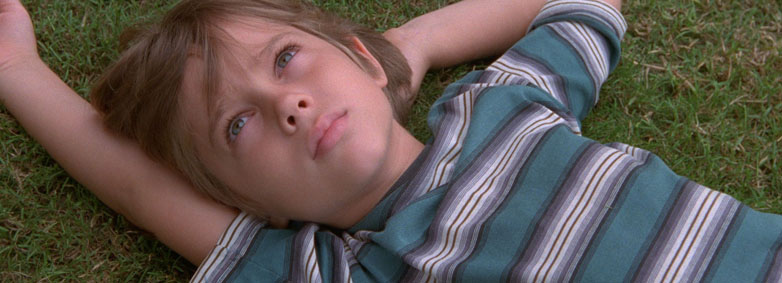
Six-year-old Mason Jnr (Ellar Coltrane) and sparky older sister Samantha (director’s daughter Lorelei Linklater) live with single mother Olivia (Patricia Arquette). The three form a compact family unit that expands and contracts as step-fathers and siblings come and go.

Much of the film’s understated, unassuming intelligent springs from the well of Coltrane’s even-tempered playing. Mason’s cautious approach to events is a coping mechanism which serves him well through some turbulent times.

Arquette is the emotional anchor; strong, anguished, fallible, continually trying to improve herself and forever making poor choices. It’s a beautifully honest performance as she attempts to marry the anxieties and sacrifice of motherhood

Equally excellent is Ethan Hawke as Mason’s dad who annoyingly and disconcertingly, never appears to age. He’s a well-meaning if absent father who pops by occasionally and spoils the kids rotten. It’s clear by his car of choice – a 1968 Pontiac GTO – that the film’s title applies equally to him.

If there’s one shame it’s due to the sometimes waning interest of the young actress in the project; so Samantha features less as time progresses.

It’s funny, engaging, uplifting and the finest film of 2014.

If I have to wait twelve years for a sequel, It will be worth it.

★★★★★

The Gambler

Director: Rupert Wyatt (2015)

Call the bluff on this glossy gambling movie that will leave you out of pocket and feeling cheated for watching.

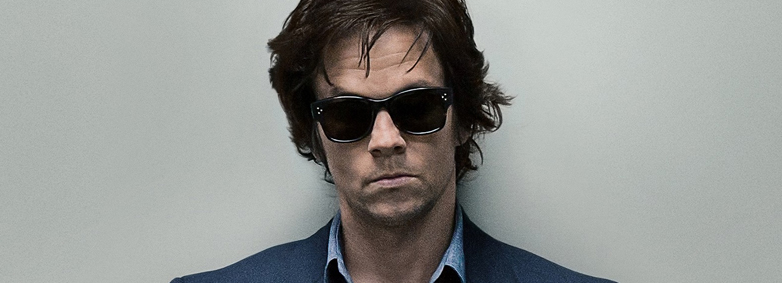
Based on the superior 1974 film of the same name, the always watchable Mark Wahlberg plays to the manor born Jim Bennett, a masochistic, nihilistic and wildly unsympathetic university professor.

It’s a brave piece of casting which treats us to the novelty of former Funky Bunch frontman Wahlberg lecturing to University students on the merits of Shakespeare.

He’s a spoilt, whiny, attention-seeking brat with self-destructive tendencies who self-medicates his existential crisis by playing cards, and is not above developing a relationship Brie Larson’s genius young student.

Jim spends his nights gambling in illicit dens and his days teaching, leaving him too busy to put on a tie or brush his hair.

When not betting money he doesn’t have or antagonising gangsters for the empty thrill of it, Jim’s isolating himself from family and colleagues and generally feeling sorry for himself.

After a great deal of behaviour I wouldn’t allow from my four year old, Jim owes a quarter of a million dollars to various bad people and has seven days to pay it back. Or else.

Reduced to trying to hock his watch to stake another game, violence is repeatedly threatened for non-payment, and Jim wants to be hurt so badly its hard to feel sorry for him when he’s badly is.

Jessica Lange plays his tennis playing mother, and the elegant actress is particularly hard done by, but Jim probably thinks that’s her fault for enabling his addiction.

And in four brief appearances, the shaven-headed John Goodman raises the acting ante as a philosophising and kindly intentioned loan shark.

★★☆☆☆

A Most Violent Year

Director: J.C. Chandor (2015)

Visually and morally murky, this brooding New York crime thriller throws insubstantial punches from behind interesting shadows.

Shy on story this is a sombre exploration of the compromises necessary in perpetuating the myth of the American Dream.

In 1981 Oscar Isaac‘s immigrant self-made businessman, Abel, has put down a huge cash deposit to buy a derelict dockside property to expand his oil interests.

When David Oyelowo‘s District Attorney charges Abel for fraud and tax evasion, the bank refuse to loan Abel the money to complete his deal.

With seven days to raise the cash or lose everything he’s worked, Abel runs around the decaying, filthy and graffitied streets for meetings in back-rooms and barbershops.

Meanwhile his truckers and salespeople are being beaten up by rivals and his family are being threatened in their new home.

Jessica Chastain captivates as Abel’s beautiful and mob-connected wife, Anna, but she’s mostly there to spur him on and cook the books on his behalf.

Abel is naively unaware of his own inconsistencies with corruption and violence taking him by surprise, despite being mobbed up to the eyeballs and knowingly guilty as charged.

Everything is captured in a low key register: the lighting, the performances, the mood. It’s carefully calculated but struggles under its weighty self importance.

Brian De Palma’s gaudy masterpiece Scarface is deliberately referenced in Chastain’s icy style and the synthesised score, but this has none of the energy, bling, coke, violence or fun.

Only occasionally violent and taking place over a mere thirty three days, A Most Violent Year is a mis-named disappointment.

★★☆☆☆